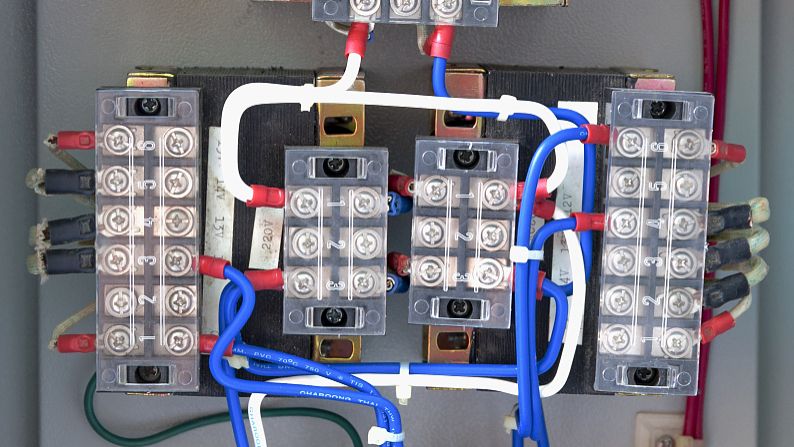
How AC Contactors Work
When you hear a “click” in an air conditioner, motor starter, or lighting panel, that’s usually an AC contactor doing its job—connecting and disconnecting power safely under load.
Basic Components of an AC Contactor
An alternating current contactor is a simple but rugged electromechanical switch. The main parts are:
Electromagnetic coil – A low‑power control winding that creates a magnetic field when energized.
Moving armature – A hinged metal piece that the coil pulls in.
Main contacts – Heavy‑duty contacts that carry the load current (compressors, motors, lighting).
Auxiliary contacts – Smaller contacts used for signaling and interlocks.
Frame and terminals – Insulated body with line and load terminals for wiring.
When the coil is off, springs hold the main contacts open. When the coil is on, the magnetic force pulls everything closed.
How the Electromagnetic Coil Pulls in the Contacts
Here’s what happens step by step:
1. Control voltage hits the coil (for example, 24 V, 120 V, or 240 V).
2. The coil generates a magnetic field that pulls the armature toward the core.
3. The armature movement snaps the main contacts closed, feeding power to the load.
4. When the control signal is removed, the coil de‑energizes, springs open the contacts, and power to the load is cut.
This fast open/close motion lets an AC contactor handle high inrush current and frequent operations without you ever touching a manual switch.
Main Contacts vs. Auxiliary Contacts
Main contacts and auxiliary contacts do two very different jobs:
Main contacts
Carry the full load current (HVAC compressors, fan motors, pumps, lighting banks).
Built wide and robust for high inrush and arc energy.
Rated by amps, poles, and utilization category (AC‑1, AC‑3, etc.).
Auxiliary contacts
status feedback (RUN signal to a PLC or BMS),
electrical interlocks (between forward and reverse contactors),
indicator lights, and alarms.
Handle small control currents only.
Used for:
Marked as NO (normally open) or NC (normally closed).
You should never run a motor or heater on auxiliary contacts—they are for control and signaling only.
AC Contactor vs. DC Contactor
AC and DC contactors look similar, but they’re engineered differently:
AC contactors
Optimized for alternating current, where the current naturally crosses zero 60 times per second (60 Hz).
Use special magnetic shading rings to prevent coil chatter at the zero crossings.
Arc is easier to extinguish because AC naturally falls to zero.
DC contactors
Built for direct current, which never crosses zero on its own.
Need larger contact gaps, stronger arc chutes, and different coil/iron designs.
Using a DC load on an AC contactor (without proper rating) can cause severe contact welding and failure.
Always check whether the contactor is rated for AC, DC, or both before you drop it into a circuit.
Where AC Contactors Are Used in Real Systems
You’ll see different types of AC contactors everywhere power needs to be switched remotely and safely:
HVAC and air conditioning
Single pole and double pole AC contactors for residential condensers.
Three pole AC contactors for rooftop units, chillers, and large air handlers.
Motor loads
Pumps, fans, blowers, compressors, conveyors, hoists—usually on three-pole or four-pole contactors.
Lighting
Lighting contactors switch LED, fluorescent, or tungsten lighting banks in commercial buildings and parking lots.
Takeaway: if you’re switching compressors, fan motors, or lighting in the U.S. market, an AC contactor is usually the heart of the control scheme—your job is to pick the right type and rating for the load.
Types of AC Contactors by Number of Poles
What “poles” mean on an AC contactor
On an AC contactor, poles are the number of separate power circuits the device can switch at the same time.
1 pole = 1 hot line switched
2 poles = 2 lines switched (often both hots in a 240V circuit)
3 poles = 3-phase lines switched
More poles = more circuits or a neutral/load added
The more poles your AC contactor has, the more conductors you can safely open and close together with one coil.
Single pole AC contactor
A single pole AC contactor switches one live conductor and usually leaves the other side permanently connected. In U.S. residential systems, you’ll often see it in:
Small HVAC units (package units, small condensers)
Lighting control where only one leg needs to be switched
Pros:
Lower cost and compact size
Simple wiring for basic loads
Cons:
One leg remains energized, so the load isn’t fully isolated
Not ideal where full disconnection and safety isolation are required
Double pole AC contactor
A double pole AC contactor switches both hot legs in a typical 240V single-phase U.S. system. That’s why it’s the go-to choice for:
Residential air conditioners and heat pumps
Well pumps and small motors
Water heaters and some resistive loads
Why it’s common in AC and heat pumps:
It fully disconnects the compressor from both lines
Improves safety and makes troubleshooting easier
Loads suited for double pole contactors:
Single-phase compressor loads
Fan motors and blower motors on 240V
Small resistive loads that need complete isolation
Three pole AC contactor
A three pole AC contactor is standard for three-phase motor control in industrial and commercial systems. You’ll see it in:
Pumps and fans in commercial buildings
Compressors in industrial HVAC and chillers
Conveyor systems, elevators, and process equipment
When to pick a three pole contactor:
You’re switching three-phase power (208V, 230V, 460V, 480V)
The load is a three-phase motor or large industrial equipment
You want clean, synchronized switching of all three phases
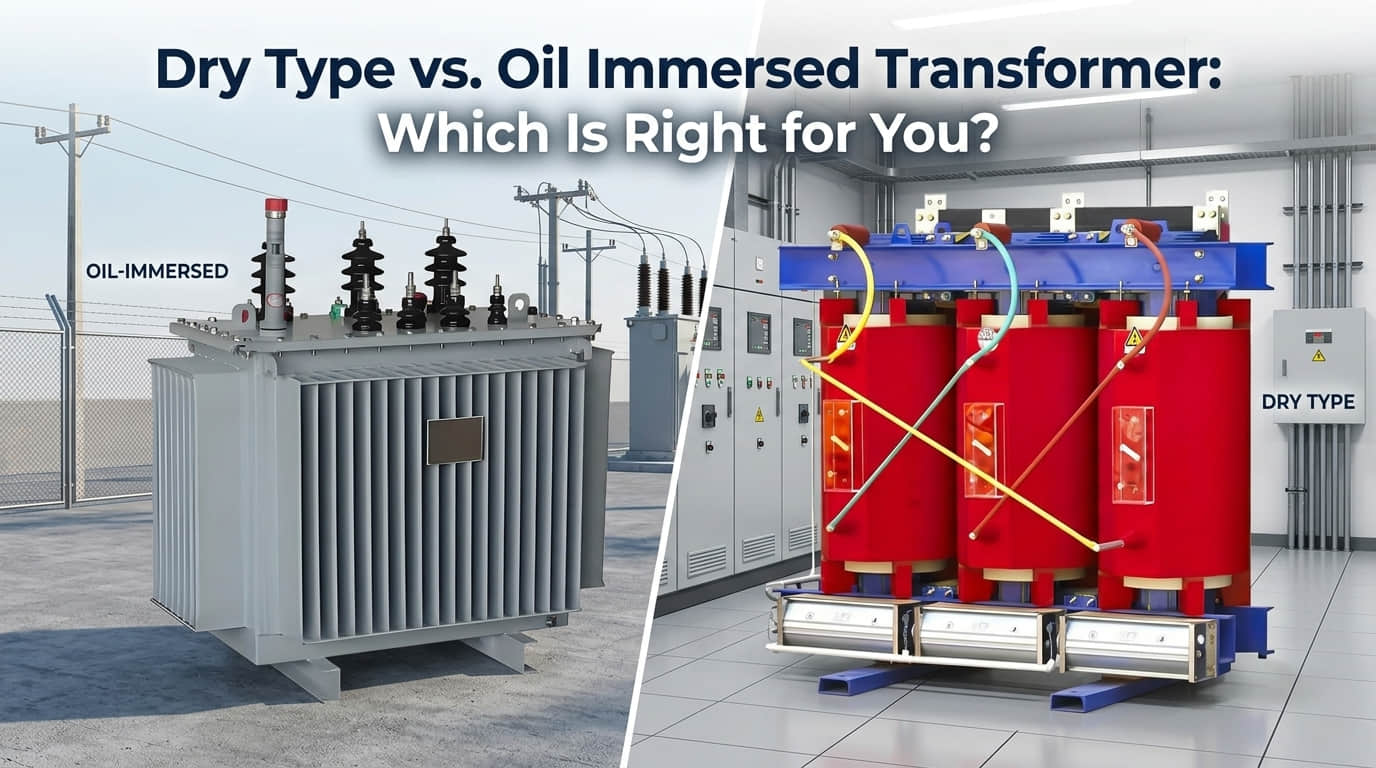
For higher voltage three-phase systems or when combined with medium-voltage gear like an oil-immersed transformer for 6–22 kV distribution, proper three-pole contactor selection becomes even more critical.
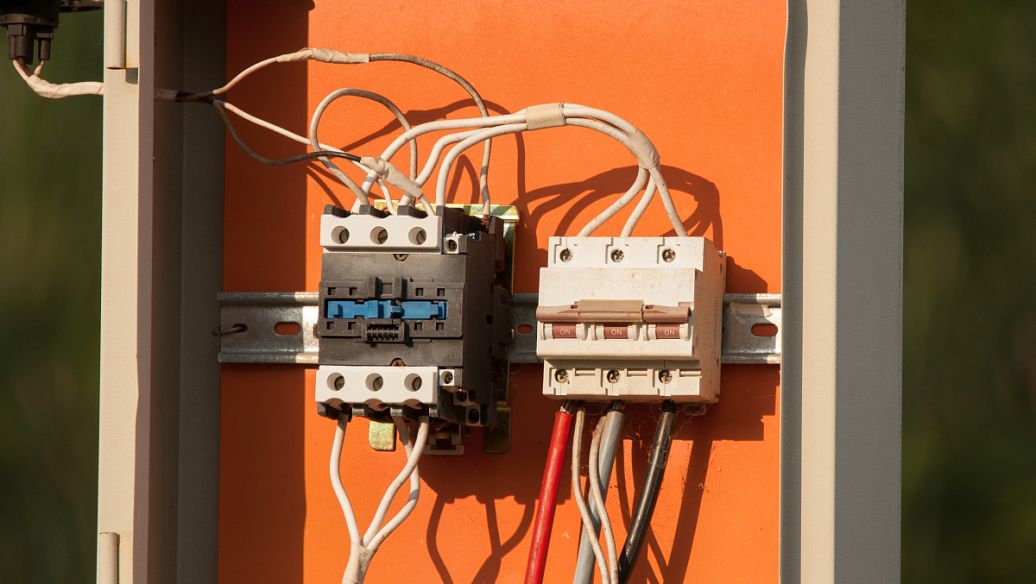
Four-pole AC contactor
A four-pole AC contactor adds an extra switched line, often used for:
Three-phase, four-wire systems where the neutral is also switched
Applications needing a switched neutral for safety or power quality
Dual circuit or backup control, where the 4th pole handles an extra load or interlock
Use a 4-pole AC contactor when:
Code or design requires neutral disconnection
You’re controlling two related circuits with one coil
You’re handling transfer or changeover functions where a neutral must follow the phases
Five pole and multi‑pole contactors
Multi pole contactors (5 poles and above) are more specialized. These show up in:
Complex motor starter schemes (e.g., star-delta starters)
Reversing and changeover setups where multiple directions or circuits are managed
Systems where you need multiple auxiliary power circuits tied to one control action
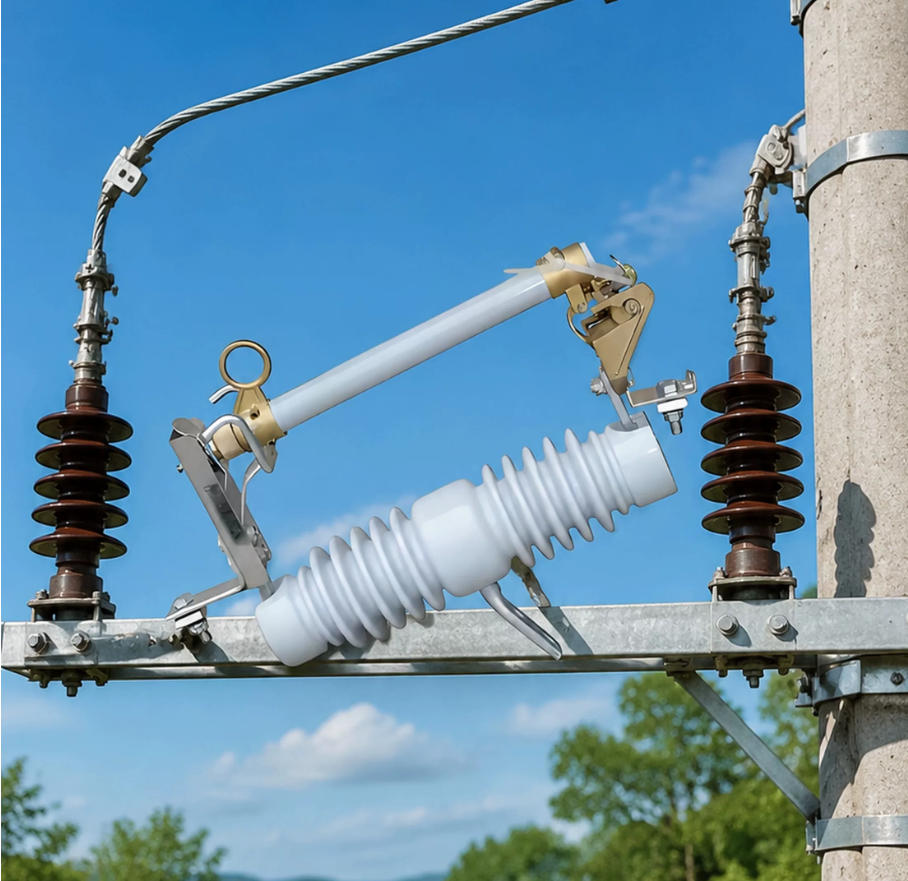
They’re common in engineered control panels and custom industrial machines, often alongside outdoor devices like a single-pole disconnect switch used for upstream isolation in distribution networks (similar to how an HDCR-12 outdoor single-pole disconnect switch works at higher voltages).
How to choose the right number of poles for your AC load
Use this quick logic for AC contactor poles:
Single pole AC contactor
Small, simple loads
One leg switching is acceptable
Double pole AC contactor
Standard for single-phase 240V HVAC, heat pumps, small pumps
You want full isolation of the load
Three pole AC contactor
Any three-phase motor or industrial load
Most commercial and industrial panels
Four pole AC contactor
Three-phase + neutral switching
Dual circuits or backup/transfer functions
Five pole or multi pole contactor
Special starters, complex motor circuits, custom machinery
For U.S. users, start with the system type (single-phase vs three-phase), then match the number of live conductors you need to open. That will tell you how many poles your alternating current contactor should have.
Types of AC Contactors by Utilization Category (IEC)
What IEC Utilization Categories Mean (AC‑1, AC‑2, AC‑3, AC‑4)
IEC utilization categories tell you what kind of load an AC contactor can safely handle and how often it can switch that load. For U.S. users working with IEC gear, these labels matter as much as amperage:
AC‑1 – non‑inductive or slightly inductive loads (mostly resistive)
AC‑2 – slip‑ring motor starting and stopping
AC‑3 – squirrel cage induction motors (start + run, no frequent reversing)
AC‑4 – severe motor duty (jogging, plugging, inching, frequent reversing)
When you match the utilization category to the real load instead of just looking at amps, your contactor runs cooler, lasts longer, and protects your motors and HVAC equipment better.
AC‑1 Contactors – Resistive Loads Only
AC‑1 contactors are built for:
Electric heaters and ovens
Simple power distribution panels
Resistive banks with low inrush and low switching stress
Why AC‑1 is not ideal for motors:
Motor loads have high inrush current and inductive kickback
AC‑1 contacts can overheat, pit, and weld when used on motors
You’ll see shorter electrical life and higher failure risk
Use AC‑1 only where the load is basically resistive and steady.
AC‑2 Contactors – Slip‑Ring Motor Duty
AC‑2 contactors are designed for:
Starting and stopping slip‑ring motors
Applications where you switch rotor circuits while starting
Where AC‑2 still shows up:
Older industrial plants with legacy slip‑ring motors
Heavy machinery upgrades where the motor type hasn’t changed
You won’t see AC‑2 much in new U.S. projects, but if you’re maintaining older gear, the AC‑2 marking tells you this contactor is sized for that specific slip‑ring motor duty.
AC‑3 Contactors – The Standard Motor Contactor
AC‑3 contactors are the workhorse for squirrel cage induction motors, which dominate HVAC and industrial systems in the U.S.
Typical AC‑3 uses:
Pumps (well pumps, booster pumps)
Fans and blowers (HVAC air handlers, exhaust fans)
Compressors (air compressors, refrigeration, A/C)
Conveyors and general industrial drives
AC‑3 vs AC‑1 – why it matters:
An AC‑3 rating at, say, 32 A is much tougher than 32 A AC‑1
AC‑3 is tested for motor starting inrush and interrupting running current
Using AC‑1 gear on an AC‑3 duty motor is a recipe for premature failure
If you’re building motor control panels or working on air conditioning systems, AC‑3 is usually the correct category. For systems with more complex switching or control power, pairing AC‑3 contactors with dedicated control power transformers keeps your control side stable and protected.
AC‑4 Contactors – Inching, Plugging, Reversing
AC‑4 contactors are for very rough motor duty, where you’re constantly switching under high stress:
Inching/jogging motors for positioning
Plugging (rapid reversing to brake the motor)
Frequent forward–reverse cycles
Typical AC‑4 applications:
Cranes and hoists
Elevators and lifts with high cycling
Heavy‑duty machine tools and positioning systems
If your motor is being switched many times per minute or reversed under load, AC‑3 is not enough. You need AC‑4 so the contactor can survive high arcing and thermal stress.
Other AC Utilization Categories – AC‑5 and Beyond
There are a few more IEC categories tailored for special loads:
AC‑5a / AC‑5b – lighting control (tungsten, fluorescent, LED with high inrush)
AC‑6 – transformer and capacitor switching
AC‑7, AC‑8, etc. – specific applications like household appliances or traction
For large lighting banks, an AC‑5 lighting contactor is built to handle the brutal inrush from tungsten and some LED drivers, making it a better choice than a general motor contactor for commercial lighting control.
How to Match Utilization Category to Your Load
Here’s a simple way to choose the right types of AC contactors by utilization category:
Resistive loads (heaters, ovens, simple panels): AC‑1
Standard motors (pumps, fans, compressors, conveyors): AC‑3
Heavy jogging, reversing, plugging motors (cranes, hoists): AC‑4
Slip‑ring motors: AC‑2
Lighting banks (LED, HID, tungsten): AC‑5 variants
Using the wrong category can lead to:
Overheating and nuisance trips
Welded or burned contacts
Shortened electrical life and unplanned downtime
In U.S. installations where safety and uptime matter—HVAC plants, industrial switchgear, or ring main units like a gas‑insulated metal‑enclosed system you’d see in a modern distribution setup (example of switchgear application)—getting the utilization category right is just as important as picking the correct amperage and voltage.
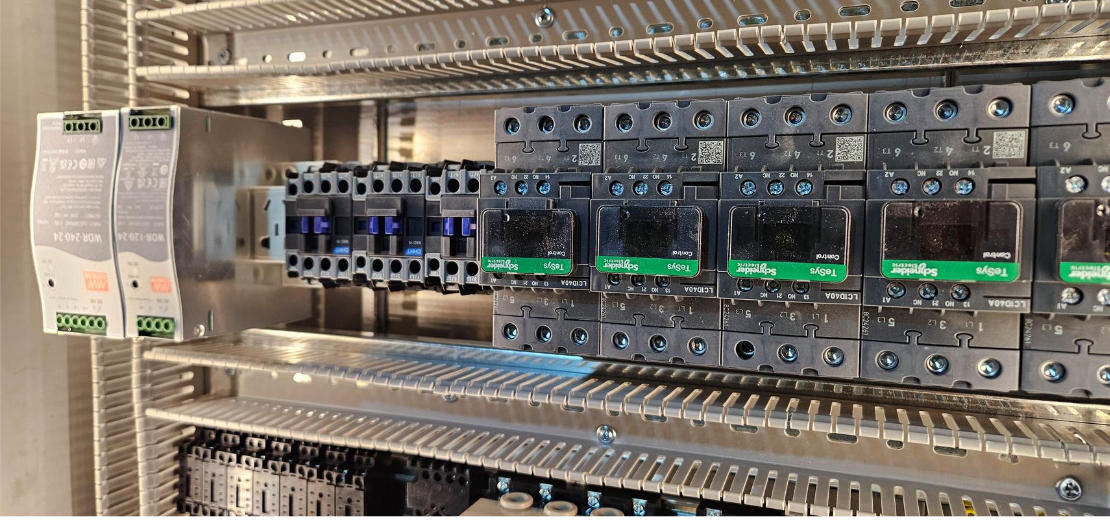
Types of AC Contactors by Application and Design
When you’re picking between types of AC contactors in the U.S. market, application matters just as much as amps and volts. Here’s how I break it down in real projects.
Definite Purpose AC Contactors
Definite purpose contactors are built for very specific jobs, not “one size fits all.”
What “definite purpose” really means
Designed and tested around a known duty: HVAC compressors, condenser fan motors, small pumps, light commercial loads.
Optimized for cost, size, and performance in that narrow range, not for every industrial application.
Typical uses
Residential and light commercial HVAC units
Fan motors, small blowers
Light-duty compressors and pumps
When they’re a smart choice
Use a definite purpose AC contactor when:
You know the exact load type (compressor, fan motor, etc.)
You need a compact, affordable contactor with standard coil voltages like 24V, 120V, or 240V
You’re replacing a residential AC contactor or small rooftop unit contactor
Lighting Contactors
Lighting contactors are all about safely switching high inrush lighting loads remotely.
Handling tungsten and LED inrush
Built for huge inrush currents from tungsten/halogen lamps
Rated for tough LED driver inrush that can destroy standard motor contactors
Often use special contact materials and pole configurations to handle frequent switching
Remote switching of large lighting banks
Perfect for:
Parking lot lighting
Gym, warehouse, or big box retail lights
Exterior façade and site lighting controlled from a low‑voltage panel or timeclock
Key differences vs standard motor contactors
Ratings based on AC‑5a / AC‑5b lighting duty, not just AC‑3 motor duty
More poles available for multiple circuits
Often quieter and designed for frequent on/off cycles
HVAC and Air Conditioning Contactors
HVAC contactors are one of the most common types of AC contactors you’ll touch in the U.S.
Built for compressor and blower control
Designed to handle:
Locked‑rotor current on compressor motors
Continuous duty on blower and condenser fan motors
Common in packaged units, split systems, heat pumps, and RTUs
Single-phase vs three-phase setups
Single‑phase contactors (1 or 2 pole)
Typical for residential 1–5 ton units
Often 24V coil from the thermostat
Three‑phase contactors (3 pole)
Used in commercial rooftop units, chillers, and larger heat pumps
Coil may be 24V, 120V, or 230V depending on the control system
How to size a contactor for an air conditioner
Match or exceed:
Compressor RLA/LRA (Rated Load Amps / Locked Rotor Amps)
Voltage and phase (single phase vs three phase)
AC‑3 motor duty rating, not just “resistive” amps
Add margin if the unit runs in hot climates or cycles frequently
Vacuum AC Contactors
Vacuum AC contactors show up once you get into medium voltage and tougher duty cycles.
How vacuum contactors break the arc
The arc is interrupted inside a sealed vacuum bottle, not in open air
This gives:
Faster arc extinction
Very low contact wear
Minimal external contamination
Where they’re used
Medium voltage motors (mining, water plants, industrial fans)
Capacitor banks and power factor correction at higher voltages
High duty cycle or critical systems where downtime is expensive
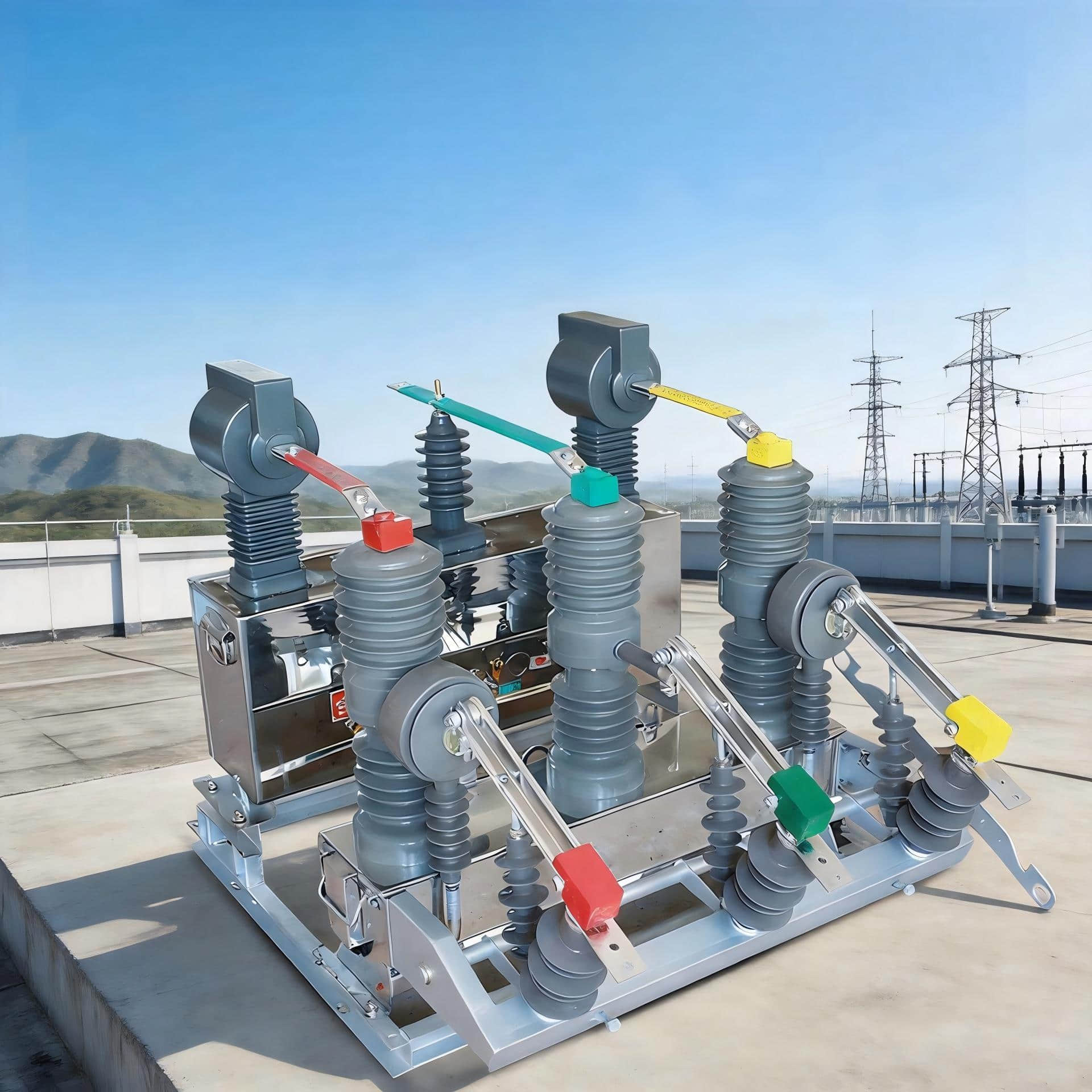
Vacuum switching tech is also used in higher‑voltage gear like an outdoor high‑voltage vacuum circuit breaker for utility and distribution protection, which complements medium‑voltage contactor systems in larger facilities: ZW32 35kV outdoor vacuum breaker.
Benefits
Long electrical life
Less maintenance vs air‑break contactors
Very low arc flash risk inside the sealed chamber
Capacitor Switching Contactors
Capacitor switching contactors are built for power factor correction and capacitor banks.
Why they need inrush limiting
Capacitors draw extremely high inrush current when energized
Proper capacitor contactors use:
Pre‑charge resistors or
Inrush limiting reactors
to protect the contacts and limit stress on the system
Typical applications
Power factor correction banks in commercial and industrial panels
Harmonic‑rich systems where capacitors are switched in and out with load changes
Utility and large facility distribution setups
Other Special Purpose AC Contactors
A few more types of AC contactors you’ll see in motor control and automation.
Reversing and changeover contactors
Reversing contactors: two mechanically interlocked contactors to swap motor phases and reverse rotation
Changeover contactors: switch between two sources or two loads (e.g., normal/emergency circuits)
Motor starter combinations
Motor starter contactors are usually paired with:
Thermal overload relays
Soft starters or VFD bypass circuits
Common in pumps, conveyors, compressors, and fans where you need overload protection and controlled starting
If you’re building or upgrading control panels in the States, choosing the right type of AC contactor by application and design is just as important as picking the right amps and poles. It’s the difference between a system that just “works” and one that stays reliable for years.
How to Choose the Right AC Contactor
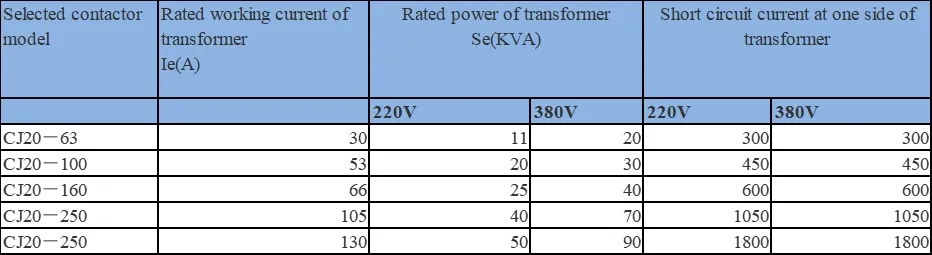
Picking the right type of AC contactor isn’t hard if you walk through a simple checklist. Here’s how I’d size and select one for HVAC, motors, lighting, or general AC loads in the U.S.
1. Match Voltage and Current Ratings
Get these wrong and everything else falls apart.
a) Coil voltage vs. load voltage
These are NOT the same thing:
| Item | What it feeds | Typical values (U.S.) |
|---|---|---|
| Coil voltage | Control side (thermostat, relay, PLC) | 24V AC, 120V AC, 208–240V AC, 277V AC |
| Load voltage | Power side (compressor, fan, heater) | 120V, 208–240V, 277V, 480V, 600V |
Match the coil voltage to your control circuit (24V in most residential HVAC).
Match the load rating to your line voltage and phase (ex: 240V single‑phase, 480V three‑phase).
b) Current rating and overload margin
Use the FLA/RLA on the motor or HVAC nameplate as the baseline.
Add 20–25% margin so the contactor runs cool and lasts longer.
For compressors or heavy motors, always check the AC‑3 or “horsepower” rating, not just the amp number.
2. Pick the Right Number of Poles
Poles = how many separate circuits the contactor can switch at once.
| Pole type | Typical use in the U.S. |
|---|---|
| Single pole AC contactor | Some residential condensing units, simple 120V loads |
| Double pole AC contactor | Most 240V single‑phase air conditioners and heat pumps |
| Three pole AC contactor | Three‑phase motors, small industrial machines |
| Four pole AC contactor | Three‑phase + neutral, dual circuits, backup switching |
Single‑phase systems (120/240V): 1‑pole or 2‑pole, depending if you want to break one leg or both.
Three‑phase systems (208/230/460/480V): Almost always 3‑pole, sometimes 4‑pole when you need neutral switching or two loads on one coil.
3. Match the Utilization Category (AC‑1, AC‑3, AC‑4)
This is where IEC ratings really matter.
| Category | Best for | Avoid using on |
|---|---|---|
| AC‑1 | Resistive loads (heaters, ovens, simple distribution) | Direct motor starting |
| AC‑3 | Standard squirrel cage motors (pumps, fans, compressors, conveyors) | Heavy plugging/jogging |
| AC‑4 | Inching, plugging, frequent reversing (cranes, hoists, lifts) | Simple heater or light duty loads |
Motors and HVAC compressors → go AC‑3.
Heaters and resistive loads → AC‑1 is fine.
Cranes, hoists, high‑cycle reversing → you need AC‑4.
If you pick the wrong category:
Contacts pit, burn, or weld much faster.
You’ll see nuisance trips, overheating, and premature failure.
Motors and compressors end up at risk if the contactor sticks or fails open under load.
4. Check Environmental and Installation Conditions
Where the contactor lives matters:
Ambient temperature: High temps reduce amp rating. Check the derating curve in the data sheet.
Altitude: At higher elevation, air cools less. Again, derating applies on industrial systems.
Duty cycle:
Infrequent starts = standard contactor is fine.
High start frequency = choose a heavier‑duty or vacuum type.
Enclosure / environment:
| Condition | What to look for |
|---|---|
| Dusty / dirty | Higher IP or NEMA enclosure, sealed panel |
| Damp / coastal / corrosive | Corrosion‑resistant hardware & terminals |
| Indoor industrial control | Standard NEMA 1 or IP20 inside a cabinet |
Consider noise level if it’s near occupied spaces (some coils hum louder than others).
Confirm the allowed mounting position (most can be vertical; side‑mounted sometimes needs derating).
While contactors are low voltage compared to devices like a medium voltage current transformer, the same idea applies: match the equipment to the environment so you don’t cook it in the field.
5. Control & Accessory Options
Plan for how the contactor will integrate into your control system.
Auxiliary contacts (NO/NC) for:
Interlocks between forward/reverse contactors
Status feedback to PLCs, BAS, or alarms
Mechanical interlocks for reversing sets so both contactors can’t close at the same time.
Surge suppressors / RC snubbers across the coil to:
Protect thermostats, relays, and PLC outputs
Cut coil noise and contact bounce
Add‑on blocks for extra aux contacts or timing functions.
6. Life Expectancy and Maintenance
Two separate ratings:
| Type of life | What wears it out |
|---|---|
| Mechanical life | Number of operations (no load) |
| Electrical life | Operations under real load and arcing |
Watch for:
Burned or pitted contacts
Humming/chattering coils
Hot or discolored terminals
If a contactor is failing electrically (welded contacts, heavy pitting, insulation damage), replace it, don’t “fix” it. Swapping a tired HVAC contactor early is cheaper than losing a compressor.
7. Brand, Certification, and Compatibility
For the U.S. market, I always check:
UL / cUL / CSA listings
Short‑circuit ratings that match or exceed the panel’s SCCR
Mechanical dimensions that drop into existing control panels and starter buckets
Coil and accessory compatibility with your current control scheme
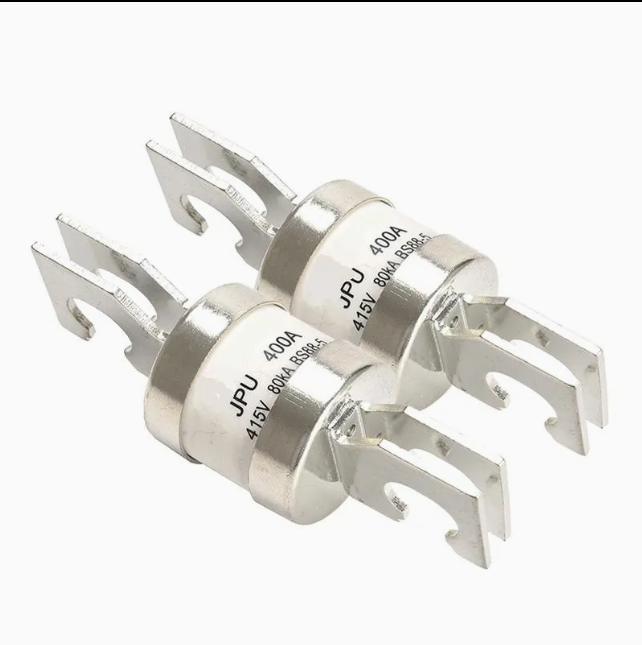
If you’re working in panels with other medium‑voltage or protection devices (like fuse cutouts or specialized switches), consistency in brand and ratings makes coordination and sourcing simpler. For high‑reliability setups, I match the contactor quality to the rest of the protection gear, just like you would when specifying a high‑voltage grounding switch.
When in doubt, overspec slightly on current, pick the correct utilization category for the real load, and keep coil and load voltages straight. That alone prevents most AC contactor headaches.
Common Problems and Maintenance for AC Contactors
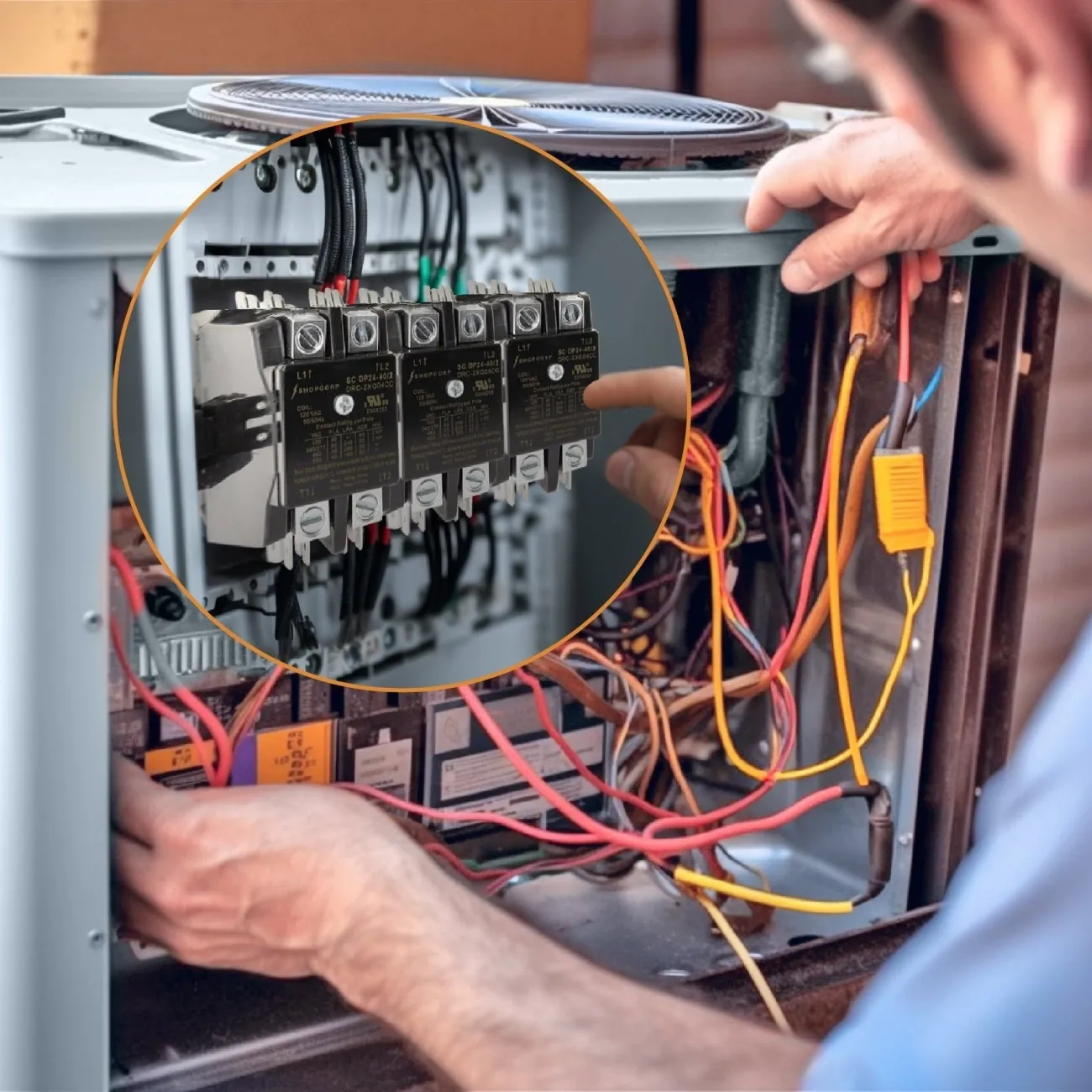
Keeping AC contactors in good shape is one of the easiest ways to protect motors, HVAC compressors, and fan loads. Here’s what usually goes wrong and what you should stay on top of.
Typical Failure Signs on AC Contactors
Watch and listen for these red flags:
Humming coils, chattering, and buzzing
Coil voltage doesn’t match the contactor coil rating (24V, 120V, 208–240V, etc.).
Loose control wiring or weak control voltage.
Dirt or rust on the moving iron core so the armature can’t pull in fully.
Burned, pitted, or welded contacts
Repeated high inrush current from motors or HVAC compressors.
Wrong utilization category (using an AC‑1 contactor on an AC‑3 motor load).
Contacts overheating until they weld shut, causing the load to stay ON.
Overheating terminals and discoloration
Loose lugs, undersized wire, or poor crimps.
Corrosion or oxidation raising contact resistance.
Hot spots around terminals, browning plastic, or a burnt smell around the contactor.
If you see or hear any of this on a residential AC contactor, don’t ignore it—damage tends to spread to motors and control boards next.
Basic Maintenance Steps for AC Contactors
For most U.S. installations, a quick visual and torque check during routine service goes a long way:
Tighten lugs and verify torque
De‑energize the circuit.
Re‑torque line and load terminals to the manufacturer’s spec.
Clean dust and check for corrosion
Blow out or vacuum dust from the contactor and panel.
Look for rust, green/white corrosion on terminals and bus bars.
Inspect contact wear and coil condition
Check contacts for deep pitting, uneven wear, or signs of welding.
Look for cracked, swollen, or overheated coils and insulation.
Confirm the coil voltage marking matches your control voltage.
Use these checks alongside broader panel inspections for insulation and switching integrity, similar to what’s done on higher‑voltage gear like an outdoor vacuum circuit breaker.
When to Repair vs. Replace an AC Contactor
In the U.S. market, where labor often costs more than the part, I treat most low‑voltage AC contactors as replace‑not‑repair items:
Repair (limited cases)
Light contact discoloration, no deep pitting.
Slight humming fixed by tightening control wiring or correcting coil voltage.
Replace immediately
Welded contacts or contacts worn past the manufacturer’s wear line.
Melted plastic, heavy pitting, or arcing damage.
Coil burned, cracked, or pulling excessive current.
Terminals burned or the base is deformed.
If the contactor looks questionable and it’s running a compressor or pump you rely on, replacement is cheap insurance.
Safe Checks a Tech or Electrician Should Do
Any inspection or troubleshooting on an alternating current contactor needs to follow basic electrical safety:
Lockout/tagout the circuit.
Verify zero voltage with a meter, not just by flipping a breaker.
Use insulated tools and PPE appropriate to the panel voltage.
Check line voltage, coil voltage, and load current after re‑energizing.
Homeowners should let licensed electricians or HVAC techs handle these checks—there’s real fault energy even at 240V.
Why Replacing a Worn AC Contactor Protects Motors and HVAC Units
Running a motor or HVAC system on a worn contactor is asking for bigger failures:
Voltage drop across bad contacts makes motors run hot and draw more current.
Chattering contactors pound windings and electronics with repeated starts.
Welded contacts can lock a compressor or fan ON, overheat the system, and trip breakers or damage wiring.
Swapping a tired residential AC contactor or fan motor contactor out early is cheap, quick, and often extends the life of the compressor, blower motor, or pump by years.
Brand Example: WEISHO AC Contactors
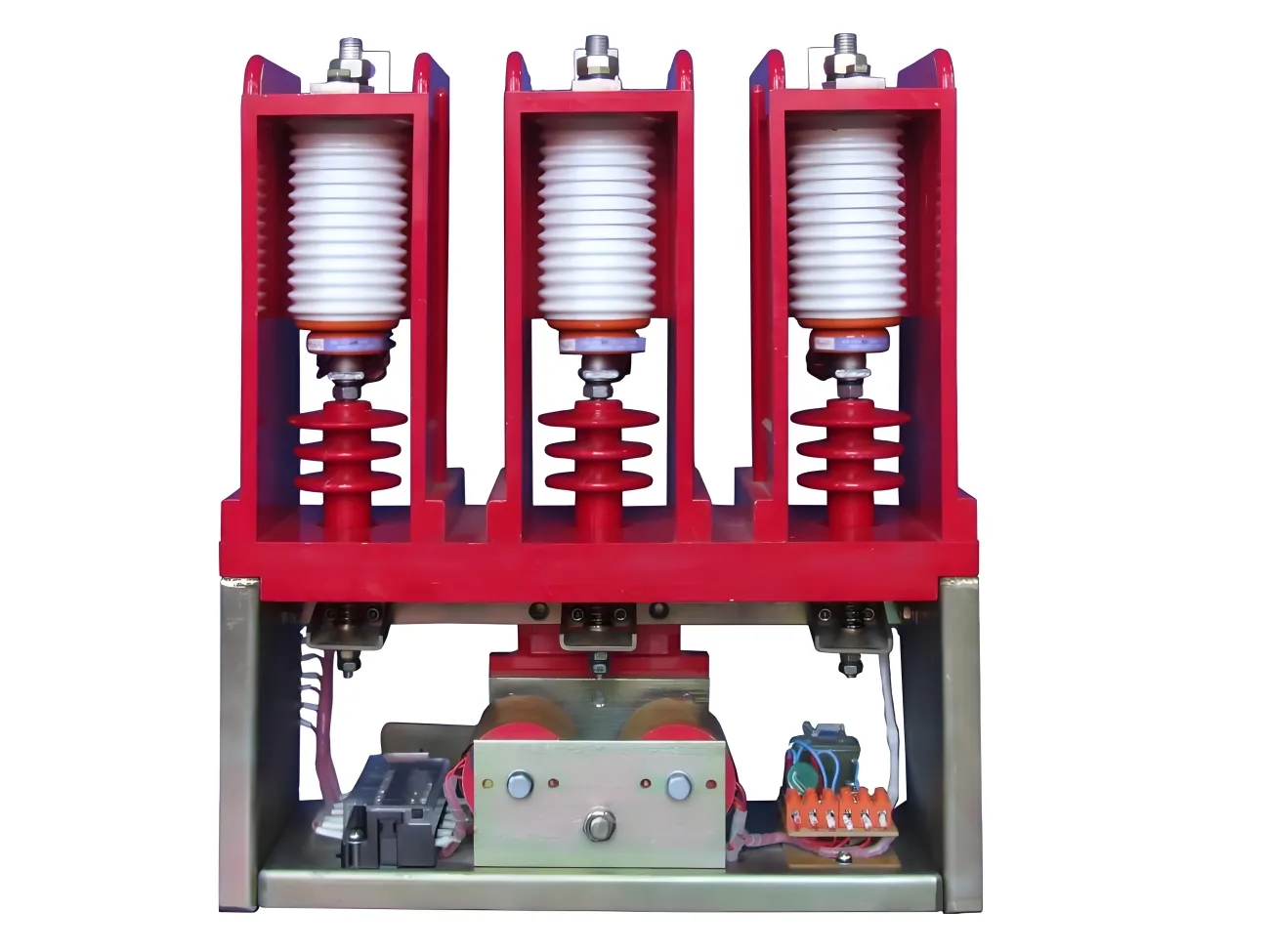
WEISHO AC contactor range by poles and ratings
With WEISHO AC contactors, I cover the common setups most U.S. contractors actually use in the field:
Single pole and double pole AC contactors for residential and light commercial HVAC (1–3 tons, up through larger split systems).
Three pole and four pole AC contactors for three‑phase motors, rooftop units, light industrial pumps, and fans.
Current ratings are available from 20A up to heavy-duty motor sizes, with coil voltage options like 24V, 120V, and 230V to match standard U.S. control circuits.
This lets you match poles and amp rating to the load instead of forcing one “universal” part that’s never quite right.
Options for HVAC, lighting, and industrial motors
I designed the WEISHO line to cover the three big application groups:
HVAC contactors – definite purpose contactors for compressors, condenser fans, and blowers in air conditioners and heat pumps.
Lighting contactors – built to handle high inrush from LED and tungsten loads, ideal for parking lots, gyms, and retail lighting banks.
Industrial motor contactors – three‑pole and multi‑pole AC contactors that fit standard motor starters, conveyors, pumps, and compressors.
For higher‑level protection in the same ecosystem, I also offer medium‑voltage solutions like our outdoor high-voltage vacuum circuit breakers, which pair well with downstream motor and capacitor contactors.
Certifications, safety, and quality checks
For the U.S. market, I focus on:
Compliance with major standards (IEC/EN and other international benchmarks), so you’re not guessing about performance.
Routine factory testing for coil operation, contact pressure, dielectric strength, and temperature rise.
Batch quality checks to make sure contactors hold up in real HVAC rooms, rooftops, and industrial panels, not just in a lab.
That way, the contactor doesn’t become the weak link in an otherwise solid system.
Why choose WEISHO for AC and factory gear
If you’re running a service truck, building panels, or maintaining a plant, WEISHO AC contactors give you:
Straightforward selection – clear pole counts, utilization ratings, and coil voltages printed and documented.
Good value for duty – designed for frequent cycling in HVAC and motor duty without burning up prematurely.
Compatibility – terminal layouts and mounting options that drop into common U.S.-style control panels.
The goal is simple: reliable alternating current contactors that keep compressors, fans, and motors running without surprises.
Fit in starter and control panel setups
WEISHO contactors are built to drop right into standard control gear:
Work with overload relays, manual disconnects, and soft starters in typical motor starter combinations.
Fit easily into NEMA or IEC-based control panels with DIN rail or base mounting options.
Support auxiliary contacts and interlock accessories so you can build reversing starters, changeover schemes, and remote signaling without hunting for odd parts.
Whether you’re replacing a residential AC contactor or designing a new factory control panel, the WEISHO line is set up to be plug‑and‑play, dependable, and easy to standardize across your jobs.
FAQs on Types of AC Contactors
AC‑1 vs AC‑3 contactor rating – what’s the difference?
| Item | AC‑1 Contactor | AC‑3 Contactor |
|---|---|---|
| Typical load | Resistive (heaters, ovens, simple loads) | Squirrel‑cage motors (pumps, fans, compressors) |
| Switching stress | Low | High (motor inrush and breaking) |
| Use on motors? | Not recommended | Yes, designed for across‑the‑line motor starting |
If you’re running motors (HVAC compressor, fan motor, pumps), you want an AC‑3 motor duty contactor, not AC‑1.
How many poles for a typical air conditioner?
For most US residential systems:
| System type | Typical AC contactor poles |
|---|---|
| 240 V single‑phase condenser | 2‑pole (double pole) |
| 120 V window unit / small load | 1‑pole or internal relay |
| 3‑phase commercial rooftop unit | 3‑pole |
Rule of thumb:
Single‑phase 240 V → 2‑pole AC contactor
Three‑phase → 3‑pole AC contactor
Can I use a definite purpose AC contactor on general motor loads?
Yes, as long as:
It has the right horsepower and AC‑3 rating at your voltage
The coil voltage matches your control circuit
It meets local UL / NEC requirements
Definite purpose AC contactors are very common in HVAC compressor contactor and fan motor contactor applications across the US because they’re compact, cost‑effective, and easy to swap.
Standard coil voltages for AC contactors
Common coil voltage options you’ll see:
| Coil Voltage (AC) | Typical Use |
|---|---|
| 24 V AC | Residential/light commercial HVAC |
| 120 V AC | Control from the standard US branch circuit |
| 208/240 V AC | Direct from the line in small panels |
| 277 V AC | Lighting control |
Always match coil voltage to your control circuit, not the motor or line voltage.
Typical lifespan of an AC contactor
In normal HVAC and motor service:
Mechanical life: Often in the millions of operations
Electrical life: Commonly hundreds of thousands of operations under-rated load
In US residential HVAC, a good air conditioning contactor often lasts 8–15 years, depending on cycling rate, heat, and maintenance.
Watch for humming, pitted contacts, or overheating lugs as signs that it’s time to replace.
Can you replace a single-pole contactor with a double-pole contactor?
Yes, in many cases, if:
Voltage and amp rating are equal to or higher than
Coil voltage is correct
Wiring is updated correctly (both hot legs switched instead of one)
Many techs upgrade older single-pole AC contactors to double-pole to fully isolate the load when off. Always follow NEC and equipment manufacturer guidance.
Can one contactor handle both compressor and fan loads?
Sometimes, but you must check:
Total FLA (full load amps) of compressor + fan
LRA (locked rotor amps) of the compressor
Contactor’s AC‑3 rating at that voltage
On most split systems, the HVAC compressor contactor only switches the compressor; indoor and outdoor fans are often on separate relays or boards for better protection and control. For larger systems and motor control centers, we usually keep one motor per contactor.
Do vacuum contactors replace low-voltage contactors in small systems?
No. Vacuum AC contactors are mainly for:
Medium voltage motors
Capacitor banks and power factor correction
High‑duty industrial switching is often paired with vacuum circuit breakers like an indoor vacuum breaker for 11 kV class systems.
For low‑voltage residential and light commercial systems (120–480 V), we still use standard air‑break AC contactors and definite purpose contactors because they’re cheaper, smaller, and perfectly suited for typical HVAC and motor loads.