A wrongly selected Potential Transformer fuse rarely fails quietly. It shows up as unexplained fuse blowing during energization, dead metering circuits, missing voltage inputs to relays, or worse, a damaged voltage transformer that should have been isolated earlier.
In real switchgear work, this is not a textbook problem. It is a downtime problem, a misoperation problem, and often a credibility problem for the engineer who signed off the panel.
I have seen this most often in medium-voltage panels where the team treated the PT like a tiny load and picked the fuse from nominal VA alone. On paper the current looked microscopic. In service, the fuse did not agree.
The Core Problem — Why Selecting a Fuse for a Potential Transformer Is More Complex Than It Looks
Voltage transformer fuse sizing is different from ordinary load protection because the normal primary current is extremely small, while the energization transient can be disproportionately high.
That creates a strange protection challenge. The fuse must survive normal energization and transient magnetizing current, but still clear a genuine internal PT fault before upstream protection takes out a larger section of the system.
On top of that, primary fuse selection for potential transformers must account for available short-circuit current, switchgear design, relay voltage continuity, and local utility practice. That is why simplistic rules often fail in the field.
What a Potential Transformer Fuse Must Actually Protect
The fuse is not there only to “match the VA.” Its real job is broader.
Protect the voltage transformer itself from internal faults and abnormal thermal stress.
Isolate faults locally so bus or feeder protection does not trip unnecessarily.
Limit arc energy inside metal-clad or enclosed equipment.
Preserve metering and protection continuity as much as possible during non-fault disturbances.
In practice, those goals conflict. A very small fuse may improve sensitivity but nuisance blow on energization. A large fuse may ride through inrush but fail to isolate an internal fault fast enough.
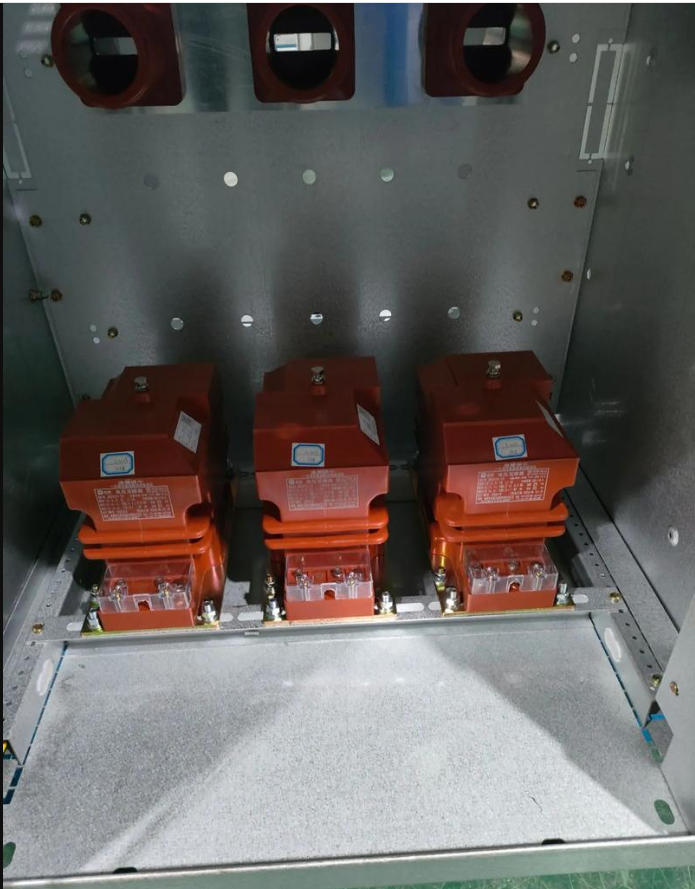
How to Select a Fuse for a Potential Transformer Step by Step
This is the method I recommend for design reviews, retrofit panels, and commissioning checks. It reflects how I have actually seen PT fuse decisions made in plants and substations, not just how they are presented in theory.
Step 1 — Collect the Minimum Nameplate and System Data
Before choosing any fuse, collect the inputs that actually drive the decision.
Rated primary voltage
PT burden in VA
Accuracy class
Frequency
Insulation level / BIL
Connection type
Grounded or ungrounded system details
Available fault current at the installation point
Upstream breaker or relay settings
Secondary fuse and wiring arrangement
If one of these is missing, the selection becomes guesswork. In retrofit projects, available fault current is often the missing value.
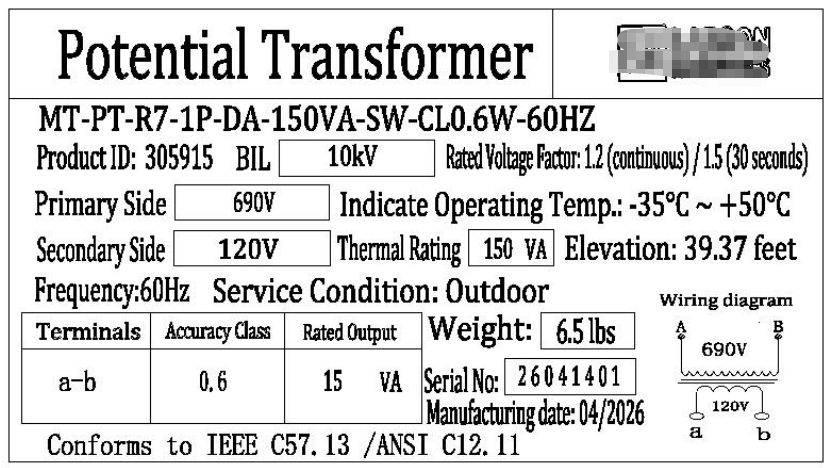
Step 2 — Calculate Voltage Transformer Primary Current Correctly
The base calculation is simple:
Primary current (A) = burden VA / primary voltage (V)
This is the essential voltage transformer primary current calculation. It gives the normal steady-state current, not the full fuse decision by itself.
Example: for an 11 kV PT with 100 VA burden, the primary current is 100 / 11000 = 0.0091 A, or about 9.1 mA.
That tiny number is exactly why engineers unfamiliar with instrument transformers often make bad fuse choices. The nominal current looks too small to be taken seriously, but the transient behavior is what dominates the fuse decision.
Step 3 — Account for Inrush and Transient Magnetizing Current
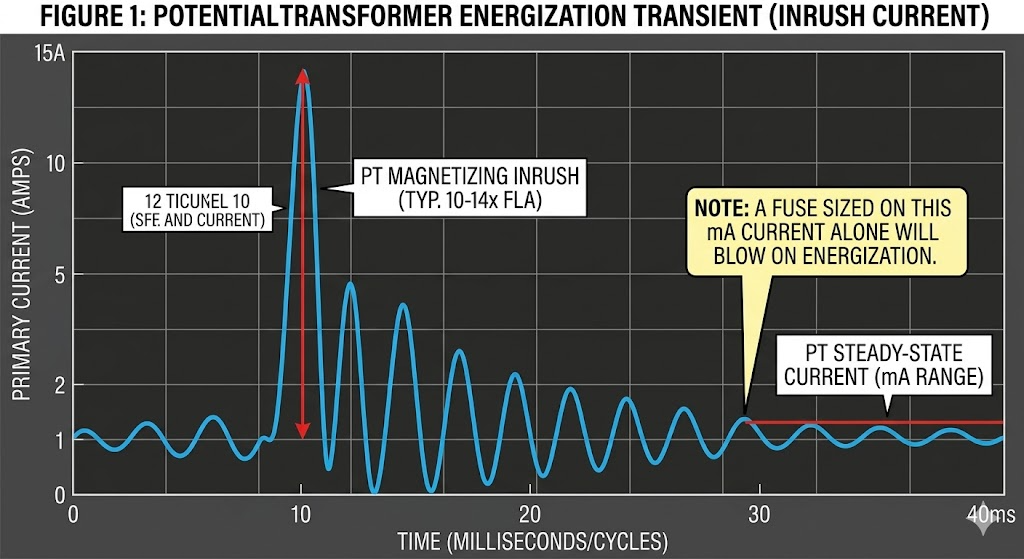
This is where many field failures begin. A fuse sized only on normal current can blow at energization because PT magnetizing inrush may be many times the steady-state current for a short duration.
In older switchgear, I have measured the practical problem indirectly through repeated replacement history: same panel, same burden, same operator complaint, always after switching events. In one 11 kV lineup I reviewed during a shutdown, the PT itself tested fine twice, but the installed fuse link was simply too tight on transient margin. The issue was not overload. It was transient survival margin. In a more specific case, while reviewing an 11 kV metering-and-protection panel on a 2022 Malaysia MRT support substation project, we saw repeated PT primary fuse operations after routine re-energization. The burden calculation looked acceptable, but the OEM curve check showed the selected link had too little margin for the actual switching duty of that lineup.
Frequent switching, ferroresonance-prone arrangements, and harmonic-rich systems make this worse. That is why fuse time-current curves matter more than the nominal current alone.
Step 4 — Choose Primary Fuse Selection for Potential Transformers by Application
Primary fuse selection for potential transformers should reflect how the PT is being used.
Metering-only PTs: continuity matters, but the burden is usually modest. Fuse choice often prioritizes reliable ride-through of energization.
Protection-only PTs: relay availability under abnormal conditions becomes critical. Unnecessary fuse operation can create false undervoltage or directional element issues.
Mixed-use PTs: these are the most sensitive cases because both metering continuity and relay performance matter.
In mixed relay-metering panels, teams often oversize the primary fuse to avoid nuisance operation. That may reduce maintenance calls, but it increases the risk of delayed isolation during an internal PT fault.
Step 5 — Check Protection Coordination for Instrument Transformer Fuses
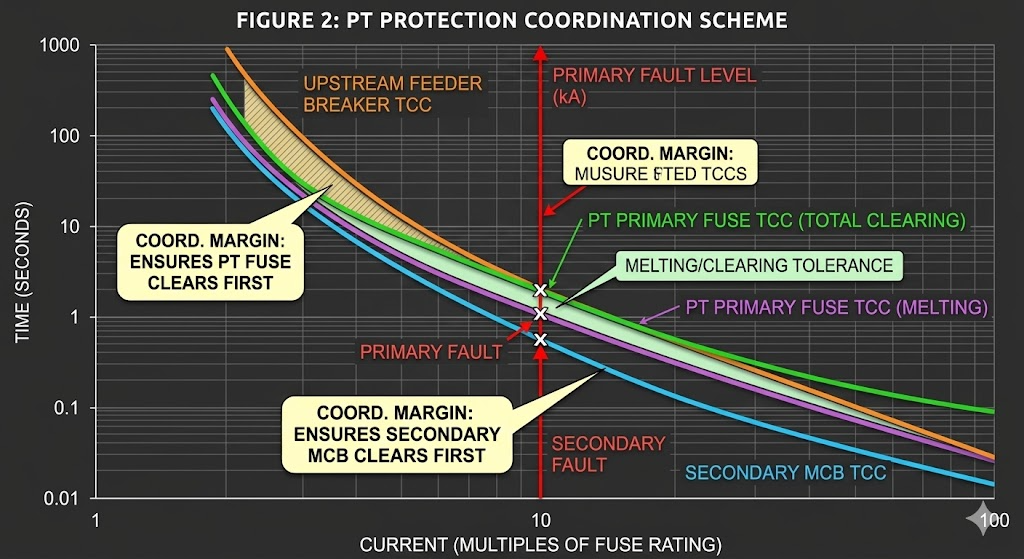
Protection coordination for instrument transformer fuses is routinely skipped in smaller projects, and that is a mistake.
The PT fuse should operate as intended without being preempted by feeder or bus protection for a local PT fault, as far as system design allows. At the same time, secondary problems should not unnecessarily force primary isolation.
Review:
Upstream breaker protection curves
Bus differential or feeder relay logic
Secondary fuse or MCB characteristics
PT thermal withstand and manufacturer application notes
Step 6 — Verify High Rupturing Capacity Fuses for Voltage Transformers
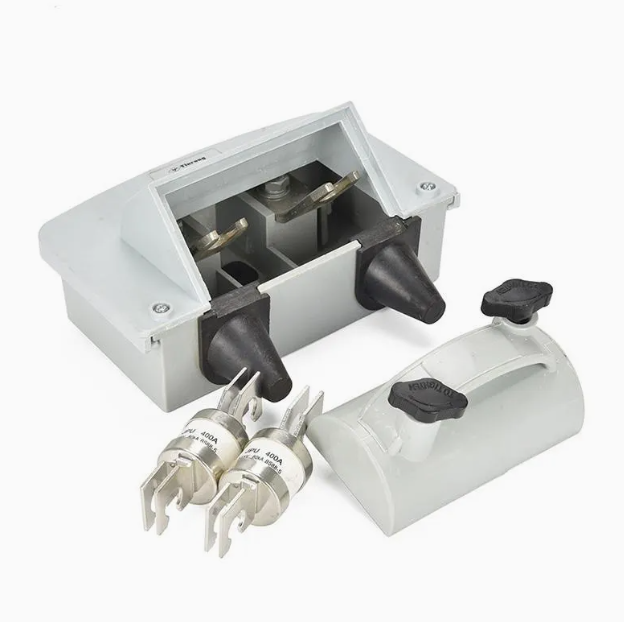
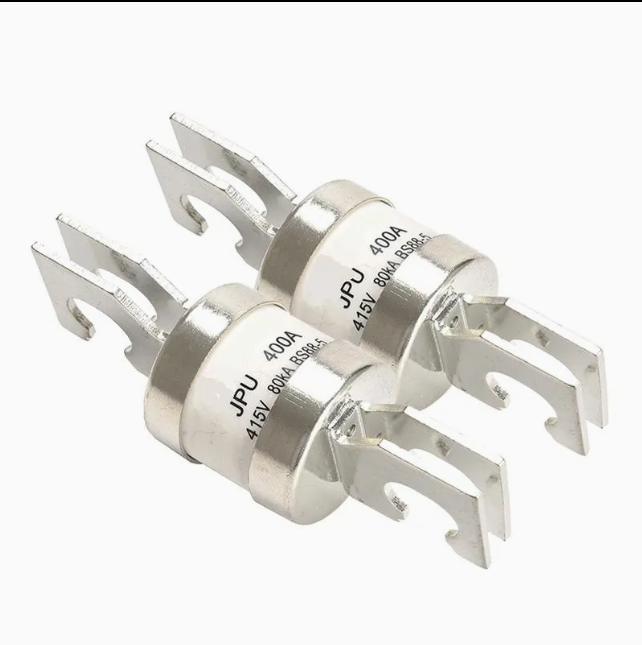
High rupturing capacity fuses for voltage transformers are often mandatory in medium-voltage systems where available fault current exceeds the interrupting capability of ordinary fuses.
This is not an optional check. Installing a fuse with inadequate breaking capacity in higher fault-current networks can turn a protective device into a hazard source.
In utility and industrial MV practice, this point is frequently controlled by switchgear OEM requirements. If the panel design calls for current-limiting or HRC fuse links, do not substitute casually.
Step 7 — Validate Against Utility, Manufacturer, and Project Guidance
Final selection should always be cross-checked against the applicable project rules and the OEM’s published curves.
In my own work, I treat generic standards as background and manufacturer data as the decision point. If the switchgear builder or PT manufacturer gives a tested fuse range, that usually tells you more than a broad rule taken out of context.
Where there is a conflict between a generic rule and the manufacturer time-current curve, use the manufacturer data unless the system study proves otherwise.
Potential Transformer Fuse Sizing Formula and Quick Rules
If you need the short answer, start here. Then verify with curves and coordination.
Primary Current Formula for a Potential Transformer
Primary current (A) = burden VA / primary voltage (V)
Example: 50 VA / 6600 V = 0.0076 A.
Typical Fuse Sizing Rule of Thumb
Select a primary fuse rated above the normal primary current, but with enough transient tolerance to survive expected inrush and switching conditions.
In practice, engineers usually choose from standard fuse ratings validated by OEM time-current curves, not by arithmetic alone.
Why Rule-of-Thumb Sizing Alone Is Dangerous
Rule-of-thumb methods ignore burden growth, ferroresonance risk, panel-specific fault level, and relay continuity requirements.
I have seen nearly identical 11 kV PT panels require different fuse decisions because one was in a low-fault indoor MCC lineup and the other sat on a stiffer bus with more severe switching duty. Same voltage. Different reality.
Data Table — Potential Transformer Primary Current Examples
Table: Example Voltage Transformer Primary Current Calculation
| PT Primary Voltage | Burden VA | Formula | Calculated Primary Current | Field Note |
|---|---|---|---|---|
| 11 kV | 100 VA | 100 / 11000 | 0.0091 A | About 9.1 mA; very easy to undersell the importance of inrush |
| 6.6 kV | 50 VA | 50 / 6600 | 0.0076 A | About 7.6 mA; common in compact MV metering applications |
| 33 kV | 100 VA | 100 / 33000 | 0.0030 A | Only 3.0 mA; nominal current is tiny compared with fault duty concern |
| 13.8 kV | 150 VA | 150 / 13800 | 0.0109 A | Approx. 10.9 mA; mixed relay and metering burdens often land here |
| 22 kV | 200 VA | 200 / 22000 | 0.0091 A | Current remains small even with larger burden |
Data Table — Practical Fuse Selection Range by System Voltage and Burden
Table: Indicative Primary Fuse Selection for Potential Transformers
| System Voltage | PT Burden | Calculated Primary Current | Typical Fuse Range | Engineering Caution Note |
|---|---|---|---|---|
| 6.6 kV | 50 VA | 0.0076 A | 0.5 A to 1 A, subject to OEM curve | Check nuisance operation if switching is frequent |
| 11 kV | 100 VA | 0.0091 A | 0.5 A to 1 A, sometimes 2 A in specific OEM designs | Do not upsize casually to “solve” inrush without fault review |
| 13.8 kV | 150 VA | 0.0109 A | 1 A to 2 A depending on transient duty and HRC requirement | Mixed-use relay applications need tighter coordination review |
| 22 kV | 100 to 200 VA | 0.0045 A to 0.0091 A | 1 A to 2 A HRC fuse often considered | Breaking capacity becomes as important as ampere rating |
| 33 kV | 100 VA | 0.0030 A | 1 A to 2 A, strongly OEM- and utility-dependent | Use utility standards and insulation coordination review |
Important: These are indicative field ranges, not universal prescriptions. Exact selection depends on fuse curves, fault level, PT construction, and panel design.
Field Reality — What Engineers Commonly Get Wrong
When I compare maintenance reports, commissioning notes, and day-to-day troubleshooting questions from the field, the same pain points keep surfacing. The wording changes, but the mistakes are remarkably consistent.
Mistake 1 — Selecting the Fuse Based Only on Steady-State VA
One common question is: “The math says the current is only a few milliamps, so why is the fuse blowing?” In my experience, that almost always points to ignored magnetizing inrush or switching transients.
I have seen repeated replacement of PT primary fuses after maintenance shutdowns, while the PT itself tested healthy. The hidden cause was a fuse selected on VA only, with no serious check against the time-current curve.
Mistake 2 — Copying a Standard Fuse Size Across All Potential Transformer Panels
Many facilities standardize one fuse size for every PT panel because it simplifies stores inventory. In practice, similar-looking installations can have different burden growth, different upstream protection, and very different fault levels.
That shortcut looks efficient until one lineup experiences nuisance fuse failures and another remains stable with the same fuse. Standardization is useful, but only after engineering validation.
Mistake 3 — Ignoring Upstream Relay and Secondary Protection Behavior
Technicians frequently complain about bigger-than-necessary outages caused by poor coordination. Instead of the PT fuse isolating the issue, a feeder breaker or bus scheme reacts first.
This is one of the clearest signs that protection coordination for instrument transformer fuses was not studied carefully enough.
Mistake 4 — Using a Fuse Without Checking the Breaking Capacity
This is less common but more dangerous. I still hear versions of the same assumption: “the voltage rating matches, so the fuse is fine.” That is not enough.
In MV systems, the interrupting duty matters. If available fault current exceeds the fuse capability, the selected device may be fundamentally unsuitable regardless of ampere rating.
Original Research Angle — What Real Installations Reveal About Potential Transformer Fuse Choices
Looking across commissioning reports, maintenance feedback, and retrofit decisions, a few non-obvious patterns stand out.
Insight 1 — Most Oversizing Happens Because Teams Fear Inrush More Than Transformer Damage
In actual plant environments, nuisance fuse replacement creates immediate pain. It triggers work orders, operator complaints, and pressure on maintenance teams.
Because of that, teams often bias toward larger fuses to stop call-backs. My view is that this is the most common PT fuse mistake in industry: people optimize for convenience first and fault isolation second.
Insight 2 — The Small Primary Current Leads to Big Selection Errors
The tiny normal current encourages false intuition. People assume the PT is electrically insignificant because the load current is only a few milliamps.
That mental shortcut is dangerous. The protective decision is driven far more by transient behavior and fault duty than by normal operating current.
Insight 3 — Coordination Studies Often Skip Instrument Transformer Fuses
In many protection studies, instrument transformer fuses receive only a note in the single-line diagram and no serious time-current review. That is a documentation gap with real consequences.
When a PT fuse misbehaves, the impact is not limited to one device. It can blind relays, distort metering, and complicate fault investigation.
How to Coordinate Potential Transformer Primary Fuses with the Rest of the Protection Scheme
Upstream Switchgear and Feeder Protection Coordination
The PT primary fuse should clear a local PT fault without unnecessary operation of feeder or bus protection, where system design permits.
Compare the fuse minimum melting and total clearing curves against upstream relay characteristics and breaker operating times. In metal-clad switchgear, even slight coordination errors can create avoidable service interruptions.
Secondary Fuse and Burden Circuit Coordination
Secondary-side faults should be handled on the secondary side whenever possible. A short in the burden circuit should not automatically become a primary fuse event unless the design specifically drives it there.
Review secondary fuse ratings, terminal block arrangements, and whether the relay panel additions have increased burden beyond the original design intent.
Relay Accuracy and Voltage Availability During Abnormal Conditions
Protection engineers sometimes focus only on fault clearing and forget relay performance. If the PT fuse is too sensitive, temporary disturbances can remove voltage signals needed by directional, synchronizing, undervoltage, or metering functions.
The art of selection is balancing survivability against sensitivity. That is why generic sizing tables are only the starting point.
Special Cases That Change Potential Transformer Fuse Selection
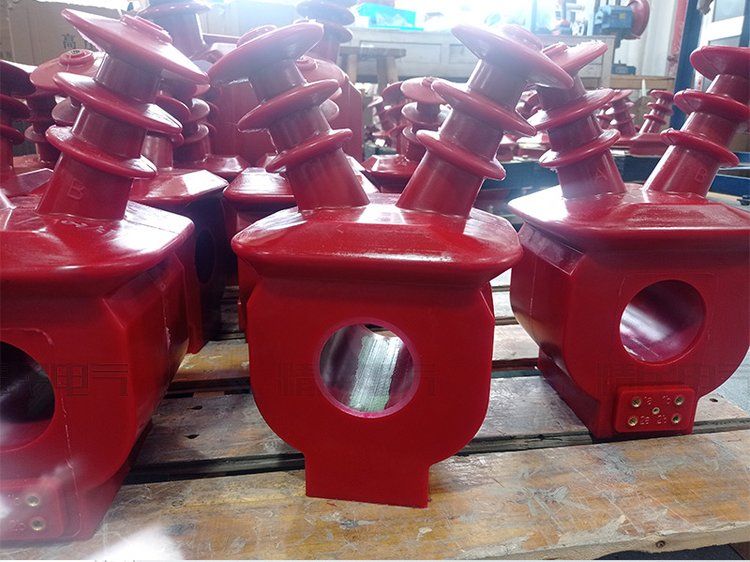
Metal-Clad Switchgear Potential Transformers
In metal-clad gear, internal arc energy, enclosure heat, restricted access, and OEM mounting details all matter. Some assemblies are tested as a system, and substitutions can invalidate expected performance.
In these panels, always check the switchgear manufacturer’s approved fuse list first.
Outdoor Utility Voltage Transformers
Outdoor service adds lightning exposure, contamination, temperature swing, and temporary overvoltage concerns. Fuse behavior may be influenced by surge events and environmental aging.
Utilities also tend to have stricter standardization rules, so local practice can outweigh generic catalog guidance.
Arc Furnace, Harmonic-Rich, or Frequent Switching Systems
These systems produce rough electrical conditions. Harmonics, repetitive energization, and transient distortion can all change how comfortably a fuse rides through normal operation.
In these environments, I would not accept a purely rule-based selection without reviewing actual fuse curves and event history.
Grounded vs Ungrounded and Single-Phase vs Three-Phase Arrangements
Connection topology affects fault exposure and the likely stress on individual PTs and fuses. Open-delta, grounded-wye, and ungrounded arrangements can present very different fault behavior.
Do not assume the same fuse strategy applies across all PT connection schemes.
What Standards and Manufacturers Usually Recommend for Potential Transformer Fuse Selection
General Guidance
Most guidance points engineers toward a method-based approach rather than one universal fuse size.
For practical work, the key lesson is that fuse selection must consider system voltage, interrupting duty, and the transformer’s actual service conditions.
North American and International Practice
Whether you work in North American or international projects, the message is largely the same: PT protection cannot be reduced to a single arithmetic shortcut.
Where utilities publish their own PT fuse requirements, those documents usually govern final selection.
Manufacturer Time-Current Curves and Application Notes
If I had to pick one source that prevents the most field mistakes, it would be the manufacturer’s time-current curve package. Those curves reveal whether the fuse will survive energization and still clear internal fault conditions acceptably.
Generic catalog statements are useful. OEM-tested application notes are better.
Comparison Table — Common Fuse Selection Approaches and Their Risks
Table: Fuse Selection Method vs Accuracy, Risk, and Best Use Case
| Selection Method | Accuracy | Main Risk | Best Use Case |
|---|---|---|---|
| Rule-of-thumb only | Low | Nuisance blowing or poor fault isolation | Very early conceptual budgeting only |
| Primary current calculation only | Low to medium | Ignores inrush and short-circuit duty | Initial screening of PT burden impact |
| OEM curve matching | High | May miss broader scheme coordination if used alone | Most practical project selections |
| Full coordination study | Very high | More engineering time required | Critical MV systems, utilities, large industrial plants |
| Copying legacy panel design | Variable | Assumes fault level and burden never changed | Only when identical design and conditions are proven |
Best-Practice Checklist for Selecting a Potential Transformer Fuse
Confirm VA Burden and Future Expansion Margin
Include metering, relays, transducers, synchronizing devices, and any planned additions. Old drawings often understate the real connected burden.
Verify Inrush Tolerance from Fuse Curve
Do not rely on nominal current. Compare expected energization behavior with fuse melting characteristics.
Confirm Breaking Capacity Against Available Fault Current
This is the core check for high rupturing capacity fuses for voltage transformers. Voltage rating alone is not enough.
Review Coordination with Upstream and Secondary Devices
Make sure the PT fuse sits logically within the overall protection scheme. This is essential protection coordination for instrument transformer fuses.
Document the Final Selection Basis
Record the burden calculation, assumptions, project requirements, OEM curves, approved alternatives, and fault-current basis. Good documentation prevents bad substitutions later.
FAQ — Potential Transformer Fuse Selection
What size fuse should be used for a potential transformer?
Start with the calculated primary current from burden VA divided by primary voltage, then select a fuse that can ride through inrush and switching transients while still clearing internal PT faults. Final size should be verified against manufacturer time-current curves, available fault current, and system coordination requirements.
How do you calculate voltage transformer primary current?
Use this formula: primary current (A) = burden VA / primary voltage (V). For example, a 100 VA PT on an 11,000 V primary has a normal primary current of 100 / 11000 = 0.0091 A.
Why is the potential transformer primary current so low?
A PT supplies only a small burden for relays and meters, not a power load. That is why the normal primary current is usually in the milliamp range, even at medium voltage.
Should a potential transformer fuse be sized to transformer VA only?
No. VA is only the starting point. You must also check inrush tolerance, fault level, interrupting capacity, coordination, and manufacturer guidance.
When are high rupturing capacity fuses needed for voltage transformers?
They are needed when the available fault current exceeds the interrupting capability of standard fuses, especially in medium-voltage systems. Many switchgear and utility applications require HRC fuses by design.
How do you coordinate instrument transformer fuses with upstream protection?
Compare the fuse melting and clearing curves with upstream breaker and relay characteristics, and verify that the PT fuse will operate appropriately for local PT faults without causing unnecessary wider outages. Also review secondary protection so secondary faults do not create avoidable primary fuse operations.
Can an oversized fuse damage a potential transformer?
Yes. An oversized fuse may not isolate an internal PT fault quickly enough, allowing greater thermal and mechanical damage and potentially exposing surrounding equipment to higher stress.
Do standards specify one exact fuse size for every potential transformer?
No. General standards provide the framework and performance context, but the exact fuse size depends on system voltage, burden, fault level, application, coordination study, and manufacturer recommendations.
Download the Potential Transformer Fuse Sizing Checklist
If you are specifying, retrofitting, or troubleshooting a PT circuit, do not leave the fuse decision to habit or warehouse stock.
Use a project-specific Potential Transformer fuse sizing checklist, review the OEM curves, and run a coordination check before procurement.
Need a faster answer? Build a worksheet with your PT voltage, burden, available fault current, and switchgear model, then request a formal fuse selection and coordination review. That single step can prevent nuisance outages, relay blind spots, and avoidable transformer failures.