Choosing the right circuit tracer comes down to one thing. You need to know your specific task and then match the tool's features, accuracy, and ease of use to your needs.
This article, written from an electrical engineer's perspective, will guide you through the principles of how these tools work. You'll also learn the best strategies for selecting a tracer, see a comparison of top models, and get practical tips for safe and effective use.
Deep Dive into the Principles: How It “Sees” Wires
To truly understand how to choose a circuit tracer, you first need to grasp how it works. This knowledge is not just a technical detail; it's the key to understanding why one tool performs better than another in certain situations.
A circuit tracer can "see" wires because it uses the principle of electromagnetic induction.
Core Principles: Signal Injection and Induction
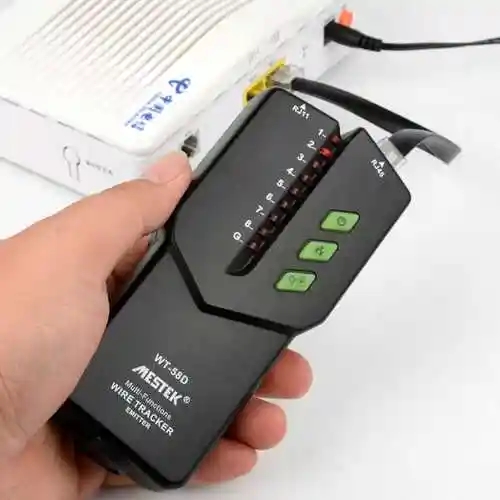
A complete circuit tracer system consists of two parts: a transmitter and a receiver. The transmitter's main job is to inject a specific, low-power electromagnetic signal into the circuit you want to test.
This signal is so weak that it won't affect the circuit's normal operation. Its presence, however, makes the wire "traceable."
The receiver's job is to "sense" this faint signal. Its internal induction coil acts like a tiny antenna.
When it gets close to a wire carrying the signal, the coil generates a current. The receiver lets you know with a sound, a flashing LED, or a number on its screen.
Two Modes of Operation: Accuracy and Flexibility
Circuit tracers typically have two basic modes. Understanding them helps you get the job done right.
Direct Connection: This is the most common and accurate mode. You connect the transmitter directly to the two ends of the wire you want to trace using probes or alligator clips.
The signal is injected right into the circuit, so the signal strength and accuracy are at their highest. This mode is best when a breaker has tripped or you've already confirmed the circuit is de-energized.
Inductive Mode: This mode requires no physical connection. You simply place the transmitter near the wire you want to trace.
The transmitter creates an electromagnetic field, and the receiver senses this field to trace the wire. While the signal strength in this mode isn't as strong as with a direct connection, it offers great flexibility, especially when you can't directly access the wires or want to avoid shutting off the power.
Note: Understanding these two modes is the foundation of choosing your tool. For industrial applications requiring extreme accuracy, the direct connection mode is the way to go. For simple cable identification, the inductive mode is a quick and easy option.
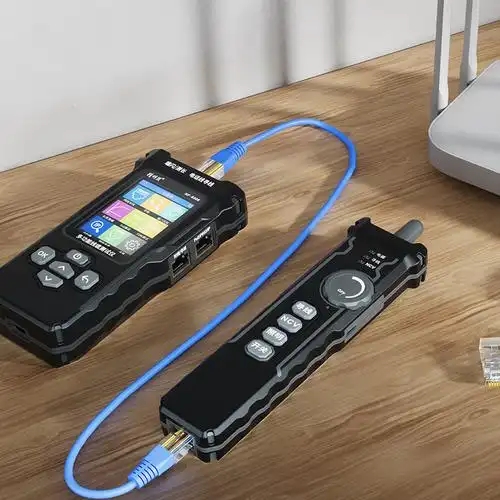
The Buyer's Guide: How to Evaluate a Good Circuit Tracer
Now that you know how they work, you can evaluate products more effectively. A good circuit tracer is more than just a device that makes noise; it excels in multiple areas.
Accuracy and Reliability: Avoiding the "Tracing Maze"
Signal Strength and Range: A good circuit tracer should maintain a stable signal over a long distance (like tens or even hundreds of yards). It should be able to effectively pass through walls, ceilings, and floors.
Always check the product's maximum tracing distance before you buy.
Interference Resistance: In a power room or industrial environment filled with electromagnetic interference, a low-quality tracer can easily pick up signals from other wires and give you false readings.
Professional-grade devices have filtering and noise-reduction technology. This helps them identify and filter out stray signals.
Functionality and Usability: Improving Your Workflow
Indicator Types: This is the most direct indicator of user experience.
Sound and Light Indicators: These are common in entry-level devices. They signal strength through the frequency of sounds and the speed of flashing LEDs.
Digital Display: This is a standard feature on professional-grade devices. It shows a numerical value for the signal strength, allowing you to compare readings and make a more precise judgment.
Sensitivity Adjustment: This is a must-have feature for high-end tools. In areas with tightly packed wires, high sensitivity can make every wire light up, making it impossible to distinguish between them.
Adjustable sensitivity lets you lower the sensitivity as you get closer to your target, helping you pinpoint the one you’re looking for.
Probes and Accessories: Besides the standard transmitter and receiver, a good kit should include a variety of accessories. This could include adapters for connecting to outlets, alligator clips for bare wires, and flexible probes for working in tight spaces.
Tip: When you're shopping, always consider your work environment. If you frequently work in complex spaces with dense wiring, investing in a professional-grade device with a digital display and adjustable sensitivity is a smart move.
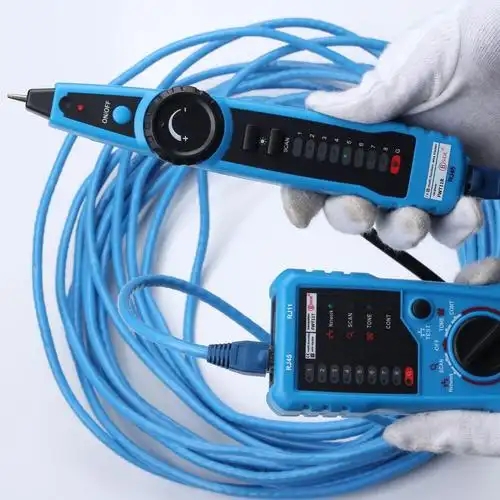
Professional Advice for Different Users
Different users have different needs. A truly valuable guide should provide tailored advice for everyone.
For Beginners: Focus on Ease of Use
If you're a DIY enthusiast or a homeowner who doesn't deal with complex electrical issues often, your priorities are safety and simplicity.
Recommended Type: Go for a basic, affordable circuit breaker finder that’s easy to use. These tools usually have simple light and sound indicators, but they're enough for most home tasks.
Key Features: Focus on a clear light and sound display and basic safety features. Make sure the product has ground fault protection and can handle the voltage levels in your region.
For Professional Electricians and Contractors: Focus on Efficiency and Accuracy
As a professional who works with circuits every day, your tools are a part of your productivity.
Recommended Type: Invest in a versatile, high-accuracy, and durable professional-grade circuit tracer. These tools can handle the most complex issues and are built to withstand daily wear and tear.
Key Features: Look for a digital display, adjustable sensitivity, multiple working modes, and additional features like non-contact voltage (NCV) testing. These features can significantly reduce your work time and increase diagnostic accuracy.
Note: For professionals, a tool's durability and warranty are just as important. Choosing a brand that offers a long-term warranty and reliable tech support can save you a lot of headaches down the road.
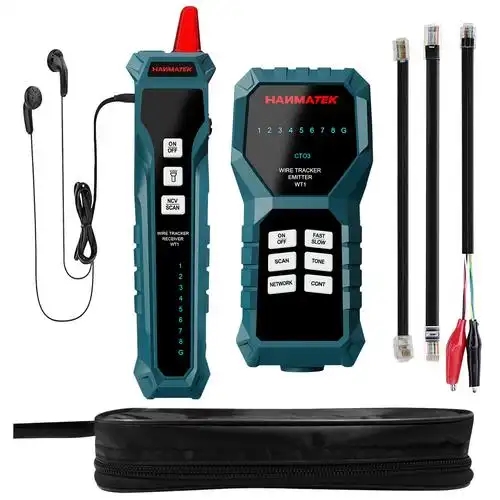
Comparison of Top Models
To help you with your decision, we've put together a simple table comparing some of the top products on the market. You can choose based on your budget and needs.
Tip: Before buying, it's a good idea to watch a video review or read user feedback to get a feel for the tool's ergonomics and performance in real-world scenarios.
Practical Application: Ensuring Efficiency and Safety
Having the right tool is only the first step. Knowing how to use it correctly is what truly matters.
Here are some tips for working efficiently and safely.
Pre-Work Preparation: Safety Above All
Before you begin any electrical work, make sure your work area is safe. Wearing personal protective equipment like insulated gloves and safety glasses is a must.
If possible, it's best to shut off power to the circuit you're testing. This is especially important when using the direct connection mode.
Technique: Work Like a Pro
1. Connect the Transmitter: Connect the transmitter to the circuit you're tracing firmly and correctly. A solid connection ensures a stable signal.
2. Scan with the Receiver: Hold the receiver and move it slowly along the possible path of the wire. Don't shake it; keep it parallel to the wall or floor. When you get close to the target wire, the sound will speed up, the lights will flash faster, or the number on the screen will increase.
3. Double-Check: Once you find the strongest signal, don't jump to conclusions. Try moving away and scanning again from a different direction to confirm that there's only one signal source. You can also adjust the sensitivity to pinpoint the exact location.
Long-Term Use and Maintenance Tips
Battery Management: Take the batteries out after each use, or use rechargeable batteries to prevent leaks that can damage the device.
Product Care: Wipe down the device with a clean cloth after each use. Store it in a dry, dust-free place to keep the probes and accessories in good condition.
Software Updates: Some high-end devices support firmware updates. Periodically updating them can give you better performance and new features.
Note: No electrical tool can replace basic safety knowledge. Always work with an abundance of caution and prioritize safety.
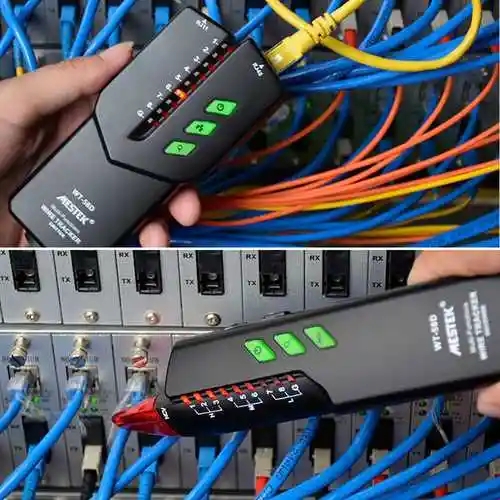
Common Questions & Answers (FAQ)
This section addresses some of the most common questions people have when using a circuit tracer.
Can a circuit tracer be used on live wires?
Yes, many high-end models can be used on live wires. However, you should always do so with caution, following all safety protocols, and wearing personal protective equipment like insulated gloves.
What if the wires are in a metal conduit?
Metal conduit can block electromagnetic signals. This makes tracing difficult or even impossible. In these situations, you may need to use a more powerful professional-grade device or one that operates at a different frequency.
Why does my tracer find multiple wires instead of just one?
This usually happens because the wires are bundled closely together, your sensitivity is set too high, or there's some electromagnetic interference. Try lowering the sensitivity or changing the angle of your receiver to narrow down the target.
What's the difference between a circuit tracer and an NCV tester?
They serve different purposes. A circuit tracer is used to "trace the path" of a wire, while an NCV (non-contact voltage) tester only detects whether a wire is "hot" or not.
Is a longer maximum tracing distance always better?
Not necessarily. For home use, too long a tracing distance can make the signal too broad and difficult to pinpoint. It's more important to choose a tracer with a range that matches your typical use case.
Conclusion: Make a Smart Decision
A circuit tracer is the "third eye" of every electrician. It can see through walls and make hidden wires appear.
Ultimately, choosing the right tool comes down to a clear understanding of your own needs. Whether you're aiming for greater efficiency or better safety, investing in the right circuit tracer is a smart move.
With the guidance in this article, you can confidently select the tool that's perfect for you, helping you complete every electrical task safely and efficiently.