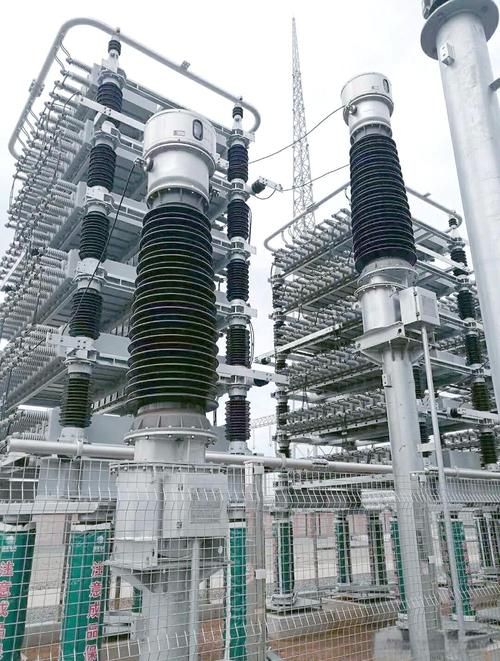
You might already know that Capacitor Voltage Transformers (CVTs) are a staple in modern high-voltage systems.
But do you know exactly when they become the superior engineering choice over traditional inductive PTs?
Is the cutoff at 66 kV? Or is it strictly for applications above 110 kV?
Selecting the wrong instrument transformer can unnecessarily inflate your substation footprint and blow your project budget.
In this guide, you’re going to learn the precise technical and economic breakpoints for when to use Capacitor Voltage Transformers.
From critical Power Line Carrier Communication (PLCC) capabilities to cost-saving insulation designs, we are breaking down the decision matrix used by top utility engineers.
Let’s dive in.
Understanding Capacitor Voltage Transformer Basics
Ever look at a substation and wonder how we measure 500,000 volts without blowing up the meter? That’s exactly where the capacitor voltage transformer (CVT) steps in. Unlike a standard inductive unit that relies solely on massive copper coils, a CVT uses a stack of capacitors to handle the heavy lifting of high voltage measurement. It is a smart, cost-effective solution for high-voltage grids, but to use it right, you have to understand what makes it tick.
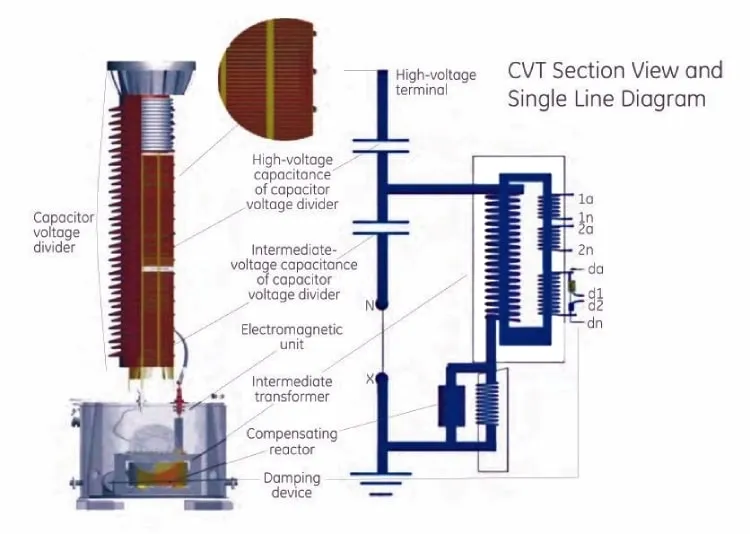
Core Components: Capacitor Divider, Tuning Reactor, and EMU
A coupling capacitor voltage transformer isn’t just a single block of equipment; it is a carefully tuned system composed of three main parts. If you open one up (figuratively speaking), here is what you are paying for:
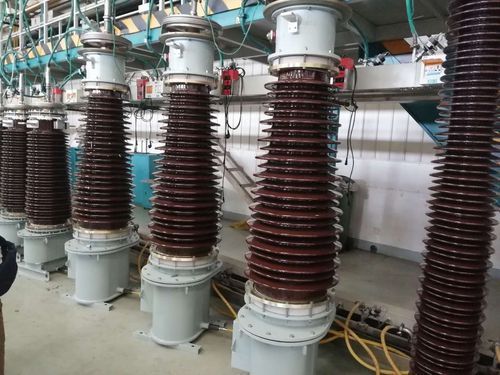
Capacitor Divider: This is the tall porcelain or polymer stack you see on the line. It acts as a voltage divider to step the primary high voltage down to a manageable intermediate level.
Tuning Reactor: Since capacitors shift the phase of the voltage, we need an inductor to correct it. The tuning reactor cancels out the capacitive reactance at the system frequency (60 Hz in the US), ensuring the output matches the grid.
Electromagnetic Unit (EMU): Located in the base tank, this works like a mini conventional transformer. It takes the intermediate voltage and steps it down to the final secondary output.
How It Works: Two-Stage Voltage Reduction Explained
The capacitive voltage transformer working principle is essentially a two-step relay race. We don’t try to drop 400 kV down to 120V in one go using wire coils—that would require a massive, expensive iron core.
1. Stage One: The capacitive voltage divider takes the full line voltage and drops it to an intermediate voltage, typically between 5 kV and 20 kV.
2. Stage Two: The EMU takes that intermediate voltage and transforms it down to the standard 69V, 115V, or 120V required for metering and protection relays.
This two-stage approach is the main reason a CVT is lighter and cheaper than an inductive voltage transformer at extra-high voltages.
Key Standards: IEC and ANSI Compliance for Accuracy
Accuracy is non-negotiable. Whether I am setting up a protection scheme or a revenue metering point, the numbers have to be right. In the United States, we rely on ANSI/IEEE C57.13 to define the accuracy classes and performance requirements. For international projects, IEC 61869-5 is the benchmark.
These standards ensure that the CVT maintains accuracy even during voltage fluctuations and temperature changes. When selecting a unit, always verify the nameplate data against these standards to ensure your instrument transformers' HV can handle the burden and transient response required by your specific grid application.
When to Use Capacitor Voltage Transformers: Key Scenarios
Deciding when to deploy a capacitor voltage transformer (CVT) versus a standard inductive unit usually comes down to voltage levels, budget, and additional functionality like communication needs. In the US market, once we hit transmission levels, the CVT becomes the go-to solution for several distinct reasons. Here is a breakdown of the specific scenarios where these units excel.
High-Voltage and Extra-High-Voltage Transmission Lines (72 kV+)
The primary domain for the capacitive voltage transformer is in systems rated above 72 kV. For high voltage measurement on transmission lines—specifically 115 kV, 230 kV, and up to 765 kV—inductive transformers become prohibitively large and expensive due to insulation requirements. A CVT handles these high potentials efficiently using a capacitive voltage divider stack, making it the standard choice for extra-high voltage substations.
Cost and Size Advantages Over Inductive PTs
When comparing CVT vs PT at higher voltages, the economics heavily favor the capacitor type.
Reduced Insulation: Because the voltage is stepped down capacitively before it hits the electromagnetic unit, we use significantly less copper and iron.
Smaller Footprint: An inductive voltage transformer rated for 500 kV is massive. A CVT is slimmer and lighter, reducing the cost of support structures and civil works.
Power Line Carrier Communication (PLCC) Applications
This is a critical dual-function capability. If your grid operation requires Power Line Carrier Communication, a CVT is essentially mandatory. Unlike a standard PT, a coupling capacitor voltage transformer (CCVT) can inject high-frequency communication signals onto the transmission line. This allows utilities to use the power line itself for voice communication, telemetry, and protection signaling without running separate cables.
Protection-Focused Installations and TRV Performance
While inductive units are faster, modern CVTs are engineered to handle protection duties effectively. They are equipped with ferroresonance suppression circuits to ensure stability. However, engineers must account for Transient Recovery Voltage characteristics during faults. To ensure the longevity of these systems and protect against overvoltage events, pairing the transformer with a reliable suspended gapless line lightning arrester is a standard best practice in protection schemes.
Revenue Metering and Grid Monitoring in EHV Systems
There is a misconception that CVTs aren’t accurate enough for metering. That is no longer true. Modern designs easily meet high-accuracy classes (such as 0.2 or 0.3) required for revenue metering and strict grid monitoring in EHV systems. They provide the precision needed for billing while maintaining the safety benefits of a capacitive design.
Performance in Harsh or Remote Environments
In remote installations where maintenance is difficult, the robust simplicity of the capacitor stack is an asset. These units perform reliably in diverse weather conditions. Whether installed in a remote renewable energy hub or a standard utility switchyard alongside a high-voltage isolator, CVTs offer a balance of durability and performance that is hard to beat for long-distance transmission infrastructure.
CVT vs. Inductive PT: A Detailed Comparison
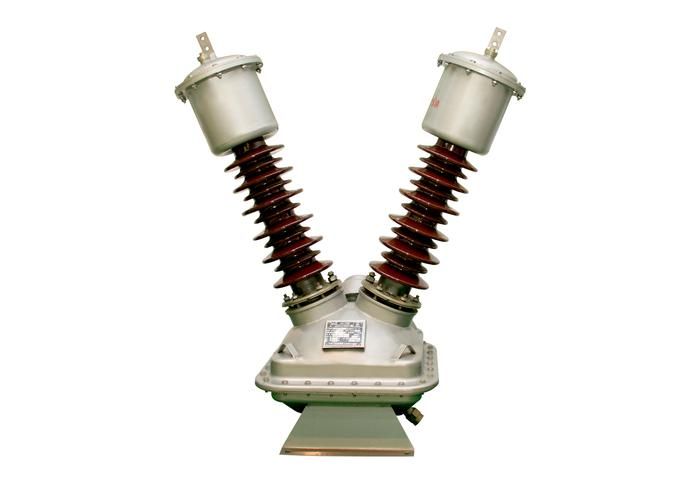
When deciding between a Capacitor Voltage Transformer (CVT) and a standard inductive voltage transformer (magnetic PT), the choice rarely comes down to preference—it comes down to physics and budget. While both devices step down high voltages for metering and protection, their internal architectures dictate where they belong on the grid.
Voltage Range Suitability and Thresholds
The most immediate filter I apply is voltage class. For distribution and lower transmission voltages (up to 69 kV), the inductive PT is the standard. It is robust, simple, and cost-effective at these levels. However, as we scale up to high voltage measurement (100 kV and above), the insulation requirements for an electromagnetic unit become impractical.
At Extra High Voltage (EHV) levels like 345 kV or 500 kV, a CVT vs PT comparison heavily favors the CVT. The capacitive design handles the dielectric stress much more efficiently than the massive iron core and copper windings required for an inductive unit at those levels.
Cost, Footprint, and Material Usage Analysis
Cost is directly tied to the voltage threshold mentioned above. An inductive PT grows exponentially in size and price as voltage increases because the amount of steel and copper scales up.
Inductive PT: At EHV levels, these units are heavy, expensive to ship, and require substantial support structures.
CVT: Uses a stack of capacitor units. It is lighter, has a smaller footprint, and costs significantly less—often 40-50% cheaper than an equivalent inductive PT at 400 kV.
Accuracy, Burden, and Transient Response
If my primary goal is absolute precision for revenue metering with a high burden, the inductive PT wins. It provides a direct magnetic transformation with very little phase shift. However, modern CVTs have improved drastically and now meet standard metering accuracy classes (like 0.2 or 0.5) without issues.
Regarding transients, inductive PTs generally have a faster response time. CVTs, due to their energy storage elements, can experience transient recovery voltage issues where the secondary voltage doesn’t collapse instantly during a fault. This requires careful coordination with protective relays. While ferroresonance in CVTs is suppressed by the damping circuit, proper substation lightning protection grounding is still essential to manage overvoltage events and ensure the safety of connected equipment.
Communication Capabilities (PLCC Integration)
This is the “killer feature” for the CVT. In many US transmission grids, we use the power lines themselves to transmit data (voice, protection signals, telemetry). A CVT acts as a coupling capacitor for Power Line Carrier Communication (PLCC). An inductive PT blocks high-frequency signals, meaning if you use an inductive unit, you would still need to buy a separate coupling capacitor for comms. Using a CVT kills two birds with one stone.
Maintenance Requirements and Testing Needs
Inductive PTs are generally “fit and forget” aside from oil sampling. CVTs require monitoring of the capacitor stack. If a capacitor element fails, the voltage ratio drifts, which can lead to metering errors or false tripping. We typically perform capacitance and dissipation factor (tan delta) testing on CVTs to ensure the dielectric integrity of the capacitor stack hasn’t degraded.
Quick Comparison: CVT vs. Electromagnetic PT
| Feature | Inductive Voltage Transformer (PT) | Capacitor Voltage Transformer (CVT) |
|---|---|---|
| Best Voltage Range | Low to Medium (< 69 kV) | High to Extra-High (> 100 kV) |
| Cost at EHV | Very High | Low to Moderate |
| Footprint | Large and Heavy at HV | Compact and Lighter |
| PLCC Coupling | Not capable (requires a separate unit) | Built-in capability |
| Transient Response | Excellent, fast decay | Slower (stored energy issues) |
| Primary Usage | High-accuracy metering, low voltage | Transmission protection, PLCC, EHV |
Critical Technical Selection Factors
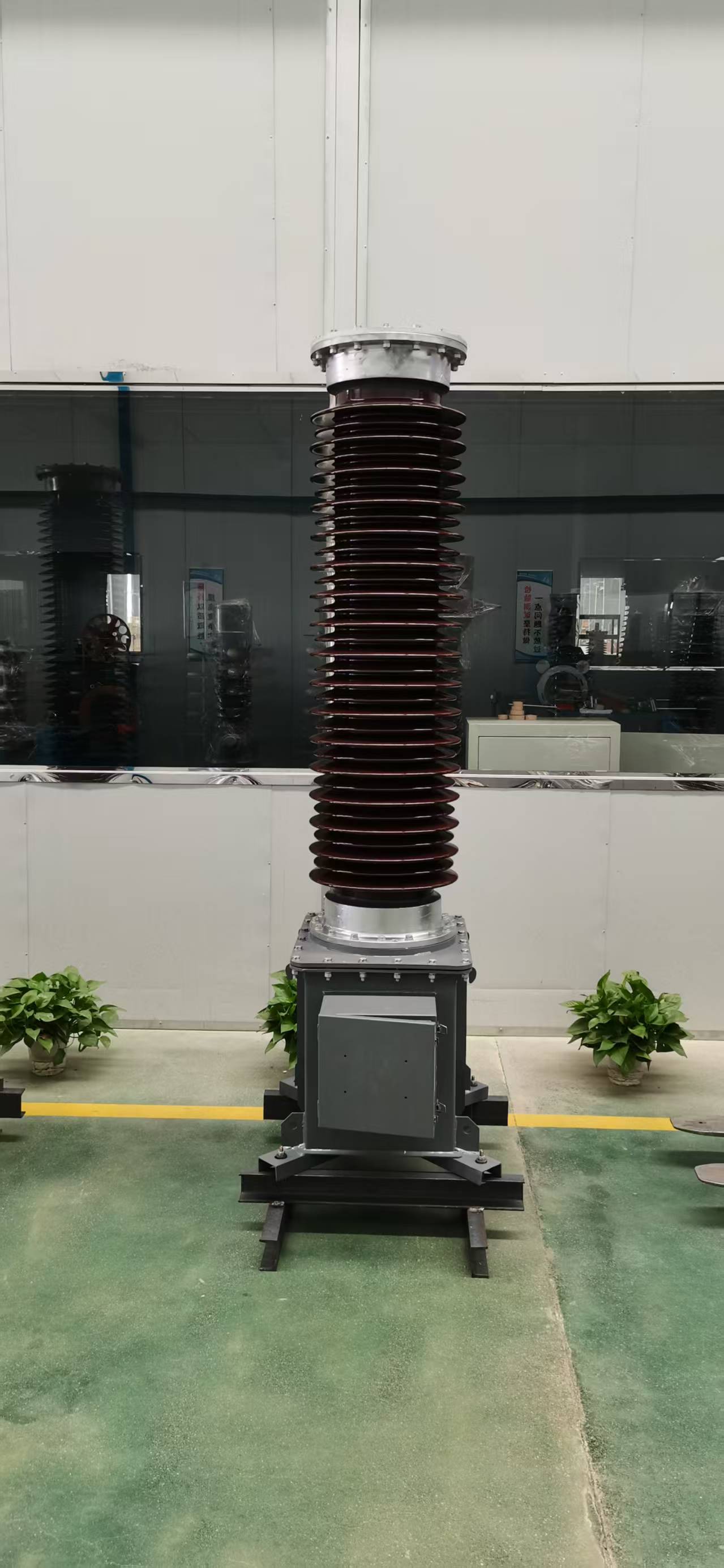
Selecting the right instrument transformer isn’t just about matching the line voltage; it requires a deep look into your system’s specific demands. When we determine when to use Capacitor Voltage Transformers, we have to weigh several technical variables to ensure reliability and safety. Here is how we break down the selection process.
Determining Voltage Class and System Requirements
The first step in voltage transformer selection is confirming the system voltage and insulation levels. Since CVTs are primarily used for high voltage measurement (typically 72.5 kV and above), you need to match the rated voltage factor to your grid’s earthing system.
Rated Voltage: Must match the line-to-ground voltage.
BIL (Basic Impulse Insulation Level): Ensure the unit can withstand lightning impulses common in EHV environments.
System Earthing: Effectively grounded systems usually require a voltage factor of 1.2 continuous or 1.5 for 30 seconds.
Matching Accuracy Classes: Metering vs. Protection
A capacitive voltage transformer serves two masters: revenue metering and system protection. These functions have conflicting requirements. Metering needs high precision at normal voltages, while protection needs reliability during massive fault spikes.
| Feature | Metering Class (e.g., 0.2, 0.5) | Protection Class (e.g., 3P, 6P) |
|---|---|---|
| Primary Goal | Revenue accuracy, billing | Fault detection, relay triggering |
| Voltage Range | 80% to 120% of rated voltage | 5% to 120% (or higher) of rated voltage |
| Transient Response | Less critical | Critical for fast relay operation |
Assessing Burden and Transient Performance Needs
We must calculate the total burden (in VA) of all connected devices—meters, relays, and PLCC equipment. Unlike an inductive voltage transformer, a CVT has a higher internal impedance. Overloading it causes voltage drops that ruin accuracy.
Furthermore, we have to look at ferroresonance in CVTs. This is a chaotic resonance between the capacitance and the iron core inductance. We always select units with a passive or active ferroresonance suppression circuit to prevent catastrophic failure during switching events. You also need to evaluate the transient recovery voltage performance to ensure the secondary voltage collapses quickly enough after a fault clearing to avoid confusing digital relays.
Environmental Considerations: Seismic, Pollution, and Temperature
The physical environment dictates the mechanical design. For installations in coastal or industrial areas, we specify silicone rubber or high-creepage porcelain to prevent flashovers. Just as we prioritize high voltage insulator safety and reliability on overhead lines, the external insulation of the CVT must withstand local pollution levels.
Seismic Zones: In areas like California, we require high-damping designs that can survive significant ground acceleration.
Temperature: The capacitor oil and expansion bellows must handle the ambient temperature range without leaking or losing capacitance.
Integration with Digital Substations and Existing Setups
Modern grids often use the CVT for more than just voltage sensing. If you are running power line carrier communication, the CVT must be equipped with PLCC coupling accessories (carrier accessories) like a drain coil and grounding switch.
For digital substations, check if the capacitive voltage divider output is compatible with modern merging units. While traditional CVTs output analog signals (115V or 67V), integrating them into a digital setup often requires verifying the transient response to ensure it doesn’t distort the high-speed sampling required by modern protective relays.
Real-World Applications and Limitations
Urban vs. Long-Distance Transmission Use Cases
In the United States, the choice between a CVT and an inductive unit often comes down to the real estate available and the distance the power needs to travel. For long-distance transmission lines (typically 220kV and above), Capacitor Voltage Transformers are the industry standard. They serve a dual purpose: measuring voltage and acting as a coupling capacitor for Power Line Carrier Communication (PLCC). This eliminates the need for separate communication equipment, significantly lowering infrastructure costs on cross-country lines.
In contrast, urban substations face strict space constraints. While CVTs are generally compact, the primary driver here is often the integration with Gas Insulated Switchgear (GIS). However, for outdoor air-insulated substations in dense city areas, our compact CVT designs help engineers fit high-voltage monitoring into tight footprints without sacrificing safety clearances.
Modern Grid Trends: CVTs in Renewable Integration
As the grid evolves, we are seeing a massive shift toward integrating large-scale renewable energy sources. Solar farms and wind parks connecting to the transmission grid at 115kV or higher require robust voltage sensing that can withstand environmental stress. CVTs are ideal here because they handle the high-frequency transients often associated with inverter-based generation better than some traditional units.
We frequently deploy these transformers alongside our wind power substation solutions, ensuring that the connection point between the renewable asset and the utility grid is monitored with precision. This setup supports reliable revenue metering and grid stability monitoring, which are critical for meeting interconnect agreements.
When Not to Use CVTs: Lower Voltage Constraints
While CVTs are excellent for high-voltage applications, they are not a “one-size-fits-all” solution. For distribution voltages (typically below 69kV, and certainly for 3.6kV–34.5kV systems), an inductive voltage transformer is almost always the better choice.
Cost Efficiency: At lower voltages, the insulation savings of a CVT disappear, making inductive units far cheaper.
Accuracy: Inductive PTs generally offer higher accuracy classes with less calibration effort at lower voltages.
Transient Response: If your application requires extremely fast transient response for sensitive protection schemes at distribution levels, the stored energy in a capacitor stack can sometimes be a hindrance.
If you don’t need PLCC capabilities and are operating at standard distribution levels, stick to electromagnetic designs to maximize performance per dollar.
FAQ: Common Questions About CVTs
We often field questions from engineers and procurement managers trying to decide between different instrument transformers for their high-voltage projects. Here are the answers to the most frequent inquiries we receive regarding Capacitive Voltage Transformers (CVT).
What is the difference between a CVT and a standard PT?
The main difference lies in the internal construction and the method of voltage reduction. A standard inductive voltage transformer (electromagnetic PT) works exactly like a conventional step-down transformer, using wire windings and a magnetic core. In contrast, a capacitive voltage transformer uses a series of capacitors (a capacitive voltage divider) to step down the high voltage before it reaches the electromagnetic unit.
While both devices measure voltage, the CVT vs PT decision usually comes down to cost and application. Standard PTs offer slightly higher accuracy at lower voltages, but CVTs are far more economical at high voltages and offer additional features like communication coupling. When designing a complete metering protection system, it is crucial to understand how these interact with other devices, similar to understanding current transformers (CTs) for comprehensive grid monitoring.
Why are CVTs preferred for voltages above 100 kV?
We recommend CVTs for high voltage measurement (typically above 72.5 kV or 100 kV) primarily due to cost and size.
Insulation Costs: As voltage rises, the insulation required for an inductive PT becomes massive and incredibly expensive. A CVT uses a capacitor stack, which is naturally easier and cheaper to insulate.
Footprint: In extra high voltage substations, space is premium. An inductive PT at 500 kV is huge; a CVT is comparatively slender.
Resilience: CVTs are less prone to ferroresonance compared to inductive units, making them safer for the grid during transient events.
Can a CVT be used for Power Line Carrier Communication?
Yes, this is one of the distinct CVT advantages over electromagnetic PT designs. A CVT can function as a coupling capacitor voltage transformer, meaning it does double duty. It measures voltage for metering/protection and simultaneously injects high-frequency signals into the transmission line for Power Line Carrier Communication (PLCC). This eliminates the need for separate coupling capacitors, saving significant money on substation equipment.
What are the main components of a Capacitor Voltage Transformer?
A CVT is not just a stack of capacitors; it is a tuned system designed for stability. The core components include:
1. Capacitive Voltage Divider: Two stacks of capacitors (C1 and C2) that step the primary voltage down to an intermediate level (usually around 10-20 kV).
2. Electromagnetic Unit (EMU): An intermediate transformer that steps the voltage down further to standard secondary outputs (like 110V).
3. Compensating Reactor: Tunes the circuit to resonance frequency (60Hz in the US) to cancel out the phase shift caused by the capacitors.
4. Ferroresonance Suppression Device: A damping circuit to prevent dangerous voltage oscillations.
These components allow the CVT to operate reliably alongside heavy-duty switchgear, such as outdoor sulfur hexafluoride circuit breakers, ensuring accurate data even during switching operations.