A Complete Guide for Safer Electrical Systems
This article helps you understand the four main MCB types—A, B, C, and D. Picking the right one is key to keeping homes, offices, and factories safe.
By the end of this guide, you'll know how to pick the right MCB for different loads, helping prevent circuit failures, fires, and costly downtime. This knowledge will help you make smarter and safer decisions when designing or upgrading electrical systems.
What Is an MCB and Why Is It Important?
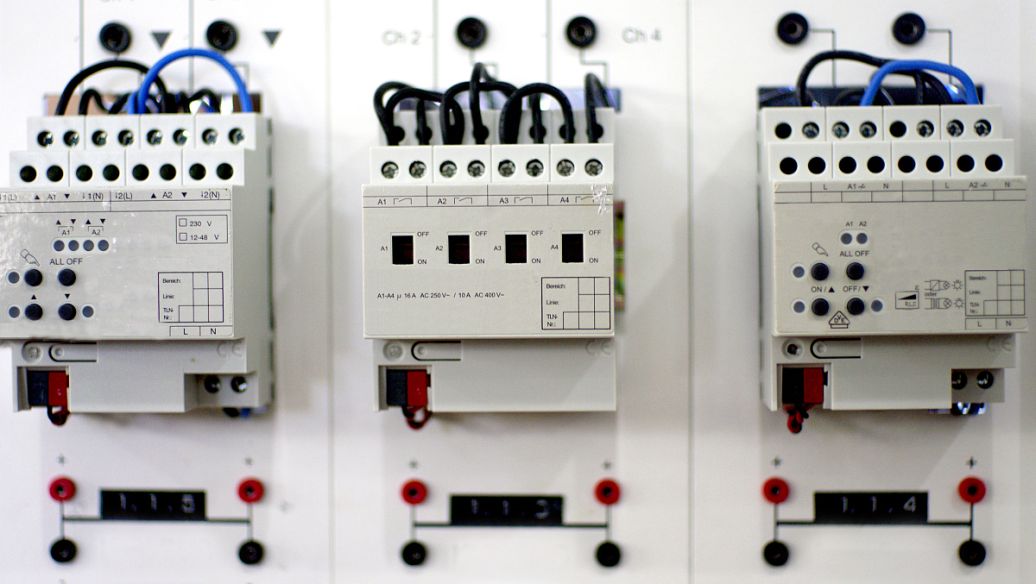
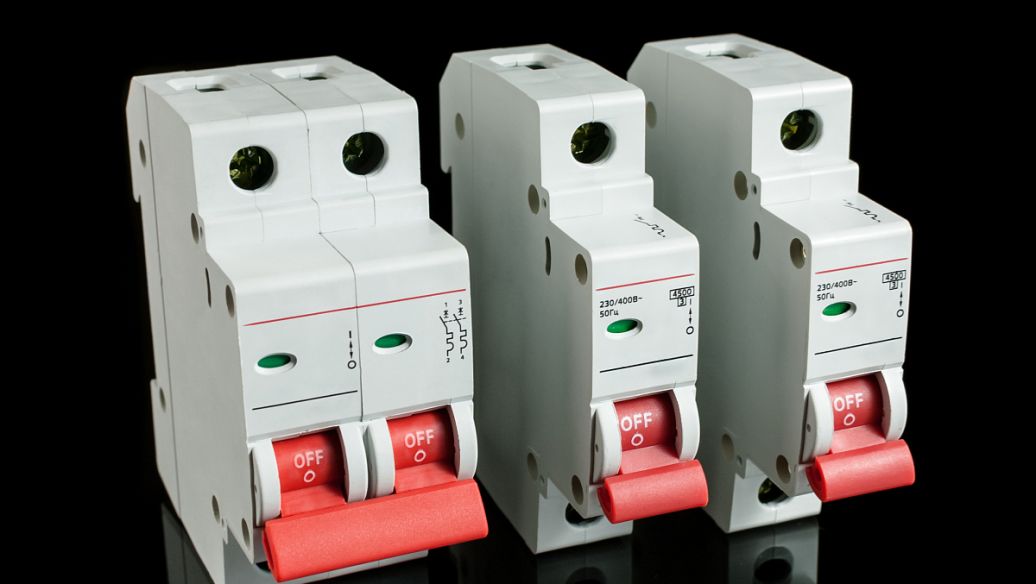
An MCB, or miniature circuit breaker, is an automatic switching device designed to protect an electrical circuit from overloads and short circuits. It interrupts the current flow when it detects abnormal conditions. Engineers widely use MCBs in residential, commercial, and industrial power distribution systems.
They are typically used in AC circuits rated at 230/400V with a current capacity of up to 63A. MCBs are commonly installed in terminal distribution boxes and provide fast, reliable protection to wiring and connected devices.
Because MCBs react to overcurrent situations, choosing the correct type and rating is critical. Selecting the wrong type can lead to frequent false tripping or worse, failure to trip during an actual fault, which can cause fires or equipment damage.
Overview of the 4 MCB Trip Types
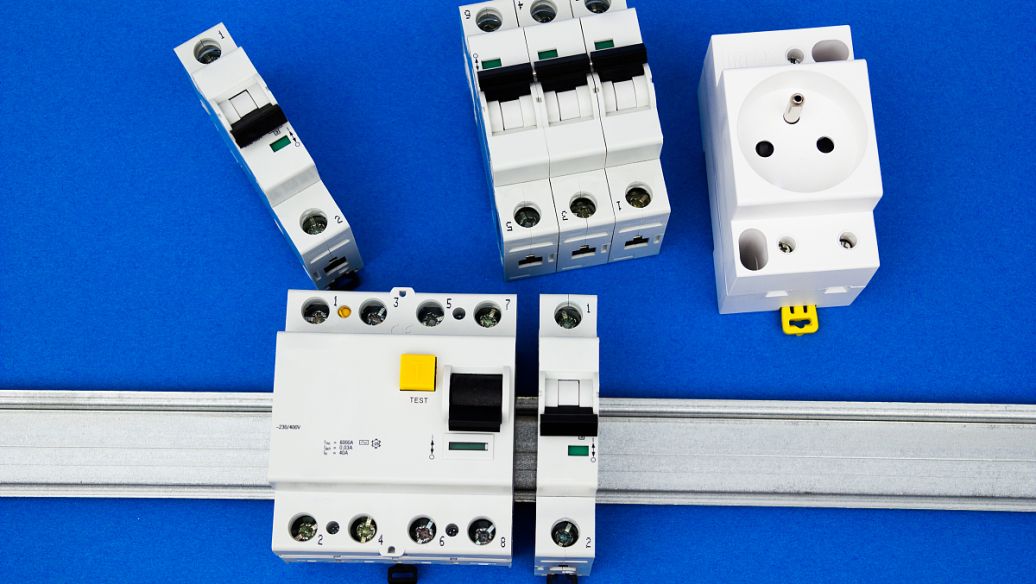
Each MCB type has a specific tripping curve that determines when it disconnects the circuit under abnormal current flow. The four main types are A, B, C, and D.
Type A MCB
Type A MCBs trip when the current exceeds twice the rated value. Engineers rarely use them in general electrical systems. Instead, they primarily use them to protect delicate electronics, especially electronic devices.
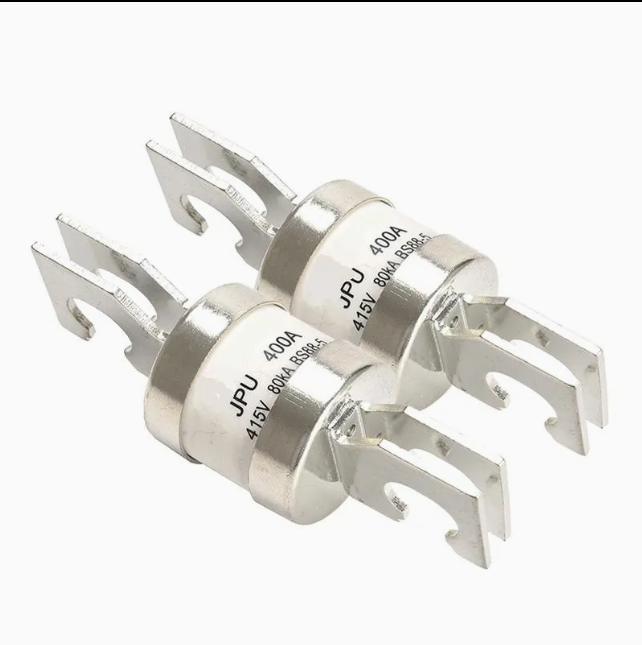
Since these components are highly sensitive to overcurrent, fast and low-threshold protection is essential. However, in most of these cases, engineers still prefer fuses because they offer lower cost and a precise response.
Type B MCB
Type B MCBs trip when the current reaches 2 to 3 times the rated current. These breakers are suitable for purely resistive loads, such as incandescent lighting and basic domestic appliances with minimal inrush current. Technicians commonly install them in older household distribution boards. However, due to their lower tolerance for inrush current, Type B breakers are less common in modern systems with more complex loads.
Type C MCB
Type C MCBs trip when the current reaches 5 to 10 times the rated value. These are the most widely used breakers today. They are suitable for mixed loads, including inductive and related to capacitors equipment such as motors, lighting circuits with transformers, and small power tools. Type C breakers provide a good balance between protection and stability, making them a preferred choice for residential, commercial, and light industrial applications.
Type D MCB
Type D MCBs are designed to trip when the current exceeds 10 to 20 times the rated current. Engineers mainly use them in circuits with high inrush currents—such as those powering industrial motors, welding equipment, and large compressors. Type D MCBs are not suitable for household use due to their high tolerance for sudden current surges. However, they offer critical protection in high-demand environments, ensuring that equipment can start properly without nuisance tripping.
Understanding Overcurrent Protection and Trip Timing
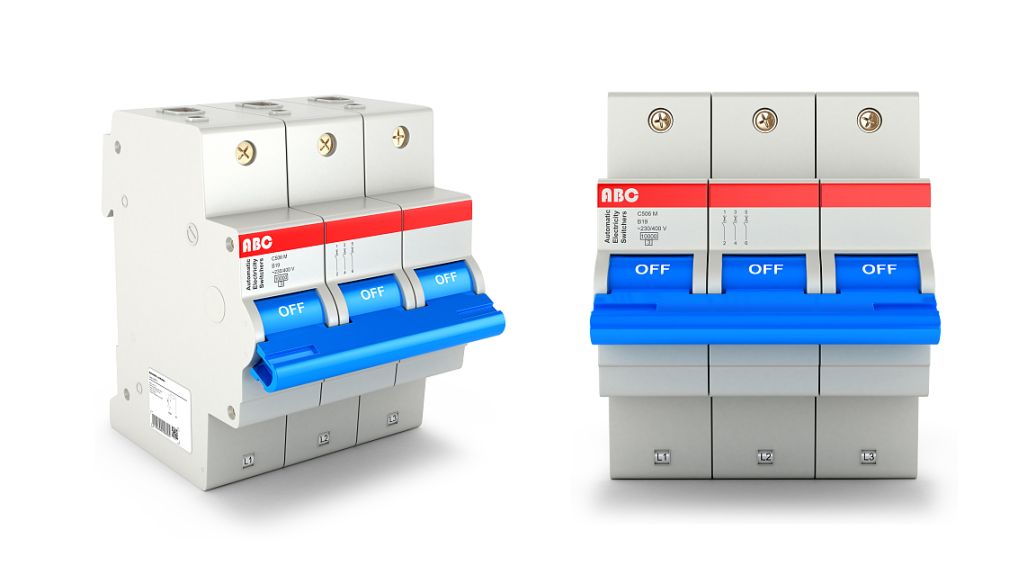
Each MCB features an overcurrent release mechanism that includes protection against overloads and short circuits. The trip response can be:
◆ immediate (0.02s): Used for immediate short-circuit protection.
◆ Short delay (0.1–0.4s): Used to allow brief inrush currents while still protecting against short circuits and overloads.
◆ Long delay (<10s): Used mainly for overload protection, allowing temporary overcurrent without cutting off power needlessly.
These trip characteristics allow MCBs to adapt to different load types. For example, inductive loads such as motors have higher inrush currents, so they require a longer delay.
Choosing the Right MCB for Appliances and Wire Size
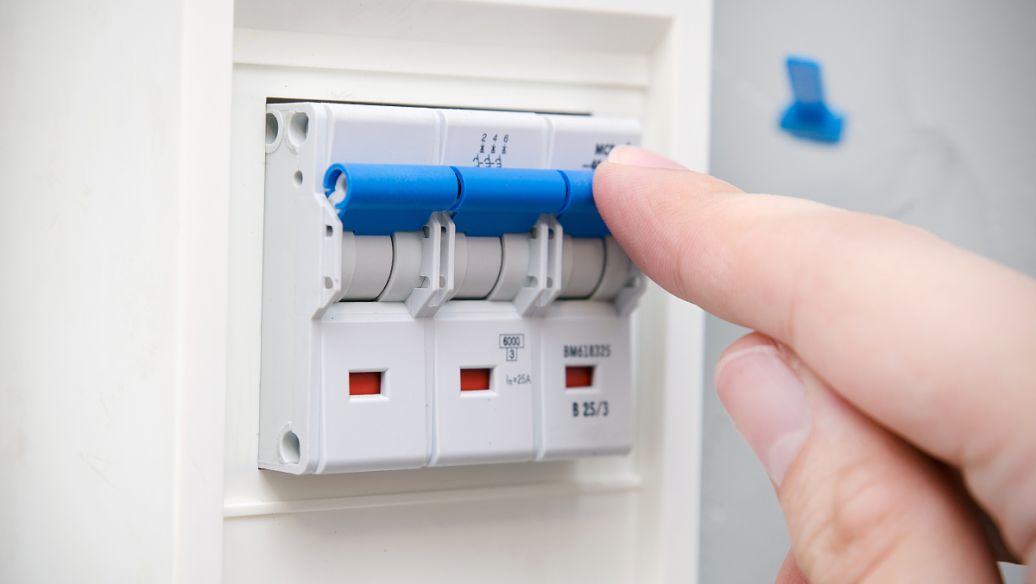
Many people choose MCBs by appliance wattage, but they should select based on the wire size. An MCB that is too large will not protect the wire during an overload, creating a serious fire risk.
Here is a simple reference chart:
◆ 1.5 mm² wire → use C10 breaker
◆ 2.5 mm² wire → use C16 or C20
◆ 4 mm² wire → use C25
◆ 6 mm² wire → use C32
For water heaters and other high-power appliances:
◆ 3500W heater → C20 breaker
◆ 6500W heater → C32 breaker
Always match the breaker to both the load and wire capacity.
MCB Selection for Motor Circuits
Motors require special attention because their starting current can be 6 to 8 times higher than the rated current. Using a Type C MCB in these cases may cause false tripping during startup.
For example, a 4 kW three-phase motor has a rated current of 9A. During startup, it may draw up to 90A.
◆ D16 MCB (tripping at 160A) handles this safely.
◆ C16 MCB (tripping at 80A) may trip needlessly.
Still, this doesn’t mean you can never use a Type C breaker for motor circuits. Using a higher-rated Type C breaker, like C25, sets the trip threshold to 125A (5×25A), enough for many motors.
From an economic point of view, this can save costs. For example:
◆ C25 Schneider MCB (3P) ≈ $20
◆ D16 Schneider MCB (3P) ≈ $25
In many cases, a well-chosen Type C breaker offers a balance of performance and cost.
1P, 1P+N, and 2P MCBs: What's the Difference?
Single-phase systems often use 1P, 1P+N, or 2P MCBs.
◆ 1P: Protects only the live wire. It's cheaper but does not disconnect the neutral line.
◆ 1P+N: Disconnects both live and neutral. Provides safer maintenance and helps prevent accidents caused by reverse polarity or incorrect wiring.
◆ 2P: Offers full isolation with higher breaking capacity. Experts recommend it for systems that require frequent maintenance or higher safety.
In lighting circuits, especially those with ground-fault protection, 1P MCBs must work with residual current devices (RCDs). In general-purpose socket outlets, 1P+N MCBs are usually sufficient, unless you need to install an RCD module.
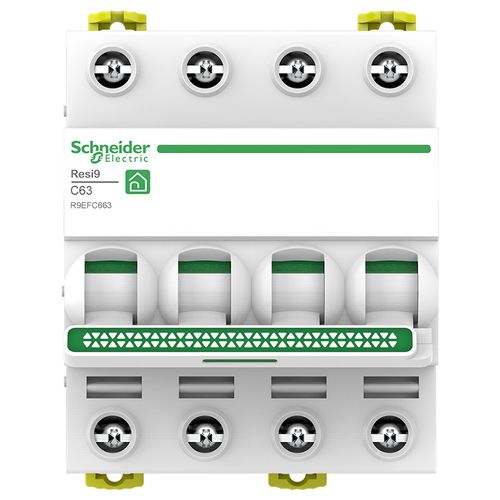
Three-Phase MCBs: 3P, 3P+N, and 4P Explained
For three-phase power systems, breakers come in three forms:
◆ 3P: Protects only the three-phase lines. Suitable for purely three-phase equipment without a neutral load.
◆ 3P+N: Adds a neutral wire without breaking it. This allows a mix of three-phase and single-phase loads.
◆ 4P: Breaks all three phases and the neutral wire simultaneously. Offers the highest level of protection, especially for unbalanced loads and systems with harmonics.
Types of 4P MCB Neutral Pole Options
Not all 4P MCBs are created equal. The neutral pole (N) can behave differently based on the model:
◆ Type A: N-pole is permanently connected; it does not open or close with the other poles.
◆ Type B: The N-pole is not protected but opens and closes along with the other poles.
◆ Type C: The N-pole is protected and opens and closes with the other poles.
◆ Type D: The N-pole is protected but remains permanently connected.
If you're dealing with high harmonic distortion from devices like LED lights or variable speed drives, use a 4P breaker with N-pole protection.
Final Thoughts: Why MCB Selection Matters
Choosing the right MCB isn't just about codes—it's about protecting people, property, and equipment.
Using the wrong MCB type can cause serious consequences, from nuisance tripping to dangerous overheating and electrical fires.
Knowing MCB types and uses helps you confidently choose the right protection for any situation.
Need Help? Send Us an Inquiry!
Still not sure which MCB type suits your needs? Let us help. Our technical team is here to help you choose the right product for your residential, commercial, or industrial needs.
👉 Send us an inquiry today, and we’ll guide you toward a safer, more reliable electrical solution.