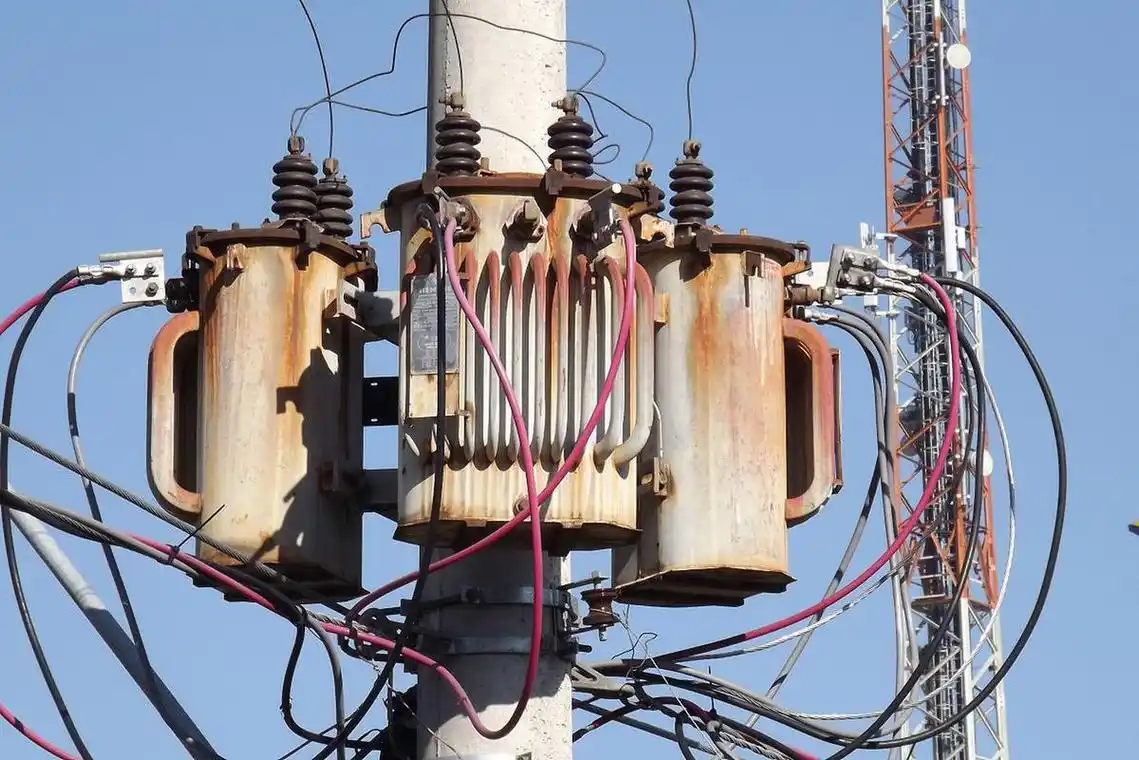
What is a grounding transformer?
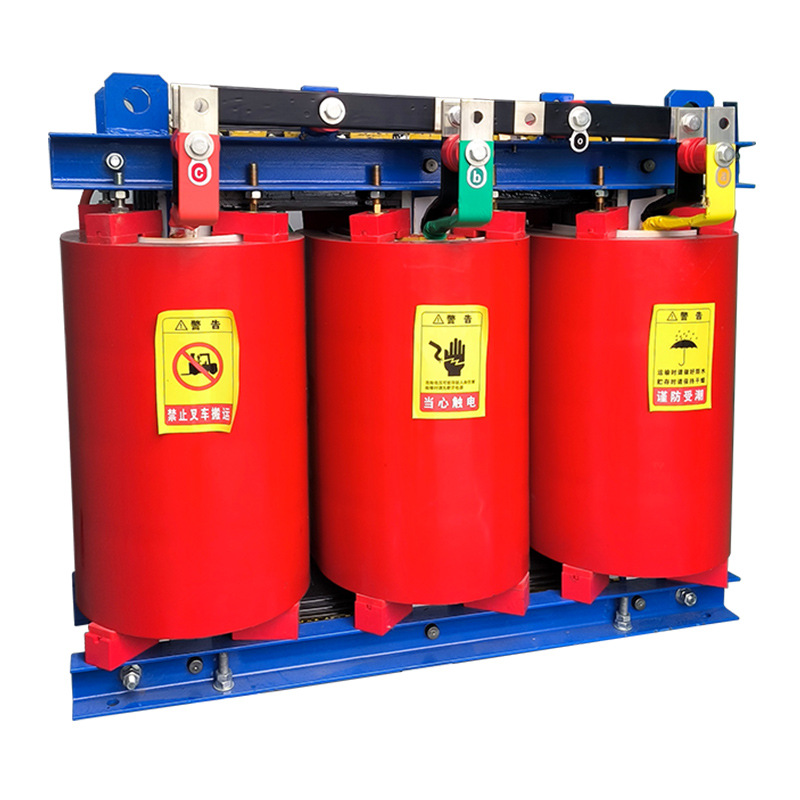
A grounding transformer, also known as an earthing transformer, is a specialized auxiliary device. You can think of it as a safety valve for power grids.
In certain electrical networks, like those at a power plant's generator outlet, there’s no direct connection to the earth or a "neutral point." The earthing transformer solves this problem.
It artificially creates a stable, earthable neutral point. When a dangerous earth fault occurs, the transformer can safely discharge the massive fault current to the ground, protecting the entire grid.
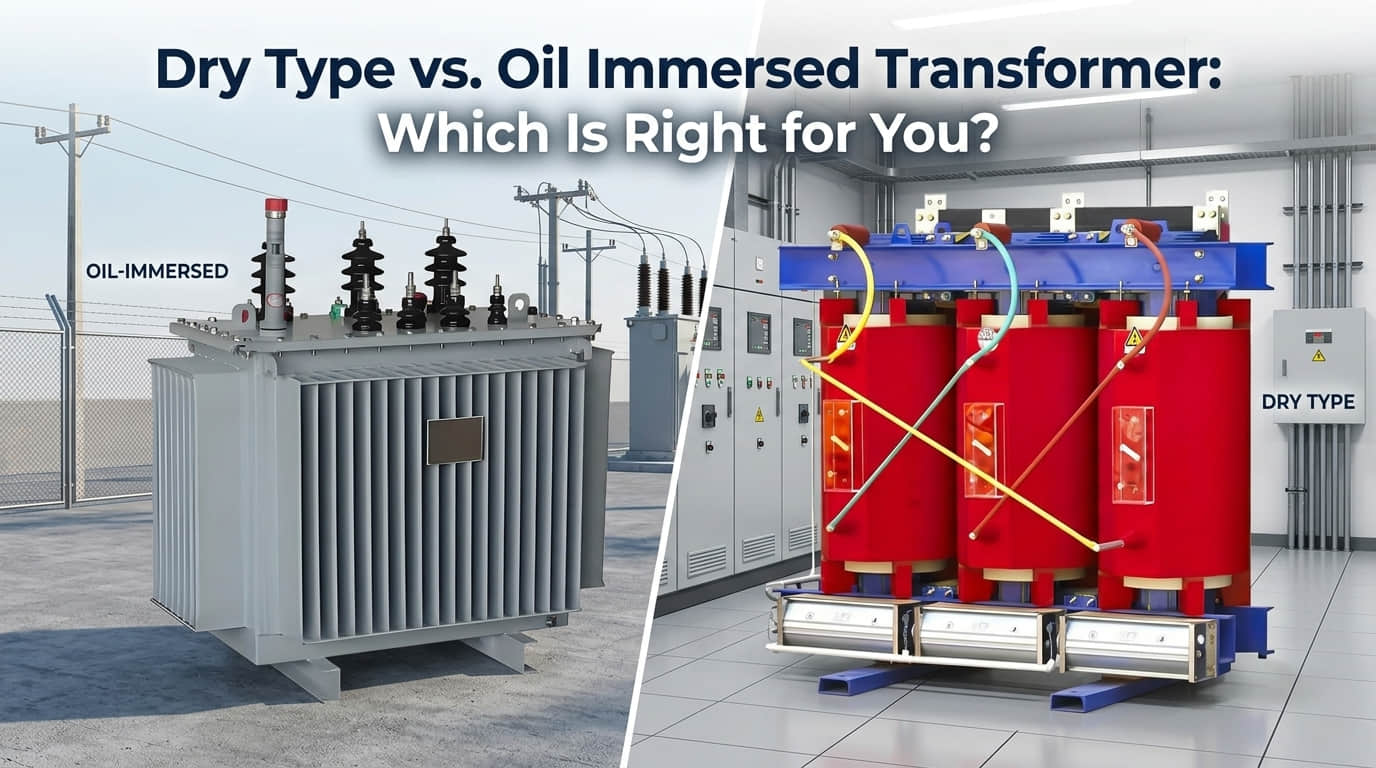
Depending on their internal components, these transformers can be oil-immersed or dry-type. They are available in both three-phase and single-phase configurations.
Part One: Core Functions
Earthing transformers exist to make power systems more resilient to single-phase earth faults. Their role goes far beyond just providing a neutral point.
They also enable a range of crucial protection mechanisms.
Creating an Artificial Neutral PointMany power systems, especially in medium and low-voltage grids, use a delta connection that doesn't have an accessible neutral point. When an earth fault happens, the fault current is too small to be detected by standard protection devices.
The earthing transformer creates a stable neutral point on the system bus. It provides a stable reference for zero-sequence current to flow, ensuring the fault current has a clear path.
Providing a Path for Fault CurrentIn a balanced three-phase system, the sum of currents is zero. But a zero-sequence current is generated when an earth fault occurs.
Without an earthing transformer, this current can't form a complete loop and can't be cleared. The transformer provides a low-impedance "highway" for the zero-sequence current to flow from the fault point, through the ground, and back to the fault circuit.
Limiting Overvoltage ungrounded systems, a single-phase earth fault can cause the voltage of the two healthy phases to rise sharply. This overvoltage can severely stress equipment insulation and even trigger further short circuits.
The earthing transformer quickly guides the fault current to the ground, allowing the voltage of the healthy phases to stay within a safe range. This protects expensive equipment.
Ensuring Reliable Protection earthing transformer and relay protection devices work together as a perfect partnership. The current path it provides allows current transformers (CTs) to detect a clear zero-sequence current.
This signal is sent to an overcurrent relay, which then trips the circuit breaker on the faulty line. This reliable and automated process ensures the fault is contained to the smallest possible area without affecting the entire grid.
Suppressing HarmonicsUnbalanced or non-linear loads can generate zero-sequence harmonics in the system. The earthing transformer, especially with its unique zigzag winding, acts like a filter.
It provides a path for these harmonics to flow to the ground, preventing them from propagating. This helps to improve power quality.
Part Two: Structure and Types
A Deep Dive into Zigzag. The most critical design of an earthing transformer is its zigzag connection. This special configuration provides a low-impedance path for zero-sequence current while maintaining high impedance to all other currents, as outlined by IEEE C57 series standards [1].
Each phase coil is divided into two groups and wound in opposing directions on the same core leg. The genius of this design lies in its behavior.
During normal operation, the magnetic flux generated by the opposing windings cancels itself out, giving the transformer extremely high impedance. This means it draws only a tiny exciting current, essentially operating with no load.
However, during an earth fault, the zero-sequence current flowing through the windings is no longer canceled. The transformer's impedance drops to a very low level, providing an unobstructed path for the fault current to flow.
Key Differences from Conventional Transformers earthing transformer’s unique zigzag connection makes it different from a conventional power transformer. For example, its zero-sequence impedance is extremely low, while a conventional transformer's is much higher.
A Z-type earthing transformer can handle an arc-suppression coil with up to 90-100% of its capacity, while a conventional transformer is typically limited to less than 20% of its capacity for this purpose.
The conventional transformer's main job is to transmit energy, whereas the earthing transformer’s main job is safety. It operates with no load under normal conditions but must endure a massive, short-duration current during a fault. This operational state is fundamentally different from a conventional transformer.
Part Three: Faults and Sequence Components
To grasp how an earthing transformer works, you must understand three key concepts: positive, negative, and zero-sequence components. They are powerful tools for analyzing asymmetrical faults.
What Are the Sequence Currents? Positive-sequence current represents the normal operation of a system with balanced phase vectors. Negative-sequence current also has 120-degree phase separation, but its phase sequence is reversed. Zero-sequence current is the simplest to understand because all three phases are perfectly in unison.
Sequence Components in Different Faults three-phase short-circuit is a symmetrical fault, so it only has positive-sequence components. A single-phase earth fault is asymmetrical, so it has all three: positive, negative, and zero-sequence components.
Two-phase short circuits are also asymmetrical but only contain positive and negative-sequence components. A two-phase-to-earth short circuit, however, contains all three. A zero-sequence current is always present whenever there's an earth fault, while a negative-sequence current is always present whenever there's an asymmetry.
Part Four: Risks in an Ungrounded System
In an ungrounded system, a single-phase earth fault can trigger a series of dangerous chain reactions. The most hazardous is arcing earth fault overvoltage.
Arcing Fault Overvoltage overvoltage is generated when a single-phase earth fault arc intermittently extinguishes and re-ignites. It can reach over four times the normal phase voltage. The long duration can severely damage electrical insulation.
The prolonged high voltage can cause breakdowns in weak insulation points, leading to equipment damage and financial losses.
Ferroresonance Overvoltage certain situations, the transformer's inductance and the line's capacitance can enter a state of series resonance. This causes ferroresonance overvoltage.
It can burn out voltage transformers and damage surge arresters.
Part Five: Application and Maintenance
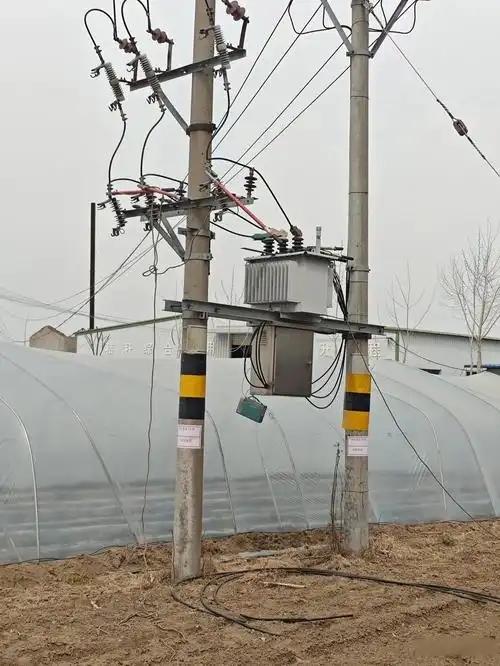
Typical ApplicationsEarthing transformers are used for generator neutral point grounding to protect windings from faults. They are also used for busbar systems in large substations to ensure that a single-phase fault can be quickly isolated.
Long cable lines often have high capacitance to the ground. In this case, an earthing transformer is used to effectively eliminate the risk of intermittent arcing overvoltage.
Use as a Station Transformer addition to their core function, earthing transformers can also be used for auxiliary power. Some Z-type transformers have a secondary winding that can supply low-voltage equipment within the substation, such as battery chargers and ventilation fans.
Using the same transformer for multiple purposes helps to save on investment costs.
Maintenance, though earthing transformers typically operate at no load, proper maintenance is crucial. They must be ready for a fault at all times.
This includes regular visual inspections of the transformer's external appearance, oil level, and bushing cleanliness. Periodic electrical performance tests are also necessary to assess their overall health.
Part Six: Neutral Point Grounding with an Arc-Suppression Coil
In certain power grids, an earthing transformer is paired with an arc-suppression coil. This setup forms a neutral point grounding system with an arc-suppression coil.
The Arc-Suppression CoilAn arc-suppression coil is a special inductor that's connected in series between the earthing transformer's neutral point and the ground. It generates an inductive current that's in the opposite direction of the fault's capacitance current.
This effectively makes the current at the fault point very small or even zero. This method can automatically clear momentary faults without tripping a relay or circuit breaker, which significantly improves the reliability of the power system.
Compensation MethodsThere are three different operating modes to accurately counteract the capacitance current. Underscoring means the inductive current is less than the capacitance current, which can lead to high overvoltage during a fault.
Full compensation means the two currents are equal, which is ideal in theory. However, this can cause the coil to endure very high voltage due to asymmetrical voltages, so it is best to avoid. Over-compensation, where the inductive current is greater than the capacitance current, is the most common practice in engineering.
Why Over-compensation Is PreferredOver-compensation is the preferred method for several reasons. It effectively avoids the risk of high overvoltage and ferroresonance that can occur with under-compensation.
It also offers maintenance convenience. As the power grid expands and its capacitance to ground increases, an over-compensated coil can still function, even if its performance shifts toward under-compensation, without needing an immediate replacement.
The inductive current in this mode also makes the fault phase voltage recover more slowly after the arc is extinguished, preventing the arc from reigniting. This helps to ensure the fault is cleared reliably.
Frequently Asked Questions (FAQ)
Q: What is the fundamental difference between an earthing transformer and a conventional power transformer?
A: The fundamental difference lies in their function and design goals. The conventional power transformer is designed to transmit and convert energy, prioritizing efficiency and capacity. The earthing transformer is designed for system safety, prioritizing its ability to provide a grounding path and limit fault currents.
Q: Why do some systems use an earthing transformer while others are directly grounded?
A: It depends on the system's topology. In systems where the generator or transformer naturally has a star connection with a neutral point, it can be directly grounded. This is common in some high-voltage grids. However, systems that don't have a neutral point, or systems that need to limit fault currents for other reasons, require an auxiliary device like an earthing transformer to create a grounding neutral point.
Q: Can an earthing transformer be used as a conventional power transformer?
A: It is generally not recommended. Although some earthing transformers can provide auxiliary power, this is not their main function. Because their windings are designed to handle large, short-duration currents, their continuous-operation capability and efficiency are much lower than those of a dedicated power transformer.
Q: Can an earthing transformer burn out during a fault?
A: Earthing transformers are designed to withstand short-duration faults. They can handle large fault currents, and as long as the fault is cleared within the specified time, they will not burn out. However, if the fault is not cleared in time and exceeds their short-duration rating, they may overheat and get damaged.
Q: What is the relationship between an earthing transformer and a grounding resistor?
A: In some resistance-grounded systems, an earthing transformer can be used with a grounding resistor. The earthing transformer provides the neutral point, and the grounding resistor is connected in series between the neutral point and the ground. Its purpose is to more precisely limit the fault current and consume some of the fault energy, thereby further reducing the impact on the system.
References: