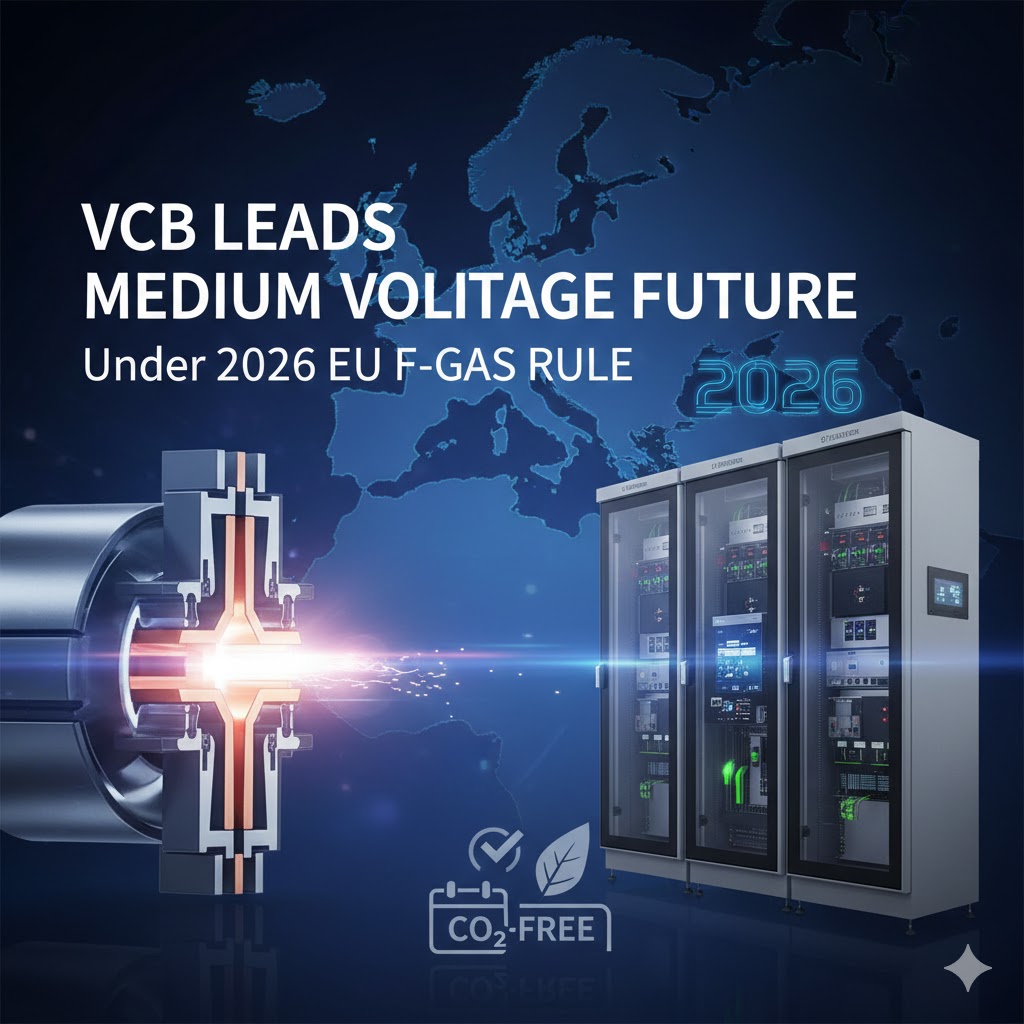
You might already know that SF6 is on its way out…
But are you truly prepared for the impact of the 2026 EU F-Gas Regulation?
Navigating this massive shift in Medium Voltage Distribution can feel overwhelming, especially with strict compliance deadlines looming.
I’ve analysed the data and the alternatives, and the verdict is clear.
VCB isn’t just a compliant option; it is the superior standard.
In this guide, you’ll discover exactly why Vacuum Circuit Breaker technology is the Only Future for Medium Voltage Distribution and how it secures your infrastructure for decades to come.
Let’s dive right in.
Understanding the 2026 EU F-Gas Regulation for Medium Voltage Distribution
The landscape of medium voltage distribution is undergoing a radical transformation driven by stringent environmental mandates. As we transition toward a greener grid, understanding the regulatory framework governing fluorinated gases is no longer optional—it is a critical operational requirement for utilities and industrial enterprises. The shift away from traditional gas-insulated equipment is accelerating, positioning Vacuum Circuit Breaker (VCB) technology as the definitive standard for future-proof infrastructure.
What are F-Gases and Why are They Being Regulated?
Fluorinated greenhouse gases, or F-gases, have long been utilised in the electrical industry for their insulation and arc-quenching properties. Sulfur Hexafluoride (SF6), the most prominent among them, offers excellent technical performance but comes at a steep environmental cost. SF6 is the most potent greenhouse gas known, with a Global Warming Potential (GWP) approximately 23,500 times greater than carbon dioxide.
Regulators are targeting these gases to align with net zero ambitions and global climate accords. The continued use of SF6 poses a significant risk to meeting 2030 deadline climate goals. Consequently, the industry is moving toward SF6-free technologies. Our focus on vacuum insulation technology directly addresses these concerns, eliminating the reliance on high-GWP gases while maintaining the high insulation strength and breaking capacity required for modern power systems.
Key Deadlines for the SF6 Phase-Out in MV Switchgear
The phase-out timeline is aggressive, forcing immediate strategic planning for asset managers. Under the new frameworks, the installation of new MV switchgear relying on fluorinated gases is being systematically banned based on voltage levels.
January 1, 2026: The ban takes effect for new medium voltage switchgear up to and including 24kV. This is the critical threshold for most primary and secondary distribution networks.
January 1, 2030: The restriction extends to equipment up to 52kV.
These deadlines necessitate an immediate shift in procurement strategies. Investing in traditional gas-insulated switchgear now risks acquiring assets that will soon be obsolete. Our range of 12kV, 24kV, and 40.5kV Vacuum Circuit Breakers ensures compliance well ahead of these regulatory cutoffs, safeguarding infrastructure against future legislative penalties.
The Impact of the 2026 Revision on the 2026 Regulatory Landscape
Regulation (EU) 2026/573 has significantly tightened the rules previously set by older F-gas regulations. This 2026 revision closes loopholes and accelerates the transition to F-gas alternatives. It mandates that if a suitable alternative exists—specifically highlighting technologies like vacuum switching—the use of F-gases is prohibited.
Key impacts of this revision include:
Strict GWP Thresholds: The regulation imposes low GWP limits that effectively disqualify SF6 and many blended gas alternatives for new equipment.
Maintenance Restrictions: Tighter controls on switchgear maintenance and leak detection for existing SF6 equipment, increasing operational costs.
Market Certainty: By solidifying the 2026 date for 24kV systems, the regulation signals to manufacturers and electricity companies that vacuum technology is the only viable path forward.
This regulatory pressure validates our commitment to vacuum interrupter technology. By adopting our VCB solutions today, operators eliminate the complex reporting and handling requirements associated with fluorinated greenhouse gases, ensuring a seamless transition to a compliant, eco-friendly grid.
The Environmental and Regulatory Pressure to Eliminate SF6
The push to remove Sulfur Hexafluoride (SF6) from the power grid isn’t just about following new rules; it is a fundamental shift in how we approach medium voltage distribution. For decades, the industry relied on SF6 for its excellent insulation properties, but the environmental cost has become too high to ignore. At Weisho Electric, we see the transition to SF6-free technology not as a burden, but as a necessary evolution toward sustainable infrastructure.
High Global Warming Potential (GWP) of Sulfur Hexafluoride
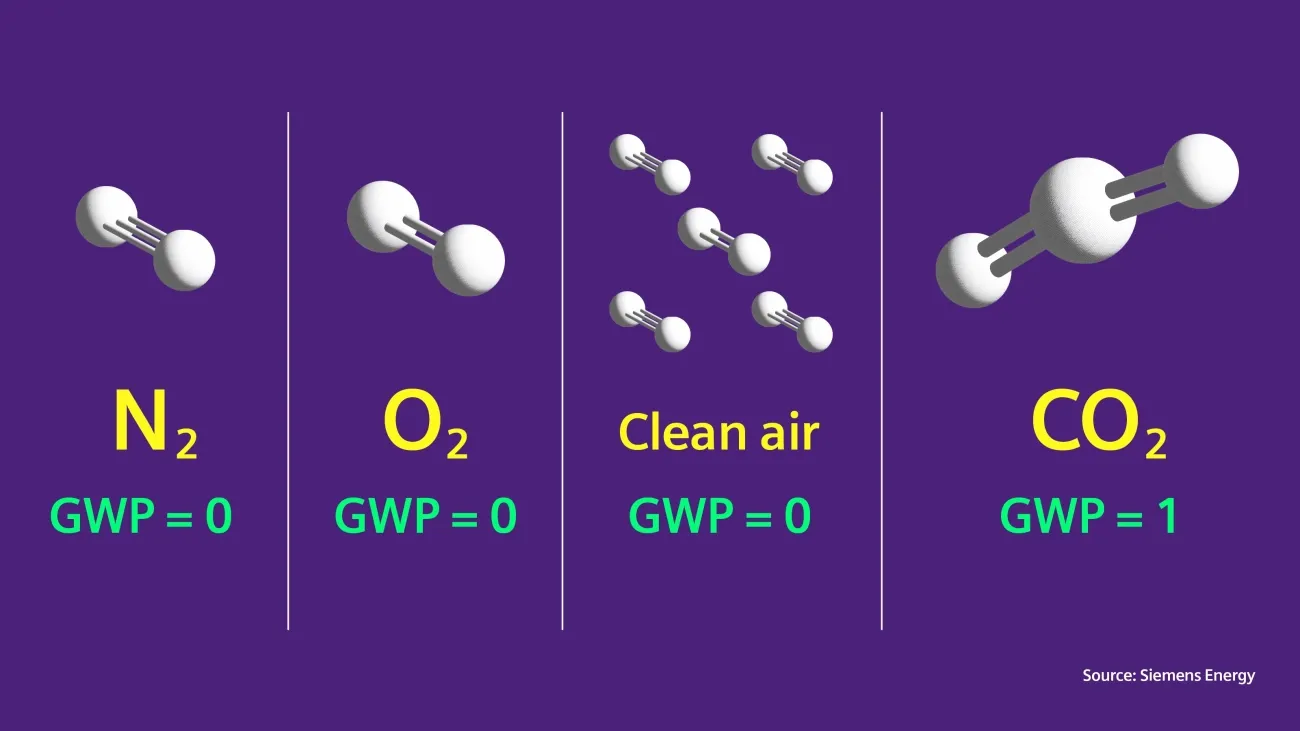
The primary driver behind the SF6 ban and Regulation (EU) 2026/573 is the staggering environmental impact of the gas itself. SF6 has a Global Warming Potential (GWP) of approximately 23,500 times that of CO2, making it the most potent greenhouse gas currently regulated.
Even minor leaks in MV switchgear contribute significantly to greenhouse gas emissions. The new GWP threshold set by European regulators aims to eliminate these emissions entirely from primary distribution and secondary distribution networks. By switching to our vacuum circuit breakers (VCB), utilities eliminate the risk of gas leakage entirely, as our vacuum interrupters rely on a sealed vacuum environment rather than fluorinated gases for arc quenching.
Addressing PFAS Concerns in Alternative Gas Mixtures
As the industry scrambles for F-gas alternatives, a new challenge has emerged: the presence of PFAS (Per- and polyfluoroalkyl substances) in some alternative gas mixtures. While some manufacturers are replacing SF6 with other fluorinated greenhouse gases to maintain dielectric strength, these chemical alternatives often carry their own environmental and toxicity risks.
We believe the safest route is avoiding gas-based insulation for switching operations altogether. Our vacuum technology bypasses the “forever chemical” debate completely. By utilizing high-performance vacuum interrupters and solid insulation materials, we ensure that our equipment remains compliant with future restrictions on chemical substances. Understanding the role of a reliable high-voltage insulator is critical here; our solid insulation designs provide the necessary dielectric strength without relying on hazardous gas mixtures.
Aligning with EU Net-Zero and Sustainability Goals
The 2030 deadline for certain equipment categories is a stepping stone toward the broader 2050 climate goals. Major electricity companies and industrial operators are under immense pressure to demonstrate a clear path to net zero. Continuing to install SF6-based equipment today creates a liability for tomorrow, risking early phase out decommissioning costs before the equipment reaches its natural end of life.
Why Weisho VCBs align with these goals:
Zero Direct Emissions: No SF6 or F-gases used in the switching process.
Long Lifespan: Our VCBs (like the VSI and ZN85 series) offer high mechanical life, reducing manufacturing waste.
Compliance Ready: Fully aligned with the industry initiative for green power distribution.
Investing in vacuum technology now ensures your infrastructure is future-proof, avoiding the regulatory headaches associated with SF6 emissions reporting and potential future taxes on pollutants.
Why VCB (Vacuum Circuit Breaker) is the Leading SF6-Free Alternative
As the industry faces the SF6 ban and stricter environmental mandates, Vacuum Circuit Breakers (VCB) have emerged as the most viable solution for medium voltage distribution. Unlike complex gas mixtures that still rely on chemical engineering to suppress arcs, vacuum technology uses a simple, physical principle: a vacuum has high insulation strength. At Weisho Electric, we have focused our engineering on SF6-free designs that meet the 2026 EU F-Gas Regulation without compromising on power handling. This shift isn’t just about compliance; it is about adopting a cleaner, more robust technology for the future of the power grid.
The Proven Reliability of Vacuum Interruption Technology
The core advantage of our VCBs lies in the vacuum interrupter. In a vacuum, there is nothing to ionize other than the contact material itself, which allows for rapid recovery of dielectric strength after an arc is extinguished. This results in superior arc quenching capabilities compared to gas or oil alternatives. Our breakers are designed to handle rigorous switching duties across various voltage levels, ranging from 12kV up to 40.5kV.
For operators concerned with stability, understanding how to check vacuum in a vacuum circuit breaker is straightforward, ensuring long-term operational confidence. The technology provides consistent breaking capacity, often rated between 20kA and 50kA, making it highly reliable for protecting critical electrical equipment.
Maintenance-Free Operations and Extended Lifecycle
One of the biggest pain points in MV switchgear management is maintenance. Traditional gas-insulated systems require constant leak detection and gas handling procedures. Our vacuum interrupters eliminate this burden entirely. Since the contacts are sealed in a permanent vacuum, they are isolated from external contaminants and oxidation.
No Gas Monitoring: Eliminates the need for pressure gauges or refilling fluorinated greenhouse gases.
Long Electrical Life: The sealed environment prevents contact degradation, supporting a high number of operations.
Reduced Downtime: The primary circuit is essentially maintenance-free, significantly lowering operational costs over the equipment’s lifespan.
Compact Design and Footprint Compatibility with Existing Systems
Space is often a premium in substations and industrial plants. We design our VCBs, such as the VSI and ZN85 series, with a modular approach that maximizes performance in a compact footprint. This makes them ideal for retrofitting existing primary distribution infrastructure where expanding the physical space isn’t an option.
The modular operating mechanisms—whether spring-operated or permanent magnet—allow for easy integration into standard switchgear cabinets. This compatibility ensures that upgrading to SF6-free technology does not require a complete overhaul of your facility’s layout. By choosing compact vacuum solutions, utilities and industrial users can seamlessly transition away from high GWP equipment while maintaining the exact physical dimensions required by their current setups.
Comparing VCB with Other SF6-Free Technologies
As the industry scrambles to meet the 2026 EU F-Gas Regulation, utilities and facility managers are evaluating several SF6-free paths. While the goal is identical—eliminating fluorinated greenhouse gases—the technologies available for MV switchgear differ drastically in performance, footprint, and maintenance requirements. At Weisho Electric, we firmly believe that vacuum technology offers the most robust solution for primary distribution and secondary distribution networks compared to legacy or experimental alternatives.
VCB vs. Air-Insulated Switchgear (AIS)
Air-Insulated Switchgear (AIS) has been around for decades, relying on ambient air for insulation. While it is technically SF6-free, it comes with significant trade-offs when compared to our Vacuum Circuit Breaker (VCB) solutions.
Footprint: Air has a much lower dielectric strength than a vacuum. To achieve the same insulation level at 12kV or 24kV, AIS requires significantly larger physical clearances between phases and to the ground. Our VCBs offer a compact design that fits easily into space-constrained substations.
Environmental Sensitivity: AIS is highly susceptible to humidity, dust, and pollution, which can compromise insulation. Weisho VCBs utilize sealed vacuum interrupters that are impervious to external environmental factors, ensuring consistent performance.
Arc Quenching: In AIS, the arc is extinguished in air, often requiring bulky chutes and generating ionized gas. Vacuum interrupters quench arcs efficiently within a sealed chamber, preventing any external emissions.
VCB vs. Alternative Gas Mixtures (F-Gas Free)
Some manufacturers are pivoting to F-gas alternatives—proprietary gas mixtures designed to replace SF6 without the high Global Warming Potential (GWP). While these mixtures lower the carbon footprint, they often retain the operational headaches associated with gas-insulated equipment.
Leak Detection Requirements: Even with “green” gases, operators must still manage pressure vessels and perform regular leak detection. If the gas leaks, the insulation integrity fails. Weisho VCBs eliminate this risk; there is no gas to monitor or replenish.
Chemical Complexity: Alternative gases can produce unknown byproducts during arcing. Vacuum technology is chemically inert.
Lifecycle Costs: Gas-based systems require specialised handling equipment for filling and recovery. Our vacuum solutions are “install and forget” regarding the insulation medium, drastically reducing switchgear maintenance costs over the equipment’s lifespan.
Why Vacuum Technology Wins on Operational Complexity
The shift to net zero shouldn’t mean adding complexity to your power grid. Weisho’s approach focuses on mechanical simplicity and durability. Our vacuum interrupters are paired with modular spring or permanent magnet operating mechanisms, designed for high mechanical endurance (up to 20,000 operations).
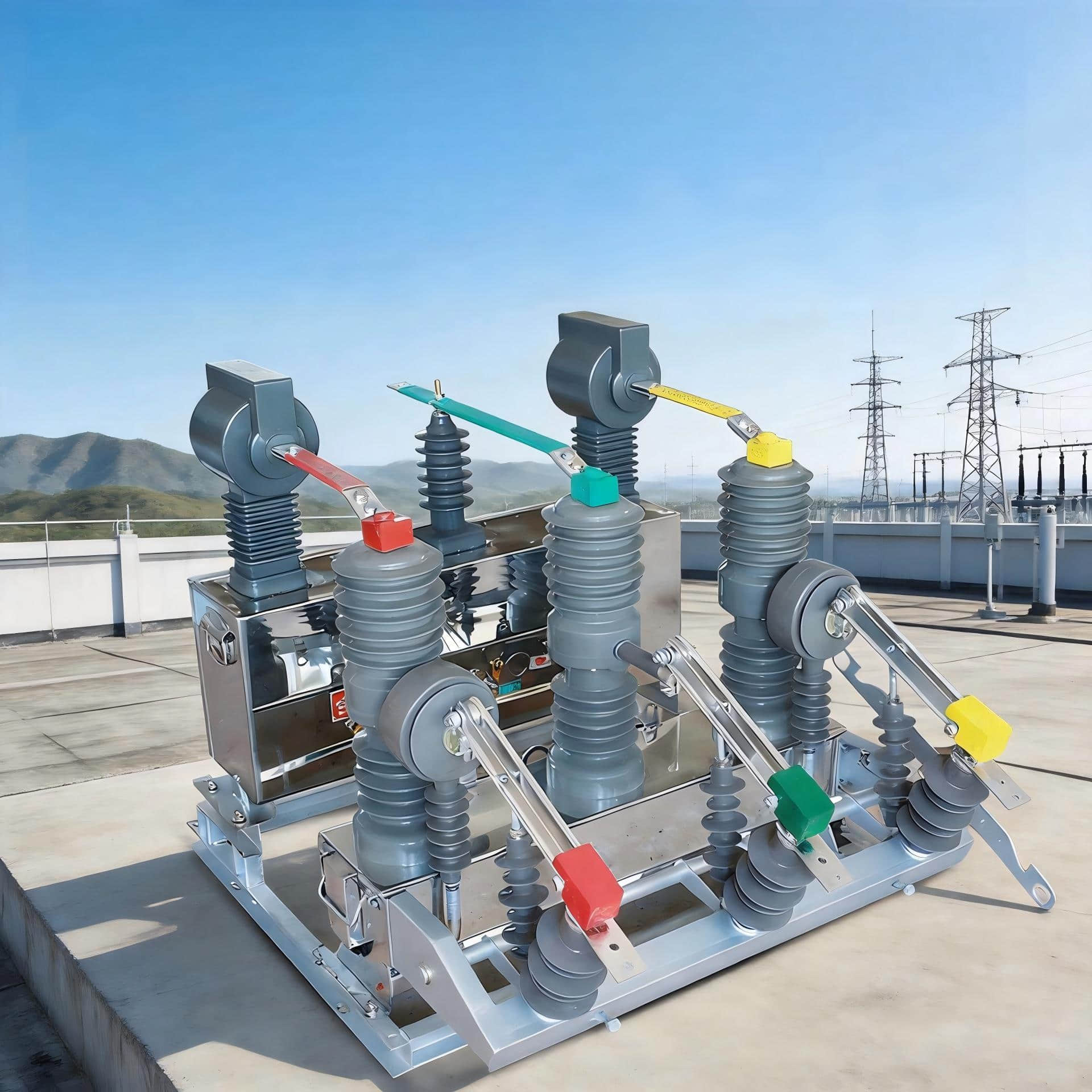
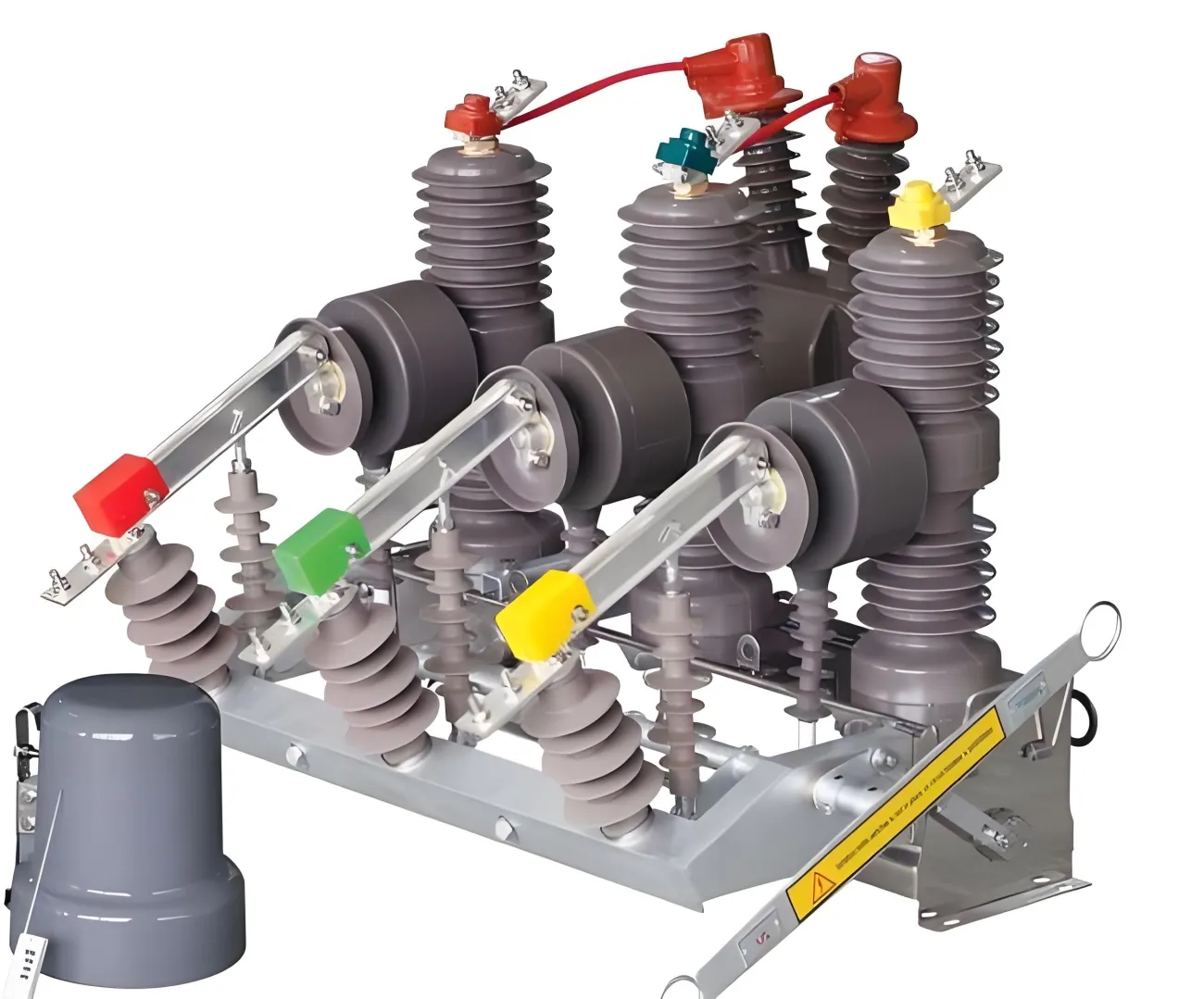
This reliability extends to demanding environments. For instance, our ZW10-12 Outdoor Vacuum Circuit Breaker demonstrates how vacuum technology provides superior breaking capacity and anti-condensation properties without relying on complex gas insulation systems.
Key Operational Advantages:
Maintenance-Free Interrupters: The primary circuit requires no maintenance for the duration of its electrical life.
Safety: No risk of explosion from gas pressure buildup.
Adaptability: Suitable for diverse applications, from data centers to heavy industrial mining, handling rated currents up to 4000A and breaking capacities up to 50kA.
Technical Advantages of VCB in Medium Voltage Applications
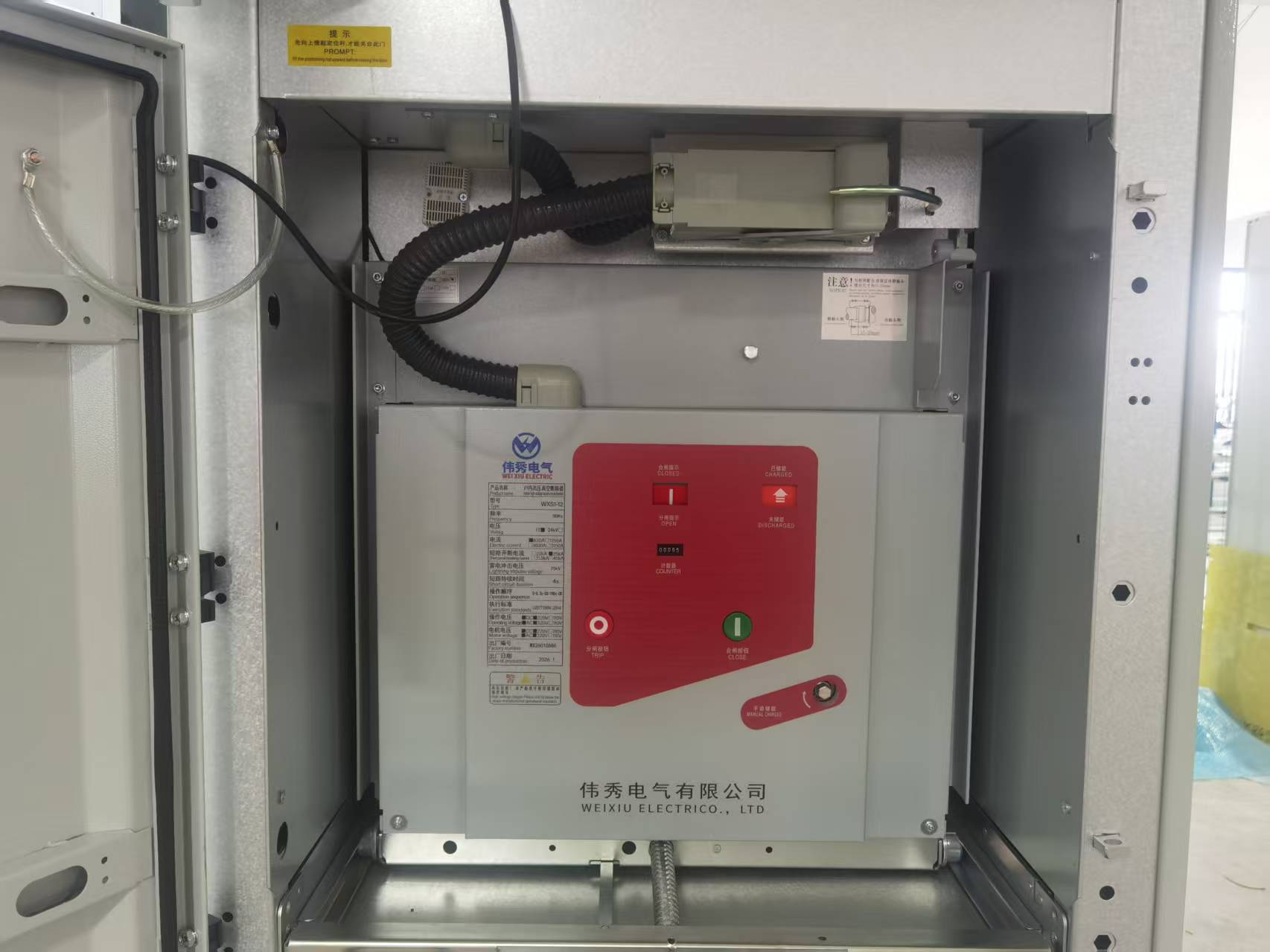
When we look at the future of MV switchgear, the shift isn’t just about meeting the Regulation (EU) 2026/573 or avoiding penalties. It is about upgrading to technology that outperforms legacy systems. At Weisho Electric, we see Vacuum Circuit Breakers (VCB) as the definitive technical standard for voltage levels ranging from 12kV up to 40.5kV. The physics of vacuum interruption offers distinct operational edges that gas and air simply cannot match.
Superior Arc Quenching Capabilities and Performance
The core advantage of our VCB technology lies in the vacuum interrupter. Since a vacuum has exceptionally high dielectric strength, the arc produced during circuit separation is extinguished almost instantly at the first current zero. There is no medium to sustain the arc, unlike in oil or air systems.
This capability allows our breakers to handle high short-circuit breaking currents—ranging from 20kA to 50kA—without significant contact erosion. Whether you are managing primary distribution in a utility substation or secondary distribution in an industrial plant, the rapid recovery of dielectric strength ensures system stability.
Performance Metrics of Weisho VCBs:
| Feature | Specification Range | Benefit |
|---|---|---|
| Voltage Rating | 12kV – 40.5kV | Versatile for diverse grid requirements. |
| Breaking Capacity | 20kA – 50kA | Handles severe fault currents reliably. |
| Mechanical Life | High Cycle Count | Ideal for frequent switching operations. |
| Insulation | Vacuum + Solid/Air | Zero SF6 emissions or leakage risks. |
Safety Benefits for Personnel and Infrastructure
Eliminating fluorinated greenhouse gases does more than just lower Global Warming Potential (GWP); it removes a significant hazard from the workplace. SF6-free vacuum bottles are hermetically sealed for life. This eliminates the need for expensive leak detection systems and removes the risk of exposure to toxic byproducts created when SF6 gas decomposes under arcing.
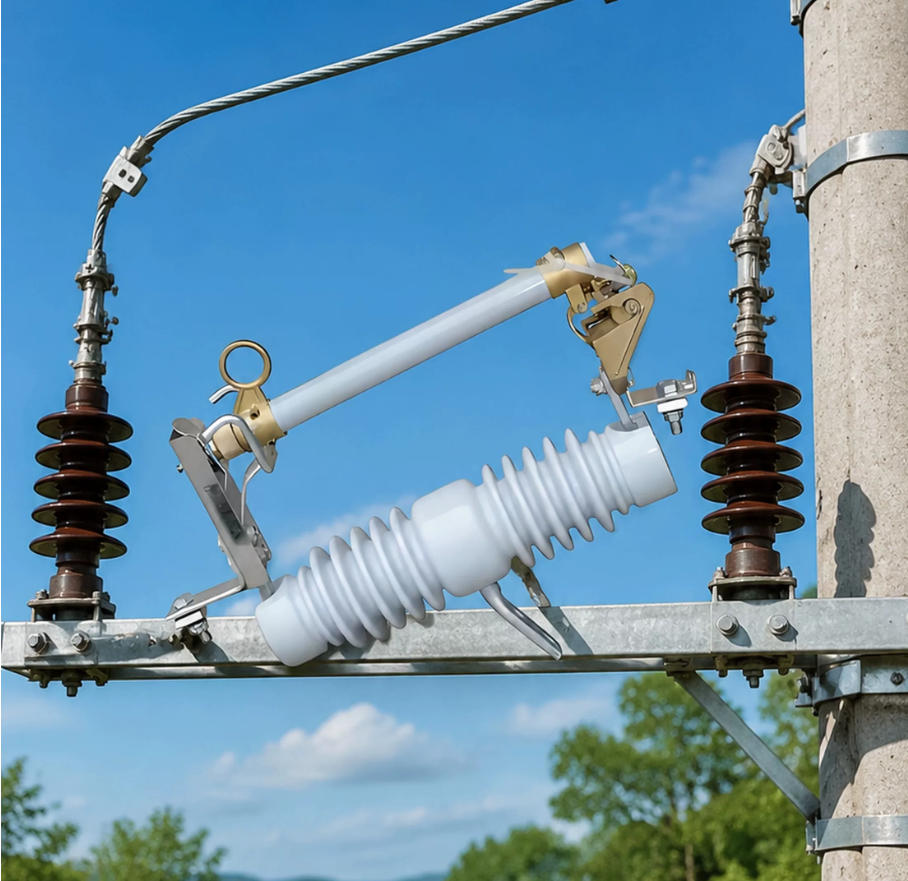
For maintenance teams, safety relies on visible isolation and reliable grounding. While the VCB handles the fault current, integrating a robust GN30-12 Indoor Disconnect Switch ensures that the circuit is physically and visibly isolated during service work. This combination of a maintenance-free vacuum breaker for protection and a high-quality disconnector for isolation creates the safest possible environment for electrical equipment operators.
Integration with Digital and Smart Grid Solutions
Modern power grids and data centres demand more than just mechanical switching; they require intelligence. Our VCBs are designed with modular operating mechanisms—both spring-operated and permanent magnet types—that integrate seamlessly with smart grid automation.
Remote Operation: Fast response times make them ideal for automated fault isolation and grid reconfiguration.
Compact Footprint: The high insulation strength of vacuum allows for smaller switchgear dimensions, saving valuable floor space in urban infrastructure.
Durability: With the ability to withstand extreme temperatures (-25°C to +40°C) and altitudes up to 3000m, these units are ready for the diverse conditions found across the United States and Europe.
By adopting this technology, electricity companies are not just hitting net zero targets; they are building a resilient, digitised infrastructure ready for the demands of 2030 and beyond.
Preparing Your Infrastructure for the SF6-Free Transition
The shift away from fluorinated greenhouse gases is no longer a distant target; with Regulation (EU) 2026/573 taking effect, the clock is ticking for utilities and industrial facilities to adapt. Transitioning your medium voltage network requires a proactive approach to avoid compliance penalties and operational bottlenecks as the 2026 deadline approaches. We view this not just as a regulatory hurdle, but as an opportunity to modernise the power grid with more reliable, sustainable technology.
Assessing Current MV Distribution Assets and Compliance
The first step in any SF6-free transition strategy is a comprehensive audit of your existing electrical equipment. You need a clear inventory of every piece of MV switchgear currently in operation, specifically identifying units that rely on Sulfur Hexafluoride for insulation or arc quenching.
Inventory Audit: Catalogue all primary distribution and secondary distribution assets, noting their installation date, voltage levels (such as 12kV, 24kV, or 40.5kV), and current condition.
Leakage Analysis: Review maintenance logs for SF6 emissions and the history of gas refills. Older units with higher leakage rates should be prioritised for phase-out decommissioning.
Regulatory Gap Analysis: Compare your current fleet against the new GWP threshold mandates. Equipment exceeding these limits faces strict controls and eventual prohibition.
Understanding the scope of your liability regarding fluorinated greenhouse gases allows you to prioritise which substations or industrial feeds require immediate intervention.
Strategic Planning for Equipment Replacement and Upgrades
Once you have identified non-compliant assets, the focus shifts to selecting the right replacement technology. We advocate for Vacuum Circuit Breakers (VCB) as the standard because they eliminate the complexity of F-gas alternatives entirely. When planning your upgrades, consider the total cost of ownership rather than just the upfront price.
Key considerations for your roadmap:
Modular Retrofitting: Look for VCBs with modular operating mechanisms (spring or permanent magnet) that can fit into existing switchgear compartments, minimising infrastructure changes.
Voltage Compatibility: Ensure the new breakers match your specific grid requirements, whether you are operating at standard 12kV or pushing up to 40.5kV.
Quality Investment: When budgeting for this shift, remember that investing in high-quality vacuum circuit breakers prevents costly downtime compared to budget alternatives that fail prematurely.
By choosing vacuum technology, you align your infrastructure with net-zero objectives while bypassing the uncertainty of transitional gas mixtures.
Training and Certification for New Technology Standards
Moving to vacuum technology changes the operational requirements for your maintenance teams. Unlike gas-insulated systems that require strict leak detection protocols and gas handling certification, VCBs are largely maintenance-free regarding the primary circuit. However, electricity companies must still update their technical training to align with these new standards.
Your team should be trained on:
Mechanical Inspections: Understanding the wear indicators on vacuum interrupters and the mechanical life of the operating mechanism.
Environmental Safety: Recognising that while VCBs eliminate greenhouse gas emissions, they still require proper handling during installation and end-of-life recycling.
Smart Integration: Many modern VCBs, like our ZW32 series, integrate with smart grid automation. Technicians need the skills to manage these digital interfaces.
Preparing your workforce now ensures a smooth handover as you decommission legacy SF6 gear and activate your new, compliant MV switchgear.