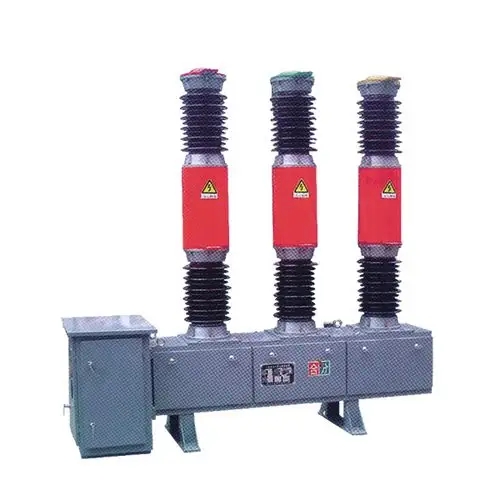
Definition and Basic Function
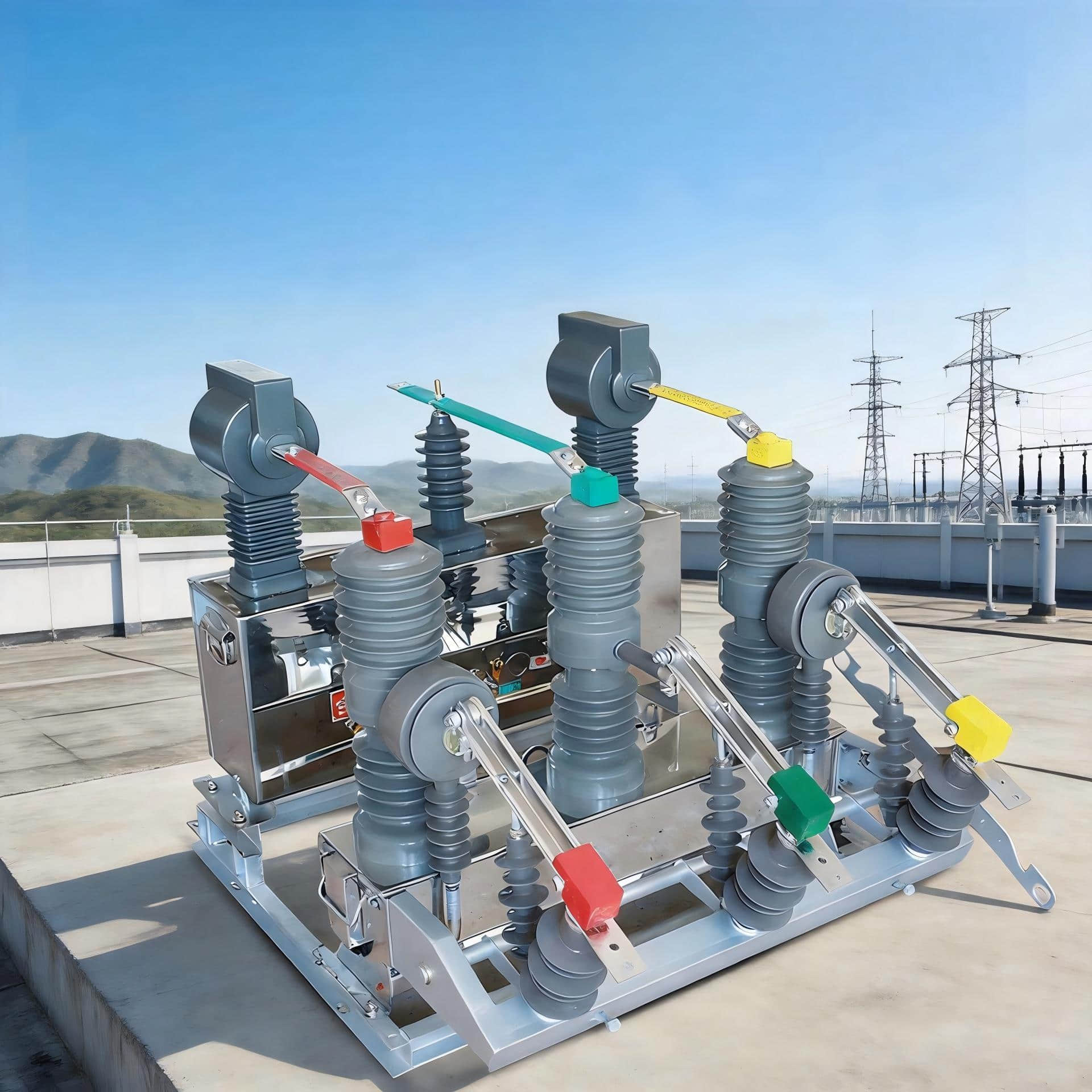
An SF6 gas circuit breaker is a type of high-voltage switchgear that utilizes sulfur hexafluoride (SF6) gas as the primary medium for insulation and arc extinction. At Weisho Electric, our breakers are engineered to protect electrical power systems by interrupting current flow during faults or normal operation. These devices are essential for maintaining the stability of industrial, commercial, and utility grids.
Designed for robust performance, our LW series breakers operate across a wide voltage range, including 40.5kV, 72.5kV, 110kV, and 220kV. Whether installed in indoor switchgear or outdoor substations, the primary function is to isolate faulty circuits instantly, preventing damage to expensive infrastructure and ensuring personnel safety.
Key Functional Characteristics:
High-Voltage Protection: Capable of handling loads up to 220kV.
Versatile Installation: Suitable for both indoor and outdoor environments.
Standard Compliance: Built to meet UL, IEC, and ANSI international standards.
The Role of Sulfur Hexafluoride in Arc Quenching
The effectiveness of an SF6 circuit breaker relies heavily on the unique physical properties of sulfur hexafluoride gas. When the breaker contacts separate to stop the flow of electricity, a high-temperature electric arc forms. SF6 gas possesses excellent electronegative properties, meaning it rapidly absorbs free electrons from the arc path.
This process allows the gas to cool and extinguish the arc within milliseconds, restoring the dielectric strength between the contacts almost instantly. This superior arc-quenching capability enables our breakers to handle higher voltages with a more compact design compared to other technologies. Furthermore, the stability of the gas contributes to the exceptional longevity of Weisho Electric products, offering a service life of 20–30 years with minimal maintenance requirements.
Essential Properties of SF6 Gas
To understand why we rely on Sulfur Hexafluoride in our high-voltage equipment, you have to look at the gas itself. It isn’t just a random filler; it is a carefully chosen medium that allows our LW series breakers to operate reliably for 20 to 30 years. The specific properties of this gas are exactly why use sf6 gas in circuit breaker designs is the standard for voltages ranging from 40.5kV up to 220kV.
Physical and Chemical Characteristics
At its core, SF6 is a heavy, man-made gas that provides a stable environment for electrical components. We choose it because it remains chemically inert under most operating conditions, meaning it doesn’t react aggressively with the breaker’s internal parts. This stability is crucial for maintaining the long service life of our switchgear without constant degradation.
Key physical traits include:
Inertness: It is chemically stable, non-flammable, and non-corrosive, which protects the internal contacts from oxidation.
Safety Profile: In its pure state, the gas is colorless, odorless, and non-toxic, making it safe for operators when handled correctly.
Thermal Conductivity: It has excellent heat transfer capabilities, which help dissipate the intense heat generated during current interruption.
Density: It is about five times heavier than air, which aids in its ability to cool arcs efficiently.
Dielectric and Electrical Properties
The primary reason we utilize this gas is its superior ability to stop electricity from jumping gaps where it shouldn’t. SF6 has a dielectric strength roughly 2.5 to 3 times that of air at atmospheric pressure. This allows us to design compact breakers that can still handle massive loads, similar to how high-voltage porcelain insulators manage electrical stress in substations.
Electrical benefits that drive performance:
Electronegativity: The gas molecules rapidly capture free electrons to form heavy negative ions. This process effectively sucks the energy out of an electrical arc, preventing it from restriking.
Arc Quenching: It is approximately 100 times more effective at extinguishing arcs than air. When an arc forms, the gas absorbs the energy and cools the channel within milliseconds.
Recombination: After the arc is extinguished, SF6 molecules that decomposed under heat quickly recombine back into their original state, ensuring the breaker is ready for the next operation immediately.
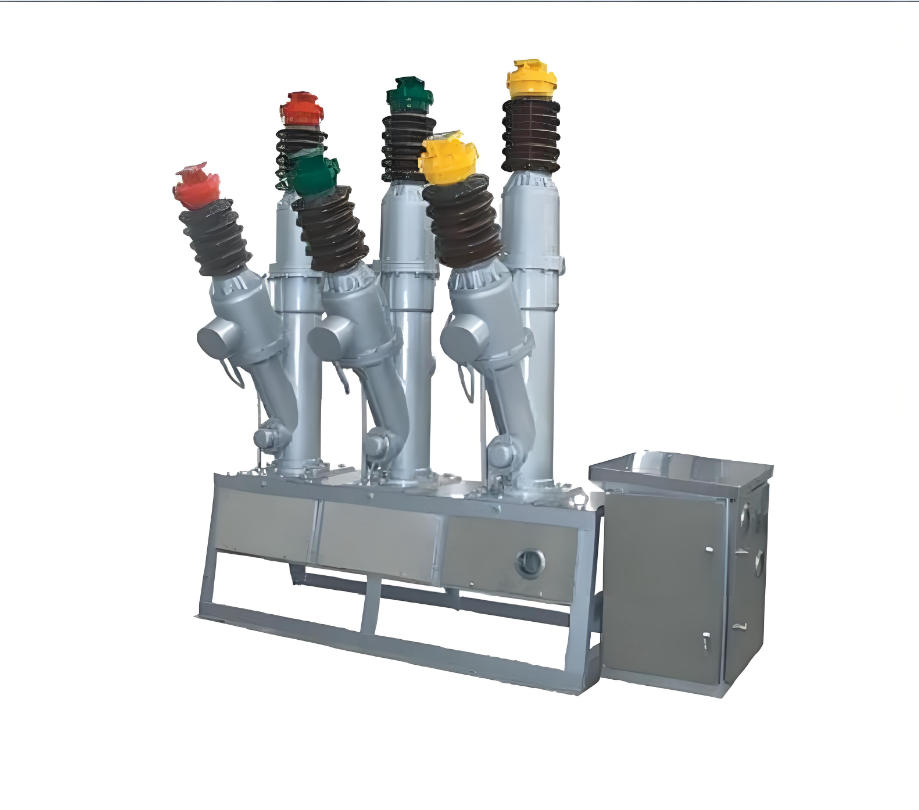
The Primary Types of SF6 Circuit Breakers
When evaluating high-voltage switchgear for industrial and utility power systems, understanding the specific types of SF6 circuit breaker designs is essential. These devices are categorized primarily by how they manage the sulfur hexafluoride gas to extinguish electrical arcs. While the goal is always the same—interrupting current within milliseconds—the internal mechanics differ to suit various voltage levels and maintenance requirements.
Single-Pressure Puffer Type SF6 Breakers
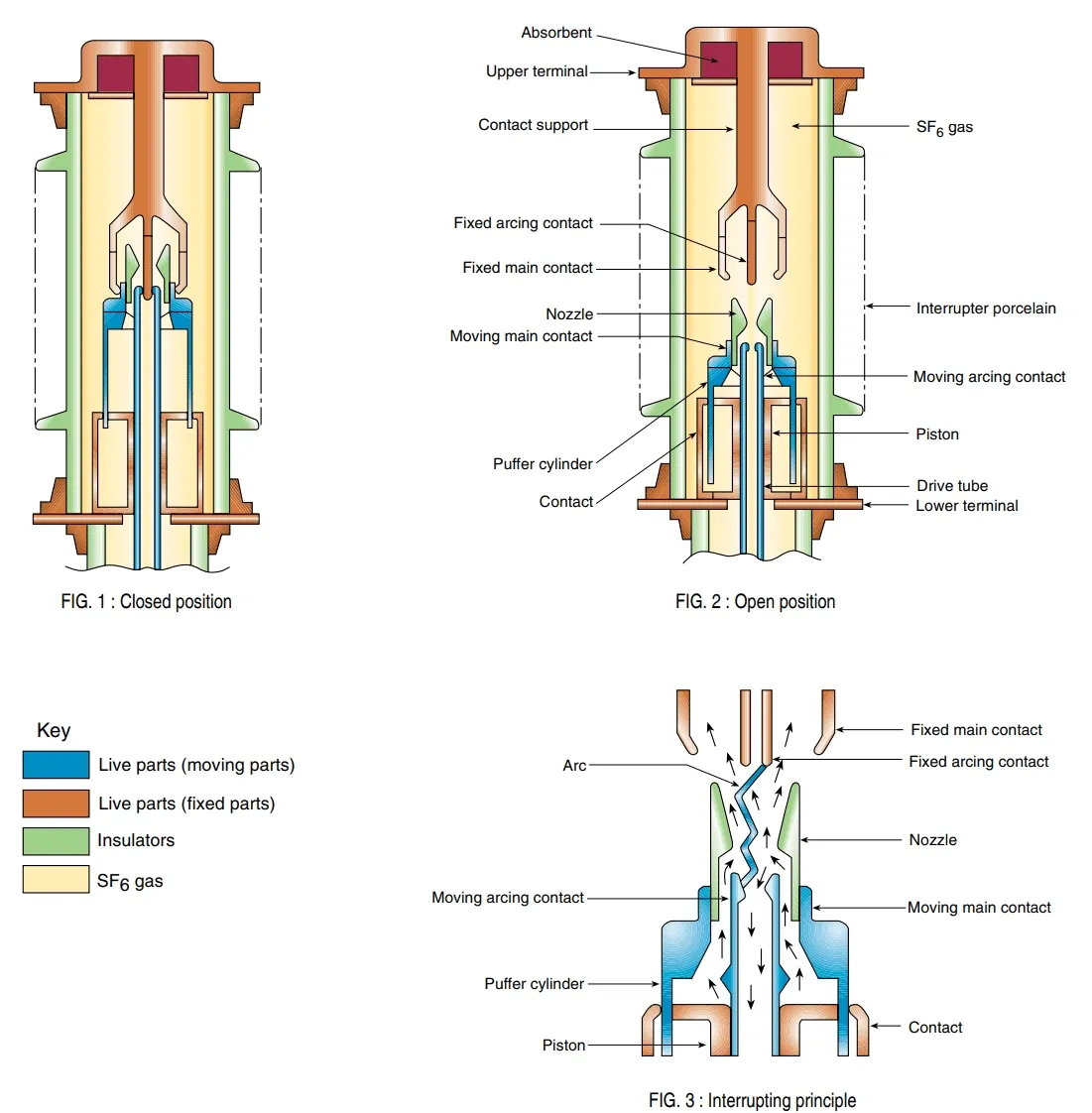
The single-pressure puffer design is the dominant technology in modern high-voltage applications, including our LW series. In this system, the entire breaker body contains SF6 gas at a uniform low pressure. When the breaker opens, a piston attached to the moving contact compresses the gas, creating a high-pressure “puff” that blasts across the arc to extinguish it.
This design is favored for its simplicity and reliability. Because it relies on a mechanical piston rather than complex external compressors, it significantly reduces maintenance needs. For instance, our LW30-220 Outdoor SF6 Circuit Breaker utilizes advanced gas dynamics to ensure rapid arc quenching, offering a service life of 20–30 years with minimal intervention.
Key Features:
Simplified Construction: Fewer moving parts compared to older systems.
High Reliability: Consistent sf6 circuit breaker working principle based on mechanical compression.
Wide Application: Suitable for voltages from 40.5kV up to 220kV.
Double-Pressure SF6 Circuit Breakers
The double-pressure system is an older technology used in the early days of SF6 development. It operates similarly to an air blast circuit breaker, maintaining gas in two separate reservoirs: one at high pressure for arc quenching and one at low pressure for insulation. When the breaker operates, gas is released from the high-pressure tank to the low-pressure tank.
While effective, this design has largely been phased out in favor of single-pressure types due to several drawbacks:
Complexity: Requires a compressor to pump gas back to the high-pressure reservoir after operation.
Maintenance: Higher risk of leakage and mechanical failure due to auxiliary equipment.
Temperature Sensitivity: Often requires heaters to prevent the high-pressure gas from liquefying in cold temperatures.
Non-Puffer Type Designs
For specific high-voltage applications, non-puffer or “self-blast” designs are utilized. Instead of relying solely on a mechanical piston to compress the gas, these breakers use the thermal energy of the arc itself. The heat generated by the arc expands the gas in a confined volume, increasing the pressure naturally.
This thermal expansion assists the extinction process, meaning the operating mechanism requires less mechanical energy. This design allows for lighter, more compact breakers that still meet rigorous international standards like IEC and ANSI. It is an efficient evolution of the standard puffer type, optimizing the types of SF6 circuit breaker options for energy efficiency and reduced mechanical stress.
Working Principle of SF6 Circuit Breakers
Understanding the sf6 circuit breaker working principle is key to appreciating why these units are the standard for high-voltage protection. At Weisho Electric, our LW series (including the LW36 and LW30 models) relies on the unique properties of Sulfur Hexafluoride to handle massive electrical loads safely. The operation is fast, reliable, and designed to extinguish arcs within milliseconds.
Arc Formation and Extinction Process
When a fault occurs or a disconnect command is sent, the contacts within the breaker begin to separate. In any high-voltage system, simply pulling contacts apart creates a powerful electrical arc—a stream of ionized plasma that keeps the current flowing.
In our SF6 gas circuit breakers, this arc is generated inside a sealed tank filled with SF6 gas. Because SF6 is highly electronegative, it rapidly absorbs free electrons from the arc. This process transforms the conductive plasma back into an insulator almost instantly. The gas essentially “suffocates” the arc, preventing the current from restriking after the current zero crossing. This capability allows our breakers to handle voltages from 40.5kV up to 220kV with exceptional reliability.
The Puffer Action Mechanism
The most common design we use in modern high-voltage applications is the puffer type. This mechanical design is simple yet incredibly effective for arc quenching.
Fixed Piston: The breaker contains a cylinder and a fixed piston.
Movement: When the moving contacts pull away, the cylinder moves with them against the fixed piston.
Compression: This movement compresses the SF6 gas inside the cylinder, raising its pressure significantly.
Blasting: The high-pressure gas is then forced through a nozzle, blasting directly onto the electrical arc.
This flow of gas effectively blows out the arc, much like blowing out a candle, but with high-dielectric gas moving at high speed.
Gas Compression and Expansion Cycles
The efficiency of the breaker depends on how well the gas is managed during the trip operation. As the gas is compressed and blasted across the arc, it absorbs the intense heat energy. The gas expands, cools the arc column, and sweeps away the ionized particles.
Once the arc is extinguished, the SF6 gas quickly recombines and recovers its dielectric strength, ready for the next operation. This rapid recovery is vital whether you are operating a complex grid or a specific 3-pole vs single-pole circuit breaker configuration. The robust seal and gas management in our LW series ensure that this cycle can be repeated over a service life of 20–30 years with minimal maintenance.
Key Advantages of SF6 Technology
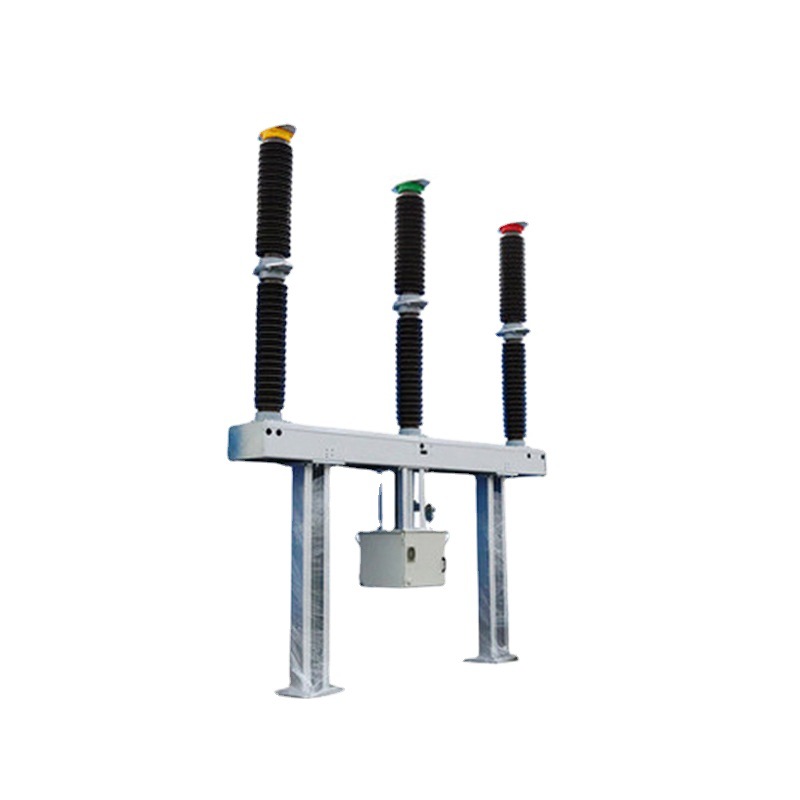
When evaluating sf6 circuit breaker advantages and disadvantages, the benefits for high-voltage applications are clear. At Weisho Electric, we rely on Sulfur Hexafluoride (SF6) because it provides a level of performance and safety that other mediums simply cannot match in high-voltage environments. From 40.5kV to 220kV systems, this technology remains the global standard for grid protection.
High Dielectric Strength and Compact Design
The primary reason why use sf6 gas in circuit breaker designs is its exceptional insulating capability. SF6 gas has a dielectric strength roughly two to three times that of air at atmospheric pressure. This property allows us to significantly reduce the physical footprint of our switchgear without compromising safety.
Because the gas insulates so effectively, we can place conductive parts closer together within the enclosure. This results in:
Reduced Installation Space: Ideal for substations where real estate is expensive or limited.
Lightweight Construction: Smaller housing requirements mean less structural weight.
Versatility: Our compact designs, such as the LW36-126/145 Outdoor Self-energy Type Circuit Breaker, are easily adaptable for both indoor and outdoor installations.
Low Maintenance and High Reliability
Reliability is non-negotiable in power distribution. One of the standout features of our SF6 breakers is their longevity. With a sealed gas system, the internal components are protected from external contaminants like moisture, dust, and oxidation.
We engineer our LW series to offer an exceptional service life of 20–30 years with proper maintenance. The gas retains its chemical stability over time, meaning:
Extended Intervals: You don’t need frequent overhauls; simple annual inspections usually suffice.
Consistent Operation: The sf6 circuit breaker working principle ensures that performance remains stable even after multiple switching operations.
Corrosion Resistance: The contacts inside the sealed chamber do not oxidize, ensuring consistent conductivity.
Superior Thermal Dissipation
Handling high-voltage arcs generates immense heat. SF6 gas excels at thermal transfer, absorbing the heat generated during the arcing process much faster than air or oil. Once the arc is extinguished—typically within milliseconds in our systems—the gas molecules recombine rapidly.
This superior thermal dissipation protects the contact surfaces from excessive wear and prevents the enclosure from overheating. This capability is critical for ensuring the types of sf6 circuit breaker we manufacture can handle heavy fault currents repeatedly without failure, maintaining the integrity of your power network.
Disadvantages and Environmental Considerations
While SF6 circuit breakers are the industry standard for high-voltage applications due to their exceptional performance, we must be transparent about the challenges associated with using Sulfur Hexafluoride. Understanding sf6 circuit breaker advantages and disadvantages is crucial for facility managers and grid operators to maintain compliance and safety.
Greenhouse Gas Impact and Global Warming Potential (GWP)
The most significant drawback of SF6 technology is its environmental footprint. SF6 is a potent greenhouse gas with a Global Warming Potential (GWP) approximately 23,500 times higher than CO2. Because of this, international regulations are becoming stricter regarding its usage and disposal.
Atmospheric Lifetime: Once released, SF6 can remain in the atmosphere for thousands of years.
Regulatory Pressure: Many regions now require detailed reporting on gas inventory and leakage rates.
Mitigation: At Weisho Electric, we counter this by engineering our LW series breakers with advanced sealing technologies that strictly limit emissions, ensuring our equipment remains environmentally responsible throughout its 20-30 year service life.
Gas Leakage Management and Handling Safety
Managing gas integrity is non-negotiable. While pure SF6 is odorless and non-toxic, the real safety concern arises after the gas has been exposed to electrical arcing. The decomposition byproducts can be toxic and corrosive, requiring careful handling during maintenance.
To ensure safety, operators must strictly follow protocols:
Leak Detection: Regular monitoring is required to prevent pressure drops that could compromise insulation.
Byproduct Handling: Technicians must use protective gear when dealing with decomposed gas during overhauls.
Equipment Integrity: High-quality sealing is essential not just for breakers, but also for related components like the FLN36-24D SF6 load break switch, to prevent fugitive emissions in indoor switchgear lineups.
Cost of Specialized Maintenance
Unlike air or oil breakers, maintaining SF6 equipment requires specialized tools and training. You cannot simply open the chamber for inspection; you must first recover and store the gas using dedicated reclamation carts.
Equipment Costs: Gas analyzers and recovery units represent an additional capital investment.
Technical Expertise: Personnel must be trained on how to check quality of sf6 gas in circuit breakers, specifically looking for moisture content and acidity.
Logistics: Sourcing and transporting high-purity SF6 gas for refilling involves strict logistical compliance.
Despite these costs, the extended maintenance intervals of our modern SF6 breakers often offset the expense, as they require less frequent intervention compared to older technologies.
SF6 vs. Vacuum Circuit Breakers (VCB)
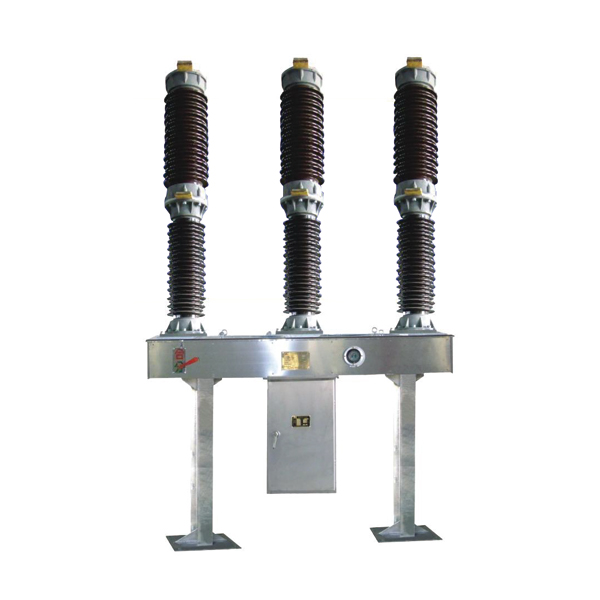
When selecting switchgear for industrial or utility grids, the debate often settles on SF6 circuit breaker advantages and disadvantages versus Vacuum Circuit Breakers (VCB). While both technologies are reliable, they serve different segments of the power grid. At Weisho Electric, we specialize in high-voltage solutions where SF6 technology remains the gold standard due to its unique physical properties.
Performance Comparison in High Voltage Applications
The primary distinction lies in voltage capability. Vacuum technology is excellent for medium voltage applications, typically up to 38kV. However, as voltage requirements climb to 72.5kV, 110kV, and 220kV, VCBs become technically complex and cost-prohibitive because they require multiple vacuum interrupters in series.
In contrast, our LW series SF6 breakers (like the LW30-220 or LW36-110) easily handle extra-high voltages in a single unit. For critical infrastructure, understanding why SF6 circuit breakers dominate medium and high voltage grids is essential for ensuring long-term stability. SF6 gas provides superior insulation in a smaller footprint, making it the preferred choice for transmission networks.
Dielectric Strength and Arc Quenching Speed
SF6 gas is electronegative, meaning it has a high affinity for absorbing free electrons. This property allows it to recover dielectric strength rapidly after the current reaches zero, extinguishing the arc within milliseconds. This fast interruption capability is crucial for preventing damage to downstream equipment during a fault.
SF6 Breakers: Use gas flow (puffer action) to cool and blow out the arc. The gas recombines after arcing, maintaining its insulating properties.
Vacuum Breakers: Rely on the rapid recovery of dielectric strength in a vacuum gap. While effective, they can cause high switching overvoltages (chopping current) which may require additional surge protection.
While VCBs are popular in distribution, reviewing the top 10 applications of vacuum circuit breakers highlights that their strength lies in frequent switching at lower voltages, whereas SF6 excels in managing high-energy faults.
Size, Weight, and Lifespan Differences
Because SF6 gas has a dielectric strength roughly three times that of air, we can design compact switchgear even for high voltages. A 220kV vacuum breaker would be massive and heavy compared to an SF6 equivalent. Our SF6 units are designed for longevity, offering a service life of 20–30 years with proper maintenance, ensuring a high return on investment.
Quick Comparison: SF6 vs. VCB
| Feature | SF6 Circuit Breaker | Vacuum Circuit Breaker (VCB) |
|---|---|---|
| Best Voltage Range | High & Extra-High (72.5kV – 220kV+) | Medium (< 40.5kV) |
| Arc Quenching | Gas Puffer/Self-Blast | Vacuum Gap |
| Size at HV | Compact | Bulky / Impractical |
| Maintenance | Gas pressure monitoring is required | Sealed interrupter (hard to repair) |
| Lifespan | 20-30 Years | 20 Years (mechanical limit) |
How to Choose the Right SF6 Circuit Breaker
Selecting the correct circuit breaker is critical for ensuring the stability and safety of your electrical grid. When evaluating options, you must align the technical specifications of the equipment with the specific demands of your power system.
Voltage Level and Breaking Capacity Requirements
The primary factor in your decision is the rated voltage and current breaking capacity. Your equipment must match or exceed the maximum system voltage to prevent insulation failure. Our LW series covers a broad spectrum of high-voltage needs, specifically designed for 40.5kV, 72.5kV, 110kV, and 220kV applications.
You also need to calculate the short-circuit breaking current. The breaker must be capable of interrupting the maximum fault current at the installation point within milliseconds. For specific medium-to-high voltage applications, models like the LW16-40.5 Outdoor Sulfur Hexafluoride Circuit Breaker offer robust performance with reliable arc-quenching capabilities tailored for demanding grids.
Key Electrical Parameters to Verify:
Rated Voltage: Ensure it matches your grid (e.g., 110kV or 220kV).
Rated Current: The continuous current the breaker carries under normal conditions.
Short-Circuit Breaking Current: The maximum fault current the unit can safely interrupt.
Installation Environment and Site Constraints
The physical location of the installation dictates the design type you need. SF6 circuit breakers generally fall into indoor or outdoor categories, each built to withstand different environmental stresses. Outdoor models require heavy-duty external insulation and weatherproofing to handle temperature fluctuations, humidity, and pollution.
For restricted spaces, such as inside substations or urban power distribution centers, compact designs are essential. If you are working with limited footprint requirements, integrating an XGN15-12kV SF6 Ring Main Unit can provide efficient switching and protection without occupying excessive space.
| Feature | Outdoor Installation | Indoor Installation |
|---|---|---|
| Enclosure | Weather-resistant (IP-rated) | Compact, often metal-clad |
| Insulation | Porcelain or composite bushings | Gas-insulated or solid insulation |
| Space | Requires larger clearance | Optimized for small footprints |
| Maintenance | Accessible for field service | Often requires minimal maintenance |
Regulatory Compliance and Environmental Standards
Global projects demand strict adherence to safety and performance standards. High-quality SF6 circuit breakers must comply with international benchmarks such as IEC, ANSI, and UL standards. These certifications ensure the equipment has passed rigorous testing for dielectric strength, mechanical endurance, and leakage rates.
Since SF6 is a potent greenhouse gas, modern selection criteria also focus on sealing technology. We prioritize designs that minimize leakage risks, ensuring the equipment remains environmentally safe throughout its 20 to 30-year service life. Always verify that the manufacturer provides clear documentation on gas handling and end-of-life recycling procedures to meet local environmental regulations