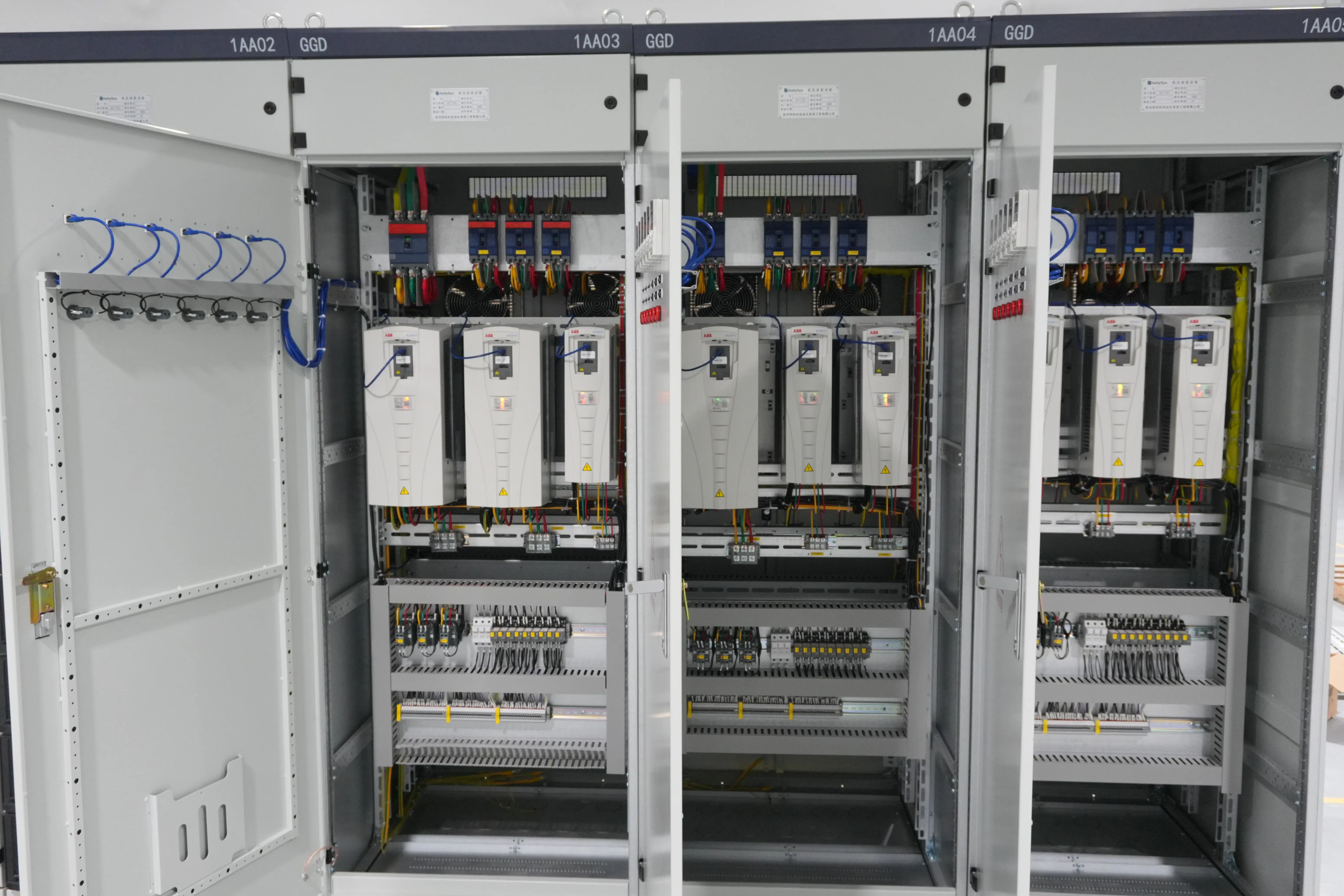
In the veins of modern industrial and commercial buildings, electrical switchgear and switchboards serve as two critical “hearts” within the power system. They're responsible for controlling, protecting, and distributing power.
Still, many people—from new technicians to facility managers—often confuse them. While they may look similar and share some functions, engineers know there's a world of difference when it comes to design, safety, performance, and cost.
This guide will give you a professional, deep dive into the fundamental differences between switchgear and switchboards. We’ll cover key standards, core technical specifications, and provide a practical decision-making guide.
Our goal is to help you choose the safest and most cost-effective option for your project.
Part I: Defining Switchgear and Its Core Features
To understand the difference, we first have to define each piece of equipment. In professional terms, switchgear is an integrated assembly of switches and devices designed to protect, control, and isolate high or medium-voltage electrical equipment.
Its entire purpose is to automatically cut off the power in milliseconds during a fault. This prevents cascading failures and protects expensive equipment.
Authoritative Definitions & Standards
In the U.S., switchgear must meet the strict UL 1558 standard. This standard enforces rigorous requirements for the device’s structure, safety, and internal compartmentalization.
Switchboards, in contrast, primarily follow the less stringent UL 891 standard. The difference in these foundational standards is where the profound gap in their applications and designs begins.
A Deep Dive into Technical Features
High-Voltage Capability. This is switchgear’s most distinguishing feature. It’s engineered to handle medium-to-high voltage, typically over 600V.
In large-scale power plants or substations, it can handle up to 350 kV.
Complex and Robust Internal Structure. Open a switchgear cabinet, and you'll see a complex, organized city of components. Each circuit breaker, relay, and busbar is housed in its own isolated metal compartment.
This "draw-out" or "sectionalized" design enhances safety. It also makes maintenance far simpler.
Advanced Safety & Protection Features. Beyond basic breaker protection, modern switchgear integrates sophisticated protective relays and advanced arc flash mitigation systems. These features ensure a rapid response during a fault to minimize risks and equipment damage.
High Amperes Interrupting Capacity (AIC). Because switchgear operates in environments with enormous potential fault currents, its breakers must have an extremely high AIC rating. This ensures it can reliably interrupt a major short circuit to protect downstream equipment.
Maintenance & Serviceability. A key advantage of switchgear is its "draw-out" breaker design. This allows technicians to perform maintenance or replace a faulty breaker without shutting down the entire system.
This is crucial for mission-critical applications where minimizing downtime is a must.
Part II: Defining the Switchboard and Its Core Features
Unlike switchgear's high-voltage, high-complexity role, a switchboard acts as a building's "power housekeeper." It’s a large panel assembly whose main job is to distribute power from a single source to multiple downstream circuits.
What Is a Switchboard?
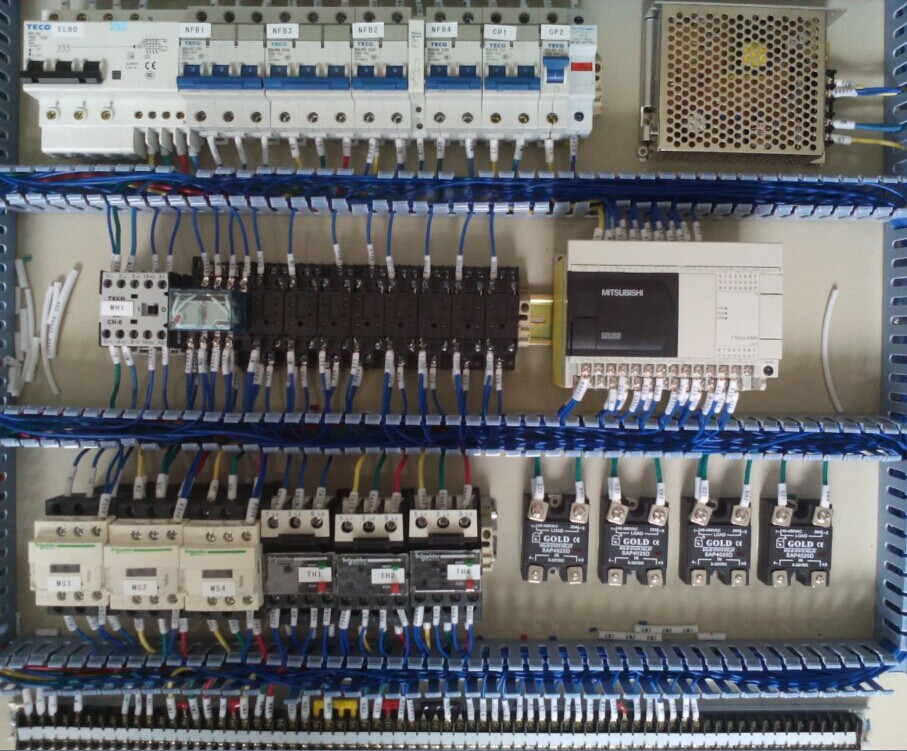
A switchboard is often referred to as the main switchboard for a building. Its core task is to efficiently branch out power.
For example, a single main cable brings power into a commercial building, and the switchboard then splits that current into dozens of smaller circuits for lighting, HVAC, and outlets.
A Deep Dive into Technical Features
Low-Voltage Operation. This is a defining characteristic of a switchboard. It’s designed exclusively for low-voltage environments, typically operating at under 600V.
This makes it ideal for residential, commercial, and small industrial facilities.
Simple & Compact Structure. Compared to a switchgear's intricate internal design, a switchboard’s structure is quite straightforward. Breakers and meters are mounted directly on the panel, and there are no isolated internal compartments.
This simple design makes it more compact with a smaller footprint.
Basic Protection. A switchboard relies on fixed-mounted circuit breakers and fuses for basic overload protection. While effective for its purpose, it lacks the advanced, automatic protection systems found in switchgear.
Lower AIC Rating. Because they operate in lower-current environments, switchboards have a much lower AIC rating than switchgear. This makes them unsuitable for applications with high potential fault currents.
Maintenance & Downtime. Switchboards use fixed-mounted breakers. This means that to perform maintenance or replace a component, technicians must de-energize the entire switchboard.
This is a key limitation in applications that require continuous uptime.
Part III: The Engineer's In-Depth Comparison
When choosing between electrical switchgear and a switchboard, the key is to understand their differences in a real-world context. This table provides a professional, side-by-side comparison to make that clear.
Low-Voltage (LV) Switchgear vs. Switchboard: The Ultimate Comparison
Primary Function. Switchgear is for protection, control, and isolation. A switchboard is for power distribution.
Voltage Level. Switchgear is designed for medium/high voltage (over 600V). A switchboard is for low voltage (under 600V).
Industry Standard. Switchgear follows UL 1558. A switchboard follows UL 891.
Breaker Type. Switchgear uses draw-out breakers. A switchboard uses fixed breakers.
Short Circuit Rating (AIC). Switchgear has a high AIC rating. A switchboard has a relatively low AIC rating.
Safety Design. Switchgear features isolated compartments and busbar partitions. A switchboard has an open busbar design.
Maintenance. Switchgear allows for live maintenance to reduce downtime. A switchboard requires the entire unit to be de-energized.
Footprint. Switchgear is large and deep. A switchboard is smaller and shallower.
Typical Application. Switchgear is used in power plants, data centers, and hospitals. A switchboard is used in commercial buildings, homes, and schools.
If the table gave you a general idea of these concepts, the video below will provide a more intuitive, visual breakdown. This clip clearly shows the internal structures of both switchgear and switchboards, helping you master these key differences in an instant.
This side-by-side comparison shows that even when used in a low-voltage environment, LV switchgear and switchboards are fundamentally different. Industry leaders like Eaton offer both types of equipment, but their product lines and technical specs always align with these distinctions.
Part IV: When to Choose? Your Engineering Decision Guide
Understanding the technical differences ultimately leads to one question: When to use switchgear versus a switchboard? This choice requires you to consider a few key engineering factors.
Reliability & Downtime Cost. If your project demands absolute power reliability and any downtime would result in huge financial losses (think hospitals or data centers), then switchgear is your only option. Its high reliability and easy maintenance minimize business risk.
Short Circuit Current Analysis. During the design phase, an electrical engineer will perform detailed fault current calculations. If the calculated fault current exceeds a switchboard’s AIC rating, you must use a higher-rated switchgear instead. This is a mandatory safety requirement.
Space & Budget. For projects with a limited budget and space (like a small commercial building or office), a switchboard is a much more cost-effective choice. Its lower price and compact footprint can easily meet basic distribution needs.
Future Expandability. If your facility plans to expand in the future, a switchgear's modular design offers a significant advantage. You can easily add new sections and breakers without affecting the existing system.
Conclusion
The decision between a switchgear and a switchboard is never about simply picking the cheaper option. It's a critical engineering decision that hinges on safety, reliability, system complexity, and long-term total cost of ownership (TCO).
Switchgear is a high-voltage, highly reliable, and safe solution designed for critical and demanding industrial environments. The switchboard, in contrast, is a simple, cost-effective distribution solution that’s perfect for most commercial and residential applications.
We hope this ultimate breakdown gives you a clear understanding of these critical devices. Making the right choice ensures a stable, safe, and efficient electrical system for years to come.