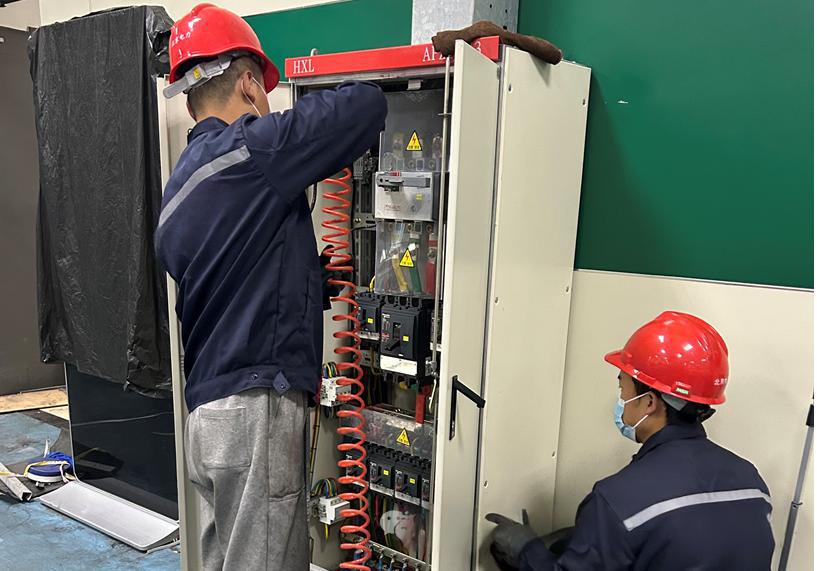
In 2019, a major data center in New Jersey experienced a sudden regional power outage, knocking out 1,200 servers and resulting in over $2 million in direct economic losses. The technical team traced the culprit: long-accumulated dust inside the power distribution cabinets. These particles, smaller than 5 micrometers in diameter, had coated the insulation layer of the busbars. In a humid environment, they formed a conductive path, ultimately triggering a phase-to-phase short circuit.
This incident was documented in the North American Power Facility Maintenance White Paper, serving as a classic warning for industries worldwide. Data shows that in Western countries, dust contamination accounts for 47% of power distribution equipment failures, while regular, standardized cleaning can reduce equipment failure rates by over 65%.
I. Dust Contamination: The "Silent Killer" of Power Distribution Cabinets
In Western industrial standards, power distribution cabinet cleaning is considered a core element of preventive maintenance (PM). Research by the U.S. Department of Energy (DOE) indicates that a dust layer just 0.3mm thick can increase circuit breaker temperature rise by 15°C and expand relay operation error by 20%.
Specific hazards include:
Thermal Management Failure: Dust obstructs heat dissipation, causing circuit breaker contact temperature rise to exceed limits (e.g., ABB Emax series circuit breakers are designed for a temperature rise limit of 65K, but in dusty environments, actual temperature rise might surpass 90K).
Insulation Degradation: Dust creates leakage paths on insulator surfaces, shortening creepage distance (e.g., the standard creepage distance for a 10kV power distribution cabinet is 125mm, which can drop below 80mm with dust accumulation).
Mechanical Sticking: Dust entering operating mechanisms increases friction (e.g., the tripping spring resistance of a Schneider NSX circuit breaker can increase by 30% due to dust), leading to abnormal opening/closing times.
II. Eight Detailed Cleaning Steps (with US/European Industrial Standard Operating Parameters)
Step 1: De-energize, Tag Out, and Isolate the Area (Preparation Phase)
Key Operational Tips:
Disconnect upstream power to the switchgear. Hang a "DO NOT OPERATE - MEN AT WORK" warning tag on the circuit breaker handle (compliant with OSHA 1910.147 Lockout/Tagout standard).
Set up a temporary isolation zone using plastic sheeting. Designate a 2-meter (approx. 6.5 ft) radius around the switchgear as the work area. Lay down insulating mats on the floor (resistance ).
Important Notes:
✅ Before testing for voltage, ensure your multimeter's voltage range is at least 1.5 times the system voltage (e.g., use a 20kV range for a 10kV system).
❌ Never open cabinet doors when power is on, especially for medium-voltage switchgear with shutters (like KYN28 series).
Step 2: Initial Vacuuming of Top and Cabinet Surfaces (Dust Removal Phase)
Tool Selection:
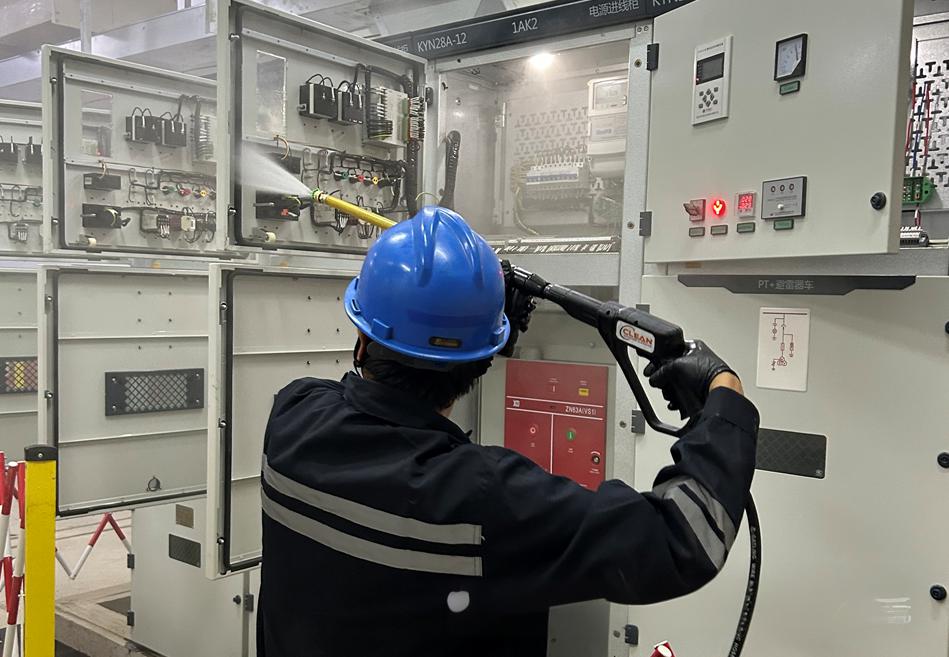
Use an industrial vacuum cleaner (e.g., German Miele industrial vacuum with 18kPa suction, equipped with a HEPA filter to capture particles larger than 0.3μm).
Pair it with an anti-static vacuum brush (polypropylene bristles, surface resistance 109Ω).
Operational Flow:
Start from the top edge of the cabinet, moving the vacuum head slowly in a horizontal direction. Pay special attention to ventilation holes and rain gutter recesses.
Perform circular vacuuming around the sides of the cabinet and the incoming cable entries at the bottom to prevent dust from falling inside.
Important Notes:
✅ Keep the vacuum head about 5cm (approx. 2 inches) away from metal parts of the cabinet to prevent static electricity from attracting dust back.
❌ Do not use household vacuum cleaners; their motor carbon brushes can generate sparks (use explosion-proof vacuums in hazardous environments, like flour mills).
Step 3: Preliminary Dust Removal from Internal Electrical Components
Detailed Operation:
Use a flat vacuum nozzle (15mm diameter) to clean dust from circuit breaker surfaces. Vacuum along the terminal blocks in a vertical direction (avoid horizontal movements that could loosen wiring).
For exposed primary terminals of current transformers and voltage transformers, use a soft rubber blower bulb (100ml volume) to clear dust from crevices.
Important Notes:
✅ Before operating, check if the vacuum nozzle has any exposed metal parts. If necessary, wrap the edges with insulating tape.
❌ Do not directly blow air onto sensitive components like relays or indicator lights; vibrations can cause poor contact.
Step 4: Deep Cleaning of Hard-to-Reach Areas (Brush + Negative Pressure)
Tool Combination:
Use a long-handled nylon brush (bristle hardness 60° Shore A) in conjunction with the vacuum cleaner.
Maintain a 45° brush angle and sweep in a "zigzag" pattern along equipment edges.
Key Areas:
Underneath busbar support insulators (use an L-shaped brush).
Guide grooves of draw-out switchgear (blow dust out, then vacuum).
Inside cabinet door seals (use a small, round-headed brush).
Important Notes:
✅ After cleaning each area, empty the vacuum cleaner dust bag promptly to prevent overload.
❌ Strictly prohibit the use of metal wire brushes to prevent scratching insulating coatings (e.g., epoxy resin insulator surfaces).
Step 5: Blower-Assisted Crevice Dust Removal (Complex Structures)
Equipment Parameters:
Select a quiet blower (e.g., Japanese Makita blower with adjustable speed, max wind speed 4m/s, outlet temperature ).
Operation Method:
For the internal mechanism of a circuit breaker, blow air from a 45° angle from above, while the vacuum cleaner creates a negative pressure zone 10cm (approx. 4 inches) below the mechanism.
For dense terminal blocks, use "segmental blowing": blow 3-5 terminals at a time, then immediately vacuum to prevent dust from spreading.
Important Notes:
✅ Maintain a distance of cm (approx. 12 inches) between the blower and live components (compliant with IEC 61936-1 safety distance requirements).
❌ Do not directly blow air onto electronic modules (like microprocessor-based protection devices) to prevent static electricity damage to chips.
Step 6: Wiping Surface Stains with Cleaning Agent
Cleaning Agent Selection:
Use CRC 03053 Electrical Cleaner (compliant with ASTM D2275 standard, evaporation rate, insulation resistance ).
Operational Flow:
Dampen a lint-free cloth (fiber length $<$0.1mm) with cleaning agent and wipe the equipment surface in one direction along its texture (e.g., wipe the circuit breaker control panel from left to right).
For oil stains or carbonized marks, you can gently scrape them off with a soft plastic scraper (hardness ≤ Shore A 70). Do not use metal scrapers.
Important Notes:
✅ Do not exceed 10ml/m2 of cleaning agent per application to prevent liquid from seeping into internal components.
❌ Strictly prohibit the use of chlorine-containing cleaning agents (e.g., trichloroethylene), as they can corrode the tin plating on copper busbars (corrosion rate 0.05mm/year).
Step 7: Fine Detailing of Corner Areas
Upgraded Tools:
Terminal block gaps: Use medical-grade cotton swabs (3mm diameter, anti-static treated tip).
Relay bases: Use a miniature air gun (0.2MPa air pressure, with a 5mm diameter nozzle) for blowing, combined with cotton swab wiping.
Inside observation windows: Clean with a chamois cloth and a neutral glass cleaner (pH 6.5-7.5).
Important Notes:
✅ When cleaning relays, first disconnect the control power to prevent accidental operation due to contact.
❌ Do not disassemble or clean sealed components (e.g., epoxy-resin cast current transformers).
Step 8: Comprehensive Drying and Resetting Inspection
Drying Process:
Use an industrial dehumidifier (30L/day dehumidification capacity) to continuously dry the cabinet for 30 minutes, reducing relative humidity to below 40%.
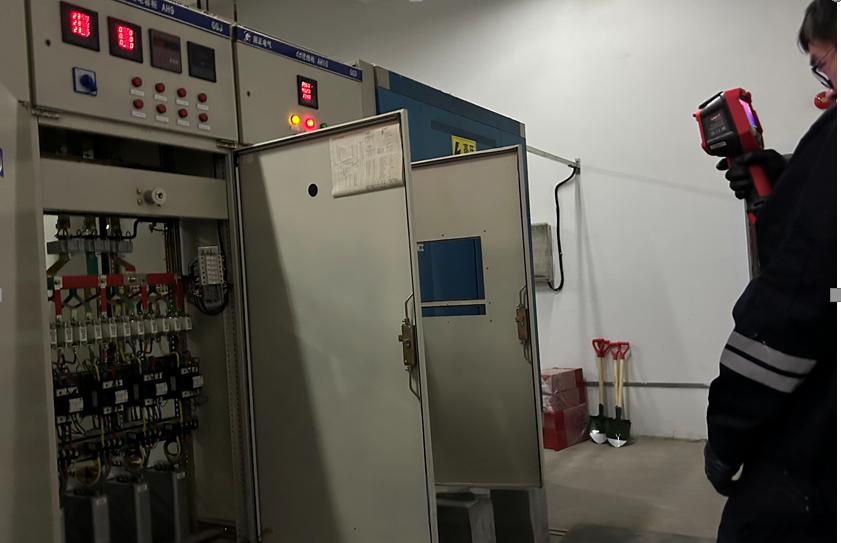
Use an infrared thermometer (±2∘°C accuracy) to check component surfaces, ensuring no localized cold spots due to cleaning agent residue.
Reset Operation:
Reconnect wiring in a "secondary first, then primary" order. Use a torque wrench to tighten terminal screws (M4 screws torque 2.5N·m, compliant with GB 7251.1 standard).
When closing the cabinet door, check that the sealing strip is intact and the lock engagement depth is mm.
Important Notes:
✅ After resetting, perform opening and closing tests to confirm the operating mechanism isn't sticking (e.g., Siemens 3WT circuit breaker tripping time should be ms).
❌ Do not close the cabinet door if the cabinet is not completely dry to prevent condensation from degrading insulation.
III. Cleaning Prohibitions and Safety Redlines in Western Industrial Standards
Cleaning Agent Usage Guidelines:
EU CE certification requires cleaning agents to have a halogen content of ppm and a volatile organic compound (VOC) content of .
Prohibited: Alcohol-based cleaners (like ethanol), as they can accelerate the aging of plastic insulation components (reducing lifespan by 40%).
Tool Management Standards:
All tools must have insulation testing labels (testing cycle 3 months). All metal parts must be fully covered with an insulating layer.
Vacuum cleaners must be equipped with spark suppressors (especially in areas with dust explosion hazards, like flour mill electrical rooms).
Personnel Protection Requirements:
Wear N95 dust masks (filtration efficiency ) and splash-proof safety goggles (compliant with ANSI Z87.1 standard).
For cleaning at higher voltage levels (kV), wear shielding suits (shielding efficiency dB).
Conclusion: Lessons from "Reactive Repair" to "Proactive Protection" in the West
In the Industry 4.0 era, switchgear cleaning has evolved from a simple "rag + broom" task into a systematic preventive maintenance discipline. Practices in Western countries demonstrate that adhering to standardized operating procedures (like the ISO 41001 Facility Management System) can reduce average annual equipment failure rates from 18% to below 6%, while lowering maintenance costs by over 30%.
For domestic power operation and maintenance teams, learning from international experience and integrating it with local equipment characteristics (such as adapting cleaning tools for domestic KYN, GCK series switchgear) is essential. This is how cleaning truly becomes a core competency that safeguards power reliability.
As the North American Electric Reliability Corporation (NERC) advocates, "Cleaning isn't just about appearance; it's about deeply managing the health of your equipment." By perfecting every cleaning step, you ensure your switchgear operates at its best, building a robust defense for industrial production and societal well-being.
We hope this article provides substantial help in your switchgear maintenance work. If you encounter any specific issues during cleaning operations or if you need high-quality electrical equipment and professional maintenance consultation, please feel free to contact our expert team at Weishoelec. We are committed to providing you with reliable solutions and technical support to collectively enhance the safety and efficiency of power systems.
About the Author
I'm Thor, an Electrical Engineer with Weishoelec. As a Chinese manufacturer serving the U.S., European, and global overseas markets, Weishoelec is dedicated to providing high-quality, internationally compliant power solutions.
We deeply understand the critical role of high-voltage electrical equipment in power systems. That's why we meticulously control every stage—from design and material selection to production—to ensure our products offer superior performance, stable operation, and utmost reliability and safety.
Beyond our advanced products, we also have a professional engineering team ready to provide technical consultation and support. If you have any questions about this article or specific needs for 10kV high-voltage equipment or related power solutions, feel free to reach out.
Weishoelec looks forward to partnering with you!
Phone: +86-0577-62788197
WhatsApp: +86 159 5777 0984
Email: thor@weishoelec.com