What Are Pole Mounted Transformers?
When buyers ask me about a pole mounted transformer manufacturer or a specific pole mounted transformer price, we always start with the basics: what these units actually do and why utilities and contractors still rely on them across the US.
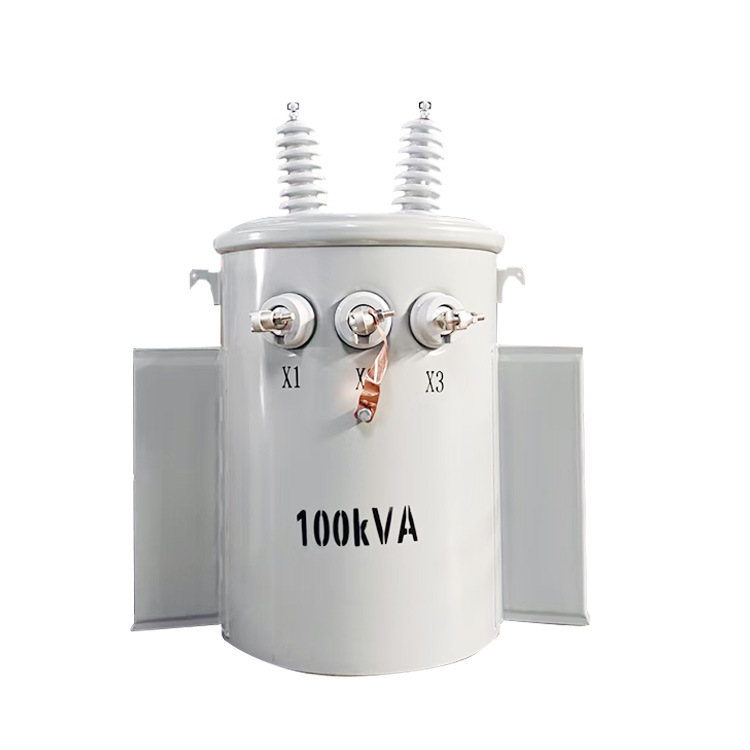
A pole mounted transformer (often just called a “pole transformer”) is an overhead distribution transformer hung on a utility pole, stepping medium voltage (typically 4.16–34.5 kV class) down to usable low voltage for homes, farms, and small businesses. Instead of sitting in a ground enclosure like a pad-mount unit, a pole transformer is installed overhead, close to the primary line.
Basic Function in Overhead Distribution
A standard single-phase pole mounted transformer or three-phase pole mounted transformer:
Takes medium‑voltage input from overhead lines (primary side)
Delivers 120/240 V, 208Y/120 V, or similar secondary voltage for end users
Provides electrical isolation and controlled impedance to limit fault currents
Protects the circuit with fuses, arresters, or CSP (completely self‑protected) features
In other words, the pole transformer is the last major step between the medium‑voltage overhead network and your meter.
Common Applications: Residential, Rural, Light Commercial
In the US, most residential distribution transformers on overhead lines are pole units. Typical use cases include:
Urban and suburban neighborhoods with overhead service drops
Rural electrification transformers feeding farms, ranches, and remote homes
Light commercial loads like small shops, schools, and roadside facilities
Temporary power for construction sites or remote telecom/equipment loads
Contractors, co‑ops, and utilities look for standard pole mounted transformer specifications and kVA ratings that can handle mixed residential and light commercial loading with good reliability.
Key Benefits vs Pad-Mounted or Ground-Mounted Units
When you compare pole mounted transformers to pad‑mounted or other ground units, a few advantages stand out:
Lower site cost – No concrete pad, fence, or large easement needed
Smaller footprint – Ideal where ground space is tight or expensive
Reduced vandalism and tampering – Equipment is up on the pole, out of easy reach
Fast deployment – Line crews can install or replace units quickly with a bucket truck
Great for rough terrain – Hills, ditches, and flood‑prone areas often favor overhead
For many utility pole transformer manufacturers and buyers, the pole option is the most cost‑effective way to serve dispersed loads, especially in rural and semi‑rural US markets.
Main Types of Pole Mounted Transformers
Single-Phase Pole Mounted Transformer Options
For most residential streets, rural lines, and light commercial loads, a single-phase pole mounted transformer is the go-to. As a pole mounted transformer manufacturer, I usually recommend:
Standard residential units: 5–50 kVA for single homes, small shops, and farms
Heavier single-phase loads: 75–100 kVA for larger homes, small commercial buildings, or clustered services
Common primary voltages: 7.2 kV, 13.2 kV, 13.8 kV, 24.9 kV
Standard secondary voltages: 120/240 V single-phase for US residential service
These residential distribution transformers are compact, cost-effective, and easy to change out on existing overhead lines.
Three-Phase Pole Mounted Transformer Configurations
A three-phase pole mounted transformer is the better fit when you’re feeding small industrial, commercial strips, or irrigation pumps. You can go with:
Three single-phase units banked in wye–wye or wye–delta
A factory-built three-phase overhead distribution transformer for cleaner installation
Typical three-phase secondary options in the US: 208Y/120 V or 480Y/277 V. These are common on light industrial and commercial feeders and integrate easily with medium voltage overhead transformers.
Conventional vs CSP (Completely Self-Protected) Designs
We build both conventional pole transformers and CSP transformers (completely self-protected):
Conventional units
Require external fuses, arresters, and cutouts on the pole
Often chosen by utilities that prefer field-configurable protection (for example, pairing with a drop-out high voltage fuse)
CSP pole mounted transformers
Built-in primary fuse, surge arrester, secondary breaker, and sometimes a low-voltage protector
Ideal for rural electrification transformers and private utilities that want simpler hardware on the pole and fewer external accessories
Oil-Immersed and Eco-Friendly Fluid-Filled Transformers
Most overhead distribution transformers in the US are still oil-immersed pole transformers using mineral oil. For tighter environmental rules or sensitive locations, we also supply:
FR3 / natural ester eco-friendly fluids
High fire point, biodegradable fluid-filled transformers for urban, coastal, and environmentally sensitive areas
These outdoor distribution transformers are built to IEEE standard distribution transformer requirements and can be supplied as UL certified pole type transformers when specified.
Typical kVA Ratings and Capacity Ranges
For utilities, co-ops, and contractors, we standardize pole mounted transformer kVA ratings to keep pricing and stocking efficient:
Single-phase: 5, 10, 15, 25, 37.5, 50, 75, 100, 167 kVA
Three-phase (banked or unit): 30–500 kVA typical for overhead
Voltage classes: up to 34.5 kV primary for most US overhead systems
As a pole mounted transformer manufacturer USA customers rely on, we size these units with realistic loading and future growth in mind so you’re not overbuying kVA you’ll never use.
Core Specifications Buyers Should Check
When I source from any pole mounted transformer manufacturer, I lock in these specs first. If these aren’t clear on the quote or data sheet, I push back.
Voltage Ratings (Primary & Secondary)
You need the exact voltage match for your overhead distribution transformer:
| Spec | Typical US Options | Notes |
|---|---|---|
| Primary voltage | 7.2 kV, 12.47 kV, 13.2 kV, 24.9 kV, 34.5 kV | Match utility or medium-voltage feeder |
| Secondary voltage (single-phase) | 120/240 V, 240/480 V | Common for residential distribution transformers |
| Secondary voltage (three-phase) | 208Y/120 V, 480Y/277 V | Light commercial / industrial loads |
Always confirm if the pole mounted transformer is for delta or wye systems and that it’s an ANSI pole mounted transformer configuration.
kVA Ratings, Loading & Overload
Right-sizing kVA is key to both reliability and pole mounted transformer price:
| Item | Typical Range (Pole Mounted) |
|---|---|
| Single-phase kVA | 10–167 kVA (utilities often 25–100 kVA) |
| Three-phase bank (3 units) | 45–500+ kVA (by banking units) |
Ask the manufacturer for:
Continuous rating at 55°C or 65°C rise
Overload capability (e.g., short-term emergency overload)
Expected load profile (residential vs rural electrification transformers vs light industrial)
Efficiency & DOE / Energy Compliance
For the US market, make sure the unit is a DOE efficiency compliant transformer:
Confirm compliance with DOE 2016+ distribution transformer rules
Ask for loss data: no-load (core) loss and load loss at rated kVA
Check if they optimize for lower life-cycle cost, not just the cheapest build
This is where copper vs aluminum windings also affects both performance and cost.
BIL, Insulation Class & Cooling
BIL and insulation are non‑negotiable when I evaluate pole-type transformer specifications:
| Spec | What to Check |
|---|---|
| BIL (Basic Insulation Level) | Must match system voltage & surge level (e.g., 95 kV, 125 kV) |
| Insulation class | Typical 55°C or 65°C rise, ANSI/IEEE compliant |
| Cooling | ONAN (oil natural air natural) for most oil-immersed pole transformers |
For areas with heavy lightning exposure, I pair pole units with proper surge protection and outdoor lightning arresters that match the transformer’s BIL and voltage rating, like a dedicated high-voltage lightning arrester.
Tank, Bushings & Standard Accessories
A good pole mounted transformer manufacturer will be very clear on the mechanical and accessory set:
| Component | What I Require in Specs |
|---|---|
| Tank | Hot-dip galvanized or painted steel; corrosion-resistant for outdoor distribution |
| Bushings | ANSI standard, porcelain or polymer; clear marking of pole mounted transformer connections |
| Accessories | Nameplate, lifting lugs, pole mounting brackets, grounding pads, drain/inspection plugs, pressure relief device |
| Optional | Bayonet fuses (for CSP transformer), lightning arresters, tap changer, oil level and temperature indicators |
Make sure the pole mounted transformer diagram and nameplate actually show all terminals, polarity, and accessories so your field crews can install fast and avoid wiring mistakes.
Wiring, Connections, and Diagrams Basics
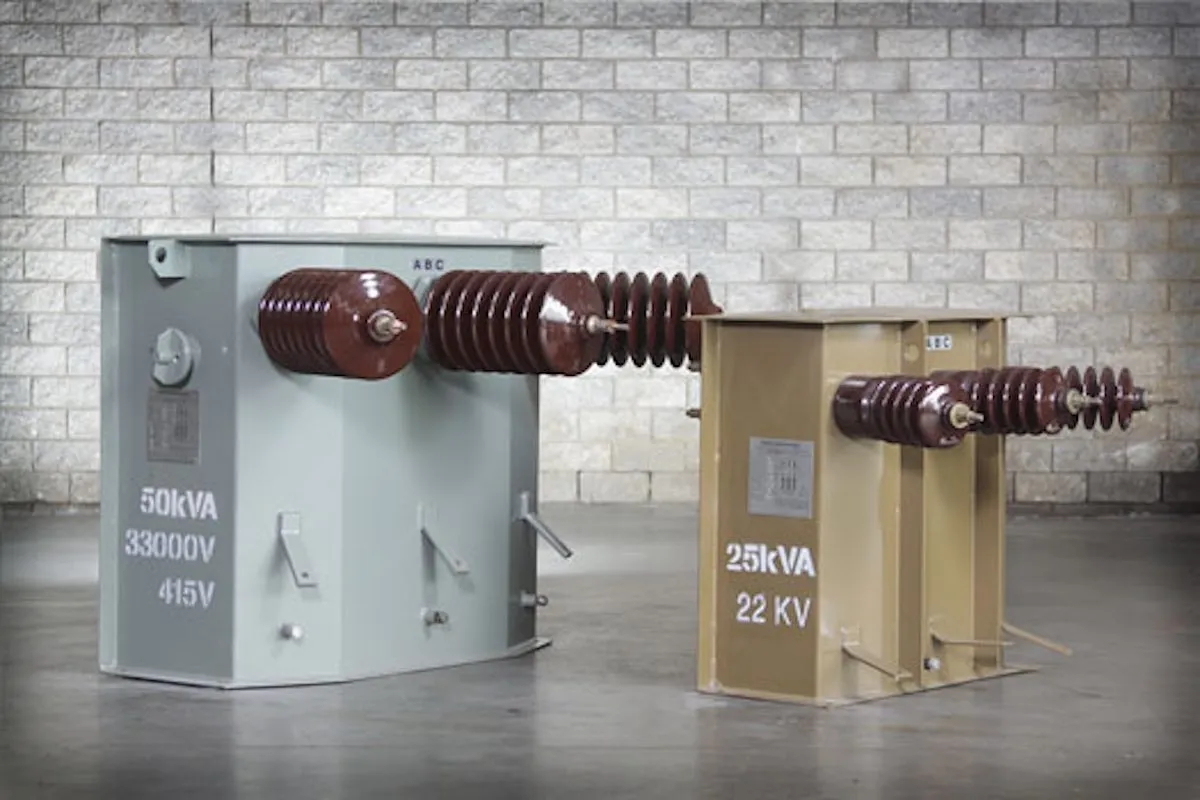
When you’re selecting a pole mounted transformer manufacturer, you need to be comfortable with the basics of wiring, connections, and how to read a pole mounted transformer diagram. Good manufacturers make this simple with clear nameplates, consistent polarity markings, and legible wiring diagrams.
Single-Phase Pole Mounted Transformer Polarity and Terminals
For a single-phase pole mounted transformer, polarity and terminals are key for safe utility and residential work:
Primary (HV) terminals are usually labeled H1, H2 (and H3 for multi-bushing designs).
Secondary (LV) terminals are labeled X1, X2, X3, etc.
Polarity is normally marked as additive or subtractive; most modern ANSI pole mounted transformers in North America use additive polarity.
Always match the system phase rotation and grounding method (e.g., X2 grounded for 120/240 V residential distribution transformers).
A solid pole mounted transformer manufacturer will provide clear terminal labels, torque specs for lugs, and guidance for overhead distribution transformer connections right on the nameplate.
Common Connection Types and Nameplate Markings
On the nameplate of a pole-type transformer, you’ll typically find:
Primary connection: delta, grounded wye, or single bushing (line-to-ground).
Secondary configuration:
120/240 V single-phase 3-wire
240/480 V
277/480 V (for light commercial)
Diagrams showing jumper positions, tap settings, and pole mounted transformer connections for series/parallel arrangements.
Look for clear ANSI/IEEE symbols, terminal diagrams, and a simple pole mounted transformer diagram on the nameplate. If it’s not obvious at a glance, that’s a red flag for field crews.
Three-Phase Banking (Wye–Wye, Wye–Delta) Using Pole Units
When you need a three-phase pole mounted transformer but want flexibility, many utilities “bank” three single-phase units on the pole:
Wye–wye: neutrals tied together and grounded, used for balanced loads and long rural lines.
Wye–delta: common when the utility primary is wye and the load side needs a delta for motors or legacy equipment.
Open-delta banks can serve smaller three-phase loads with only two transformers, cutting upfront cost but with lower capacity.
A capable pole mounted transformer manufacturer USA will support standard banking diagrams, recommended kVA combinations, and proper grounding practices for rural electrification transformers and light commercial services.
How to Read a Pole Mounted Transformer Wiring Diagram
A pole mounted transformer wiring diagram should be something your linemen can read in seconds:
Start with primary side: identify H-bushings, system voltage, and grounding points.
Move to secondary side: see how X1, X2, X3, X4 are tied to create 120/240 V, 240/480 V, or other service voltages.
Check tap changer diagram if your unit has taps for ±2.5% or ±5% voltage adjustment.
Confirm CSP transformer features (internal fuses, lightning arresters, breakers) and how they’re shown in the diagram.
We also make sure our equipment plays nicely with other grid gear. For example, many of our customers pair pole transformers with gas-insulated ring main units for compact medium-voltage switching on wind or solar projects, similar to what you’d see in a 12 kV gas-insulated ring main unit.
When you compare pole mounted transformer manufacturers, look closely at how clear their diagrams, polarity markings, and connection guides are. That’s what makes installation faster, reduces wiring mistakes, and keeps linemen safe in the field.
What Drives Pole Mounted Transformer Price?
Key Cost Drivers for Pole Mounted Transformers
When you’re pricing a pole mounted transformer, a few technical choices move the number more than anything else:
kVA rating and voltage class
Higher pole mounted transformer kVA ratings (larger load) cost more—both for raw materials and engineering.
Moving from 15 kV to 25 kV or 34.5 kV class adds cost because of higher insulation levels and tougher BIL requirements.
Custom primary/secondary voltages or unusual tap ranges will raise the pole mounted transformer price versus standard utility combinations.
Custom specs vs standard builds
Non‑standard bushings, special tap changers, extra surge protection, or bespoke brackets all add engineering and production time.
Utility-standard ANSI pole mounted transformer designs are usually cheaper than one‑off custom pole type transformers.
Copper vs aluminum windings
Copper wound pole transformers usually cost more upfront but offer lower losses and better mechanical strength.
Aluminum wound pole transformers cut initial cost and weight, which many U.S. utilities prefer for everyday residential distribution transformers.
The copper/aluminum decision is a major lever if you’re trying to hit a target budget.
Standards, certifications, and features
DOE efficiency compliant transformers, IEEE standard distribution transformers, and UL certified pole type transformers carry a premium but reduce risk with U.S. inspectors and utilities.
CSP transformers (completely self-protected) with built‑in fuses, arresters, and breakers cost more than conventional units, but can remove separate protective gear in the field.
Extra monitoring, stainless tanks, and special coatings also move the price up.
Supply chain, region, and logistics
Steel, copper, and transformer oil pricing swings can change pole mounted transformer price quarter to quarter.
Manufacturing location matters: a pole mounted transformer manufacturer USA will often be higher on unit cost but lower on shipping time, tariffs, and import headaches.
Freight to remote rural areas, plus permitting and coordination with gear like an outdoor breaker or medium‑voltage circuit breaker, should be part of your real cost calculation.
Practical Ways to Cut Cost Without Killing Reliability
If you’re buying for U.S. utilities, co‑ops, or contractors, here’s how I keep costs down while staying safe and compliant:
Standardize where possible
Use common single-phase pole mounted transformer ratings and voltage combos that suppliers keep in stock.
Avoid unnecessary customization on accessories, paint colors, and brackets unless absolutely needed.
Right‑size the kVA
Don’t overspec a 50 kVA where a 25 kVA will do. Focus on realistic loading and diversity, not worst‑case guesswork.
For rural electrification transformers, build in moderate growth margin—not double.
Balance efficiency vs payback
Choose DOE compliant levels that meet local rules, but don’t overpay for ultra‑high efficiency where kWh rates or loading don’t justify the premium.
Be flexible on materials
Consider aluminum wound pole transformers for standard feeders and keep copper for heavily loaded or sensitive circuits.
Negotiate volume and lead time
Bundling orders and accepting reasonable lead times lets the utility pole transformer manufacturer optimize production and give better pricing.
Lock pricing with contracts when copper/steel markets are volatile.
By focusing on kVA, voltage class, winding material, and standardization, you can control pole mounted transformer price while still getting reliable, code‑compliant gear that fits U.S. field conditions.
How to Choose Pole Mounted Transformer Manufacturers
When I shortlist a pole mounted transformer manufacturer in the USA or overseas, I focus on five things: qualifications, certifications, engineering depth, delivery performance, and red flags. Here’s a tight checklist you can use.
Key Qualifications of a Utility Pole Transformer Manufacturer
Look for real utility-grade experience, not just catalog products.
Core qualifications:
Proven track record with:
Residential distribution transformers
Rural electrification transformers
Medium voltage overhead transformers
Ability to build:
Single-phase pole mounted transformers
Three-phase pole mounted transformers / banks
CSP transformers (completely self‑protected)
Familiar with U.S. standards and specs:
ANSI pole mounted transformer designs
IEEE standard distribution transformers
DOE efficiency-compliant transformers
Ask for:
Utility approvals or AVL listings
List of U.S. EPCs / co-ops / IOUs they supply
Sample pole mounted transformer specifications they’ve delivered
Certifications, Testing Capabilities, and Quality Systems
If the plant can’t test it, they can’t guarantee it.
Must‑have certifications:
ISO 9001 (quality), ISO 14001 (environment)
UL or ETL where required (UL-certified pole-type transformers)
Compliance with DOE and IEEE/ANSI standards
Testing you should demand:
Routine tests on every overhead distribution transformer
Type test records: temperature rise, impulse (BIL), short‑circuit
Access to test reports and data sheets
Good manufacturers also understand coordination with upstream/downstream gear like breakers and fuses; for example, see how they talk about protection when comparing circuit breakers vs HRC fuses in distribution systems.
| Area | What to Check |
|---|---|
| Standards | IEEE, ANSI, DOE, UL |
| Test Reports | Routine + type tests for pole transformers |
| QA System | ISO 9001, clear inspection and traceability |
Customization Options and Engineering Support
You don’t want a “take it or leave it” catalog mentality.
Customization to look for:
Custom pole mounted transformer kVA ratings
Flexible primary/secondary voltages for U.S. grids
Copper or aluminum windings (copper wound or aluminum wound pole transformer)
Special bushings, arresters, tap changers, fusing, CSP options
Custom nameplate, pole mounted transformer diagram, and connection labels
Engineering support:
Ability to advise on:
Pole mounted transformer connections (single‑ and three‑phase)
3 phase pole mounted transformer wiring diagrams (wye–wye, wye–delta banks)
Quick response on RFQs and technical questions
OEM / ODM design support (custom pole mounted transformers)
If they can’t walk you through a basic pole mounted transformer wiring diagram or protection coordination, that’s a red flag.
Lead Times, Logistics, and After‑Sales Service
In the U.S. market, delivery reliability is as critical as price.
Lead times & logistics:
Standard lead time for:
Stock ratings (common pole mounted transformer kVA ratings)
Custom high‑voltage pole transformers
Production capacity during storm season / emergency rebuilds
Experience shipping to your state (e.g., pole mounted transformer manufacturer California needs West Coast logistics dialed in)
After‑sales service:
Clear warranty terms (years, coverage, response time)
On‑site or remote support for pole mounted transformer installation
Spare parts availability and response on replacements
| Item | Good Sign | Bad Sign |
|---|---|---|
| Lead Time | Transparent, written, realistic | Vague, “we’ll see” |
| Logistics | Knows U.S. ports, trucking, packaging requirements | No clear shipping plan |
| Support | Named contact, process for claims | No structure or documented policy |
Red Flags When Shortlisting Manufacturers
Cut through the noise quickly. Watch for these deal-breakers:
No verifiable factory or third‑party audit
Can’t share test reports or sample type test certificates
Over‑promising lead times with no capacity data
No U.S. references, yet claims “big utility” experience
Extremely low pole mounted transformer price vs market with no explanation
Poor answers on:
Pole mounted transformer connections
Protection levels, BIL, or DOE efficiency
When you see these, move on. Reliable utility pole transformer manufacturers are transparent about specs, tests, price drivers, and risk.
Comparing Global vs USA Pole Mounted Transformer Manufacturers
Pros and cons of distribution transformer manufacturers USA
When I compare USA pole mounted transformer manufacturers to global suppliers, here’s how it usually breaks down for utilities, co-ops, and contractors:
Advantages of USA manufacturers (including California and other key hubs):
Faster lead times: Shorter shipping distance, no ocean freight delays, easier to expedite emergency orders.
Stronger compliance: Easier adherence to DOE efficiency, ANSI/IEEE, and UL requirements that U.S. inspectors and utilities expect.
Easier communication & support: Same time zones, onsite visits, faster response for warranty and field issues.
Better fit for local specs: More experience with U.S. utility standards, local PO requirements, and typical pole mounted transformer specifications.
Potential downsides:
Higher pole mounted transformer price: Labor and material costs are usually higher than many overseas factories.
Capacity constraints: During peak demand cycles, some U.S. plants have longer backlogs.
When to source from overseas manufacturers
I look at overseas pole mounted transformer manufacturers when:
You’re running a large project and every dollar per kVA matters.
Lead time is flexible, and you can absorb 12–20 weeks including ocean freight and customs.
You need custom pole mounted transformers, and a proven OEM/ODM overseas partner can engineer around your specs.
You’re supplying outside the U.S. where local certification needs differ.
In that case, I make sure they understand ANSI pole mounted transformer requirements and U.S. customer expectations, even if they usually build to IEC.
Balancing cost, compliance, and delivery risks
To keep risk under control, I balance three things on every pole transformer sourcing decision:
Cost: Unit price, freight, duties, storage, and total cost of ownership (losses, failures, downtime).
Compliance: DOE efficiency, IEEE/ANSI, UL, utility standards, and safety. Non‑compliant overhead distribution transformers can kill a project at inspection.
Delivery risk: Ocean freight volatility, customs holds, geopolitical issues, and weather. For time‑critical grid upgrades, I lean heavily toward USA production.
A good approach is a mixed strategy:
Use USA distribution transformer manufacturers for critical, high-visibility, or fast-track jobs.
Use vetted global factories for cost-sensitive, longer-horizon builds.
How to verify real factory capabilities and audits
Before I trust any utility pole transformer manufacturer—U.S. or overseas—I always verify the factory, not just the trading company or sales office:
Audit the plant:
Request live video or onsite visits to winding shop, core assembly, tank fabrication, and test bay.
Confirm they can test to your voltage class (e.g., 15 kV, 25 kV, 35 kV high-voltage pole transformers).
Check certifications and test records:
Ask for type test reports, routine test samples, and standards list (DOE, IEEE, ANSI, UL where applicable).
Look for real transformer projects, not generic brochures.
Review engineering depth:
Confirm they can provide pole mounted transformer diagrams, nameplate samples, and 3‑phase pole mounted transformer wiring diagrams for your utilities.
Ask for previous designs: single‑phase pole mounted transformer and three‑phase overhead distribution transformer banks.
For teams that are still comparing basic transformer types and standards, it helps to review a simple primer like this overview of the two main types of electrical transformers on Weisho’s site: what are the two main types of electrical transformers. It’s a good baseline before diving into pole-type details.
Checklist for Evaluating Pole Mounted Transformer Supplier Proposals
When I review proposals from pole mounted transformer manufacturers, I run through the same tight checklist every time. It keeps bids comparable and protects long‑term reliability and cost.
1. Technical Specs: Side‑by‑Side Comparison
Make sure every quote matches your pole‑type transformer specifications.
Key items to line up:
kVA rating & overload capability (continuous and emergency)
Primary/secondary voltages (e.g., 13.2 kV / 240–120 V)
Single-phase pole mounted transformer vs three-phase pole mounted transformer
BIL & insulation class (ANSI/IEEE compliant)
Oil-immersed vs eco-fluid; cooling method (ONAN, etc.)
Accessories & protection: CSP transformer features, arresters, fuses, taps
Compliance: DOE efficiency, IEEE/ANSI pole mounted transformer standards
| Item | Spec to Confirm |
|---|---|
| kVA & voltage class | Matches your system design? |
| Winding material | Copper vs aluminum, loss data included? |
| Protection | CSP, internal fuses, lightning arresters? |
| Standards | IEEE, ANSI, UL, DOE listed on datasheet? |
2. Total Cost of Ownership (Not Just Pole Mounted Transformer Price)
I never pick only on unit price. I look at lifetime cost:
Purchase price vs losses (no‑load + load) over 20–30 years
Expected service life and failure rates
Maintenance needs for oil-immersed pole transformers
Logistics: freight, storage, handling, installation time
Ask vendors to show loss capitalization so you can compare real lifetime cost between offers.
3. Warranty, Service, and Spare Parts
A strong warranty tells you how confident the pole mounted transformer manufacturer really is.
Check:
Warranty length (years) and what’s actually covered
Response time for failures or defects
Availability of spare parts and replacement units in North America
Local service partners or factory technicians in the USA
Clear RMA / claims process
| Support Area | Question to Ask |
|---|---|
| Warranty | Duration? Covers materials + workmanship + labor? |
| Service | On‑site support? Response SLA in hours/days? |
| Spares | Stocked kVA/voltage units in the U.S.? |
4. Case Studies, References, Track Record
Before I trust a utility pole transformer manufacturer, I want proof.
Focus on:
Case studies for similar projects (rural electrification transformers, residential distribution transformers, light commercial loads)
References from U.S. utilities, co-ops, EPCs, or contractors
Years in business and installed base for overhead distribution transformers
Type test reports and certifications from independent labs
Ask to see documented projects, especially where they supplied medium voltage overhead transformers in similar climate and grid conditions to yours.
Spotlight on WEISHO as Your Pole Mounted Transformer Manufacturer
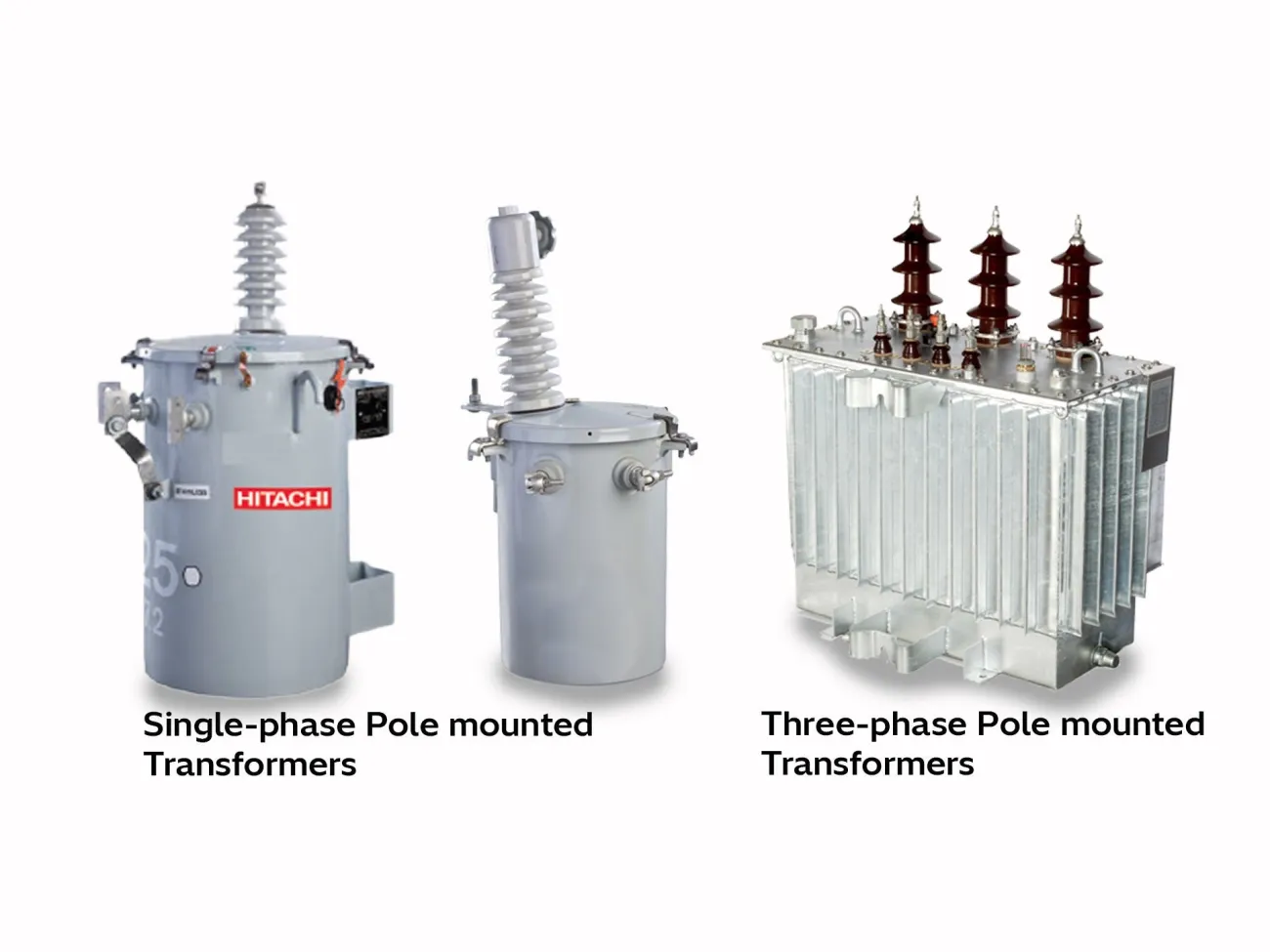
WEISHO pole mounted transformer product range
As a dedicated pole mounted transformer manufacturer, WEISHO focuses on utility‑grade, outdoor distribution units designed for the U.S. market. Our range covers:
Single‑phase pole mounted transformers for residential and rural electrification
Three‑phase pole mounted transformers for light commercial and small industrial loads
Oil‑immersed pole transformers and eco‑friendly fluid options
Standard and CSP (completely self‑protected) pole transformers for overhead systems
We support common U.S. kVA ratings and voltage classes used by co-ops, IOUs, and municipal utilities.
Design strengths in single-phase and three-phase units
We engineer every overhead distribution transformer for real‑world grid conditions in North America:
Optimized electrical design for high efficiency and DOE‑compliant operation
Flexible copper wound pole transformer or aluminum wound designs
Robust mechanical construction for coastal, desert, and cold‑weather installs
Clear nameplates, labels, and pole mounted transformer connections layouts aligned with ANSI/IEEE practices
For projects requiring arresters, we also coordinate with compatible 10 kV drop-type lightning arrester solutions to protect rural and residential distribution lines.
Quality control, standards, and testing
As an OEM/ODM utility pole transformer manufacturer, WEISHO runs strict in‑house quality control from core stacking to final assembly:
Design and testing in line with IEEE standard distribution transformers and relevant ANSI/IEC requirements
Routine, type, and special tests on every production batch
Dielectric, temperature‑rise, and impulse tests to verify BIL and insulation class
Full records and test reports available with shipments
For customers needing deeper insight on protection and connections, we share practical resources similar to our guide on current transformer connection fundamentals, helping field teams interpret diagrams and terminations correctly.
Typical applications and project profiles
WEISHO pole‑type transformers are built for:
Residential distribution transformers on overhead lines
Rural electrification transformers for long feeder runs and mixed loads
Small commercial plazas, farms, telecom sites, and public infrastructure
System upgrades and replacement programs for aging fleets
We’re comfortable supporting standard repeat orders and one‑off custom pole mounted transformers for special voltage or mounting needs.
How WEISHO works with utilities, EPCs, and contractors
We don’t just ship equipment; we work as a pole mounted transformer partner:
Front‑end engineering review of pole mounted transformer specifications
Support for pole mounted transformer diagram and wiring questions during design and installation
Coordinated logistics to meet shutdown windows and phased construction schedules
Long‑term supply relationships for utilities, EPCs, and large electrical contractors
If you need a pole mounted transformer manufacturer USA‑focused partner that understands schedule pressure, standards compliance, and total lifecycle cost, WEISHO is set up to support you from spec to energization.
FAQs About Pole Mounted Transformer Manufacturers
1. Pole Mounted vs Pad Mounted Transformer Suppliers
| Point | Pole Mounted Transformer Manufacturer | Pad Mounted Transformer Supplier |
|---|---|---|
| Typical Use | Overhead distribution, rural & residential lines | Underground or urban distribution |
| Installation Style | Mounted on utility poles, with a smaller footprint | Ground-level concrete pad |
| Access & Safety | Needs bucket truck; live-line safety practices | Ground access, lockable cabinets |
| Customization | More options for pole hardware, brackets, CSP | More focus on tamper‑resistant enclosures |
When I pick a pole mounted transformer manufacturer, I look for strong experience with overhead distribution transformers, line hardware integration, and utility standards (ANSI/IEEE, DOE). Pad-mounted suppliers focus more on tamper-proof cabinets and underground systems.
2. Typical Lead Times for Custom Overhead Distribution Transformers
For custom single-phase pole mounted transformers or small three-phase pole mounted transformers, most serious manufacturers run on:
| Product Type | Typical Lead Time (USA) |
|---|---|
| Standard catalog pole units (kVA in stock) | 2–4 weeks |
| Lightly customized ratings/voltages | 6–10 weeks |
| Fully custom designs or special features | 10–16+ weeks |
Lead times stretch when you add:
Non-standard primary voltages
Special bushings, terminals, or CSP transformer protection
Tight utility specs or new type tests
Plan—especially if you’re coordinating with switchgear or protection gear such as an indoor load break switch for distribution systems.
3. Common kVA and Voltage Options in Stock
Most utility pole transformer manufacturers in the U.S. keep these ranges ready or semi‑ready:
| Type | Common kVA Ratings | Typical Primary Voltages (kV) | Typical Secondary Voltages (V) |
|---|---|---|---|
| Single-phase pole mounted | 10, 15, 25, 37.5, 50, 75 | 7.2, 7.62, 12.47, 13.2, 24.9 | 120/240, 240/480 |
| Three-phase banked (3x single) | 3×25 to 3×167 kVA | 12.47, 13.2, 24.9, 34.5 | 208Y/120, 480Y/277, 240/480 |
| Small three-phase pole mounted | 45, 75, 112.5, 150, 225 | 4.16–34.5 | 208Y/120, 480Y/277 |
If you need DOE efficiency compliant transformers, confirm the kVA and voltage class match the latest DOE/CSA/ANSI tables before you issue a PO.
4. Basic Installation and Maintenance Considerations
When I supply pole mounted distribution transformers to U.S. utilities and contractors, these are the basics I insist on:
Installation basics
Verify pole mounted transformer specifications (kVA, primary/secondary voltage, BIL) against the single-line and pole mounted transformer diagram.
Use proper pole mounted transformer connections and torque values for lugs and bushings.
Maintain clearances from communications lines and structures per NESC and local code.
Coordinate fuses, cutouts, and arresters with your protection design (see also this overview of switchgear and protection basics).
Maintenance basics
Visual checks for oil leaks, corrosion, broken arresters, or overheated connectors.
Periodic infrared scans on heavily loaded feeders.
For oil-immersed pole transformers, follow utility practice for oil sampling and dielectric tests.
Keep records of loading vs. pole mounted transformer kVA ratings to avoid chronic overloads.
For U.S. buyers, I always recommend working only with manufacturers who provide clear pole mounted transformer wiring diagrams, nameplate data, and basic maintenance guidelines with every unit.