I. Introduction: Defining the Critical Difference
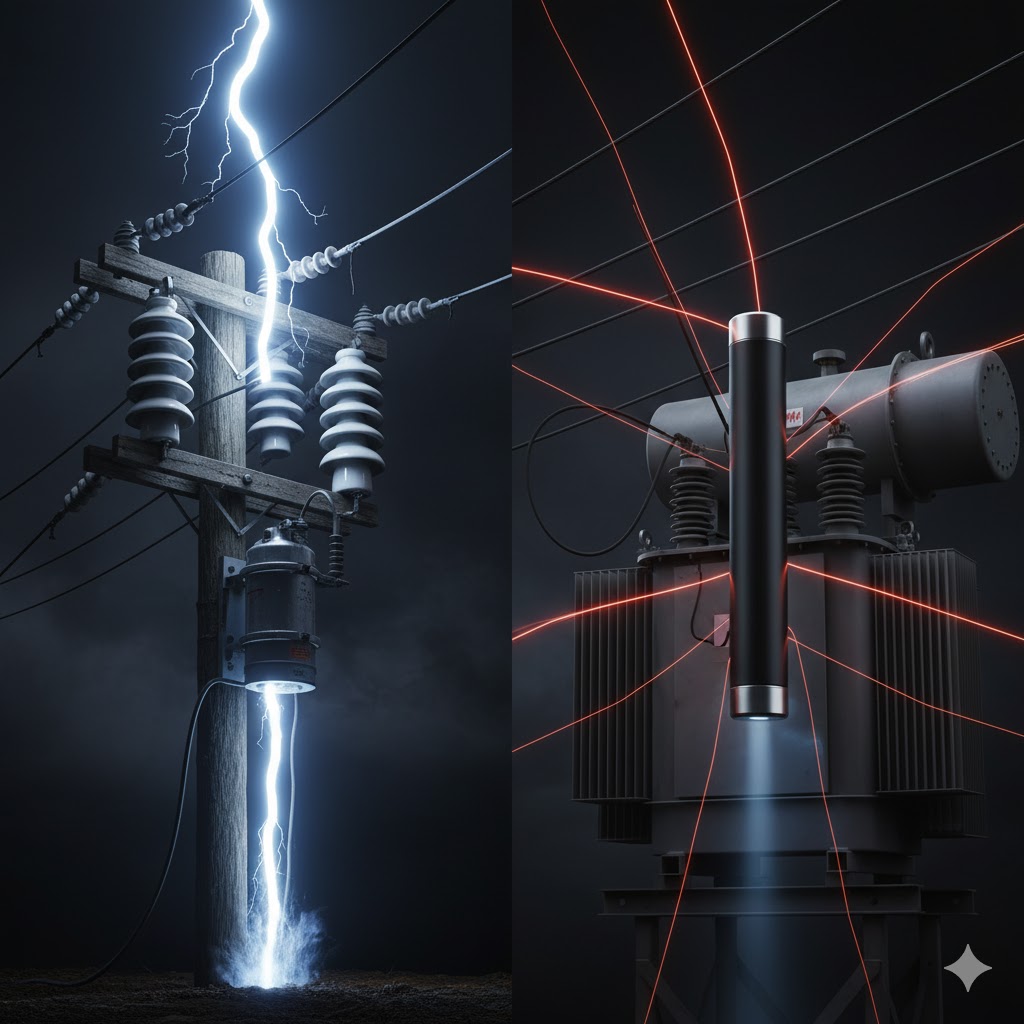
The fundamental difference between a Lightning Arrester (LA) and a Surge Protective Device (SPD) is rooted in the energy magnitude they are engineered to handle. The LA serves as the robust, first line of defense against immense, high-energy discharges from direct lightning strikes.
The term SPD, conversely, describes a broader class of devices. They are tasked with protecting sensitive equipment against diverse transient overvoltages, including indirect lightning effects and system switching operations.
Transient overvoltages, often simply called surges, represent a constant, invisible threat to modern power system stability and longevity. Regardless of whether these surges stem from a natural lightning strike or from internal grid events like routine switching, they can inflict irreversible damage in mere milliseconds.
For every electrical engineer, mastering the correct deployment and technical understanding of LAs and SPDs is critically important. This mastery is necessary for ensuring continuous operational integrity and reliable power delivery. This comprehensive guide will delve deep into the core technologies, relevant standards, and necessary engineering coordination of these two protective elements. We will equip readers to construct an unassailable, multi-tiered protection architecture.
Key Takeaways: Your Core System Protection Snapshot
Essential Distinction: Lightning Arresters are purpose-built to tackle high-energy direct lightning impulses, prioritizing energy absorption capability. Surge Protective Devices are optimized for low-to-moderate energy transients from multiple sources, focusing intensely on low clamping voltage (residual voltage).
Technological Core: LAs predominantly rely on large-volume Zinc Oxide (ZnO) Metal Oxide Varistors (MOVs) to achieve the necessary high thermal capacity for long-duration impulses. SPDs utilize a sophisticated combination of smaller MOVs, Gas Discharge Tubes (GDTs), and Silicon Avalanche Diodes (SADs) to optimize lightning-fast response speed and ultra-low clamping voltage.
Standard Divergence: LAs are mandated by IEC 60099-4, which emphasizes the device's resilience to the severe 10/350μs waveform, a signature of direct lightning current. SPDs are primarily governed by IEC 61643-11, focusing on the 8/20μs waveform and the pivotal Up (voltage protection level) parameter.
Engineering Practice: Successful protection relies on these two device types functioning in coordinated harmony. Residual voltage coordination calculations are crucial to ensure the upstream device’s residual voltage will not breach the insulation rating of the downstream device or the final protected equipment.
System Role: The Lightning Arrester acts as the coarse protection (Type 1), defending major system infrastructure and substation apparatus. The Surge Protective Device fulfills the role of fine protection (Type 2/Type 3), specifically safeguarding sensitive terminal electronic equipment.
II. The Clear Mandate: Design Goals and Protection Scope
2.1 The Lightning Arrester (LA): Shielding the High-Voltage Backbone
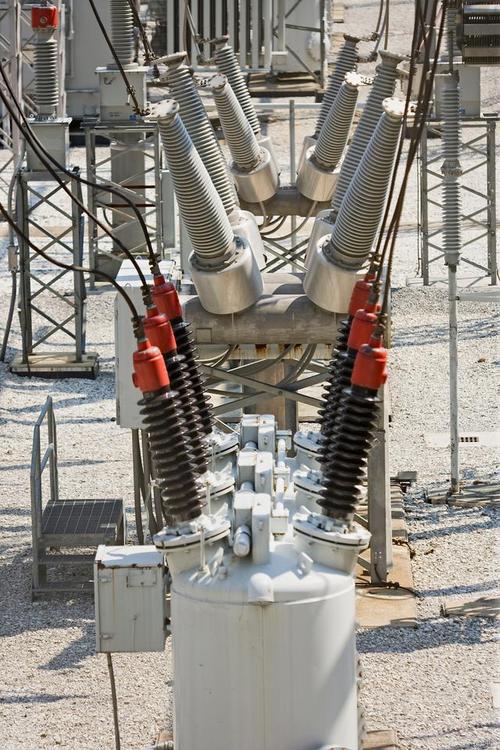
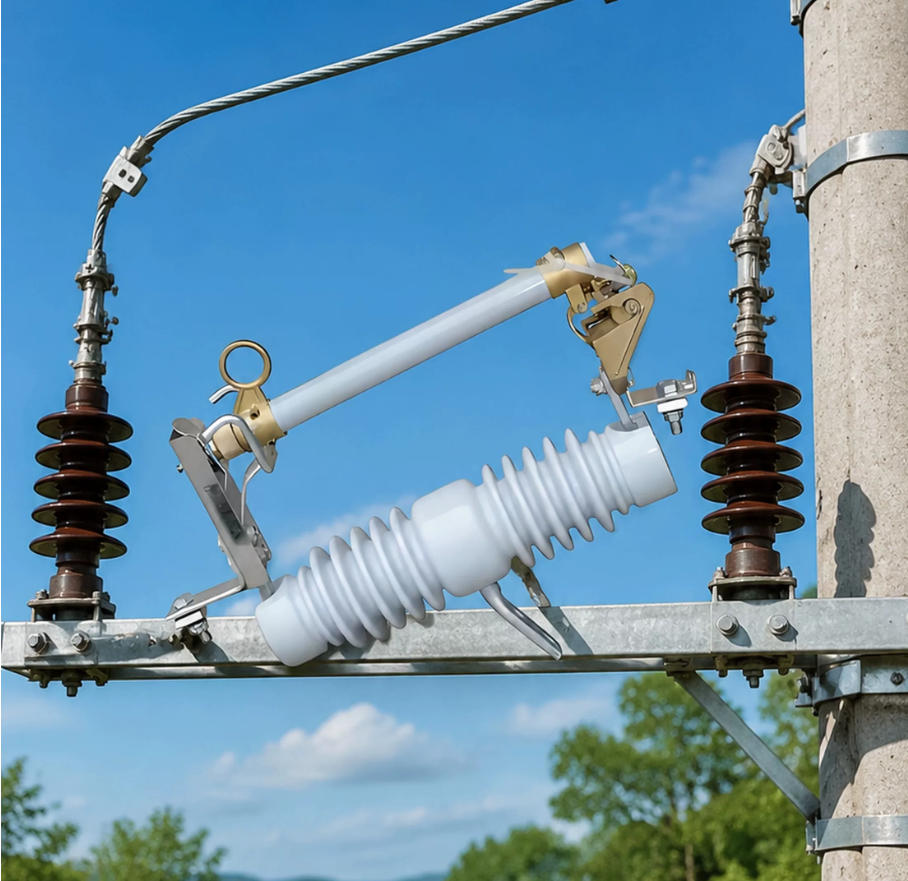
The Lightning Arrester's primary design mandate is to aggressively address the extremely high-amplitude, high-energy overvoltages induced by lightning strikes. These devices represent the critical, final stand in defending a grid's primary system from catastrophic destruction. In modern applications, they are most commonly known as Metal Oxide Arresters (MOAs).
The LA fundamentally functions as a non-linear resistance component within the power system. Under normal system frequency voltage, the device presents an extremely high impedance, ensuring it remains isolated and dormant. The moment a transient overvoltage exceeds its defined activation voltage, however, its impedance instantly drops to an infinitesimally low level, swiftly diverting the immense lightning current to the earth.
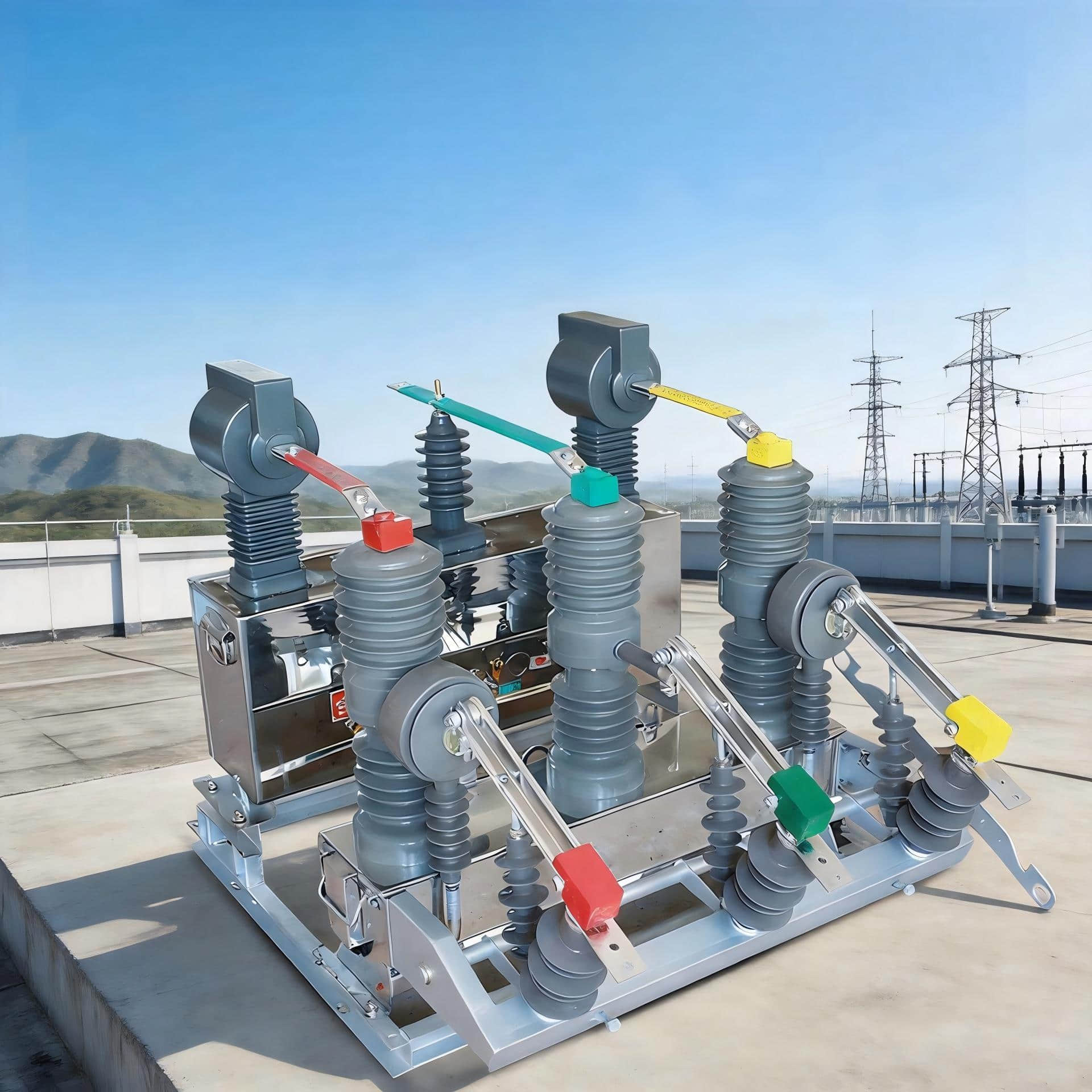
The specific protection objective for an LA centers on guarding high-voltage transmission towers and the most critical, high-value assets within substations. These assets include the main power transformers, circuit breakers, and busbars. In these environments, any protection failure translates directly into protracted downtime, cascading system failures, and massive financial repercussions.
LAs are strategically installed outdoors and on the high-voltage side. This placement is typically at the point where transmission lines enter the substation or in proximity to transformer windings. They serve as the absolute first line of defense against external atmospheric lightning impulses, often categorized as IEC Type 1 or higher protection.
2.2 The Surge Protective Device (SPD): Guarding the Low-Voltage Periphery
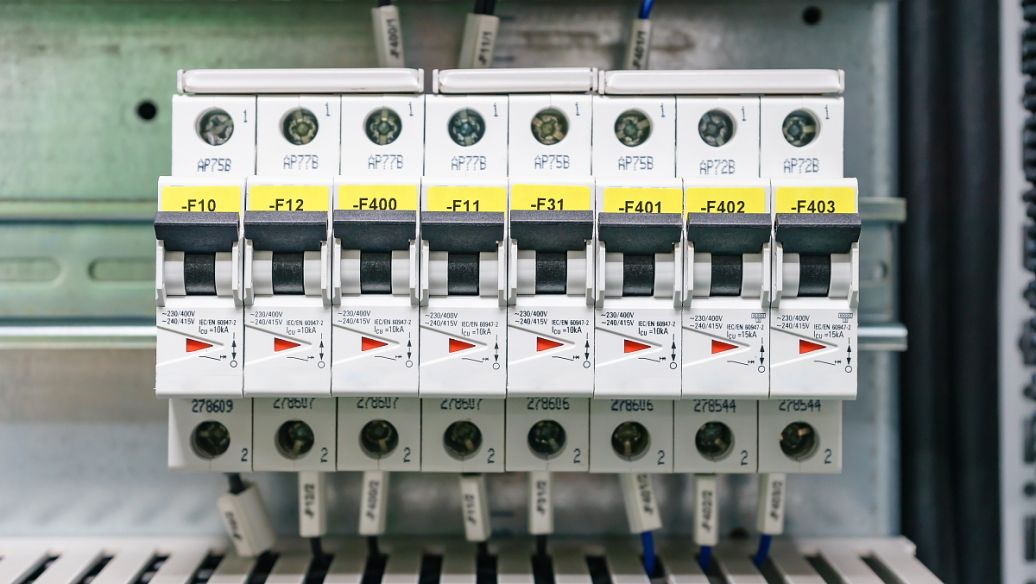
The Surge Protective Device is a far more encompassing term, generally applied to the meticulous, fine-tuned protection of low-voltage distribution systems. Crucially, the SPDs are designed to manage a much more diverse and frequent array of transient overvoltage sources.
The essential function of the SPD is to severely restrict and actively clamp various forms of transient overvoltage, regardless of their source. The goal is to limit the peak voltage to a pre-defined, acceptable, and low level, which is known as the voltage protection level (Vp). This action successfully safeguards all sensitive electronic equipment positioned downstream.
The primary targets for SPD protection include the low-voltage distribution boards, specific branch circuits, and most importantly, sensitive terminal electronic devices. These devices range from PCs and Programmable Logic Controllers (PLCs) to servo drives and LED lighting fixtures.
Their installations are typically indoor, distributed across the low-voltage main distribution cabinet (Type 2), floor distribution panels (Type 2/Type 3), and right at the point-of-use outlets (Type 3). The core responsibility of SPDs is to manage the residual surges that have been attenuated by the upstream LA/Type 1 devices. They also manage the constant and numerous internal surges generated within the system itself.
III. Core Technology: Differences in Underlying Principles
The fundamental distinction between an LA and an SPD is not simply a matter of physical size or rating. It is deeply rooted in the underlying material selection and physical design optimization. These choices are employed to successfully manage specific energy types and pulse durations, which ultimately dictate their respective roles in the protection hierarchy.
3.1 Core Operating Mechanism and Material Selection
The key to understanding an LA’s design is recognizing its emphasis on thermal capacity to survive catastrophic, high-energy events. LAs predominantly rely on specialized, large-volume Zinc Oxide (ZnO) Metal Oxide Varistors (MOVs) as their primary functional element. They prioritize sheer durability and energy dissipation over achieving ultra-low clamping performance.
The 10/350μs lightning waveform, which LAs must withstand, doesn't just deliver an extremely high current peak. It also boasts a significantly long duration, which generates an enormous amount of Joule heat within the protective element. To counteract this, the ZnO varistor blocks used in LAs are typically much larger in volume and arranged in series-parallel banks. This ensures they have sufficient physical mass to absorb and safely dissipate this high-energy, long-duration thermal load, effectively preventing the device from thermal runaway or catastrophic breakdown.
In stark contrast, low-voltage SPDs are rigorously engineered to achieve both a much lower protection voltage and an exceptionally faster response speed. This demand for agility and precision necessitates a far more diverse and modular protection strategy than the LA.
While MOVs remain the workhorse component, they are usually smaller and are highly optimized for better clamping characteristics rather than pure energy absorption capacity. Additionally, SPDs frequently incorporate Gas Discharge Tubes (GDTs), which offer superior insulation resistance and massive current surge capacity. However, they have a slower response time, often making them ideal for the Type 1 or Type 2 stage's common-mode protection or used in series with MOVs.
For the most sensitive protection layer, Silicon Avalanche Diodes (SADs), also known as Transient Voltage Suppressors (TVS), are deployed. These devices boast the fastest response speed (picoseconds) and the lowest clamping voltage, though they are limited in current capacity. This makes them perfect for Type 3 or data line protection.
The ultimate objective of an SPD’s technology mix is to achieve the absolute lowest voltage protection level () possible. This is essential for protecting micro-electronic chips and components that are extremely sensitive to momentary voltage fluctuations.
Tip: The Lightning Arrester is fundamentally designed for "survival"—absorbing catastrophic amounts of energy without destroying the main system. The Surge Protective Device is designed for "precision clamping"—restricting the voltage to a safe, low level that modern electronics can tolerate.
Unique Insight: The discussion extends to the devices' safe failure mechanisms following a major current impulse. LAs primarily focus on maintaining insulation recovery capability in a high-voltage environment. Low-voltage SPDs, on the other hand, must incorporate a thermal disconnector or thermal cutout mechanism. This prevents catastrophic failure or explosion that could result from thermal runaway after MOV degradation or from sustained power frequency overvoltages.
3.2 The Energy Handling Capability: Focus on "Power" vs. "Speed"
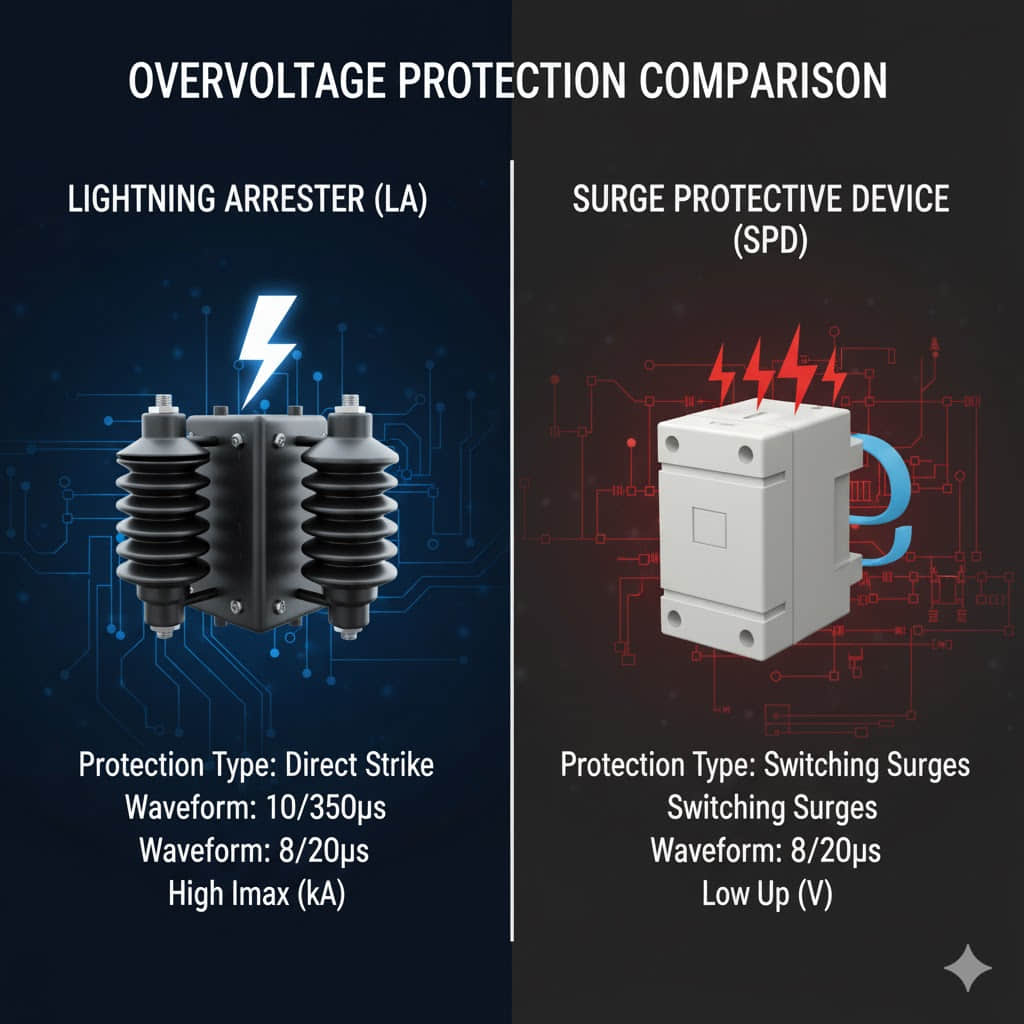
The LA operates in the Power Class, dealing with high-magnitude currents that carry significant energy. During testing, LAs must successfully endure the rigorous 10/350μs lightning current waveform, which is known as the Full Lightning Current Wave. This waveform mathematically models the devastating energy delivered by a direct lightning strike.
The key parameters for an LA—its nominal discharge current (In) and maximum discharge current (Imax)—are often rated in the tens or even hundreds of kiloamperes (kA). This high rating directly reflects its design priority: sheer energy absorption capability. The device must divert this current safely without failing or leaving dangerous residual voltage.
Conversely, the SPD operates in the Speed Class, primarily addressing the 8/20μs operating waveform. This waveform represents either switching overvoltages or induced lightning surges. While the energy content of this waveform is lower, the transient speed is often much faster, requiring the device to react almost instantaneously.
The most crucial performance indicator for an SPD is the voltage protection level. This value absolutely must be maintained far below the downstream equipment's insulation withstand voltage. Therefore, the SPD’s design prioritizes both clamping speed and exceptionally low residual voltage output.
IV. Key Comparisons and Standardization Requirements
4.1 Comparative Overview: LA vs. SPD
This table provides an essential, at-a-glance comparison of the two device types. It highlights the technical and functional divergence that drives their application in the field. For professional engineers, understanding these precise differences is non-negotiable for correct system design.
4.2 Divergence in Standardization and Testing Requirements
The rigor of engineering practice is fundamentally demonstrated by adherence to industry standards, which accurately reflect real-world application demands. LAs and SPDs are governed by distinct international standards from the International Electrotechnical Commission (IEC). This separation recognizes their diverse operating environments.
Lightning Arrester Standards adhere strictly to IEC 60099-4, which specifically governs gapless Metal Oxide Arresters used in high-voltage power systems. The testing regime is designed to simulate the harsh operational environment of the high-voltage grid. It focuses intensely on the device’s ability to withstand repeated impulse current waveforms and thermal cycles.
This testing ensures reliable thermal stability is maintained even under maximum continuous operating voltage. The standards are designed to test the limits of survival under catastrophic conditions.
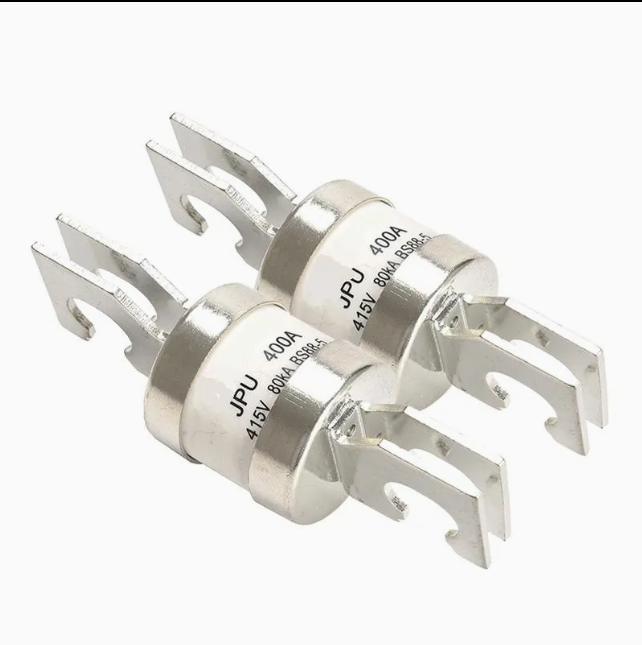
Surge Protective Device Standards follow IEC 61643-11, which applies to SPDs in low-voltage distribution systems. This standard classifies SPDs into Type 1 (T1), Type 2 (T2), and Type 3 (T3) based on their location and function within the system.
The key testing focus remains the Voltage Protection Level (), which measures the maximum residual voltage the device allows downstream. Testing also verifies its ability to maintain safe operation at the system's highest continuous operating voltage (Uc).
Note: The distinction between the 10/350μs waveform (LA focus) and the 8/20μs waveform (SPD focus) is the fundamental criterion for engineers determining the necessary protection class. The former is the absolute measure of energy content, while the latter primarily quantifies current peak and transient speed.
V. Practical Engineering Application: Coordination and Synergy
In nearly all professional electrical designs, systems are never protected solely by an LA or an SPD. Rather, they form a multi-stage protection system that must function as a cohesive whole, demanding meticulous planning. The underlying philosophical core of this necessary cooperation revolves around precise "Energy Management" and the critical technical challenge of "Residual Voltage Coordination."
5.1 Multi-Stage Protection: Residual Voltage Coordination
The moment a transient event occurs, even after the powerful LA (T1) has successfully diverted the vast majority of the lightning energy to the earth, the device itself will still allow a residual voltage to pass downstream. This residual voltage might still peak at 1.5 kV or even higher, depending on the current magnitude.
While this voltage level is perfectly safe for high-voltage transformers and switchgear, it is often a fatal "hit" for modern micro-electronic devices. For instance, the insulation withstand voltage (Uw) for components like CPUs, PLCs, or sensors might be only a few hundred volts, so the LA's residual voltage remains a critical threat.
The necessary principle for an effective multi-stage design is strictly mandated by IEC 61643-12. This standard requires both Energy Coordination and Voltage Coordination.
Energy Coordination ensures each protective stage reliably shares and dissipates the current surge energy that flows through it. Voltage Coordination, which is the most challenging technical aspect, mandates that the upstream device's residual voltage (Upres) must be lower than the activation voltage (Ua) of the downstream protective device (T2/T3 SPD).
This strict requirement ensures that once the upstream device acts, the downstream device "sees" enough voltage differential to reliably trigger its own low-clamping action. The result is achieving true step-by-step voltage limitation throughout the system.
The key methodology for achieving this coordination often involves utilizing the line impedance for decoupling between the protection stages. Engineers achieve this by maintaining a sufficient installation distance between the different protection levels.
This distance often requires 30 feet (about 10 meters) of cable run, which provides the necessary inductance (L) in the wiring. The inherent inductance of the wiring over this distance creates a crucial voltage drop during the current transient, ensuring the second-stage SPD perceives a high enough voltage differential to initiate its discharge and safely clamp the voltage.
If physical distance is impractical or insufficient, a dedicated decoupling inductor must be wired in series between the two stages to artificially provide the necessary impedance.
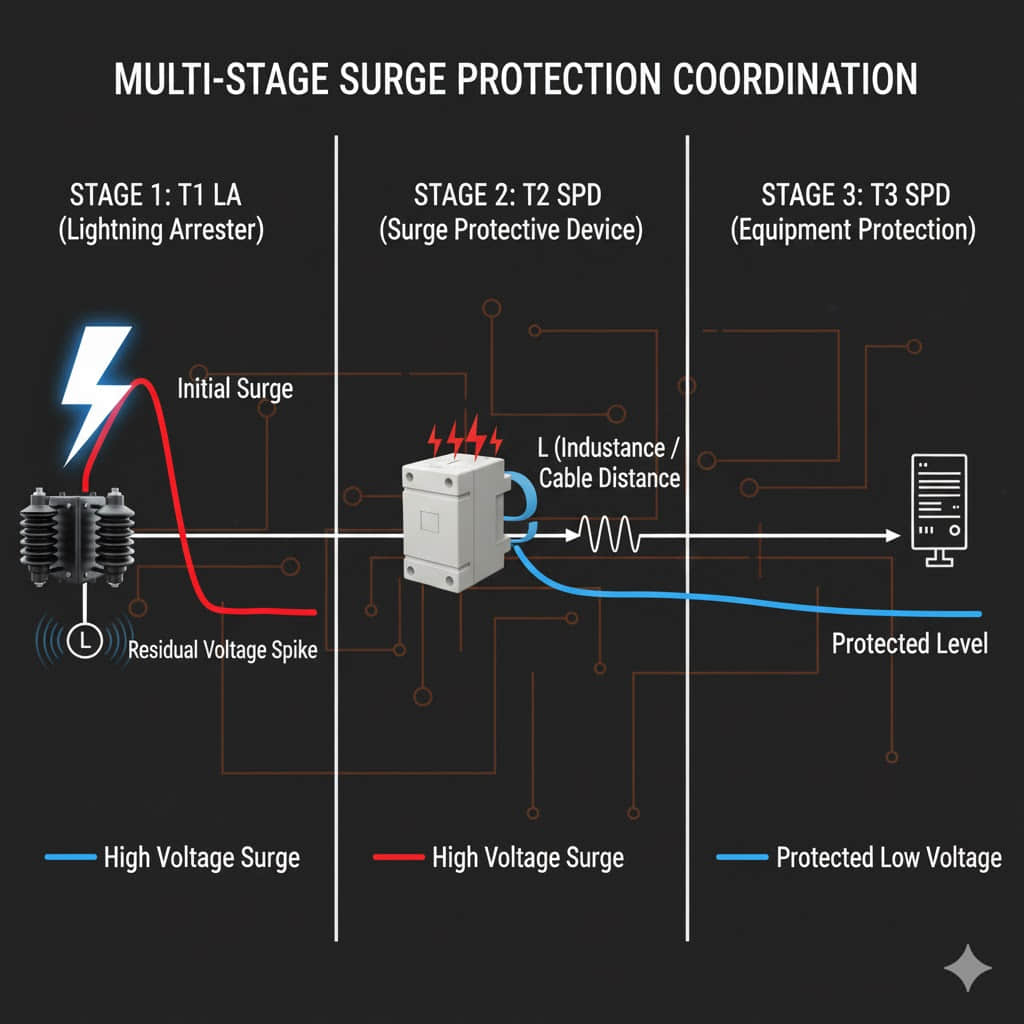
As technology continues to advance, T1+T2 combined SPDs have been developed and gained popularity. These modular devices integrate GDT and MOV technology in a coordinated cascade within a single housing unit. This integrated design significantly simplifies the traditional inter-stage coordination problem for the engineer, making them increasingly popular in modern low-voltage distribution cabinet applications where space is often limited.
Tip: In detailed engineering design, you must verify that your SPD’s Up (voltage protection level) is maintained at least 20% below the insulation withstand voltage (Uw) specified by the terminal equipment manufacturer. This safety margin of 20% is considered the crucial golden standard for ensuring long-term operational integrity.
5.2 Common Selection Traps and Misconceptions
1. Misconception 1: Over-reliance on LAs while ignoring internal surges. The reality is that up to 80% of transient overvoltages are actually generated internally by routine switching operations. These internal sources include events like capacitor bank switching or large motor starts. LAs are fundamentally unable to handle these frequent, low-energy internal surges effectively.
2. Misconception 2: Ignoring (Maximum Continuous Operating Voltage). The UC rating must be absolutely higher than the system's maximum operating voltage. Otherwise, the SPD will remain constantly energized or stressed. This continuous loading leads to MOV degradation, thermal runaway, and ultimately results in a catastrophic device failure within the distribution panel.
3. Misconception 3: Assuming all MOVs are created equal. As established in Section 3.1, the MOV blocks used in LAs are specifically engineered for massive thermal capacity and longevity under high-energy pulses. They have fundamentally different performance metrics and expected lifespans compared to the standard, lower-rated MOVs found in low-voltage SPDs.
VI. Conclusion: A Unified Approach to Electrical Integrity
Lightning Arresters and Surge Protective Devices fulfill mutually exclusive yet highly complementary roles within the electrical system. The LA is dedicated to the high-energy, external lightning impulse, serving as the primary defense line for high-value grid assets.
Conversely, the SPD focuses on the multi-source, full-range transient voltage clamping, acting as the fine-tuned defense line for end-point electronics. Their relationship is not one of competition, but rather of essential cooperative synergy.
For every electrical professional, true mastery of power protection demands more than simple differentiation. It requires a deep understanding of the two devices' divergent technical principles, testing standards, and complex engineering coordination requirements.
Only by deploying both according to the principles of "staged protection and energy coordination" can one guarantee comprehensive, reliable, and secure protection for electrical assets. This security extends from the primary source down to the most sensitive terminal device. Complete electrical protection is fundamentally a systems engineering discipline, relying equally on the concerted efforts of LAs, SPDs, a robust grounding network, and effective shielding.
💡 Take Action Now: Secure Your Custom Protection Solution
Is your power system grappling with complex and persistent surge challenges? Simply understanding the difference between LAs and SPDs is insufficient; meticulous residual voltage coordination remains the ultimate defense for ensuring equipment longevity and safety.
As seasoned experts in the power protection field, we deeply appreciate that every project presents its own unique set of challenges and operational variables. If your facility requires specialized attention, we are ready to assist with custom solutions.
You should reach out to our team if your project needs:
1. Tailored Multi-Stage Protection System Design (T1/T2/T3 Coordination).
2. Professional Residual Voltage Calculation and Verification Services for mission-critical infrastructure.
3. Expert LA/SPD Selection Guidance specifically engineered for high-exposure environments (e.g., direct lightning zones).
👉 Click here now to connect with our Senior Electrical Engineering team, and you will receive a complimentary system protection assessment and specialized solutions designed just for your operation!
❓ Frequently Asked Questions (FAQ)
1. Can a Lightning Arrester (LA) Replace an SPD?
Answer: No, the LA cannot fully replace the Surge Protective Device. While the LA (T1 SPD) possesses massive current-handling capacity, its resulting residual voltage is comparatively higher than that of a T2 or T3 device. The LA successfully protects the system from devastating failure.
However, its residual voltage may still exceed the insulation withstand level (Uw) of sensitive electronic devices. The SPD's function (T2/T3) is crucial for further clamping the voltage to a safe, acceptable range, making their synergistic use essential.
2. Can an SPD Protect Against a Direct Lightning Strike?
Answer: Only Type 1 Surge Protective Devices (SPD Type 1) are specifically rated to withstand a portion of the direct lightning current impulse, and they are typically installed at the main service entrance. However, standard Type 2/Type 3 SPDs cannot handle the raw, high-energy impact of a direct strike.
They are primarily designed to manage the transient surges that are induced onto the power line via long cable runs after a strike. They also handle the residual voltage that has been successfully diverted by the T1 SPD. Dedicated LAs are mandatory for high-voltage infrastructure protection.
3. Why Would My Surge Protective Device (SPD) Fail or "Burn Out"?
Answer: SPD failure usually stems from three primary issues: 1. End of Service Life: MOV components have a finite discharge cycle count, and their performance gradually degrades over time and with each discharge event. 2. Thermal Runaway: This occurs if the selected Uc (Maximum Continuous Operating Voltage) is too low, or if the device constantly handles high-energy surges beyond its rating. This leads to sustained overheating and eventual thermal breakdown. 3. External Faults: System faults like a neutral line loss or line-to-line short circuit can subject the SPD to sustained power frequency overvoltages rather than momentary transients. This can cause catastrophic failure. All professional SPDs include visual indicators or disconnectors to flag their operational status.
4. What is the Voltage Protection Level (Up) and why is it Critical?
Answer: Up (Voltage Protection Level) is one of the most critical parameters for an SPD. It represents the maximum instantaneous voltage peak that appears at the SPD's output terminals when the device is actively conducting a surge current. Its value is the direct determinant of the downstream equipment's safety.
When selecting an SPD, you must ensure its Up is significantly lower than the insulation withstand voltage (Uw) specified by the equipment manufacturer. This difference provides the necessary safety margin for all connected equipment.
5. How is "Residual Voltage Coordination" Achieved Between Arresters and SPDs?
Answer: Residual voltage coordination is the essential requirement for effective multi-stage protection. The most common method involves maintaining sufficient electrical distance between the first stage (e.g., T1 SPD) and the second stage (T2 SPD). This distance often requires 30 feet (about 10 meters) of cable run.
This distance provides the necessary inductance (L) in the line, which generates a large enough voltage drop during the current transient. This voltage drop ensures that the second-stage SPD "sees" a sufficient voltage rise to reliably activate and clamp the voltage within its safe Up range. If distance is impractical, a dedicated decoupling inductor must be wired in series between the two stages.
6. What is the Relationship Between a Lightning Rod and Arresters/SPDs?
Answer: The Lightning Rod (or Air Termination System) is functionally distinct yet complementary to Arresters and SPDs. The Lightning Rod is the first layer of External Lightning Protection; its job is to actively capture the lightning strike. It then safely channels the massive current to the earth via separate down-conductors, preventing a direct strike on the structure or equipment.
Lightning Arresters and SPDs are the crucial components of Internal Lightning Protection, responsible for managing the high currents that are conducted onto the power lines (or communication lines) and the induced surges. A complete, robust protection system requires all three—the rod, the arrester, and the SPD—to work in harmony.