
Testing a current transformer (CT) is critical because it's the bedrock of a power system’s safety and accuracy. Routine testing ensures a CT operates reliably, preventing equipment damage or safety hazards caused by its failure. Think of it like giving a car a thorough inspection to ensure it won’t break down on the highway.
As an electrical engineer with years of real-world experience, I know just how vital a meticulous testing process can be. Every successful test represents a potential risk that has been averted. In this article, I’ll share the hands-on insights I’ve gained while breaking down every step of the CT testing process, from basic safety preparations to complex performance evaluations.
Step 1: Pre-Test Prep & Safety
Before you even think about picking up a test instrument, you must remember one golden rule: safety first, no exceptions. Every CT test carries inherent risks, especially from its secondary circuit, which can generate lethal high voltages if left open.
Confirming Test Conditions
First, ensure the CT's primary side is completely de-energized and physically isolated from any live high-voltage equipment. This is a non-negotiable step, so always visually verify the disconnection and use a voltage detector to confirm.
At all times, the CT's secondary circuit must be shorted or grounded; this is absolutely critical. Never, under any circumstances, allow a CT's secondary circuit to be open while current is flowing on the primary side. An open circuit can induce an extremely high voltage (hundreds or thousands of volts), which can cause catastrophic equipment failure and, more importantly, endanger lives. Always short the secondary terminals before disconnecting any connected meters or relays.
Lockout/Tagout (LOTO)
Place clear "Do Not Operate" tags and physical locks on all possible operating points connected to the CT. This simple action prevents accidental re-energization and ensures your work environment remains secure.
Essential Testing Tools
To perform a CT test, you'll need a set of reliable tools. These basic instruments should include an insulation resistance tester (Megger), a micro-ohmmeter for precision measurements, and a multimeter for basic continuity checks.
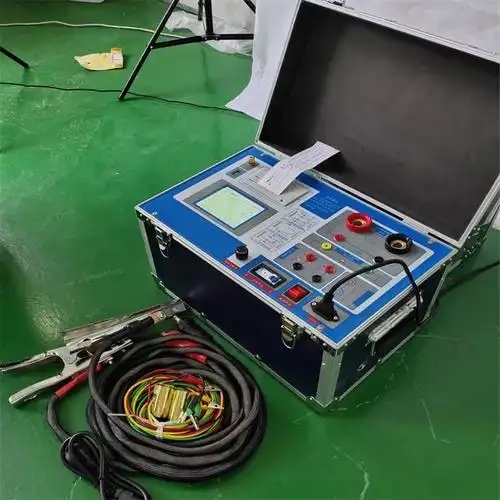
For more comprehensive tests, like ratio, excitation, and polarity, I highly recommend using a multifunctional CT analyzer. These automated devices can perform multiple tests quickly and accurately, with built-in safety features that prevent human error.
Note: When working on high-voltage equipment, no safety step can be skipped. Ensure you and your team fully understand and comply with all safety protocols.
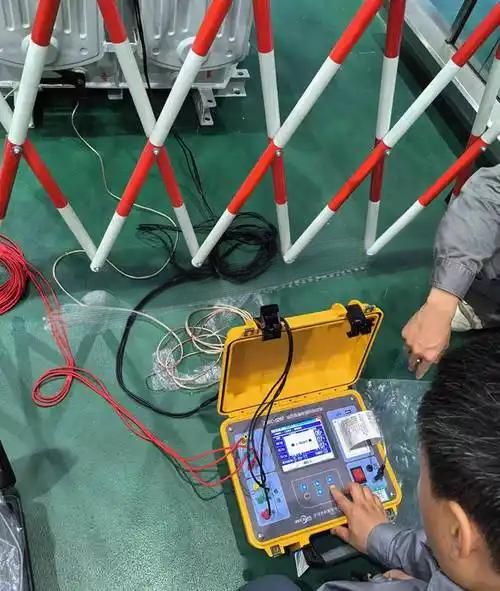
Step 2: Initial Inspection—The Non-Electrical Tests
Electrical tests are essential, but the first step is always to go back to basics. Many potential faults can be identified simply by looking at the equipment before you even apply power.
Visual Inspection
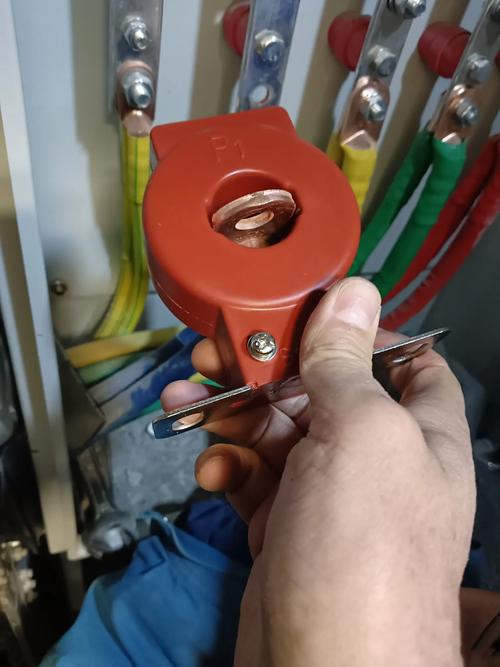
Take the time to check the CT's casing, porcelain bushings, or epoxy insulation for any cracks, chips, or burn marks. Physical damage like this can occur during shipping or operation and might compromise the internal insulation.
You should also ensure that all terminal connections are tight. Look for any signs of loosening, corrosion, or discoloration, as these can indicate a poor connection.
Nameplate Information
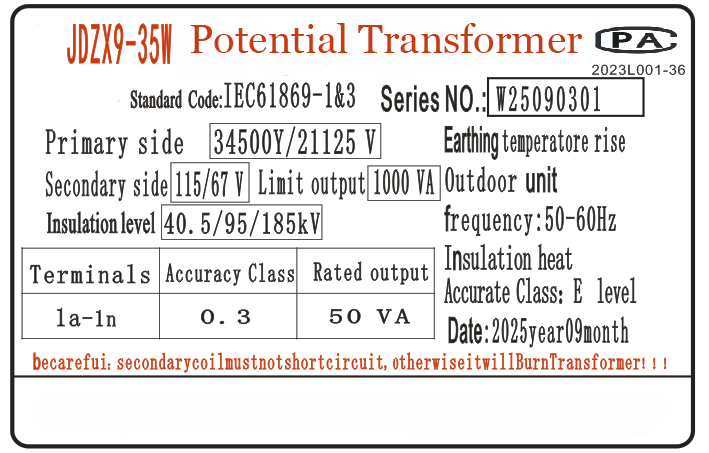
Confirm that the nameplate is intact and legible. It's the CT's "ID card," and it provides crucial data like the rated ratio, accuracy class, and serial number, which are all essential for your subsequent electrical tests.
Tip: Take photos of your visual inspection. This serves as a permanent record of the CT's condition and a baseline for future comparisons.
Step 3: Electrical Performance Tests—Basics & Insulation Integrity
Once your visual inspection is complete and all safety measures are in place, you can move on to the electrical testing phase. The primary goal here is to confirm the CT's basic electrical health and ensure there are no internal shorts, open circuits, or insulation problems.
Insulation Resistance Test (Megger Test)
This is the most fundamental test for assessing a CT's insulation health. The importance of this test is detailed in international standards like
Test Procedure
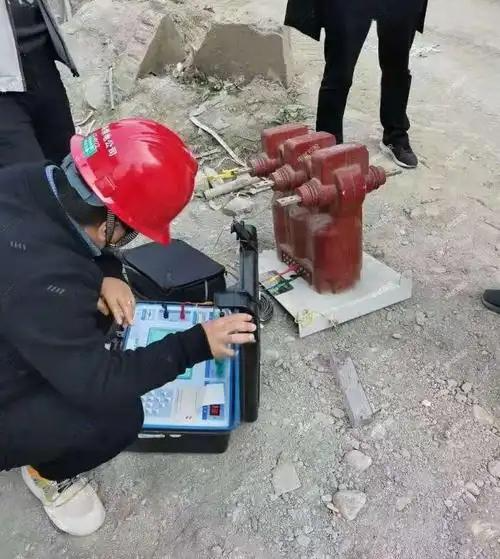
Use an insulation resistance tester (Megger) to apply a suitable test voltage (e.g., 500V or 1000V).
Measure the insulation resistance between the primary and secondary windings.
Measure the insulation resistance between the primary winding and the core (ground).
Measure the insulation resistance between the secondary winding and the core (ground).
Note: Insulation resistance test results can be affected by temperature and humidity, so always record environmental conditions along with your readings for future comparison.
Winding Resistance Test
This test might seem simple, but it can reveal many internal problems. Its purpose is to confirm the continuity and health of the winding conductors. You're looking for any open circuits or loose internal connections.
Use a micro-ohmmeter to measure the DC resistance of both the primary and secondary windings.
Since the primary winding resistance is often in the micro- or milli-ohm range, you must use a four-terminal micro-ohmmeter for accurate results.
The measured value should be within the manufacturer’s specified range or match the reference value for similar CTs. If the value is too high, it may indicate a loose connection; if it reads as an open circuit, the winding is broken.
Tip: Perform the winding resistance test after the CT has cooled to ambient temperature to prevent temperature from affecting your readings.
Step 4: Electrical Performance Tests—Core Characteristics & Accuracy
This is the heart of CT testing, where you verify its performance and accuracy in real-world scenarios.
Polarity Test
The polarity test is crucial for ensuring the CT is wired correctly, especially in differential protection schemes. Its purpose is to verify the proper relationship between the primary and secondary windings. Incorrect polarity can cause a protection device to malfunction.
The most common method is the DC method. Momentarily connect the positive terminal of a low-voltage DC source to the P1 terminal on the primary side and the negative terminal to P2.
At the same time, observe the deflection of a DC voltmeter connected to the S1 and S2 terminals on the secondary side.
If the voltmeter deflects in the positive direction, it indicates that S1 and P1 are the same polarity, and the wiring is correct. If it deflects negatively, the polarity is reversed.
Note: Polarity errors are a common mistake in electrical engineering, especially in new installations or retrofits. A polarity error in a differential protection circuit can lead to a dangerous malfunction.
Turns Ratio Test
This test verifies the CT's core function. According to
You can use the current injection method by injecting a known current into the primary winding and measuring the output current on the secondary. The ratio is the primary current divided by the secondary current.
Alternatively, use the voltage method by applying an AC voltage to the secondary winding and measuring the induced voltage on the primary. The ratio is the primary voltage divided by the secondary voltage.
Watch an On-Site Demo: CT Turns Ratio Test
Combining theoretical knowledge with practical application provides a much deeper understanding of the turns ratio test. The video below will take you to the field to show you how to perform a ratio test with clamp meters and how to interpret the results.
Tip: Prioritize using a multifunctional CT analyzer for ratio testing, as it automatically performs multiple measurements and calculates the average, leading to more precise and reliable results.
Excitation / Saturation Test
This test is key to determining a CT’s performance under extreme conditions, like a short circuit. As emphasized in
Connect a variable AC test voltage source to the CT’s secondary winding.
Gradually increase the voltage while recording the corresponding exciting current until the core saturates.
Plot the volt-ampere characteristic curve (excitation curve). The knee point voltage on this curve represents the core's saturation point.
The saturation knee point voltage should be higher than expected, and the excitation curve should match the manufacturer's provided curve. If the saturation point is too low, the CT will saturate quickly during a high-current fault, distorting the output current and causing a protection device to malfunction.
Note: Excitation testing is one of the most important tests for a protection-class CT. A good CT's excitation curve should be very steep, indicating it remains linear under increasing current, which ensures relays receive accurate fault information.
Burden Test
A CT's performance depends not only on itself but also on the load connected to it. The purpose of this test is to ensure the CT can maintain its rated accuracy when connected to the actual load (e.g., a meter or relay coil).
Connect a known or simulated burden to the secondary side of the CT.
Inject a rated current into the primary winding and measure the output voltage on the secondary side to verify the CT’s performance under that specific burden.
The secondary output current error should be within the specified accuracy class at the rated burden. Any burden higher than the manufacturer’s rating can cause the CT to fail to meet its rated accuracy.
Tip: Performing a real-world burden test can help you find potential wiring issues, like excess resistance from a long cable run, which can negatively affect the CT's accuracy.
Conclusion: Comprehensive Evaluation & Summary
A successful CT test is never just about completing a few measurements. It's a systematic process that connects a meticulous visual inspection with rigorous electrical performance tests. Ultimately, you need to analyze all test results collectively to build a complete "health file" for the CT. If any result is abnormal, it could signal a potential fault that requires further investigation or replacement.
To reiterate, routine testing is crucial for a CT's long-term stability and safe operation. While modern test equipment like CT analyzers have greatly streamlined the process, we, as engineers, must always maintain a deep understanding of every test and a profound respect for safety.
FAQ (Frequently Asked Questions)
Q1: Why can't the CT secondary circuit be open?
A1: This is the most critical safety rule. A CT has a very high turns ratio. When a large current flows through the primary, the secondary induces a voltage proportional to the current. If the secondary circuit is open, the current is zero, but the magnetic flux increases dramatically. This induces a dangerous, high voltage (hundreds or thousands of volts) across the secondary winding. Not only can this break down the insulation and destroy the CT, but it can also be lethal.
Q2: Is there a difference in testing protection-class and metering-class CTs?
A2: Yes, but the test items are generally the same. The main difference lies in the acceptance criteria and the testing focus. Metering-class CTs (e.g., 0.2S, 0.5) have extremely high accuracy requirements, and the testing focus is on ratio and phase angle errors. In contrast, protection-class CTs (e.g., 5P, 10P) are more concerned with performance under overcurrent conditions. Their excitation and saturation tests are particularly important to ensure they function correctly during a fault.
Q3: Why use a micro-ohmmeter for winding resistance tests instead of a regular multimeter?
A3: A CT's winding resistance, especially for large-current primary windings, is extremely small—often in the micro-ohm range. A standard multimeter lacks the current and precision to accurately measure such a small resistance. The resistance of the multimeter's test leads alone can be greater than the winding resistance, leading to completely distorted results. A micro-ohmmeter uses a four-terminal measurement method to effectively eliminate the influence of lead resistance, ensuring high accuracy.
Q4: How often should I test a CT?
A4: The test frequency depends on the CT's operating environment, importance, and age. Generally, new equipment must undergo a full set of tests before commissioning. For equipment in service, it's recommended to perform routine preventive maintenance every 3-5 years or after any major fault or retrofit. For critical equipment, consider increasing the test frequency.
Q5: Can a CT analyzer replace all traditional tests?
A5: For the most part, yes. A multifunctional CT analyzer can automatically perform most tests, including ratio, excitation, polarity, and winding resistance, with results that are more precise and traceable. However, for some special cases, such as high-voltage insulation tests (requiring higher test voltages) or unconventional tests, traditional equipment may still be a necessary supplement.
Q6: What is the significance of the "knee point voltage" in the excitation test?
A6: The knee point voltage is a key point on the excitation curve that marks where the CT's core transitions from a linear operating region to a saturated one. In the linear region, the secondary current is proportional to the primary current. After entering the saturated region, the secondary current's growth slows down significantly, and it can no longer accurately reflect the primary current. For a protection-class CT, a high knee point voltage means it will remain linear under a larger primary fault current, ensuring that the relay receives accurate fault information and operates correctly.