Want to shield your home or business from voltage spikes? This guide will show you how to pick the best surge arrester. It diverts dangerous surges, saving your appliances, servers, and control systems from damage.
This article explains what a surge arrester is and why it's crucial for your safety and equipment. You'll learn how to pick the right model for your electrical system, budget, and protection needs.
Are you a homeowner, small-business owner, or facilities manager? This guide is for you. It covers types, ratings, coordination, standards, installation, and more.
By the end, you'll know how to read datasheets and choose the right surge arrester. You'll also learn about layered protection and how to work with a licensed electrician. Check manufacturer datasheets and standards from IEEE, UL, and NEC to confirm your choices.
Key Takeaways
Surge arresters protect equipment by diverting high-voltage spikes away from sensitive loads.
This guide helps you choose surge arrester types and match voltage and current ratings.
Layered protection and coordination reduce residual risk for homes and businesses.
Use datasheets from Eaton, Schneider Electric, or Siemens and follow IEEE, UL, and NEC standards.
Work with a licensed electrician for correct installation and compliance.
Why choosing the right surge protection matters for your home or business
Choosing the right surge protection is crucial. It protects your property and keeps things running smoothly. Small surges can add up and shorten the life of your equipment.
Costs of inadequate surge protection
Replacing damaged items can be expensive. For example, fixing a damaged UPS or server can cost thousands of dollars. This can be a big hit to your budget.
There are also indirect costs. Downtime, lost data, and emergency repairs can add up. These costs can hurt your business more than just the price of parts.
Common surge causes in residential and commercial settings
Lightning strikes and grid changes are big threats. These events can cause overvoltages that enter buildings.
Internal sources also cause problems. Things like motor starts and HVAC cycling can create spikes. Fault-clearing operations inside a facility can also stress wiring and electronics.
How proper surge arresters extend equipment life
Surge arresters limit peak voltages and absorb energy. This reduces stress on sensitive gear. It slows down wear and tear.
Using multiple surge protection layers is best. Service-entrance arresters paired with others protect sensitive systems. This stops small surges that wear down equipment.
| Risk or Benefit | Typical Impact | How surge protection helps |
|---|---|---|
| Equipment replacement | $500 to $50,000+ | Limits peak voltages that cause catastrophic failure |
| Operational downtime | Hours to days of lost service | Prevents transient events that force shutdowns |
| Insurance exposure | Premium increases or claim denial | Code-compliant protection supports claims and lowers risk |
| Cumulative wear | Shortened MTBF for electronics | Reduces small surges that erode components over time |
| Cause types | Lightning, grid switching, motor starts, transfer switches | Targeted arresters mitigate both external and internal events |
Understanding how a surge arrester works
Protecting your home or business from power surges is crucial. This guide will help you understand surge arresters. You'll learn about the difference between surge arresters and surge protectors. Plus, we'll cover the important metrics to look for when choosing surge protection.
Basic operating principles of surge arresters
Surge arresters act as a shield between your electrical system and the ground. They stay dormant until a surge hits, then they divert the surge to the ground safely.
They use various technologies like metal oxide varistors, gas discharge tubes, and silicon avalanche devices. These devices have replaceable modules and indicators to show when they need to be replaced.
Difference between surge arresters and surge protectors
Surge arresters handle high-energy surges and are usually found at the service entrance. They meet Type 1 or Type 2 classifications.
Surge protectors, on the other hand, are for lower-energy events. They're often found in power strips and plug-in modules. For bigger faults, you need a surge arrester, not a protector.
Key performance metrics to look for
Look for the maximum continuous operating voltage (MCOV) to ensure it matches your system. The rated surge current and energy absorption are also important for MOV-based devices.
Check the clamping voltage and response time to protect your equipment. Also, make sure the device meets standards like UL 1449, IEEE, and IEC 61643 series. Look for clear indicators of when the device needs to be replaced.
| Metric | What it tells you | Typical spec to check |
|---|---|---|
| MCOV / Nominal Voltage | Matches arrester to your system to avoid nuisance operation | 120 V, 240 V, 480 V, or system-specific value |
| Rated Surge Current (kA) | Maximum surge current the device can divert | 10 kA to 200 kA depending on application |
| Energy Absorption (Joules) | How much energy MOV devices can absorb before degradation | Hundreds to tens of thousands of joules |
| Clamping Voltage / VPL | Voltage level at which the device starts conducting heavily | Lower VPL gives better equipment protection |
| Response Time | How quickly the device reacts to a transient | Nanoseconds for MOVs and SADs, microseconds for some GDTs |
| Short-Circuit Withstand | Ability to survive utility fault currents and follow current | Rated to match service equipment requirements |
| Standards Compliance | Confirms testing and expected performance | UL 1449, IEEE, IEC 61643 series |
Types of surge arresters available
Before choosing surge protection for your home or business, it's important to know the different types. Each type has its own strengths and weaknesses. Here, we'll look at the three main types and their roles in protection plans.
Metal oxide varistor (MOV) based arresters
MOV surge arresters switch to low resistance when voltage hits a certain level. They can handle a lot of energy and are often used in Type 2 SPDs. Brands like Eaton, Littelfuse, and Schneider Electric offer MOV modules with detailed specs.
MOVs can wear out over time and might fail short or open. To make them safe, they're often paired with thermal disconnects and fuses. Use MOV-based units for high energy needs and plan for regular checks or replacements.
Gas discharge tube (GDT) arresters
A GDT arrester creates a conductive path by ionizing gas at a specific voltage. It returns to high impedance after the surge passes. This design offers low leakage and a long life for occasional large surges.
GDTs are slower than some other options and might show voltage overshoot on very fast pulses. You'll find TE Connectivity and Bourns GDTs in telecom and specialized power protection. Pair a GDT with a faster device for high-voltage handling and tight clamping.
Silicon avalanche diode (SAD) and hybrid designs
SAD surge protection reacts quickly and clamps precisely. It's perfect for low-energy, high-speed needs like sensitive electronics and telecom lines. SADs protect circuits from transients before they cause damage.
Hybrid surge arresters mix components like GDT + SAD or MOV + SAD. They offer fast response and robust energy handling. You'll find hybrid designs in high-performance SPDs and smart arresters where longevity and controlled clamping are key.
| Characteristic | MOV surge arresters | GDT arrester | SAD surge protection | Hybrid surge arresters |
|---|---|---|---|---|
| Primary advantage | High energy absorption; cost-effective | Handles very high voltage transients; low leakage | Ultra-fast response; precise clamping | Balanced fast response and high energy handling |
| Typical use | Type 2 SPDs for distribution panels | Telecom, AT&T-style protection, outdoor lines | Point-of-use electronics and signal lines | Smart arresters and high-performance SPDs |
| Weakness | Degrades with repeated surges; needs thermal disconnects | Slower response; possible overshoot | Limited energy capacity for large surges | More complex and higher cost |
| Manufacturers | Eaton, Littelfuse, Schneider Electric | TE Connectivity, Bourns | Semiconductor specialists and telecom vendors | Leading SPD makers using mixed technologies |
| Best pairing | With thermal fuses and backup protection | With fast clamping devices for hybrid setups | With higher-energy arresters for layered defense | Integrated designs that reduce component count |
Voltage rating and system compatibility
Before buying an arrester, make sure it matches your electrical system's voltage. Residential systems usually have 120/240V split-phase, while commercial sites use 208Y/120V or 480Y/277V three-phase. Look for the MCOV or nominal discharge values on the datasheet. They should be at or just above your system's continuous voltage to avoid unnecessary trips.
For single-phase installs, a single-phase surge arrester protects line-to-neutral and line-to-ground paths. Choose modules rated for your system voltage. Make sure the MCOV matches your continuous line voltage. In the United States, you'll often see low-voltage SPD modules rated 150/300V or with specific MCOV numbers on labels.
Three-phase systems require a different approach. For reliable three-phase surge protection, protect phase-to-phase and phase-to-ground paths as needed. Delta, wye, corner-grounded, and high-leg delta systems need specific arresters or grounding changes. Always follow manufacturer guidance or consult a licensed electrician to choose the right Type 1 or Type 2 arrangements.
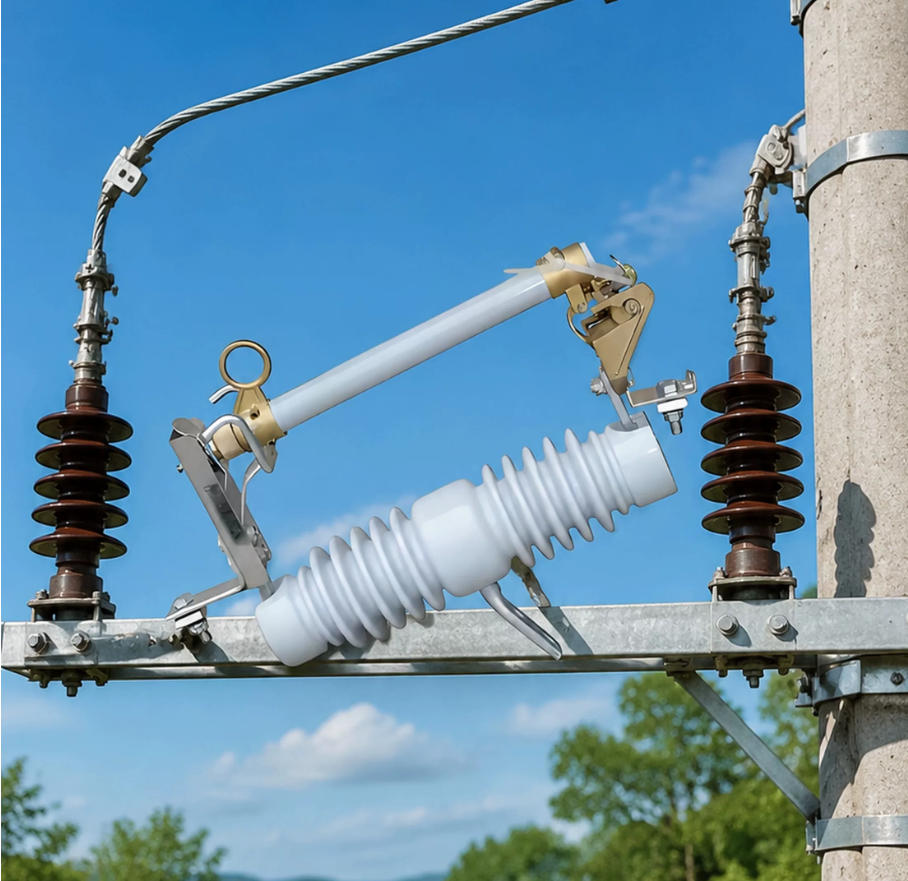
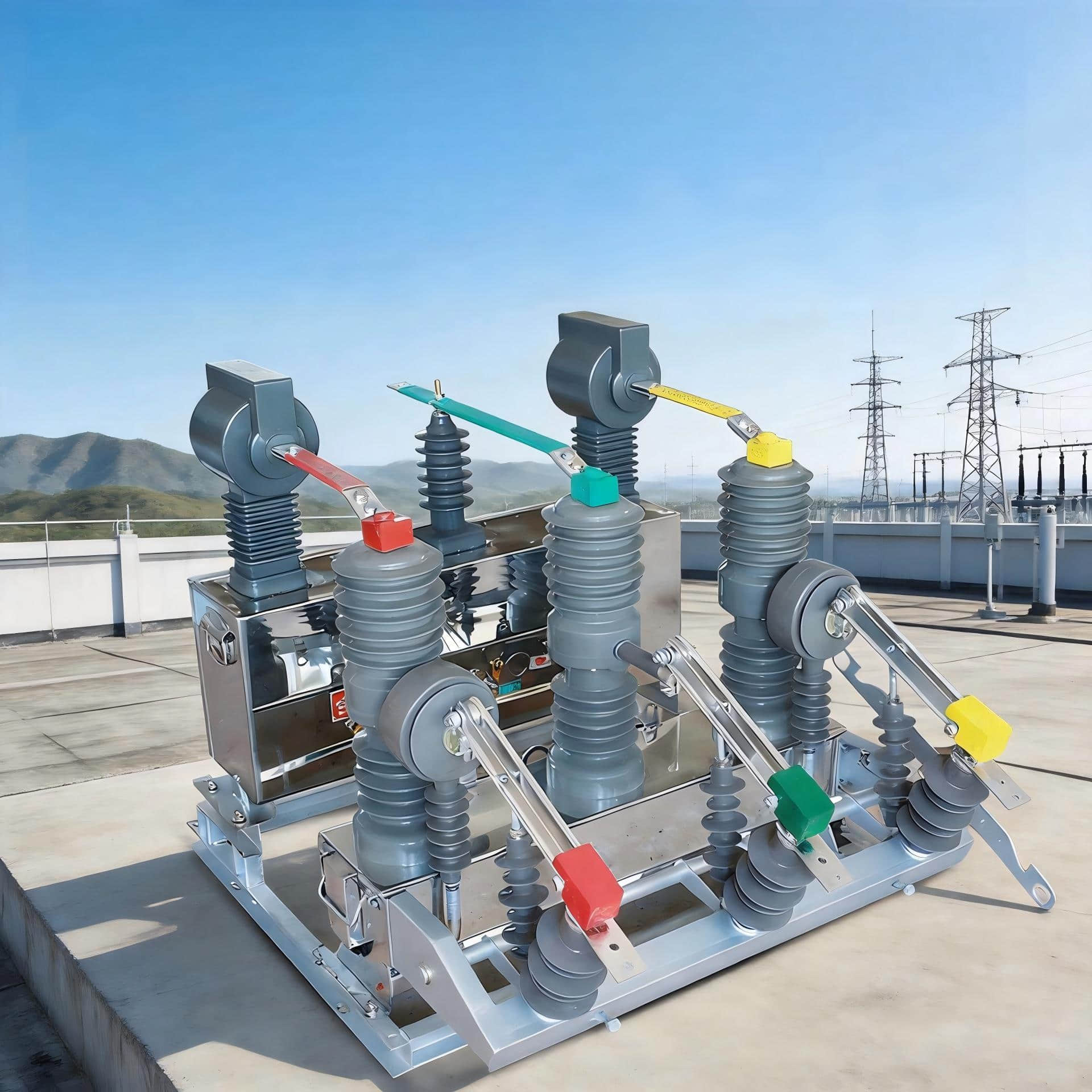
Outdoor and indoor locations need different hardware. An outdoor arrester must meet higher environmental and insulation standards. It needs greater creepage distances and impulse withstand ratings. Pole-mounted or pad-mounted arresters exposed to sun, rain, or salt air should have UV-resistant housings and NEMA or IP ratings that match site conditions.
Remember to consider enclosure and clearance requirements. Choose NEMA 3R, 4X, or comparable IP ratings for corrosive or exposed sites. Verify clearance and insulation per NEC and the manufacturer. This ensures medium-voltage and service-rated arresters meet safety and performance needs when deployed outdoors or inside switchrooms.
| Consideration | Single-Phase | Three-Phase | Indoor vs Outdoor | |
|---|---|---|---|---|
| Typical nominal voltages | 120/240V split-phase | 208Y/120V, 480Y/277V | Indoor: controlled environment | Outdoor: exposed to weather |
| Protection points | Line-to-neutral, line-to-ground | Phase-to-phase, phase-to-ground | Requires proper enclosure rating and creepage distance | |
| Arrester selection | Single-phase surge arrester with matching MCOV | Coordinated devices for three-phase surge protection | Outdoor arrester with higher impulse and weatherproof rating | |
| Mounting notes | Near service panel or main breaker | At service entrance and distribution points | UV-resistant housings, NEMA/IP rating per site | |
| Special cases | High-leg delta needs attention to neutral grounding | Corner-grounded or ungrounded systems may need custom SPDs | Medium-voltage outdoor arresters require lightning-rated designs |
Energy absorption and surge current capacity
Choosing the right arrester means more than just looking at the label. You need to match the surge energy and current capacity to your site's risks. Start with the basics and then check the fine print on suppliers like Eaton, Siemens, or Schneider Electric.
Manufacturers quote a surge current rating kA as the peak current a device can withstand for a defined waveform, often 8/20 µs. Ratings may be listed per mode or per pole, so a 20 kA label can mean 20 kA per phase. Higher kA values show greater capacity to handle large transients without failing.
Energy (joules) rating and what it means for protection
Consumer products often show a joules rating surge protector to indicate energy absorption. Joules measure how much energy the device can dissipate during an event. That number helps you compare nominal capacity, but remember that waveform and peak current ratings give a clearer picture for real power-system surges.
MOV-based devices list joules more often than system-grade arresters. Repeated hits reduce MOV life even if single-event energy stays under the listed joules rating surge protector. Plan for replacement intervals when MOVs are part of the design.
How to interpret manufacturer datasheets
A good datasheet surge arrester lists key specs you should check: maximum continuous operating voltage (MCOV), nominal discharge current (In), and maximum discharge current (Imax). Look for VPR or clamping voltage values at specified test currents, such as 3 kA or 10 kA.
Confirm which test waveforms the maker used, for example 8/20 µs or 10/350 µs, and the protected modes like L-N or L-G. Also review thermal protection, response time, and environmental ratings such as temperature range and IP/NEMA class.
When you compare products from Eaton, Siemens, and Schneider Electric, align MCOV and Imax numbers, then check VPR at the same test current. That approach gives a reliable, apples-to-apples view and helps you choose an arrester suited to your system and service life expectations.
Response time and clamping voltage considerations
When picking a surge arrester, think about how fast it acts and its clamping voltage. You need protection that doesn't stress your gear too much and fits your system. This guide helps you find the right balance for your equipment and system.
Clamping voltage explained and why it matters
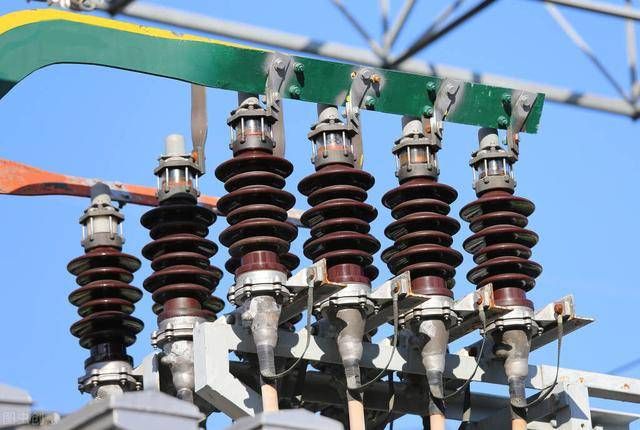
Clamping voltage, or VPR, is the peak voltage your equipment sees when the arrester acts. A lower clamping voltage means less voltage hitting your electronics, which reduces damage risk. Look at VPR values at 3 kA or the Imax to see how a device handles real surges.
Response time differences between technologies
Surge arrester response times vary by type. SADs and MOVs switch fast, in nanoseconds to microseconds, for quick suppression. GDTs, on the other hand, take longer, in microseconds to milliseconds, but handle more energy. Hybrid devices offer the best of both worlds, with fast initial response and high energy capacity.
Balancing clamping voltage and equipment sensitivity
In data centers or with medical equipment, aim for the lowest VPR near your load. Use layered protection to let the service entrance handle a bit more voltage while keeping critical gear safe. Check coordination tables to ensure VPR values work together without causing issues.
Remember, system inductance and wiring length matter too. Long wiring can cause voltage overshoot, even with fast surge arresters. Short, low-inductance wiring helps keep your equipment safe.
Coordination with upstream and downstream protection
Keeping your equipment safe means setting up a defense system from the service entrance to the plug. Start with big, high-energy devices and end with small guards for sensitive gear. This way, you limit voltage and protect your electronics well.
At the service entrance, put Type 1 or heavy-duty Type 2 arresters to handle big lightning and utility transients. These primary devices take the biggest surges and protect the building's distribution.
Secondary protection goes at main distribution panels and subpanels. These devices cut down leftover energy before it hits branch circuits. The last layer is the point-of-use surge arrester, placed right at the equipment to catch any remaining spikes.
Selecting coordinated devices for layered defense
Good surge protection coordination means each device has a specific role. Choose upstream units with higher energy capacity and downstream units with lower protection level voltages. Use manufacturer coordination charts to match clamping behavior and energy ratings.
Avoid using multiple devices with the same clamping characteristics. That setup can force shared currents and damage both units. Instead, stage protection so the service entrance diverts bulk energy, the panel-level unit limits residual voltage, and the point-of-use surge arrester provides the final clamp.
Typical placement in service entrance and distribution panels
Install the main arrester on the line side of the meter or service entrance, following NEC and utility rules. For three-phase systems, place arresters across each phase to ground or phase-to-phase according to system configuration.
Mount secondary arresters inside main distribution panels or subpanels close to bus bars. Always position point-of-use devices as near as possible to the sensitive load to cut lead length and inductance.
| Protection Layer | Typical Device | Primary Function | Placement |
|---|---|---|---|
| Primary | Type 1 / Type 2 arrester | Absorb high-energy external surges | Service entrance, line side of meter |
| Secondary | Panel-mounted SPD | Reduce residual voltage to downstream circuits | Main distribution panels, subpanels |
| Point | Point-of-use surge arrester | Clamp remaining spikes for sensitive equipment | At the equipment outlet or DIN rail next to load |
| Key Coordination Tip | Manufacturer charts & staged ratings | Ensure upstream handles energy, downstream clamps VPL | Follow vendor guidance and NEC requirements |
Environmental and installation factors
Choose a site that protects equipment from harsh conditions while keeping service simple. Small choices in placement and hardware affect life span and safety. Pay attention to temperature swings, moisture risk, and sunlight when you plan installation and ongoing surge arrester maintenance.
Temperature, humidity, and UV exposure effects
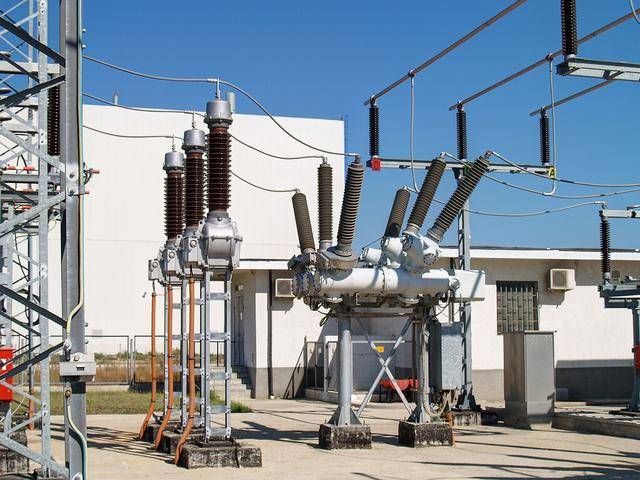
Metal oxide varistor elements age faster at high temperatures, so follow the manufacturer's derating curves in datasheets. Install where ambient heat is limited or provide ventilation to keep MOV temperatures in range.
Moisture and condensation erode insulation and corrode terminals over time. Pick enclosures with an appropriate NEMA or IP rating for the location to limit humidity risk and reduce the need for frequent surge arrester maintenance.
Sunlight can crack housings and degrade seals. Use UV-stable materials or shade outdoor units to protect polymer parts and extend service life.
Mounting, enclosure, and clearance requirements
Follow torque specs, grounding conductor routing, and mounting orientation from the manufacturer. Correct mounting surge arresters reduces mechanical stress and prevents poor electrical performance.
Keep required creepage and clearance distances for your system voltage. Reference NEC tables and manufacturer data to prevent surface tracking and flashovers.
Choose enclosures rated for the environment, such as NEMA 3R, 4X, or IP66 for wet or corrosive sites. In elevated or vibrating locations, select anti-vibration hardware and secure fastenings.
Maintenance access and serviceability
Place units so visual indicators remain visible and modules are replaceable with minimal downtime. When you cannot access units easily, add remote signaling and alarms tied to your building management or monitoring system.
Create a simple inspection checklist that covers discoloration, loose connections, corrosion, and indicator status. Schedule checks per the manufacturer's recommendations to keep surge arrester maintenance consistent and effective.
Quick tip: Mount at a height and orientation that eases inspection and protects against water pooling.
Quick tip: Label units with model and replacement part numbers to speed repairs.
Standards, certifications, and code compliance
Choosing surge arresters for your home or business means meeting certain standards. Third-party tests ensure devices work as promised when a surge occurs. Look for proof that matches product claims.
UL 1449 is the key certification for Surge Protective Devices in North America. It outlines SPD types, voltage ratings, and test methods. Also, check IEEE surge standards like IEEE C62.41 for expected surge waveforms. For projects outside North America, IEC 61643 series is crucial for low-voltage SPDs. ANSI and NEMA guides offer practical advice on application and installation.
NEC requirements in the United States
The National Electrical Code sets rules for installation. NEC surge protection rules, including where to install SPDs, are in article 280. For example, hospitals need SPDs at service entrances and critical panels.
NEC also covers bonding and grounding, which affect SPD performance. Local authorities might use different NEC editions. Always check with your electrician and code official before installing equipment.
How certifications affect warranty and insurance
Certified devices from brands like Eaton, Siemens, or Schneider Electric have test records. These records support warranty claims. A UL or IEC mark means third-party testing that insurers and manufacturers trust. Skipping certified SPDs can void warranties or insurance when high-value gear is damaged.
| Compliance Area | What to Check | Why it Matters |
|---|---|---|
| Product Certification | UL 1449 listing or IEC 61643 certification, ETL reports | Validates SPD meets established test criteria and ratings |
| Design Guidance | IEEE surge standards, IEEE C62.41 environment classification | Helps you select SPDs sized for expected surge levels |
| Code Compliance | NEC surge protection requirements, local code adoption | Ensures legal installation, correct locations, and proper grounding |
| Warranty and Insurance | Manufacturer test reports, traceable component sourcing | Supports claims and may be required by insurers for high-value assets |
Monitoring, diagnostics, and remote alerts
Watching over surge protection keeps your gear safe and maintenance on track. Today's systems offer quick visual checks on device health. They also connect surge events to building controls. This helps you spot issues early and schedule fixes when it's best for you.
Built-in indicators and signaling
Many devices have visual signs like LEDs or flags to show if they're working right. These signs let you check the device's status easily without needing tools. Some units can even send signals to building automation or fire panels for easier monitoring and control.
Digital communications and IoT features
Smart SPD models from Schneider Electric and ABB support Modbus, BACnet, or Ethernet for real-time checks. These smart SPDs send alerts on surge events, total energy, and when they need to be replaced. You get detailed data to help figure out what went wrong.
Benefits for operations and maintenance
Monitoring surge arresters and getting alerts remotely helps avoid unexpected failures. It flags problems with parts before they fail. Event logs make it easier to find the cause of big transients and justify upgrades.
With the right mix of local and remote signals, you get clear insights into surge protection. This helps protect important equipment and keeps maintenance costs steady.
Selecting the right manufacturer and warranty considerations
Choosing the right brand is key for performance, service, and cost over time. Look for reliable support, local availability, and clear terms. Top brands like Eaton, Schneider Electric, and Siemens offer documented field experience.
Reputation, support, and local availability
Make sure there are nearby distributors and certified installers for quick repairs and replacements. Check case studies for real-world performance in data centers, healthcare, and commercial buildings.
Warranty terms, replacement policies, and failure modes
Compare warranties closely. Some offer coverage for damage to other equipment if the arrester fails. Find out if the warranty includes labor or just device replacement.
Understand common failure modes like MOV wear-out and thermal fuse activation. Choose models with fail-safe disconnects and remote signaling for quick fault response.
When to choose premium vs budget options
Premium surge arresters have higher kA ratings and better thermal protection. They're best for data centers and critical sites.
Budget options are fine for low-value residential circuits. Consider total cost of ownership, including downtime and maintenance, when choosing.
| Consideration | What to look for | Best fit |
|---|---|---|
| Manufacturer reputation | Field references, brand history, product lineage | Commercial sites, data centers |
| Local support | Distributors, certified installers, spare parts | Locations needing fast service |
| Warranty scope | Length, equipment damage coverage, labor inclusion | High-value installations |
| Replacement policy | On-site swap, RMA speed, coverage limits | Facilities with strict uptime targets |
| Failure protection | Fail-safe disconnects, remote signaling, thermal cutouts | Critical infrastructure |
| Price vs value | Initial cost, expected life, service savings | Residential secondary circuits vs mission-critical loads |
Cost vs protection: budgeting for surge arresters
When picking surge protection, think about the upfront cost and long-term benefits. Consider the initial price, installation, any needed changes, upkeep, and subscription fees. Also, think about the money you save by avoiding equipment replacement, downtime, and insurance costs.
Estimating total cost of ownership
First, list the direct costs: the surge arrester price, electrician time, permits, and panel parts. Then, add ongoing costs like replacing MOV modules, inspections, and monitoring services.
Next, figure out the savings. Calculate the value of the equipment you protect, downtime costs, and surge event frequency. Use these to estimate the total cost of surge protection over 3–10 years.
Cost-benefit for residential vs commercial installations
At home, a service-entrance SPD and point-of-use units for valuable gear are often a good choice. Costs can vary from a few hundred to a few thousand dollars, depending on the devices and labor. Focus on protecting home theaters, HVAC controls, and smart panels.
For businesses, costs rise due to three-phase systems, critical loads, and compliance needs. Data centers, medical clinics, and manufacturing lines may need SPDs with monitoring and extra protection. Budgets can be several thousand to tens of thousands, based on the scope and reliability needed.
Tips to prioritize protection where it matters most
Protect the service entrance first to blunt large external surges.
Add panel-level SPDs on branch circuits that feed sensitive loads.
Prioritize server rooms, security systems, telecom closets, HVAC controls, and medical equipment.
Consider phased deployment: start with essential points and expand as funds allow.
When constrained, choose budget surge protection for low-risk circuits while investing in higher-grade protection for critical assets.
Do a simple risk assessment: list assets, estimate downtime cost per hour, and assign a surge likelihood. Use this to decide how much to spend on surge protection. This helps you set a realistic plan that fits your budget and risk level.
Installation best practices and working with electricians
You want a safe, code-compliant surge arrester installation. It should protect equipment and stay reliable over time. Start by planning with the building owner, your licensed electrician surge protection contractor, and the local authority having jurisdiction. Confirm requirements and any surge arrester permits needed for the job.
Why hire a pro:
Use a licensed electrician surge protection professional. They understand NEC grounding and bonding, service-entrance rules, and utility coordination. A licensed contractor keeps warranties intact and avoids redoing work due to missed permit steps.
Typical installation steps:
De-energize circuits and follow lockout/tagout before touching equipment.
Mount the arrester per manufacturer torque and clearance specs.
Connect the line and neutral conductors securely and verify correct polarity.
Run a short, dedicated copper ground conductor to the equipment grounding point.
Check visual indicators or remote signaling before re-energizing.
Safety precautions:
Verify absence of voltage with properly rated test tools.
Wear PPE rated for the system voltage and arc flash potential.
Avoid working on live parts unless you hold the required live-work certification.
Grounding best practice:
Keep ground runs as short and straight as practical. This minimizes impedance. Do not route the arrester ground through multiple panels or long chassis paths. Proper grounding helps the arrester divert surge energy quickly and lowers residual voltage seen by equipment.
Permits and inspections:
Check if local authorities require surge arrester permits for service-entrance changes or panel work. Filing permits and scheduling inspections reduces risk of code violations. It ties into municipal records that inspectors and future contractors will reference.
Documentation and labeling:
Label SPD locations, voltage rating, date of installation, and the protection zone on the panel door. Keep datasheets, installation manuals, and warranty registration in your facility records. Log serial numbers, inspection dates, and any surge events reported by monitoring systems.
| Task | Who | Why it matters |
|---|---|---|
| Plan and confirm permits | Owner & licensed electrician surge protection contractor | Ensures compliance with local code and secures required surge arrester permits |
| De-energize and LOTO | Electrician | Prevents shock and arc incidents during surge arrester installation |
| Mount and torque hardware | Electrician | Maintains reliable electrical connections and meets manufacturer specs |
| Ground conductor routing | Electrician | Short ground path reduces impedance and improves protection performance |
| Labeling and record-keeping | Owner & electrician | Speeds future maintenance and preserves warranty and inspection history |
Common mistakes to avoid when choosing a surge arrester
Choosing the wrong surge protection can leave your equipment vulnerable and cost you more over time. Below are three frequent surge arrester mistakes to watch for and simple steps to protect your systems.
Buying based only on price
Trying to save money by buying cheap surge arresters can be risky. These units often lack the necessary kA ratings, thermal protection, and recognized certifications. A cheap part can give a false sense of security and raise replacement and repair costs later.
Look for products from known manufacturers like Eaton, Siemens, or Schneider Electric. They list energy ratings and end-of-life indicators. A higher upfront cost can mean better long-term protection and manufacturer support.
Ignoring system compatibility and coordination
Using a surge device without checking MCOV, topology, or phase compatibility leads to nuisance trips and poor protection. For example, installing a single-phase arrester on a three-phase service creates imbalance and risk.
Compare datasheets and use coordination charts. Coordinate primary and secondary devices so downstream SPDs do not absorb excessive energy. If unsure, consult a licensed electrical engineer or a qualified electrician to avoid these surge protection pitfalls.
Overlooking environmental and installation constraints
Installing indoor-rated arresters outdoors, ignoring temperature derating, or running long ground conductors reduces performance and increases failure risk. Leaving indicators hidden or placing devices in hard-to-access locations makes maintenance harder.
Choose the right enclosure, follow clearance and mounting rules, and plan for accessible replacement. Consider monitored arresters where physical checks are difficult to perform. These steps reduce common surge protection pitfalls and protect your assets.
Conclusion
Choosing the right surge arrester is key. You need to match the device type and voltage rating to your electrical system. Also, consider the kA and energy handling, and balance clamping voltage with response time.
Use layered protection for the best results. Start with service-entrance arresters for primary defense. Then, add coordinated downstream devices and point-of-use protection for sensitive gear. This approach ensures your home or business is well-protected.
Next, take stock of your critical equipment and note down panel voltage and system type. Look at datasheets from Eaton, Schneider Electric, and Siemens to compare ratings and performance. After that, get a licensed electrician to check for compatibility and code compliance.
If you manage critical systems, remember to budget for monitoring and maintenance. This will help keep your systems running smoothly.
For the best surge protection advice, start with certified products at the service entrance. Add downstream and point-of-use arresters for vulnerable loads. Consider monitoring when downtime is a big issue. By choosing surge arrester solutions wisely, you reduce risk, extend equipment life, and make smart investments.
FAQ
What is a surge arrester and why do you need one?
A surge arrester protects your electrical system from sudden voltage spikes. These spikes can come from lightning, utility work, or internal motor starts, and may damage appliances, servers, and HVAC controls. Using the right arresters can save you money and keep your equipment running smoothly by preventing costly repairs and downtime.
How do surge arresters differ from consumer surge protectors?
Surge arresters are designed for high-energy transients at the building entrance, handling more energy than consumer surge protectors. They often have replaceable modules, end-of-life indicators, and remote signaling. Consumer protectors, by contrast, are for point-of-use protection (e.g., power strips) with lower energy capacity—they provide extra protection but shouldn’t be the only defense.
How do you choose the right voltage rating for your arrester?
Match the arrester’s maximum continuous operating voltage (MCOV) to your system’s voltage: for homes, it’s usually 120/240V split-phase; for commercial buildings, 208Y/120V or 480Y/277V. Choose an MCOV slightly above your system’s voltage to avoid false trips. For special systems (e.g., corner-grounded delta), consult a licensed electrician for proper ratings.
What surge current (kA) and energy (joules) ratings should you look for?
Look for the surge current (kA) rating for standard waveforms (e.g., 8/20 µs)—higher kA ratings mean the device can handle bigger surges. Joules measure energy absorption (relevant for MOV-based devices), but peak current and waveform data are more critical for real-world surges. Check datasheets for nominal discharge current (In), maximum discharge current (Imax), and VPR/clamping voltage at specific currents to compare devices.
What is clamping voltage (VPL) and how does it affect sensitive equipment?
Clamping voltage (or voltage protection level, VPL) is the peak voltage an arrester lets through to your equipment. A lower VPL offers better protection for sensitive electronics (e.g., data center servers, medical devices). Use layered protection (service-entrance + panel-level + point-of-use arresters) to reduce residual voltage at the load.
Which arrester technology is best: MOV, GDT, SAD, or hybrid?
Each technology has strengths: MOVs absorb high energy but degrade with repeated surges (suitable for Type 2 SPDs); GDTs handle high-voltage transients with low leakage and long life but respond slower (used in telecom); SADs offer ultra-fast response and precise clamping for low-energy needs (ideal for sensitive electronics). Hybrid designs (e.g., GDT+SAD, MOV+SAD) balance fast clamping and high energy handling, making them a top choice for mixed threats.
How do you coordinate upstream and downstream protection?
Use a layered defense: 1) Primary protection (Type 1/heavy-duty Type 2 arrester) at the service entrance to absorb high-energy external surges; 2) Secondary protection (panel-mounted SPD) at distribution panels to reduce residual voltage; 3) Point-of-use arresters near sensitive loads. Choose upstream devices with higher energy capacity and downstream units with lower VPL. Use manufacturer coordination charts to avoid shared currents and device damage.
Do arresters require special installation considerations or permits?
Yes. Install per NEC rules (Article 280) and local codes—some jurisdictions require permits/inspections for service-entrance work. Hire a licensed electrician experienced in grounding, bonding, and torque specs to keep warranties valid. Follow lockout/tagout (LOTO) procedures, use voltage-rated PPE, and keep ground conductors short (to minimize impedance). Label SPDs, store datasheets, and register warranties.
Where should you place arresters in single-phase and three-phase systems?
For single-phase residential systems: Protect line-to-neutral and line-to-ground at the service entrance; add point-of-use arresters for high-value gear (e.g., home theaters). For three-phase commercial systems: Install arresters across each phase-to-ground or phase-to-phase (per system configuration) at the service entrance and distribution panels. For special systems (delta, high-leg delta), consult an electrician for topology/grounding adjustments.
What environmental factors affect arrester performance and lifetime?
Temperature: MOVs age faster at high temperatures—follow manufacturer derating curves and provide ventilation. Humidity: Moisture erodes insulation; use NEMA 3R/4X or IP66 enclosures for wet/corrosive sites. UV exposure: Sunlight degrades housings—use UV-stable materials or shade outdoor units. For hard-to-inspect locations, add remote signaling to monitor health without physical checks.
How do you interpret key datasheet terms like MCOV, Imax, VPR, and waveforms?
- MCOV (Maximum Continuous Operating Voltage): Maximum voltage the arrester can handle without conducting (match to your system voltage). - Imax (Maximum Discharge Current): Peak current the device can divert (tested to waveforms like 8/20 µs or 10/350 µs). - VPR (Voltage Protection Rating): Clamping voltage at a specified current (e.g., 3 kA)—lower = better protection. - Waveforms: 8/20 µs (simulates internal surges) and 10/350 µs (simulates lightning)—confirm alignment with your site’s risk. Compare devices from reputable brands (Eaton, Schneider Electric) for consistent specs.
Should you choose premium or budget arresters for your facility?
Base the choice on asset value and downtime cost: Premium arresters (with lower VPL, higher kA ratings, thermal protection, and monitoring) suit data centers, medical clinics, and mission-critical sites—they reduce downtime and extend equipment life. Budget options work for low-value residential circuits or noncritical loads. Always calculate total cost of ownership (upfront price + maintenance + avoided downtime) instead of just initial cost.
What monitoring and diagnostic features matter for surge arresters?
- Visual indicators (LEDs, flags): Quick on-site health checks. - Dry-contact alarms: Send signals to building management systems (BMS) for remote alerts. - Smart SPD features: Modbus/BACnet/Ethernet connectivity for real-time data (surge events, energy absorption, end-of-life status). - Event logs: Help root-cause analysis of transients and justify upgrades. These features reduce manual inspections and prevent unexpected failures—critical for large facilities or remote sites.
How often should arresters be inspected or replaced?
Inspect visual indicators, terminals, and enclosures during routine preventive maintenance (typically quarterly). Replace modules after a major surge event or when end-of-life indicators trigger. MOV-based units degrade with repeated surges—use event logs from monitored arresters to make data-driven replacement decisions. Follow manufacturer guidelines for specific intervals (e.g., 3–5 years for residential, annual for commercial).
How do standards and certifications affect your choice?
Choose arresters meeting UL 1449 (North America) or IEC 61643 (global) for third-party validated performance. IEEE C62.41 guides surge waveform selection based on the environment. NEC Article 280 dictates installation locations (e.g., hospitals need SPDs at service entrances). Certified devices support warranty claims and insurance coverage—non-certified units may void equipment warranties or insurance if damage occurs.
What common mistakes should you avoid when buying a surge arrester?
1. Buying based only on price: Cheap units lack kA ratings, thermal protection, or certifications (false sense of security). 2. Ignoring system compatibility: Mismatched MCOV or phase (e.g., single-phase arrester on three-phase service) causes poor protection. 3. Poor installation: Indoor units outdoors, long ground leads (increases impedance), or hidden indicators (hard to maintain). 4. Skipping layered protection: Relying solely on point-of-use devices leaves systems vulnerable to external surges.
How do surge arresters affect insurance and warranties?
Certified, code-compliant arresters may be a requirement for equipment warranties (e.g., server, HVAC) and insurance coverage—non-compliant units can void claims. Proper documentation (installation records, test logs, datasheets) strengthens claims after surge damage. Some manufacturers offer "connected warranties" that cover downstream equipment if their SPD fails to operate as specified—review warranty scope carefully.
What should you tell your electrician when planning protection for your site?
Provide system details: nominal voltage (120/240V, 480Y/277V), phase (single/three-phase), panel locations, and critical loads (servers, medical devices). Share coordination goals (e.g., layered protection), preferred manufacturers (Eaton, Schneider Electric, Siemens), and monitoring needs (remote alerts, IoT). Ask about permits, NEC compliance, and total cost (arresters + installation + enclosure work).
How do you prioritize protection within a limited budget?
1. Prioritize service-entrance protection first (blocks large external surges).
2. Add panel-level SPDs for critical circuits (server rooms, HVAC controls, telecom closets).
3. Use point-of-use arresters for the most sensitive devices (e.g., MRI machines, lab equipment).
4. Consider phased deployment: Start with core protection, then expand to noncritical loads as budget allows.
5. Use budget options for low-risk circuits (e.g., residential lighting) while investing in premium protection for high-value assets.