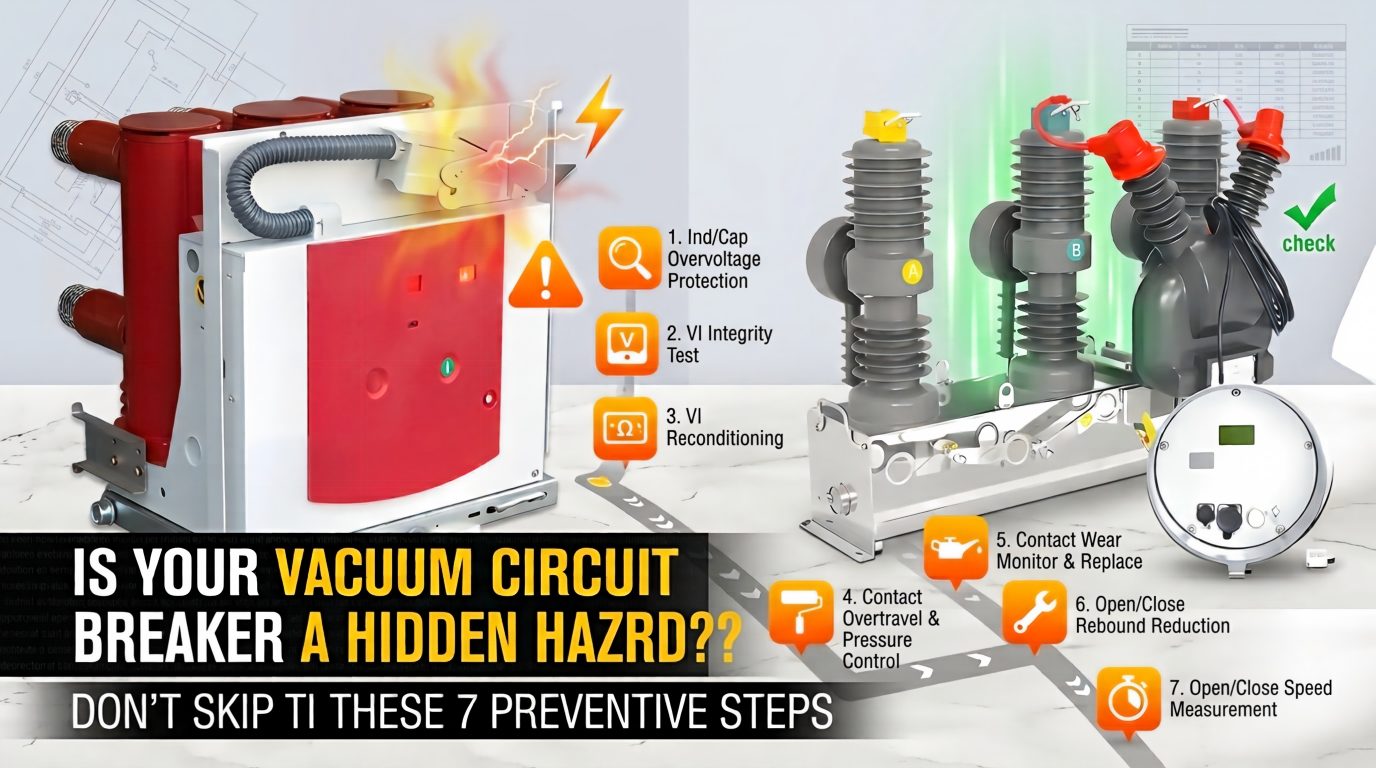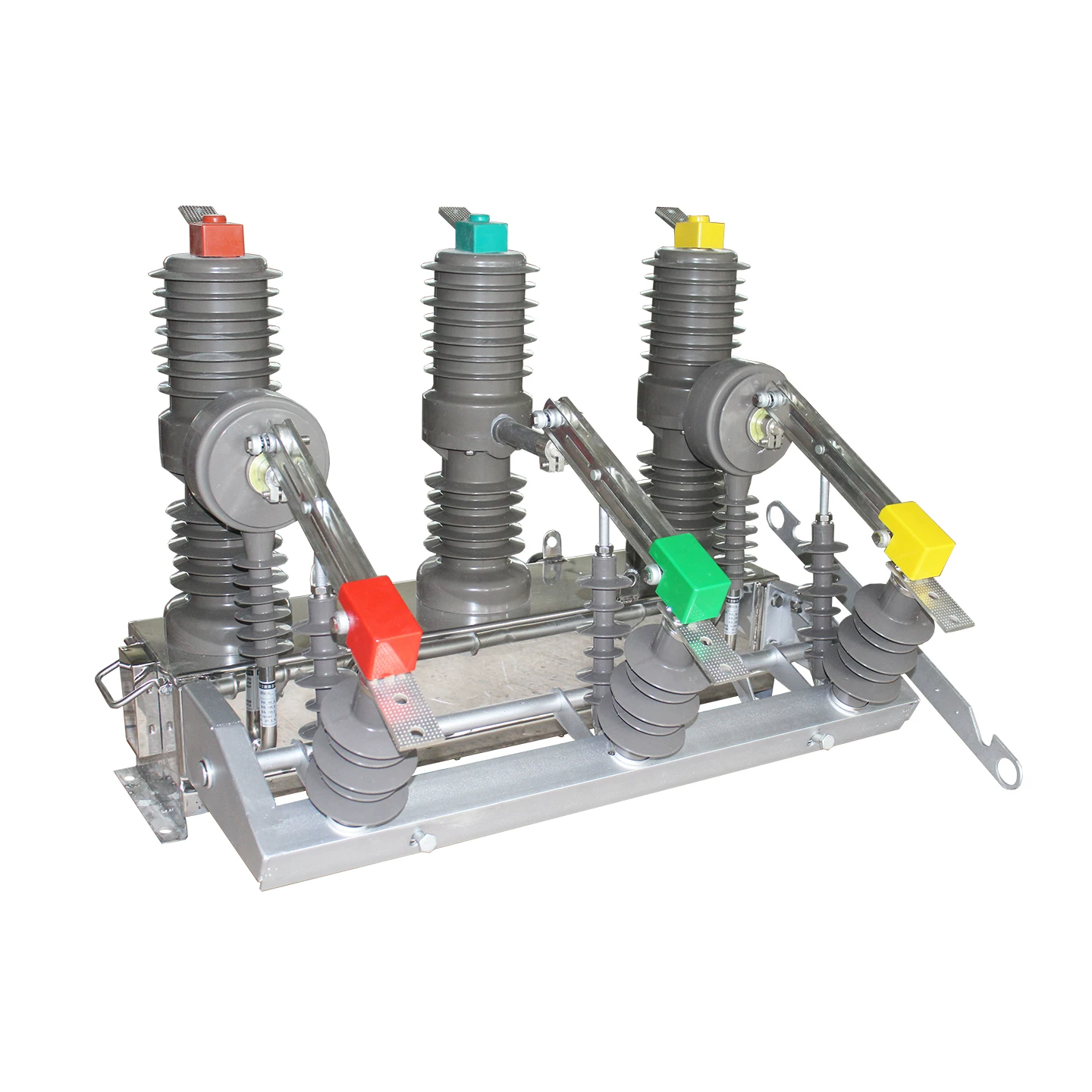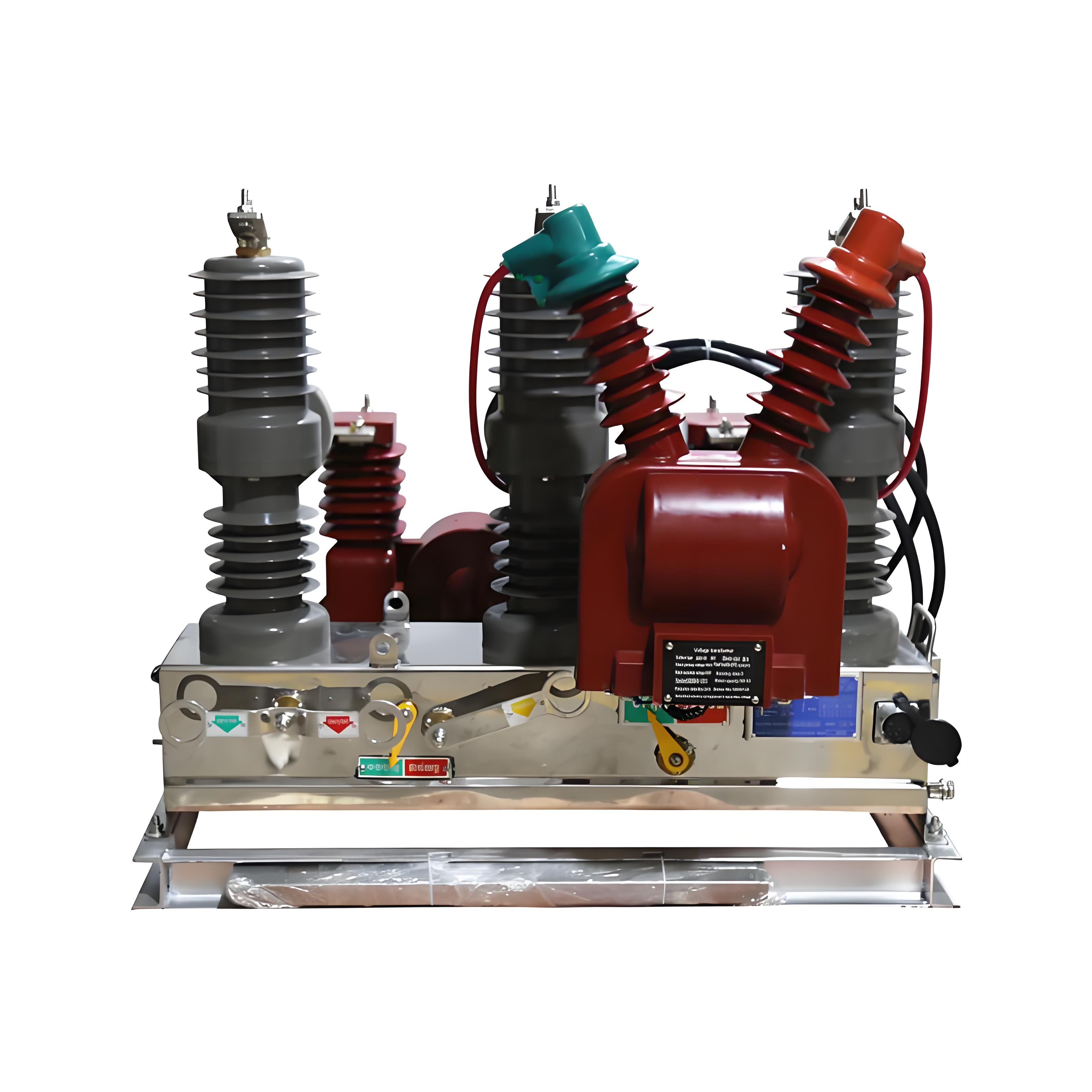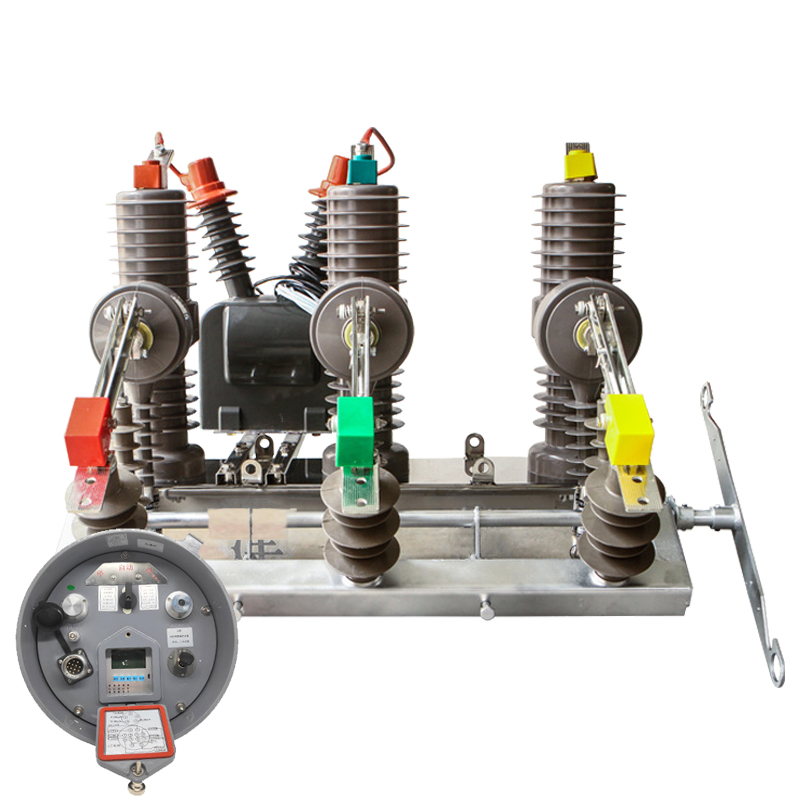
I. The Engineer's Immediate Answer
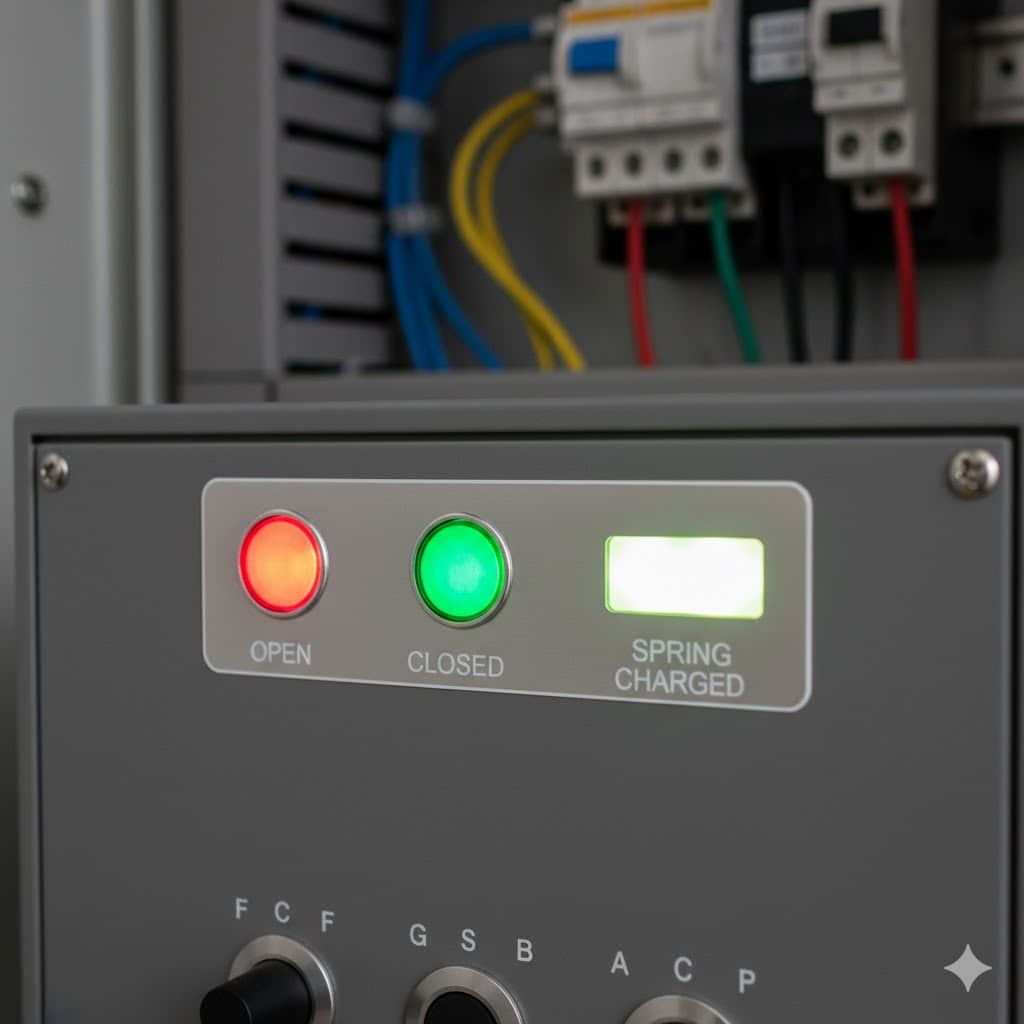
To effectively resolve red and green light issues on a Vacuum Circuit Breaker (VCB), the essential first step involves discerning the specific engineering meaning of the indicators. The red light invariably signifies the breaker is in an open, tripped, or faulted state, while the green light indicates it is closed, live, and operational.
The basic fix for a persistent red light is to execute the standard reset procedure by firmly switching it to "Open/OFF" before attempting to "Close/ON." If the VCB immediately trips or refuses to close after this initial attempt, the problem has escalated significantly.
This escalation points to an underlying electrical fault, a severe overload, or, more typically for VCBs, an internal mechanical or secondary control circuit failure involving the closing coil or operating mechanism. At this critical juncture, users must cease repeated attempts and immediately consult the protective relay records.
Consulting these records is necessary to determine the precise fault type, engaging a qualified electrical engineer for systemic diagnosis and professional repair. A VCB indicator light failure is never a trivial visual glitch; it is a direct reflection of a precise failure within the complex system, ranging from the high-voltage primary circuit to the low-voltage secondary control loop.
Key Takeaways: Professional Diagnosis Checklist
The VCB indicator system operates on three critical dimensions: Red (Open/Faulted), Green (Closed/Live), and the dedicated Spring Charged Light (indicating stored mechanical energy). The "Spring Charged" status is an absolute prerequisite for any closing operation.
Initial Troubleshooting Steps mandate performing the standard “Open-then-Close” reset sequence. If the breaker instantly trips again, the Load Isolation Method must be utilized immediately. This method distinguishes if the fault originates in the downstream load or the main VCB circuit wiring itself.
Diagnostic Escalation is required if the VCB remains locked in the open position (persistent red light). The primary focus must shift to checking the Spring Charged status and confirming the electrical continuity and integrity of the Closing Coil.
Advanced Fault Location requires mandatory consultation of the Protective Relay’s Trip Records. This crucial step distinguishes between short-circuit, overload, or internal equipment protection trips and is the key difference in professional engineering diagnosis.
Safety Protocols are non-negotiable within medium-voltage environments. Zero-Voltage Verification must be performed before any internal inspection, and the operator must never attempt to forcibly hold the breaker in the "ON" position.
Long-Term Reliability is ensured through proactive maintenance, which includes routine Contact Resistance Testing, Insulation Resistance Testing, and Mechanism Lubrication. These actions prevent future thermal or mechanical failures, ensuring the VCB's longevity.
II. VCB Status Indicators: The Three-Dimensional Engineering View
2.1 Engineering Interpretation of the Traditional Red and Green Lights
The VCB’s red and green indicators, typically driven by auxiliary switch contacts, serve as the operator's most visible signal of the main contact status. However, for high-voltage VCBs, the indicator light status represents a highly simplified readout of a complex electrical engineering system.
| Indicator Color | VCB Standard State Meaning | Primary Circuit Status | Potential Issue / Action Required |
| Red | OPEN / TRIPPED | Main contacts are open. | Indicates a protective relay operation due to overcurrent or short-circuit. The specific trip cause must be determined immediately. |
| Green | CLOSED / LIVE | Main contacts are closed. | The circuit is energized. De-energization procedures must be strictly followed before any downstream work. |
| Center Position | Mechanical Trip Point | Main contacts are open. | The mechanism must first be reset by switching fully to "OFF" before attempting re-closure. |
In virtually all high-voltage distribution systems, a red signal is inherently associated with a hazard (a trip has occurred) because it suggests a primary protection device has operated. You must perform a thorough investigation to understand the cause.
Conversely, the green signal denotes safe operation (closed), but always underscores the fundamental fact that the system is live and energized. Industry standards rigidly control signal light colors: red signifies immediate required action (opening the circuit), and green signifies a normal, running state (closing the circuit).
Note: In industrial or high-voltage settings, a "Red Light" is distinctly different from a low-voltage thermal breaker's "OFF" state. A red light means the protective system was forced to act, and the root cause behind that action must be diagnosed and eliminated, not simply bypassed.
2.2 The VCB’s Unique Third Dimension: The Spring-Charged Indicator
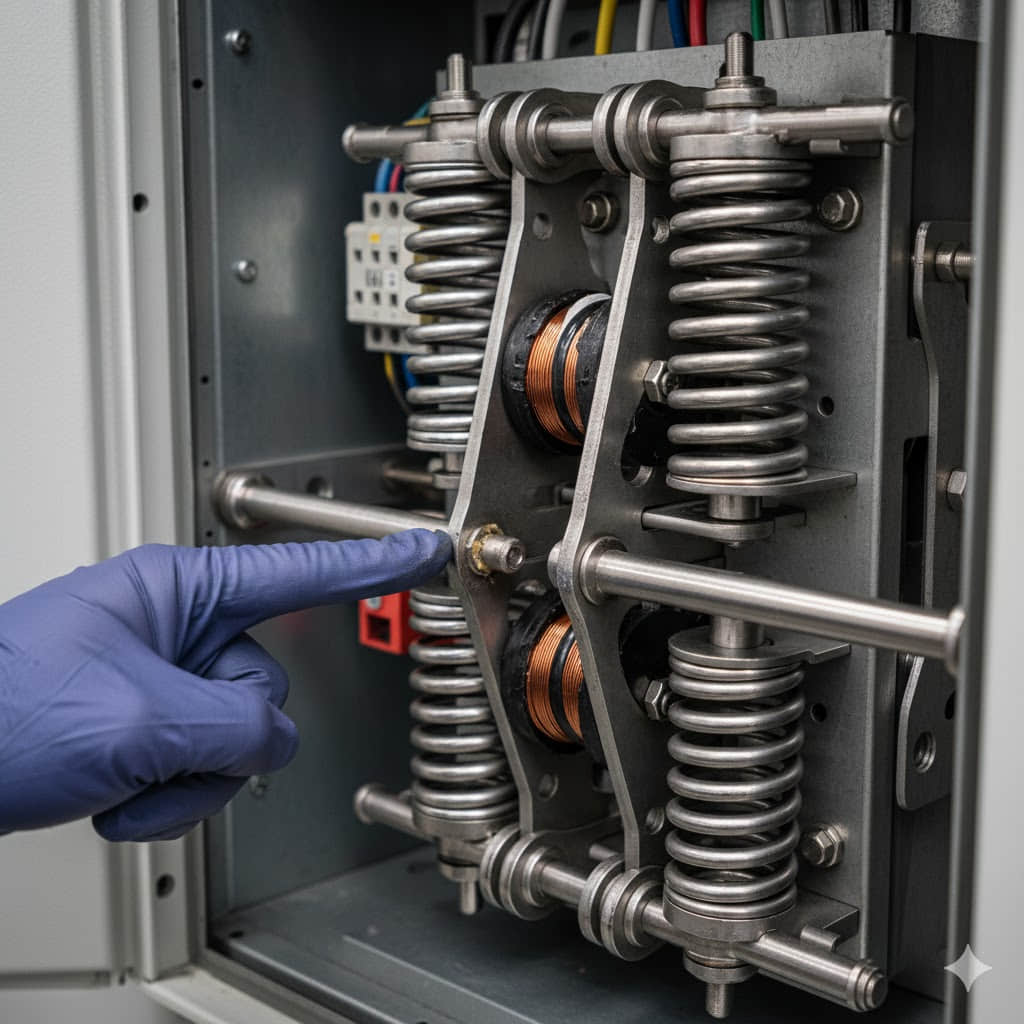
This specific feature represents the most significant operational divergence between a VCB and a standard low-voltage circuit breaker. It is often the single most common solution point for "refuses to close" (persistent red light) failures. The VCB's powerful closing operation is fundamentally driven by a large stored-energy spring, not merely by a direct electromagnetic force.
The Yellow/White Spring Charged Indicator is critically important, as it confirms that the operating mechanism’s closing spring has been fully charged with potential energy. The VCB’s dedicated charging motor uses a gear reduction mechanism to physically compress this massive spring.
Once the spring charge is complete, a limit switch within the mechanism operates, illuminating the Spring Charged light and simultaneously cutting the power to the charging motor. This mechanism is essential for the rapid, high-force closing required in medium-voltage switching.
Engineering Interlocks prevent misoperation and severe damage. The VCB includes anti-pumping and anti-non-charged closing interlocks. The Closing Circuit is only electrically enabled and physically allowed to operate after the spring is fully charged (indicated by the light being ON).
The Key Diagnostic Point is simple but often missed: If the red light is ON (open) and the breaker refuses to close, the primary investigation must be to rule out a charging failure. This scenario points directly to a fault within the charging motor itself, its power supply fuse, or a mechanical issue with the charging limit switch.
Tip: If the VCB won't close, immediately check the Spring Charged light. If it is not illuminated, the fault is isolated to the charging motor, the motor power supply, or the charging limit switch. If it is illuminated but the breaker still won't close, the fault lies with the closing coil or a mechanical/electrical interlock.
(Professional Reference: VCB Principle and Mechanism)
This visual supplement is highly recommended for a deeper understanding of the VCB's internal mechanics.
It will visually clarify the complex operating mechanism, charging system, and trip/close coil functions mentioned in this guide. Watching the VCB in action is essential for understanding the root cause of persistent red light failures.
III. Primary Repair Steps: Reset, Safety, and Load Isolation
3.1 Uncompromising Safety Protocols and Zero-Voltage Verification
Any inspection of a VCB, even basic troubleshooting, must be predicated on the highest possible safety standards. VCBs operate in medium-voltage environments, where a mistake can have catastrophic consequences far exceeding those of a low-voltage fault.
De-Energization Mandate: Strict adherence to the "Five Safety Rules" and the Work Permit System is mandatory. Before working on the VCB, the upstream circuit breaker or isolator (disconnect switch) must be operated to physically isolate the VCB from all potential sources of supply.
Verification Protocol: The operator must use a calibrated High-Voltage Detector (or Voltmeter) to confirm that the VCB's incoming and outgoing terminals are absolutely de-energized (Zero Voltage). This critical step must be methodically applied to all three phases on both the line and load sides of the VCB.
Grounding Requirement: After isolating both the upstream source and the downstream load, the grounding switch must be physically closed. This action establishes a reliable earth ground, mitigating risks from induced voltage or accidental re-energization.
Note: Zero-Voltage Verification demands the use of tested and certified equipment. You must never rely on the indicator light color alone to confirm the circuit is dead, as the light may be giving a false indication due to an auxiliary switch failure.
3.2 VCB Standard Reset and Operational Mode Differentiation
The standard reset sequence is engineered to ensure the VCB’s internal mechanical trip mechanism is completely unlocked. This action prepares the mechanism for a subsequent closing command.
Observe Status: Confirm the breaker handle is either in the tripped (center) or fully open (red light) position.
Forced Open/Reset: Firmly move the operating handle or push button to the fully "Open/OFF" position. This action mechanically resets the trip-free mechanism inside the VCB, which was released by the protective relay.
Closing Energy Check: Verify the Spring Charged light is illuminated. If it is not on, attempt manual or electrical charging before proceeding.
Attempt Re-closure: Move the handle or push button to the "Close/ON" position.
3.2.1 Diagnosing Manual vs. Electrical Operation Differences (Unique Content)
VCBs allow for two distinct modes of operation, and comparing their outcomes is a powerful diagnostic tool for engineers. This comparison is the key to quickly localizing the fault.
Manual Operation uses a hand lever or button to mechanically bypass the electrical closing coil. Electrical Operation uses the Closing Coil and Tripping Coil to respond to remote signals from the control panel or relays.
| Fault Symptom | Manual Operation Result | Electrical Operation Result | Diagnostic Focus Area |
| Recoverable | Closes successfully | Closes successfully | Temporary overload or momentary fault (now cleared) |
| Mechanism Jam | Fails (handle resists) | Fails (no or inadequate coil movement) | Internal mechanical fault (jamming, broken springs, etc.) |
| Secondary Circuit Fault | Closes successfully | Fails (no operation) | Secondary Control Circuit (Closing coil open, power loss, remote control failure) |
If the VCB successfully closes manually but fails electrically, the fault is almost certainly isolated to the low-voltage secondary control circuit. This comparison eliminates the primary circuit short, mechanical jamming, and main electrical faults as the root cause.
3.3 Load Isolation Method for Persistent Tripping
If the VCB protects a branch circuit in a low or medium-voltage system, and it continues to trip (persistent red light) after a reset, the Load Isolation Method is the required systematic troubleshooting technique.
Isolate All Loads: Disconnect all downstream loads or move all low-voltage branch circuit breakers supplied by the VCB to the “OFF” position. In high-voltage systems, this may mean physically isolating the transformer or large motor leads.
Attempt Re-closure: Attempt to reset and close the VCB.
Result Analysis: If the VCB Closes Successfully, the fault source is definitely located in the downstream load or branch circuit. You must then sequentially restore loads until the faulty component is identified.
If the VCB Trips Again, the fault is located within the main feeder wiring, a main circuit ground fault, or a VCB internal protection operation. You must immediately cease attempts to close and escalate to a professional diagnosis.
Note: Attempting to repeatedly close a VCB that trips instantly can cause catastrophic failure of the vacuum interrupter bottle or severe damage to the primary bus work. Safety mandates no more than two attempts to close before professional analysis is required.
IV. Advanced Diagnosis: VCB Internal and Secondary Circuit Analysis
If the primary repair steps fail, the fault has moved into the realm requiring specialized knowledge and instrumentation. The electrical engineer must now shift focus from simple operation to the health of the protective relay system and the VCB's internal components.
4.1 Protective Relay Data: Advanced Fault Classification (Professional Differentiation)
The VCB’s trip (red light) is the direct result of a Protective Relay System operation. The first diagnostic step for a professional engineer is not to inspect the VCB itself, but to examine the upstream Protective Relay Unit.
The Microprocessor Protective Relay is the essential diagnostic tool. The engineer must retrieve the relay's Event Records and Fault Recordings (Oscillography). The fault recording provides voltage and current waveforms at the moment of the trip, acting as the definitive evidence for fault determination.
| Protection Action Type | Relay Record Indication | Electrical Nature of the Fault | VCB Diagnostic Focus Area |
| Instantaneous Overcurrent (I>>) | Extremely fast operation time (< 50ms) | Severe primary short circuit fault (e.g., phase-to-phase short, hard ground fault) | Primary circuit isolation and Insulation Resistance Test (using a Megohmmeter) |
| Time-Delayed Overcurrent (I>) | Longer operation time (> 100ms) | Sustained overload or incorrect protection settings | Load current measurement and Secondary Circuit Current Transformer (CT) wiring check |
| Ground Fault Protection (Io) | Zero-Sequence Current value exceeded | Single-phase-to-ground fault | Line-to-ground fault location, check neutral grounding system |
| Non-Electrical Protection | As Gas Protection, Temperature Protection was recorded | Fault within the protected equipment body (transformer, motor) | Check equipment status, verify VCB trip logic |
Tip: The Protective Relay record is the diagnostic GPS. It tells you where the fault is (line, transformer, bus) and what type it is (short, overload, ground), allowing you to avoid blindly inspecting the VCB. This capability is a hallmark of professional electrical engineering practice.
4.2 Internal Mechanical and Coil Faults (VCB Specific)
The inability to close the VCB (persistent red light) is almost always rooted in the closing coil or the mechanical mechanism.
4.2.1 Coil and Charging System Diagnostics
Charging Motor Failure: If the Spring Charged light is off, measure the voltage and resistance across the charging motor. A blown motor or a tripped fuse/circuit breaker in its power supply is a common cause.
Closing Coil Inspection: The closing coil receives the close command; if faulted, it prevents closing. With the power off, measure the coil resistance against factory specifications. An open circuit (infinite resistance) or a short circuit (near-zero resistance) indicates a failed coil.
To further confirm, measure the control voltage across the coil terminals when a close command is issued. If the voltage is normal but the coil does not operate, the coil is failed; if the voltage is low or absent, the problem is in the secondary control circuit. The Tripping Coil Inspection is also vital; while its failure doesn't cause a persistent red light, it compromises the breaker's ability to clear future faults.
4.2.2 Mechanism Jamming and Mechanical Interlocks
Mechanical Jamming: With power isolated, try manually operating the mechanism and note the smoothness of the handle or linkage. Contamination, inadequate lubrication, or a broken component will cause jamming and prevent the VCB from closing fully, which leads to an incorrect red light indication.
Racking-in Interlock: For draw-out (hand-cart) VCBs, if the breaker is not fully and correctly "racked-in" to the "Service Position," the interlock will forcibly block the closing operation, maintaining the red light. The technician must use the manufacturer's tool to confirm the cart is seated properly.
Auxiliary Switch Malfunction: The auxiliary switch provides the indicator light signal. Contacts that are welded shut or misaligned can cause the light to indicate "Open" (Red) even if the mechanism has moved, providing a false status to the control system.
4.3 Interlocks, Secondary Circuits, and Auxiliary Contact Issues
The low-voltage secondary control circuit is the other major point of VCB failure.
Secondary Circuit Power Supply: The VCB’s control power (typically DC voltage) must be stable. Loss of this power means the charging motor, coils, and all indicator lights will fail.
Terminal Block Wiring: Inspect all screw terminals on the terminal block for looseness, damaged insulation, or corrosion. A simple loose wire can create an open circuit in the closing loop, preventing electrical operation.
Anti-Pumping Circuit: The VCB incorporates an anti-pumping circuit to prevent the breaker from repeatedly closing and tripping after a fault. If a component in this circuit (like a time delay relay) fails, it can block subsequent closing attempts, resulting in a persistent red light.
V. Long-Term Reliability: Preventive Maintenance and Professional Protocol
5.1 Key Checkpoints for Preventive Maintenance (Long-Term Differentiation)
Preventive maintenance is the most effective engineering strategy for ensuring VCB longevity and avoiding indicator and operation failures. Proactive inspection is always superior to reactive repair, especially for high-voltage assets.
Operation Counter and Major Overhaul: The VCB's vacuum interrupter has strict electrical and mechanical life limits (e.g., 10,000 operations). A rigorous log of operation counts must be maintained, and a Major Overhaul must be scheduled when limits are approached.
Contact Resistance Testing: Use a Micro-Ohmmeter to regularly measure the resistance of the VCB's primary circuit contacts. Any significant increase (e.g., exceeding 30% of the factory value) is a crucial early warning signal for heat generation and potential thermal tripping.
Insulation Resistance Testing: Use a Megohmmeter to periodically test the VCB's insulation resistance (phase-to-ground and phase-to-phase). Decreased resistance suggests moisture or contamination, indicating a high short-circuit risk.
Mechanism Lubrication: Adhere strictly to the manufacturer's guidelines, using specified specialty grease to clean and lubricate the operating mechanism's bearings and linkages. This prevents the high friction that leads to mechanical jamming and failed operations.

5.2 When Professional Electrical Engineers Must Be Contacted
In handling VCB faults, any uncertainty or discomfort by non-qualified personnel should immediately be replaced by a call for professional help. Safety must be prioritized above all else.
Professional assistance is mandatory for any fault following a protective relay operation, especially those involving short circuits or ground faults. It is also required for internal mechanical or coil faults, as these need specialized tools and knowledge.
Any situation requiring high-voltage side testing, such as insulation or high-potential (Hi-Pot) testing, must be handled by certified professionals. Furthermore, issues with cart movement or interlock function during Racking-in/out procedures require expert intervention.
5.3 Required Professional Tools and Skills
Essential Tools: These include the Micro-Ohmmeter (DLRO) for contact resistance, the Megohmmeter (Megger) for insulation resistance, and a high-precision Digital Multimeter (DMM) for secondary circuit checks. A Calibrated Torque Wrench is essential to ensure terminal tightness and prevent thermal runaway.
Core Skills: Professional engineers must possess proficiency in reading and interpreting the VCB's Secondary Control Schematics. They must also have a deep understanding of Protective Relay Logic and the Four/Five Safety Interlock Principles to accurately diagnose system failures.
Note: VCB fault management is a specialized field within medium-high voltage distribution. Personnel without specialized training and authorization must never access the VCB's high-voltage compartment or operating mechanism covers. Strict adherence to Lockout/Tagout (LOTO) and Work Permit Procedures is non-negotiable.
Frequently Asked Questions (FAQ)
Q1: The VCB shows a persistent red light (won't close), but the Spring Charged light is ON. What is the likely cause?
If the spring-charged light is ON, the closing spring has energy, which strongly points the fault to the closing circuit or a failed interlock. The two most common causes are a failed closing coil (an open circuit, confirmed with a DMM) or an active anti-pumping or position interlock.
The protective relay may not have fully reset, or the VCB cart may be slightly misplaced. Either issue can keep an auxiliary contact open, thus blocking the electrical closing command.
Q2: What is "Zero-Voltage Verification," and why is it mandatory for VCB work?
Zero-Voltage Verification is the most crucial safety step in electrical operations. It mandates that a certified High-Voltage Detector or Voltmeter must be used directly on the VCB terminals to confirm the voltage is zero before any work begins.
The goal is to eliminate the severe risk of accidental re-energization, induced voltage, or "false open" status. You must confirm zero voltage before safely proceeding with work.
Q3: How do I distinguish between a short circuit, an overload, and an internal equipment fault after a VCB trip?
You cannot reliably distinguish this using the red light alone; you must rely on the Protective Relay's records. A short circuit (severe fault) will be recorded as an Instantaneous Overcurrent (I>>) trip with a near-zero operation time.
An overload (minor fault) will be recorded as a Time-Delayed Overcurrent (I>) trip with a longer time delay. An internal equipment fault will be recorded as a non-electrical trip, such as Gas or Temperature Protection.
Q4: My VCB's Spring Charged light is OFF, and the breaker won't close. What's the recommended diagnostic sequence?
The fault is likely confined to the charging system. The sequence should be: Check the charging motor's power supply (verify control voltage and fuse integrity).
Next, check the charging motor itself (measure resistance for an open circuit). Finally, check the charging limit switch for mechanical binding or contact failure, as this small switch controls the entire charging sequence.
Q5: Why are "Contact Resistance Testing" and "Mechanism Lubrication" so critical, and how do they relate to indicator light faults?
Contact Resistance Testing: High contact resistance generates excessive heat (P = I^2R) when current flows. This heat can lead to the VCB tripping on over-temperature (Red Light) or, over time, cause permanent damage to the primary contacts.
Mechanism Lubrication: Poor lubrication increases friction, leading to mechanical jamming. This prevents the VCB from completing a full stroke, causing the auxiliary switch to fail to transition correctly, resulting in an inaccurate Red Light indication.
Q6: Why can my VCB be closed manually but not electrically?
This definitely points to a Secondary Control Circuit Failure. Since manual operation is purely mechanical, the successful closing proves the primary circuit and the main spring mechanism are healthy.
The problem is isolated to the electrical control: either a failed closing coil (open circuit), loss of closing control voltage, a loose wire, or an active auxiliary contact (like the anti-pumping relay) that is physically blocking the electrical closing path.