
Solving electrical connection issues requires a systematic, step-by-step approach, and you must always prioritize safety above all else. This methodical process can be broken down into six specific steps to guide your every move.
1. Check documentation and history before you start.
2. Determine the type of electrical fault you are dealing with.
3. Use the right tools to perform professional diagnostics.
4. Inspect all key connection points and components physically.
5. Isolate the problem and perform the necessary repairs.
6. Safely restore power to the circuit after all work is complete.
Detailed Step-by-Step Breakdown
Before you touch any electrical equipment, safety is the number one priority. Any oversight can lead to serious consequences, and your personal well-being is non-negotiable.
Step One: Check Documentation & History
Before you do anything else, consult the electrical schematics, wiring diagrams, and any past maintenance records. This crucial step helps you quickly understand the circuit's design and identify potential recurring fault points.
Step Two: Determine the Fault Type
Based on what you observe, you can often make an educated guess about the type of fault you're dealing with. Different faults require different troubleshooting paths, so this initial diagnosis is key.
Short Circuits: When live wires touch accidentally, current surges instantly. This causes your circuit breaker to trip immediately, often with a crisp snapping sound.
Overloads: When a circuit's total current exceeds its rated capacity, an overload occurs. This causes a delayed trip as the breaker's thermal protection needs time to heat up.
Open Circuits/Loose Connections: These faults prevent a device from working or cause it to function intermittently. They won’t trip a breaker but can generate heat and sparks, posing a serious fire hazard.
Ground Faults: A ground fault happens when a live wire touches a grounded part of the system, like a metal enclosure. It leads to a rapid surge in current that trips a dedicated protection device, such as a GFCI outlet.
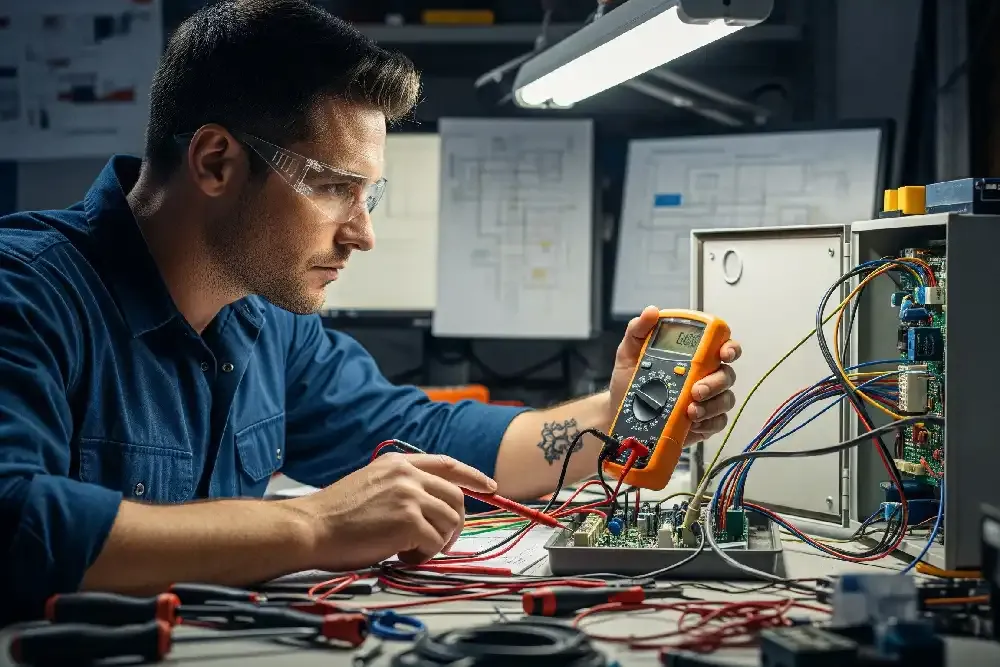
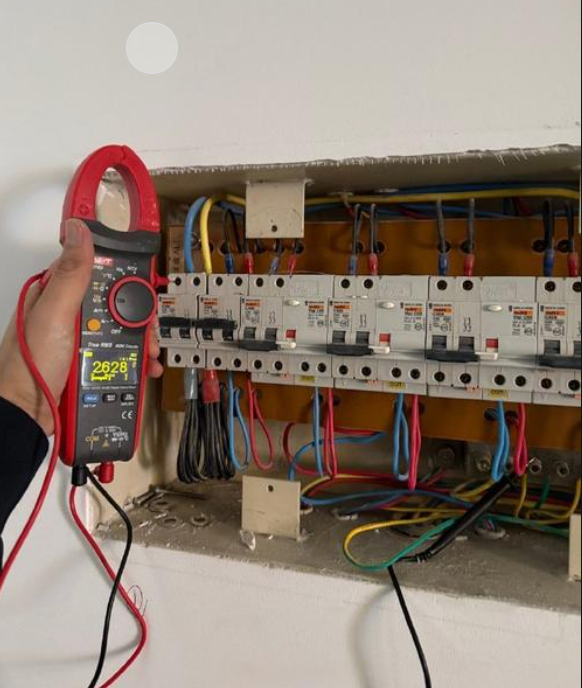
Step Three: Use the Right Tools for Precision Diagnostics
This is the core of effective troubleshooting, as the right tools allow for a precise diagnosis. You'll move beyond visual checks to get to the root of the problem.
Step Four: Check Key Connections & Component Status
Use your senses and your tools to inspect the physical condition of the circuit. This hands-on step often reveals the most common problems.
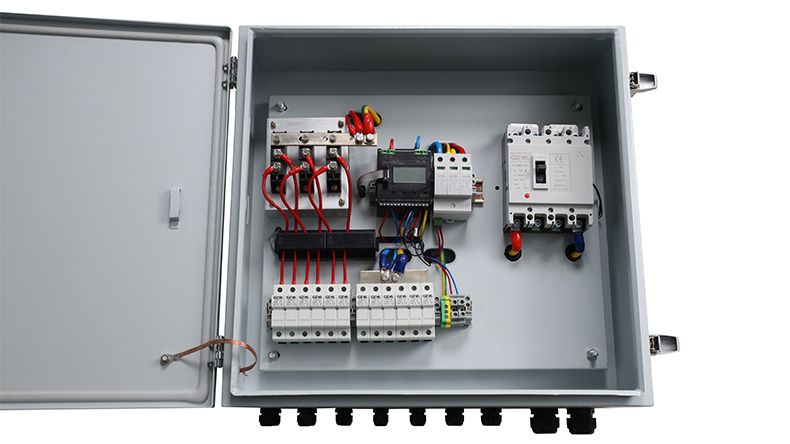
Check Terminals: Check all terminal blocks and connections for looseness or corrosion. A loose connection can create high resistance, leading to dangerous heat buildup and potential fire.
Check Wires: Visually inspect the insulation on all wires for any cracks, melting, or signs of stress. Pay special attention to bends or areas where wires are physically strained.
Check Components: Look at the circuit breakers, outlets, switches, and relays for any signs of physical damage. Discolored plastic, a melted component, or a burnt smell all point to a faulty part that needs to be replaced.
Step Five: Isolate & Repair
Once testing points to a specific area, you can then isolate the fault. This is done by disconnecting a branch circuit or removing a suspected device.
Final Diagnosis: If the main breaker no longer trips after you remove a device, you've found the problem. Proceed to either replace or repair the faulty component.
Perform Repairs: Ensure all new connections are made with the correct torque, and all splices are properly insulated. This final step guarantees the safety and reliability of your work.
Step Six: Safely Restore Power
When all repairs are complete, re-check all connections to ensure everything is secure and nothing was overlooked. Remove all your tools and lockout tags from the panel.
Final Check: Start by resetting the breaker and then gradually power up the equipment. This careful process allows you to watch for any immediate issues before fully restoring the system.
Targeted Troubleshooting Tips
Motor Start-Up Faults: Use a multimeter to check if the windings have balanced resistance. Use a megohmmeter to test for low insulation resistance between the winding and the motor casing, which could cause a ground fault.
Control Circuit Faults: Check the inputs and outputs of your PLC with a multimeter. Also, verify that relays, coils, and sensors are receiving the correct voltage and sending proper signals.
Three-Phase System Faults: Check the voltage balance across all three phases. An imbalance can indicate a broken fuse, a failing component, or even a phase loss, which can damage expensive equipment.
Light Fixture & Outlet Faults: For a light, check for a loose connection at the bulb socket and the switch. If an outlet is dead, check for a tripped GFCI button before you do anything else.

Preventative Maintenance: An Ounce of Prevention
Proactive maintenance can prevent most circuit issues from ever happening. It's always easier to prevent a problem than to fix it.
Regular Inspections: Periodically check all terminal connections to ensure they are properly torqued. Over time, vibration and temperature changes can cause connections to loosen.
Cleanliness: Regularly clean dust from inside electrical panels. Accumulated dust can trap moisture and act as a conductor, leading to ground faults and unexpected issues.
Thermal Scans: Use a thermal imaging camera to scan electrical panels and connections. This non-contact method can spot hot spots caused by loose connections before they become a serious issue.
When to Call a Professional
You should always defer to a professional electrician in these situations. Never risk your safety for a quick fix.
You smell smoke or find a component that is hot to the touch.
You are dealing with high-voltage systems.
You lack the proper tools or expertise.
The issue is in your main service panel.
Final Thoughts
Effective circuit troubleshooting isn't just about fixing a problem; it's about applying a logical, systematic mindset. By following this guide, you can move from being a victim of electrical faults to a confident troubleshooter.
The right tools and a safety-first mindset are your greatest assets.
Frequently Asked Questions (FAQ)
My circuit breaker keeps tripping, but I can't find a reason. What's wrong?
If a breaker trips without an obvious overload or short circuit, the issue may be a ground fault, an aging breaker, or a loose connection. Test the circuit's insulation and consider replacing the breaker if all other possibilities are exhausted.
What's the difference between a short circuit and a ground fault?
A short circuit is a direct connection between live wires, whereas a ground fault is a connection between a live wire and the ground. Both cause a rapid current increase, but ground faults are especially dangerous to people.
Is a multimeter enough for all troubleshooting?
While a multimeter is essential, it's not a complete toolset for all problems. For insulation and ground faults, you need a megohmmeter. For live circuits, a clamp meter is a safer way to measure current.
Why is my outlet hot to the touch?
A hot outlet is a major warning sign, usually indicating an overload or a loose connection inside. Unplug all devices immediately and have an electrician inspect the wiring.