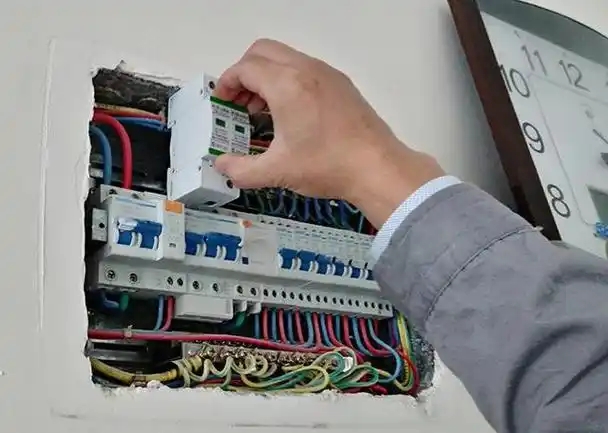
I. Critical Safety First: Implementing the LOTO Procedure
A. The Non-Negotiable First Step: De-Energization
If you want to change a circuit breaker, the process must begin by ensuring absolute safety.
Key Points:
Never skip turning off the main power to your entire electrical panel or the specific source feeding the panel.
Common mistakes: forgetting to disconnect the power or failing to verify that the wires are dead.
Professional Standard – Implement LOTO (Lockout/Tagout):
1. Lockout: Physically lock the main disconnect switch in the OFF position.
2. Tagout: Place a tag with your name to prevent accidental re-energization by others.
Verify Zero Voltage:
Use a reliable non-contact voltage tester or multimeter.
Check the main lugs and breaker terminals to ensure zero voltage before touching any wires.
B. Safety Gear and Professional Judgment
Safety always comes first. If you feel unsure—especially regarding wiring complexity, code compliance, or procedures—call a licensed electrician.
| Safety Requirement | Rationale (EEAT Focus) |
|---|---|
| Personal Protective Equipment (PPE) | Always wear protective gear, including insulated gloves and safety goggles, to prevent injuries from arc flashes or shocks. |
| Code Compliance | Follow electrical codes (like NEC) to ensure your home’s electrical safety. |
| Wiring Knowledge | If you don’t understand each wire’s function or safe torque connections, get professional help. |
C. Identifying a Faulty Breaker
Before replacement, confirm the breaker is actually faulty.
Signs of a failing breaker:
Trips are frequently under normal load.
Visible damage, corrosion, or a burning smell from insulation.
Key Takeaway:
Always turn off the main power before starting work.
Verify zero voltage with a tester before touching anything.
Ideally, work should be performed by a qualified electrician.
Safety with Circuit Breakers
II. Electrical Hazards and Mandatory Safety Procedures
A. Understanding the Electrical Risks
Working with electricity can be dangerous, and faulty circuit breakers pose severe risks to property and life.
Circuit breakers protect your home by shutting off power during overloads or faults. If a breaker fails:
Wires can overheat.
Fires can start behind walls.
Critical Warning Signs:
Fire Hazards: Overheated wires may ignite hidden fires.
Failure to Trip: Old or damaged breakers may not trip when needed.
Warning Indicators: Burning smells, buzzing sounds, or scorch marks are immediate danger signs.
Frequent Tripping: Repeated trips indicate an underlying electrical issue that could escalate.
B. Mandatory Safety Procedure: Zero Voltage Verification
Before touching any component, ensure the system is completely de-energized. This is the core of the LOTO (Lockout/Tagout) procedure.
De-Energization Checklist (LOTO Foundation):
1. Communication: Inform everyone at home about the power outage.
2. Main Disconnect: Locate the main breaker and flip it OFF firmly.
3. Verification: Use a non-contact voltage tester or multimeter to confirm zero voltage. Never rely solely on the switch.
4. Lighting: Set up flashlights or portable lights to see clearly while working.
5. Environment: Ensure the area is dry. Work with dry hands and dry floors only.
C. When to Call a Professional Electrician (EEAT Focus)
High-risk components require trained professionals. Call a licensed electrician if you notice:
Audible Signs: Buzzing or humming sounds from breakers.
Thermal/Visual Signs: Hot breakers, burning smells, discolored outlets, scorch marks, smoke, or flames.
Structural Issues: Gas smells near the panel, or breakers tripping for no apparent reason.
Tip: If unsure, do not risk it. Electricians have the proper tools and training to handle hazards safely.
III. Essential Tools and Materials
A. Personal Protective Equipment (PPE)
The right gear is non-negotiable for protection against sparks and shocks.
| Gear Type | Purpose |
|---|---|
| Insulated Gloves | Protect hands from electrical shocks. |
| Safety Goggles | Protect eyes from sparks or flying debris. |
| Insulated Footwear | Rubber-soled shoes for extra protection. |
| Specialized Clothing | Fire-resistant clothing if available. |
B. Required Tools and Materials
Gather all tools before starting work. Always use insulated tools and stand on a dry surface.
| Tool / Material | Purpose |
|---|---|
| Replacement Breaker | Must match your panel specifications. |
| Safety Mat | Stand on plywood or a rubber mat for insulation. |
| Insulated Tools | Screwdrivers, hammers, and wire strippers are made for electrical work. |
| Voltage Tester / Multimeter | Verify that wires are de-energized. |
| Cable Connectors | For safe reconnection of wires. |
| Insulated Flashlight | Provide light safely while working. |
Tip: Keep a notepad nearby to record wire order or labels. This simplifies reassembly and reduces errors.
IV. Choosing the Right Circuit Breaker
A. Matching Breaker Type to Protection Requirements
Picking the right circuit breaker is critical for both safety and code compliance.
Not all breakers protect against the same hazards; selection depends on the circuit type and location.
| Type of Circuit Breaker | Key Features | Mandated Use (NEC/IECC) |
|---|---|---|
| Standard Circuit Breakers | Protect against basic overloads and short circuits. | General residential and commercial use. |
| Ground Fault Circuit Interrupters (GFCIs) | Protect against ground faults (leakage current) that can cause electric shock. | Wet areas like bathrooms, kitchens, garages, and outdoors. |
| Arc Fault Circuit Interrupters (AFCIs) | Protect against dangerous arc faults (sparks) that may start fires. | Habitable areas such as bedrooms, living rooms, and dens in new construction. |
| AFCI/GFCI Dual-Function | Combines both arc and ground fault protection in a single unit. | High-risk and sensitive environments where both hazards exist. |
Tip: Always follow local electrical codes (NEC/IECC) for proper breaker type placement.
B. Brand Compatibility and Compliance
Match the breaker brand and model exactly to your existing panel to maintain UL listing and factory safety certification.
Using a breaker not designed or classified for your panel can void the warranty and create a safety hazard.
Examples of Common Brands:
| Brand | Key Models and Features | Professional Focus |
|---|---|---|
| Eaton | FireGuard breakers (arc-fault protection), Residential Current Circuit Breakers (RCCB) | Ensure the correct Bus Bar connection (plug-in vs. bolt-on) is selected. |
| General Electric (GE) | Miniature Circuit Breakers (MCB) for various poles, dedicated AFCI/GFCI breakers | Verify breaker ampere rating matches wire size and load. |
Note: Always check your panel for brand, series, and size. The wrong breaker can damage the bus bar or cause operational failure.
C. Estimated Professional Replacement Costs
The cost depends on breaker type, panel complexity, and local labor rates.
| Project | Average Cost (USD) | Complexity Level |
|---|---|---|
| Replace the standard 1-pole breaker switch | $100 – $180 | Low (Basic replacement) |
| Replace the 2-pole breaker switch | $180 – $260 | Medium (Higher voltage/dedicated circuits) |
| Replace the main breaker switch | $200 – $600 | High (Full panel de-energization + LOTO) |
| Install a subpanel box | $500 – $1,700 | Very High (Adding new infrastructure) |
| Replace the entire panel box | $850 – $4,000 | Very High (Major service upgrade) |
| Convert the fuse box to a breaker panel | $1,100 – $4,000 | Very High (Major system conversion) |
Tip: Unsure about which breaker to use?
Take a photo of the panel label and consult a licensed electrician for full compliance and compatibility.
Find the Faulty Breaker
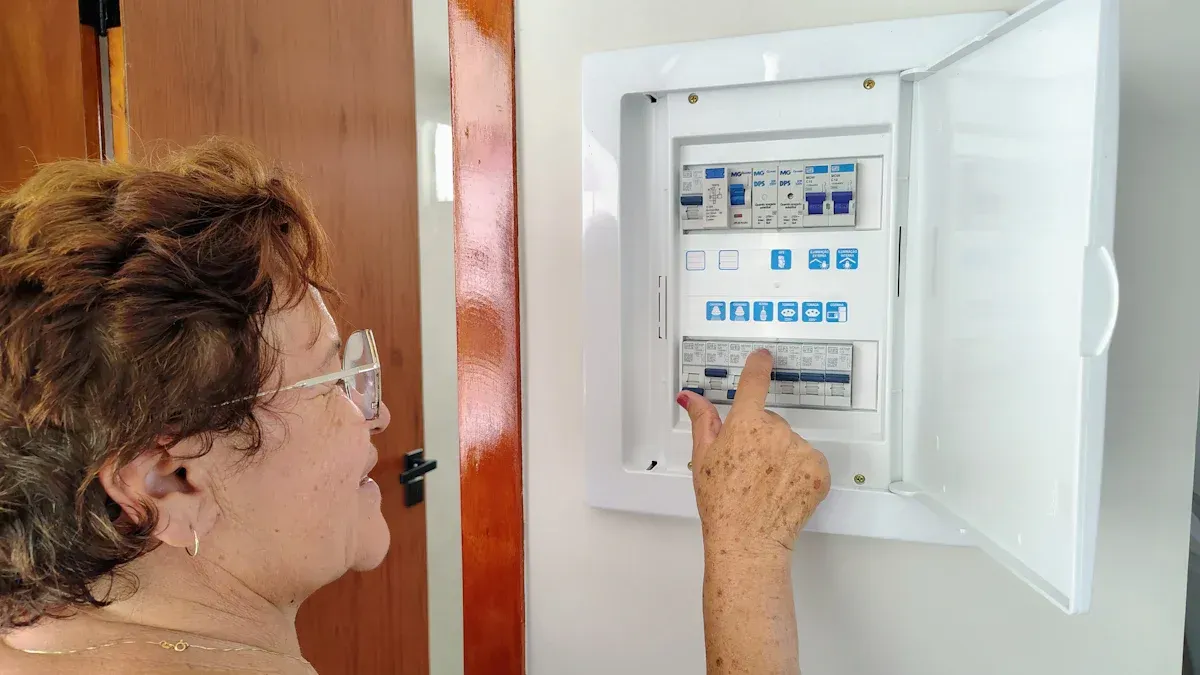
V. Signs of Failure and Diagnostic Testing
A. Recognizing Immediate Failure Warnings
Identifying a faulty breaker early is critical to prevent electrical fires.
Some signs can be subtle, but must never be ignored:
Frequent Tripping:
Breaker trips often even under normal usage.Indicates internal fault or persistent overload.
Failure to Trip:
Circuit overload occurs, but the breaker does not trip.Major safety hazard — the circuit is unprotected.
Physical Damage:
Look for melted plastic, burn marks, or discoloration on the breaker or panel.Audible Warnings:
Buzzing or humming sounds from the panel indicate loose connections or internal failure.Associated Heat:
Outlets or switches feel warm or smell burnt.
🔥 Weisho Tip: Stop using the circuit immediately if you notice any unusual signs. Safety first!
B. Understanding Failure Rates and Standards
Breaker quality varies significantly:
Brand Reliability:
Some brands have higher failure rates. Multi-pole breakers may sometimes fail to open, creating a serious risk.Top-quality brands rarely fail.
Safety Limits:
Breakers must open reliably at 135% of their rated current.Failure to do so means the breaker does not meet safety standards.
C. Diagnostic Testing Methods
Accurate assessment often requires specialized tools and professional expertise.
| Method | Description | Professional Focus |
|---|---|---|
| Load Testing | Apply a controlled overload to check if the breaker trips within the correct time/current curve. | Only trained professionals should perform due to inherent danger. |
| Insulation Resistance Testing | Checks internal insulation for hidden damage and ensures breaker integrity. | Requires tools like a Megohmmeter and technical training. |
| Home Reset Check | Step 1: Turn off all devices on the faulty circuit. Step 2: Flip breaker OFF, then ON. Step 3: Plug in a small device (like a lamp) to test. Step 4: Observe if the breaker trips again immediately. | Simple initial check for homeowners. If trips persist or the breaker is damaged, call a licensed electrician immediately. |
⚡ Note: If you are unsure or if the breaker shows physical damage, always call a licensed electrician.
VI. Power Off & Panel Access (LOTO Implementation)
A. Mandatory Disconnection of Main Power
Before touching anything inside the panel, you must ensure the power is off. This step is non-negotiable for personal safety and accident prevention.
The main breaker controls electricity for your whole house and is usually double-width at the top of the service panel.
Step-by-Step Main Power Off Procedure:
Preparation:
Stand in front of the electrical panel with a flashlight ready.
Inform everyone at home about the power outage.
Ask them not to touch anything electrical during the procedure.
Protect Devices:
Switch off each smaller breaker one at a time.
This prevents damage to connected devices from sudden power loss.
Main Breaker Disconnect:
Flip the main breaker to the OFF position.
Use a firm motion until you hear a click.
Verification (Zero Voltage):
CRITICAL: Use a voltage tester to check the wires and panel before proceeding.
Never rely solely on the switch position.
⚡ Tip: Keep a flashlight handy as the panel interior will be dark.
If you feel unsure at any point, stop and call a professional.
B. Safe Removal of the Panel Cover
Once power is verified OFF, you can remove the panel cover to access breakers and internal wires.
Safety Guidelines for Cover Removal:
Final Voltage Check:
Test the panel enclosure with your voltage tester to confirm zero electricity.
Use Insulated Tools Only:
Loosen screws using insulated tools.
Only touch the screws and edges of the cover.
Body Position:
Stand back from the panel while working.
Keep your face and body away from the cover.
Grounding Check:
Ensure proper grounding before touching any wires or metal parts.
Procedure:
Work slowly and carefully.
Do not tap or force the panel with your hands.
Crew Safety:
Only one person should handle the panel at a time.
🛡️ Note:
If you notice loose wires, burn marks, or unusual signs, stop immediately.
Call a licensed electrician — this may indicate a severe pre-existing fault.
After removing the cover, set it aside safely and remember the position of each screw.
You are now ready for the breaker replacement step.
Remove Old Circuit Breaker
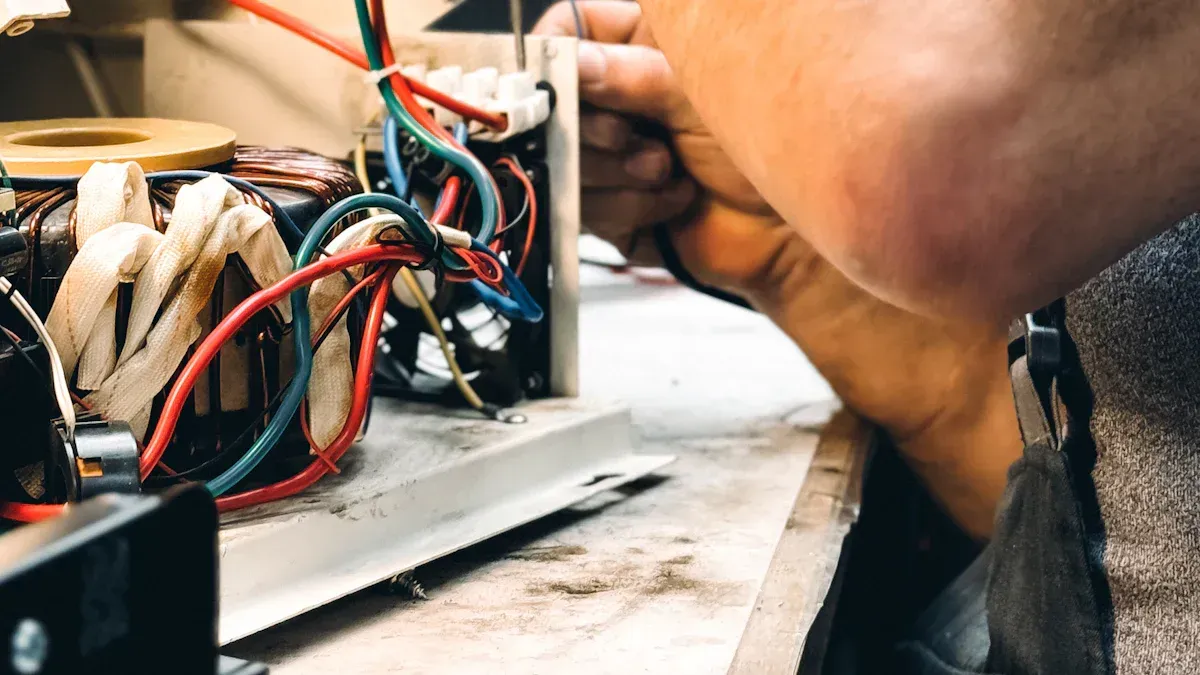
VII. Removing the Faulty Circuit Breaker
A. Diagnosing and Locating the Fault
You must accurately find the exact circuit breaker causing the trouble before proceeding with removal. Look for these key failure indicators:
Frequent Tripping: The breaker trips often, even when the power usage is low.
Failure to Reset: The breaker will not reset or keeps immediately popping back off.
Operational Failure: The breaker does not trip when the circuit is overloaded, which is a significant safety risk.
Thermal/Visual Damage: You notice a burning smell coming from the panel, or the breaker itself looks damaged with cracks or scorch marks.
Age and System Issues: The breaker is old (typically over 15 to 30 years), or lights and appliances on that specific circuit flicker or act strangely.
🔍 Professional Tip: Write down the location and label of the faulty breaker to ensure you replace the correct unit and keep the panel organized. Always double-check by testing the breaker and looking for physical damage.
B. Safe Wire Disconnection and Breaker Removal
Once the power is confirmed OFF and the main LOTO procedures are complete, you can begin the physical removal using only insulated tools.
1. Loosening Terminal Screws
The wires must be detached from the old breaker before removal.
Ensure you have your insulated tools ready and the power is off.
Locate the screws holding the wires in place. If there are no screws, look for a small slot near where the wires enter.
To release the wires, use a small screwdriver to push back the internal retainer clip (if applicable).
Safety Precaution: Keep your left hand behind your back while working near live rails; this professional technique reduces the risk of accidental shock.
Warning: Always verify that the breaker is tripped and the mechanism is discharged before you start. If the breaker does not look safe, call a professional.
2. Disconnecting Wires and Final Inspection
Zero Voltage Check: Verify again that the wires are not live using your voltage tester.
Wire Removal: Gently pull the wires out of the breaker. Wiggle them free without using excessive force if they are stuck.
Inspection: Inspect the wires for damage, looking for fraying, burns, or rust. If the wires look worn, cut and strip them to a clean section before connecting to the new breaker.
Breaker Removal: Pull the circuit breaker free from the rails (bus bar) inside the box.
Post-Removal Safety: Set the wires aside and keep a safe distance from the internal parts of the panel.
🛡️ Critical Safety Tip: If you see any moisture, rust, or charring inside the panel, stop right away and call an electrician. If you find any damage inside the panel, do not continue; it is safer to get help from a licensed electrician.
VIII. Replacement Procedure: Removal and Installation
A. Safe Removal of the Old Breaker
The removal process must be performed carefully to avoid damaging the panel's bus bar. Ensure you have already disconnected the wires (Section VII) before proceeding.
1. Grip and Tilt: Grip the breaker firmly by its sides. Gently pull the end of the breaker that faces away from the center of the panel, tilting it outward. Most breakers snap into place on a metal rail or clip.
2. Lift Out: Once the breaker tilts free, lift it up and away from the panel. Some older breakers may require gentle wiggling, but never use force.
3. Inspect the Slot: Examine the slot where the breaker was seated, ensuring there are no broken plastic pieces or debris left behind.
4. Inspect the Breaker: Take a close look at the old breaker for burn marks, melted plastic, or other heat damage. This confirms the reason for its failure.
🛠️ Professional Tip: If the breaker feels stuck, stop and double-check for hidden clips or screws. Forcing the removal can cause serious damage to your panel's bus bar connections.
B. Installing the New Circuit Breaker
Before handling the new breaker, you must prepare it for installation.
1. Breaker in OFF Position (Mandatory Safety Check)
Before you touch any metal parts or wires, ensure your new breaker is in the OFF position.
Check the switch: It must point to OFF or be pushed all the way down.
Safety Rationale: Installing an energized breaker risks severe electrical shock or instantaneous damage to the new unit and the panel.
⚠️ Critical Warning: Always double-check that the breaker is OFF before you touch any wires or metal parts.
2. Inserting the Breaker
1. Select Slot: Find the open slot in your panel where the old breaker was. Ensure the slot type exactly matches the size and design of your new breaker (e.g., single-pole vs. double-pole, specific clip type).
2. Align and Engage: Hold the breaker so the terminals face the bus bar (the main metal strip inside the panel). Hook the back clip (or lever) onto the rail opposite the bus bar connection point first.
3. Snap into Place: Push the breaker firmly onto the bus bar until you hear or feel it click. The breaker must sit flat and not wiggle.
4. Check the Fit: Gently tap the breaker to confirm it is secure. It should not move.
🛠️ Note: If the breaker does not snap in easily, do not force it. Remove it and try again, checking alignment. Forcing an incompatible or misaligned breaker can permanently damage your panel's bus bar.
IX. Final Connection and Torquing
A. Reconnecting the Wires Safely
Connecting the circuit wire to the new breaker is critical to prevent heat build-up and potential fires. Loose wires are a serious fire hazard.
Step-by-Step Wire Connection:
Preparation:
Loosen the terminal screw on the new breaker just enough to accept the wire.
Use an insulated screwdriver for safety.
Wire Insertion:
Slide the stripped end of the wire between the two clamping plates.
Do not place the wire directly under the screw head; it must be secured by the plates.
Secure the Connection:
Hold the wire steady while tightening the screw.
The connection must be snug so the wire cannot slip.
Verification:
Gently tug the wire to ensure it does not move.
A secure connection confirms proper installation.
B. Professional Torquing Requirements (Expertise)
Incorrect torque—either too tight or too loose—can:
Damage the wire
Create high-resistance connections, leading to heat or fire hazards
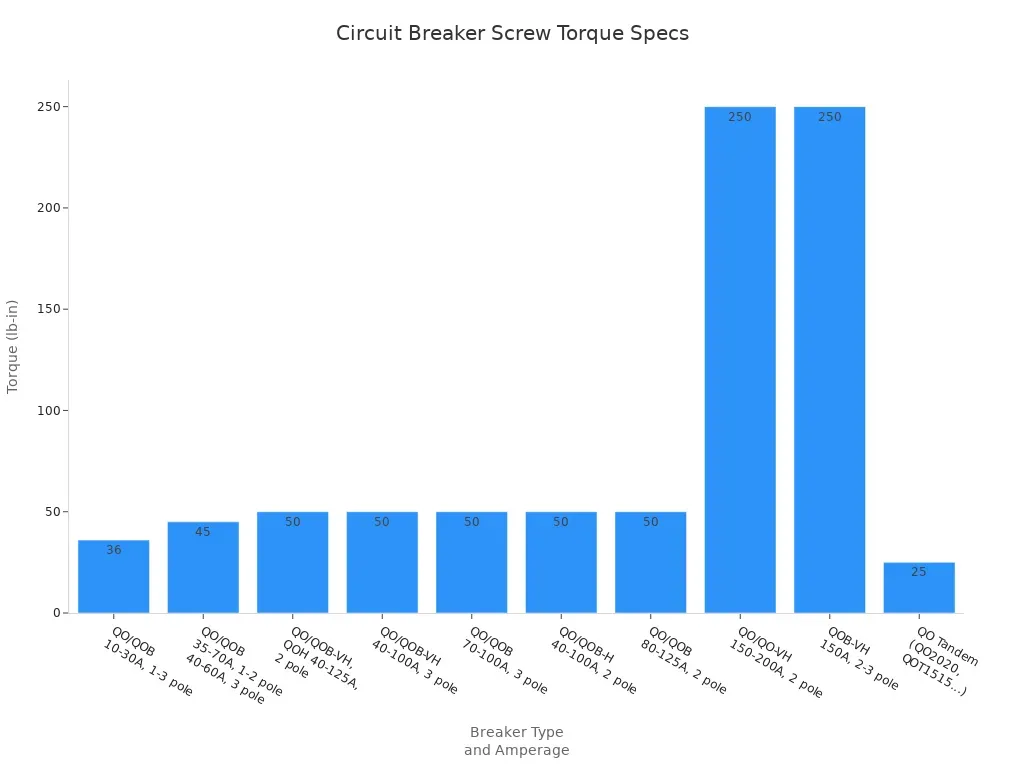
Professional installations require a torque wrench to meet the manufacturer’s specifications.
Typical Torque Values (Breaker Type / Amp Rating)
| Breaker Type / Amp Rating | Torque lb-in (N-m) | Focus Area |
|---|---|---|
| QO/QOB (10–30 A, 1–3 pole) | 36 (4.0) | Standard residential lighting/receptacle circuits |
| QO/QOB (35–70 A, 1–2 pole; 40–60 A, 3 pole) | 45 (5.0) | Dedicated medium-load appliance circuits |
| QO/QOB-VH (40–125 A, 2 pole) | 50 (5.6) | Higher capacity 240 V circuits (HVAC, water heater) |
| QO/QOB-VH (40–100 A, 3 pole) | 50 (5.6) | Three-phase commercial loads |
| QO/QOB (150–200 A, 2 pole) | 250 (28.3) | High-capacity 240 V feeders/subpanels |
| QO Tandem (e.g., QO2020, QOT1515) | 25 (2.8) | Space-saving tandem breakers (lower torque required) |
💡 Professional Tip:
Without a calibrated torque screwdriver, it is impossible to guarantee the connection meets fire safety code.
Always check the label on your specific breaker for the exact torque value.
✅ Completion Check:
Inspect your work to ensure all wires are tight, neat, and properly clamped.
You have now successfully installed the new circuit breaker and connected the wires safely.
X. Final Steps: Torquing, Restoration, and Testing
A. Professional Torquing of Connections
Properly tightening terminal screws is essential to prevent electrical failures. Loose screws cause resistance, generating heat, sparks, melting, and potential fires.
Technique:
Hold the wire steady and turn the screw clockwise until you feel firm resistance.
Verification:
Gently tug the wire. If it moves, tighten slightly more.
The wire must be snug and not shift.
Torque Specification:
Most breakers have a label showing the exact required torque (lb-in).
Use a torque screwdriver for compliance.
If unavailable, use firm judgment—snug, but do not strip the screw or damage the wire.
| Step | Action | Critical Avoidance |
|---|---|---|
| Insert Wire | Place the wire in the terminal clamp | Leaving the wire loose or under the screw head |
| Tighten Screw | Turn until snug (to spec) | Over-tightening (damages wire) or under-tightening (fire hazard) |
| Check | Tug the wire gently | Ignoring loose wires, compromising safety |
⚡ Note: If you find any frayed or damaged wires not replaced earlier, stop and replace them now before proceeding.
B. Restore Power and Test
1. Replace Panel Cover (Safety Enclosure)
Before restoring power, the panel cover must be securely reinstalled:
Alignment: Hold the cover straight, aligning it with the panel opening.
Screws: Insert screws into opposite corners first, and tighten by hand.
Final Tightening: Use a screwdriver to tighten all screws evenly, without over-tightening.
🛡️ Tip: Loose cover rattles; over-tightening can strip screws. Take time for a perfect fit.
2. Power On Procedure
Pre-Check: Turn off light switches and unplug non-essential appliances.
Main Breaker ON: Ensure all branch circuit breakers are OFF, then flip the main breaker ON firmly.
Sequential Power-Up: Turn on branch breakers one by one to prevent overload.
⚡ Immediate Hazard Warning: If you hear buzzing, see sparks, or smell burning, turn off the main breaker immediately and call a professional.
3. Test the New Breaker
Visual Check: Inspect for scorch marks or loose wires.
Voltage Verification: Use a voltage tester or multimeter.
Functionality: Plug in a lamp or small device; it should work if installed correctly.
C. Troubleshooting Common Issues
| Problem | What to Check / Diagnose | Action to Take |
|---|---|---|
| Breaker trips instantly | Faulty appliance, short circuit, wrong breaker type/amperage | Unplug devices, reset. If it still trips with nothing plugged in, call a licensed electrician |
| No power on the circuit | Breaker not fully seated, loose connections, main breaker OFF | Turn off main power, inspect/tighten connections |
| Flickering/buzzing | Wire tightness, fraying | Turn off the main power, tighten loose screws with an insulated screwdriver |
| Burning smell/sparks | Severe thermal issue, fire risk | TURN OFF THE MAIN BREAKER IMMEDIATELY and call a professional |
D. Conclusion and Professional Recommendation
Changing a circuit breaker is an advanced DIY task only if all safety procedures (LOTO) are strictly followed.
Recommended Inspection Intervals:
Average homes: Every 3–5 years
Homes over 25 years: Every 2–3 years
Homes over 40 years: Annual inspections
Final Rule: If nervous, unsure, or noticing electrical damage, always call a licensed electrician.
Frequently Asked Questions (FAQ)
Q: Can I change a breaker without turning off the main power?
A: Never. Turn off the main power and verify zero voltage before touching the panel.
Q: How do I know which breaker to buy?
A: Match panel brand, model, amperage, and type (AFCI/GFCI). Wrong breakers can damage panels or void safety listings.
Q: What tools do I need?
A: Insulated screwdrivers, wire strippers, voltage tester/multimeter, safety goggles, insulated gloves.
Q: What signs indicate a breaker needs replacing?
A: Frequent tripping, failure to reset, burning smells, scorch marks, or buzzing sounds.
Q: Is it safe to change a breaker myself?
A: Only if you have wiring knowledge, proper PPE, and follow all safety steps, including LOTO. Otherwise, call a professional.