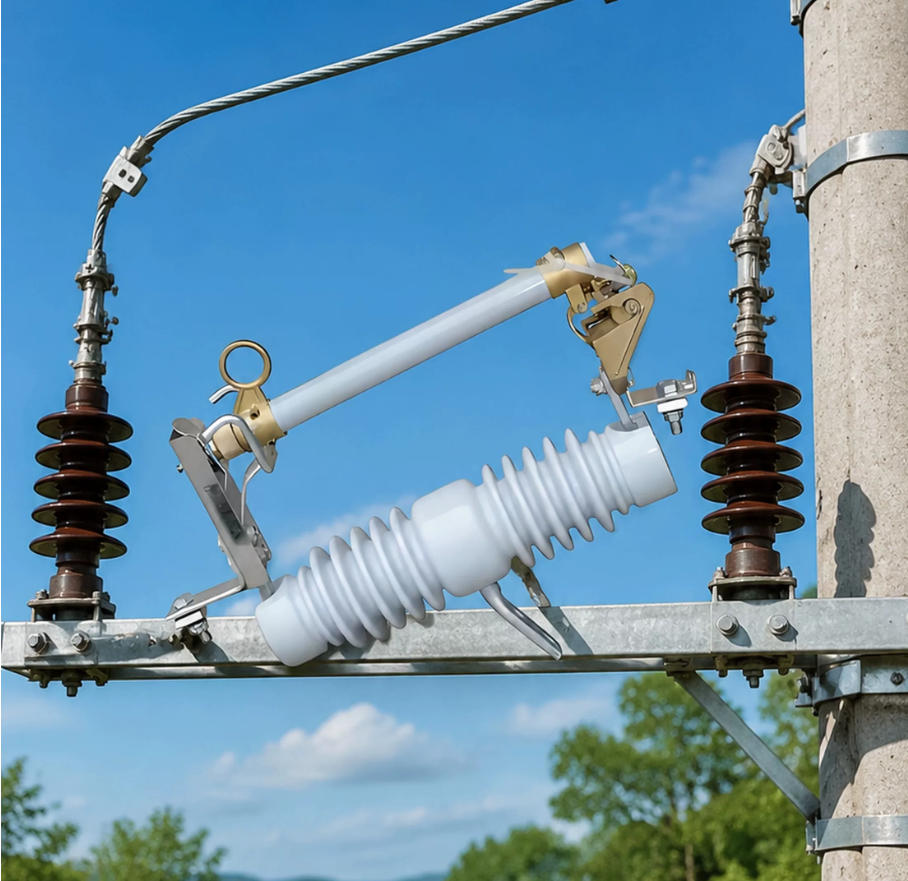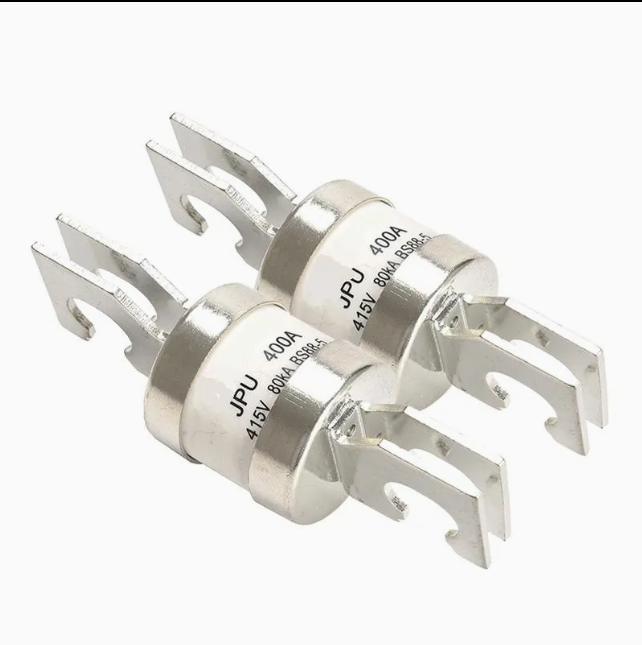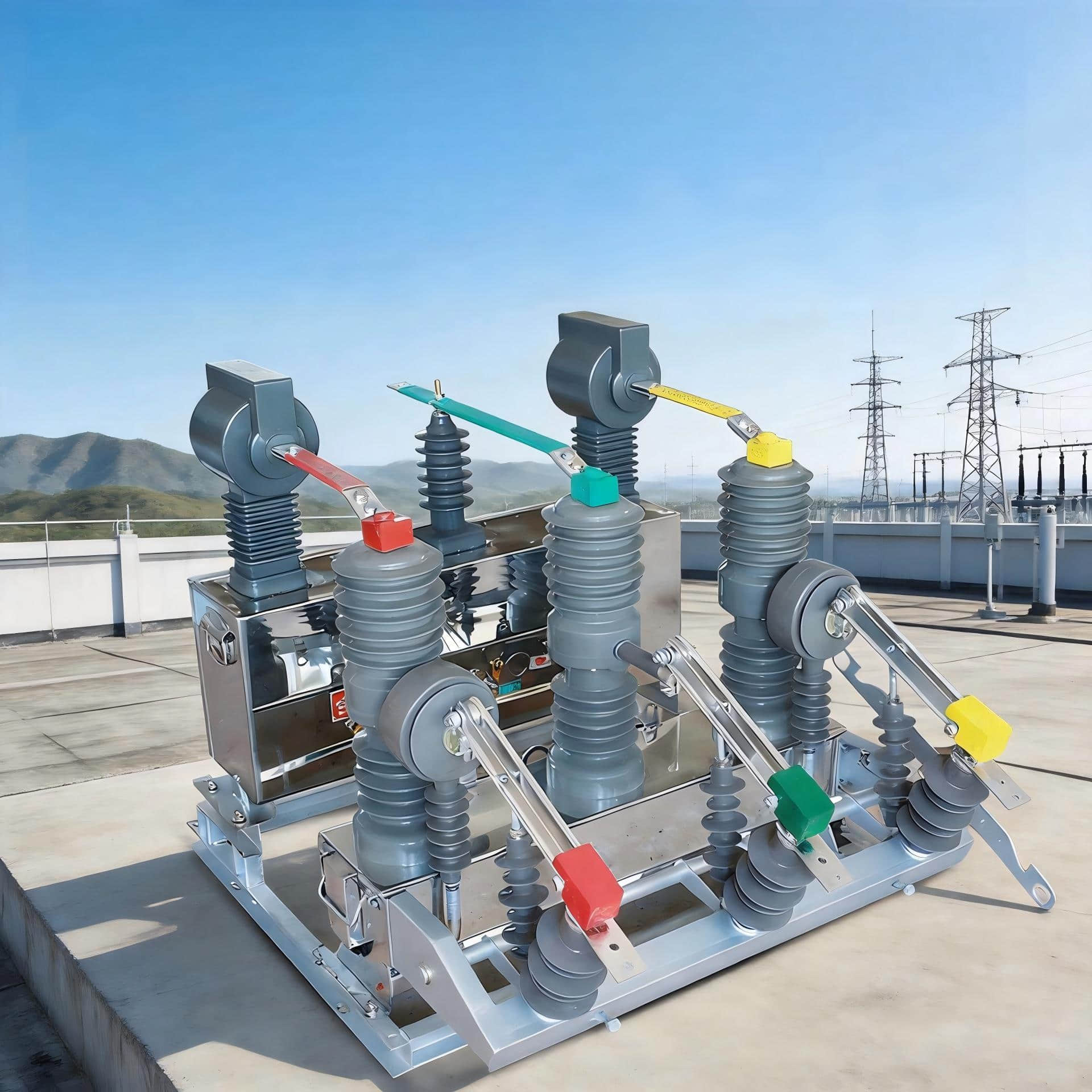
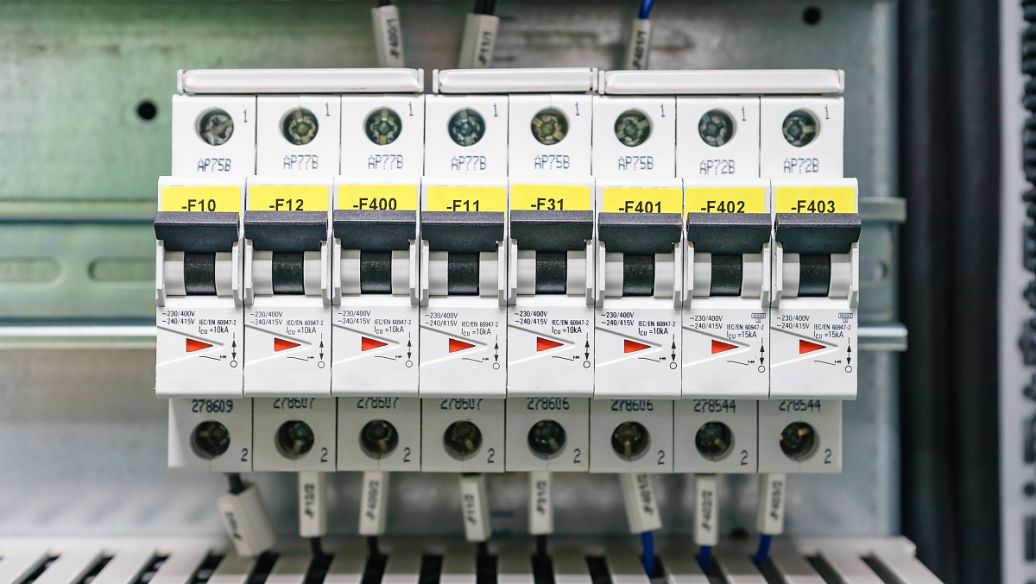
The fundamental principle for selecting a fuse to protect a Surge Protective Device (SPD) is remarkably straightforward, yet it is often misunderstood. You must ensure the fuse's I²t value can withstand the energy released during a normal surge event, while also guaranteeing it will rapidly open the circuit if the SPD fails in a short-circuit condition.
This isn’t just a matter of matching current ratings; it is a meticulous technical decision that directly impacts the safety and reliability of your entire electrical system. A properly implemented backup protection scheme allows the fuse to remain a silent guardian during normal operation, only to spring into action at the critical moment, clearing the fault to protect both equipment and human lives.
In modern electrical systems, Surge Protective Devices are absolutely vital components. They act as the first line of defense, constantly on alert to absorb transient overvoltages from lightning strikes or switching operations, shielding sensitive electronics from harm.
But this defensive line is not invulnerable. When an SPD unit eventually fails due to aging, repeated stress from massive surges, or a manufacturing defect, it can transform into a catastrophic short circuit, posing an immense safety hazard.
At this juncture, a seemingly simple component—the humble fuse—becomes the final barrier. An incorrect selection can lead to two equally disastrous outcomes. First, the fuse might nuisance trip during a routine surge, disrupting system continuity and leaving your equipment unprotected.
Or worse, it could fail to interrupt the current when it is truly needed, leading to equipment destruction and even a full-scale electrical fire. This guide will walk you through every critical aspect of selecting the right fuse for an SPD, providing a complete, trustworthy, and actionable roadmap from the perspective of a seasoned electrical engineer.
I. The Symbiotic Relationship of SPD and Fuse: A Study in Coordination
The roles of a Surge Protective Device and a fuse are not interchangeable; rather, they operate in a synergistic partnership within a comprehensive electrical protection system. Each component performs a unique and essential task.
The Function of a Surge Protective Device (SPD)
The primary mission of an SPD is voltage limiting and energy diversion. It is composed of one or more non-linear components, most commonly a Metal Oxide Varistor (MOV).
Under normal operating voltage, an MOV exhibits extremely high impedance, effectively appearing as an open circuit to the system. But when a transient overvoltage occurs, its impedance instantly drops to near zero, diverting the massive surge current safely to ground and clamping the voltage at a safe level for your sensitive downstream equipment.
This entire process happens in milliseconds or even microseconds, and it is defined by a massive, momentary pulse of current.
The Function of a Fuse
A fuse, conversely, has one core purpose: overcurrent protection. It is an electromechanical device that operates on the principle of Joule heating.
When a current exceeding its rated value flows for a specified duration, the fusible element inside melts and vaporizes, creating an intentional open circuit. The time it takes for a fuse to blow is inversely proportional to the magnitude of the overcurrent.
How They Work Together
In a well-designed protection scheme, the fuse serves as the backup protection for the SPD. During a normal surge event, the transient current is of such a short duration that the fuse's thermal inertia prevents it from melting.
This is precisely the desired outcome. However, if the SPD experiences a hard short-circuit failure, the current flowing through it will no longer be a momentary pulse; it will be a continuous, high-amperage fault current.
At this point, the fuse must act swiftly and decisively to interrupt the flow, de-energizing the faulty circuit and preventing a potential fire or other catastrophic failure.
It is critically important to remember that the SPD is designed to protect against voltage transients, while the fuse is there to protect against overcurrents. The fuse is not a replacement for the SPD; it is its indispensable guardian. Without this crucial backup, a failed SPD becomes a serious hazard to the entire electrical system.
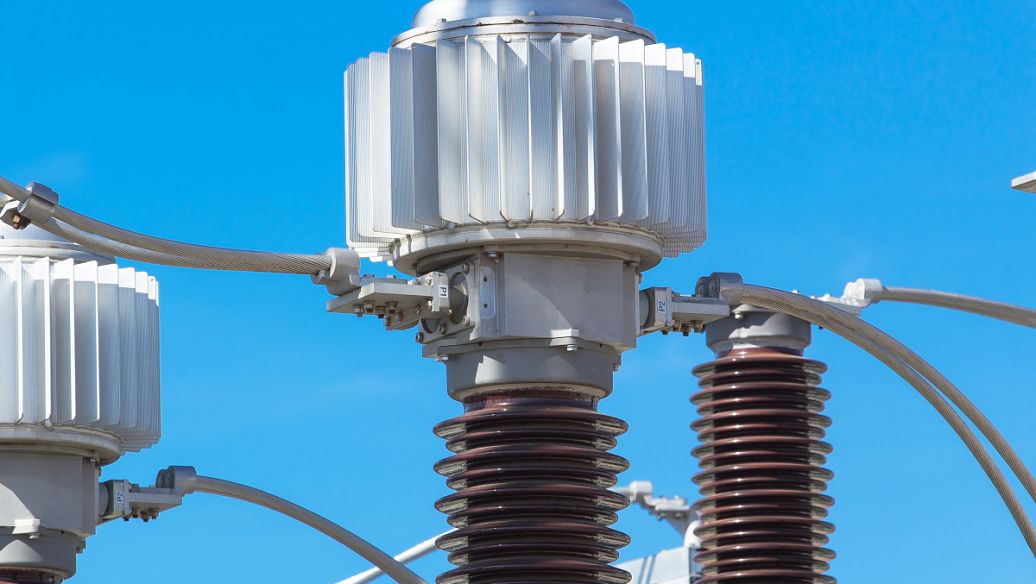
II. The Core Technical Parameters for Fuse Selection: Attention to Detail Is Everything
When selecting a fuse for an SPD, an electrical engineer must possess a profound understanding and a rigid command of several key technical parameters. Overlooking a single one of these can lead to a spectacular and costly failure.
Rated Voltage (Un)
A fuse's rated voltage must be equal to or greater than the maximum voltage of the circuit where it is being installed. This is the most fundamental safety requirement.
If the rated voltage is too low, the fuse may be able to interrupt the circuit, but the electrical arc created at the moment of melting might not be effectively extinguished. This can lead to a sustained arc, resulting in a short circuit or an explosion. You must always build in a safety margin. For example, in a 277V or 480V system, you would select a fuse with a 600V AC rating.
Rated Current (In)
This is the maximum current a fuse can continuously carry without melting under specified conditions. For SPD protection, this parameter has nothing to do with the connected load.
Instead, it must be carefully chosen to allow the SPD's normal operational currents to pass through without any risk of nuisance tripping. A common practice is to select a fuse with a rated current that is greater than or equal to the nominal discharge current (In) of the SPD, with some additional safety margin.
Breaking Capacity (Icn)
Also known as Interrupting Rating or Interrupting Capacity, this is the maximum short-circuit current that a fuse can safely interrupt at its rated voltage. This value must be greater than or equal to the maximum prospective short-circuit current available at the point of installation.
If the breaking capacity is insufficient, the fuse may rupture explosively during a massive fault event, leading to a dangerous failure. Calculating this prospective fault current requires a detailed analysis of the upstream transformer capacity and the impedance of the connecting cables.
The I²t Value (Melting Energy)—The Most Critical Parameter
The I²t value, which stands for "current-squared-times-time," represents the energy required to melt a fuse's element. It is the most critical parameter in this selection process and directly determines the effectiveness of the fuse-SPD coordination. It is a fundamental measure of the fuse's thermal withstand capability.
The SPD's I²t Value
Every SPD manufacturer provides an I²t value, which represents the energy the device can handle during a surge. This value is derived from laboratory tests using standardized waveforms, such as the 8/20µs or 10/350µs pulses. This is the energy that a properly functioning SPD will generate and dissipate during a lightning event.
The Fuse's I²t Value
A fuse has two key I²t values: the pre-arcing I²t (or melting I²t) and the total clearing I²t. The pre-arcing value is the energy required to simply melt the fuse element, while the total clearing value is the energy it takes to completely open the circuit and extinguish the arc.
The crucial part of the selection process is to ensure that the fuse's pre-arcing I²t value is greater than or equal to the SPD's I²t value at its maximum discharge current (Imax).
The Selection Principle
The principle can be stated simply in a mathematical expression:
If I2t_Fuse is less than I2t_SPD(Imax), the fuse will experience a “nuisance trip” and open the circuit during a normal, non-destructive surge event. This leaves the system completely unprotected for any subsequent surges.
Conversely, if I2t_Fuse is too high, the fuse may not blow quickly enough when the SPD fails in a short-circuit condition, leading to catastrophic damage.
A qualified engineer must always refer to the manufacturer's technical datasheets to obtain both the fuse's and the SPD's I²t values. Relying on guesswork or general rules of thumb is a recipe for disaster. This is a technical relationship that must be verified with hard data.
Theoretical knowledge is essential, but real-world application and lessons learned are far more convincing. This video, presented by a seasoned expert from the reputable electrical company Cape Electric, provides further insight into the selection of backup fuses for Surge Protective Devices. The video not only explains why selecting the correct fuse is so critical but also demonstrates a real-world fire incident caused by inadequate protection, offering a cautionary tale that is incredibly valuable for every engineer.
III. Fuse Characteristics and Coordination: Ensuring System Selectivity
Beyond the core parameters, the inherent characteristics of a fuse and its ability to coordinate with other protective devices are key to a reliable system. A proper design ensures that only the faulty part of the circuit is isolated, without affecting the rest of the system's operation.
Types of Fuses
Various types of fuses are available in modern industry, each with a unique time-current characteristic curve that determines its suitability for a specific application.
GG-type Fuses (General Purpose)
This is the most common type of fuse used for general-purpose protection. They have a relatively slow response curve, which allows them to withstand minor overloads and inrush currents, making them ideal for protecting cables and general distribution equipment. They are a good all-around choice.
aR-type Fuses (Fast-acting)
These fuses are specifically designed for the rapid protection of semiconductor devices like thyristors and transistors. They have an extremely fast response time and a very low I²t value. For high-frequency power supplies or certain specialized SPDs that require ultra-fast protection, an aR-type fuse is often the superior choice.
It's important to note that not all SPDs are compatible with aR-type fuses. You must always consult the SPD manufacturer's recommendations to ensure proper coordination.
Energy Coordination and Selectivity
Energy coordination is the cornerstone of an effective protective system. It ensures that when a short circuit or a fault occurs, only the protective device closest to the fault—in this case, the fuse—operates, while upstream circuit breakers or main switches remain closed. This guarantees that the rest of the electrical system continues to receive power.
The ideal coordination for SPD backup protection is a three-part harmony. First, during a normal surge event, the SPD dissipates the energy and the fuse does not act.
Second, when the SPD short-circuits, the fuse blows quickly to de-energize the faulty SPD before it can be destroyed. And finally, when the fuse blows, the upstream circuit breaker must not operate.
Achieving this perfect coordination is a matter of properly matching the time-current characteristic curves and the breaking capacities of all the protective devices in the circuit. The fuse's melting curve must be below the SPD's withstand curve.
At the same time, the fuse's I²t value must be lower than the I²t value of the upstream circuit breaker to ensure selectivity. This creates a "selective hierarchy" where each device is assigned a specific role and response time.
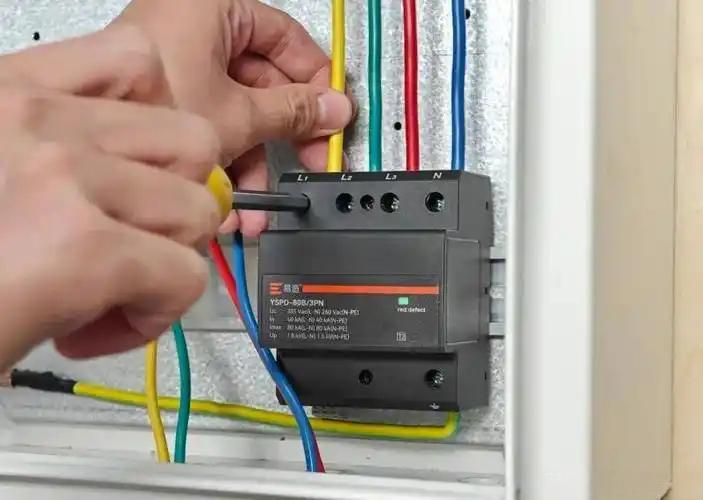
IV. The Selection Process: A Practical Step-by-Step Guide
Here is a practical, step-by-step approach for selecting a fuse for your SPD application. This process ensures all critical factors are considered.
1. Gather the Necessary DataFirst, you must collect all the relevant data from your electrical system and the SPD manufacturer. This includes the maximum operating voltage of your system and the available prospective short-circuit current at the point of installation.
From the SPD manufacturer, you must get the maximum discharge current (I_max), the nominal discharge current (I_n), and the corresponding I²t value. Without this data, you cannot proceed.
2. Determine the Appropriate Fuse TypeBased on the specific application and the SPD’s characteristics, decide whether a gG-type or an aR-type fuse is the most suitable choice. Unless there are specific requirements for ultra-fast action, a gG-type fuse will meet most of the demands.
3. Match the Parameters is where you match the technical data you've gathered to the fuse specifications. Ensure that the fuse's rated voltage is greater than or equal to the system voltage. The fuse's interrupting capacity must also be greater than or equal to the system's prospective short-circuit current.
Most importantly, you must confirm that the fuse's melting I²t value is greater than or equal to the SPD's I²t value.
4. Consider Environmental Conditions ambient temperature of the installation environment can significantly impact a fuse's performance. High temperatures can cause a fuse to operate at a reduced capacity.
In high-temperature environments, you may need to de-rate the fuse's current rating based on the manufacturer's provided derating curves.
Remember that you must always consult the technical datasheets provided by both the SPD and fuse manufacturers. Never base your decision on a visual inspection or experience alone. The data is what guides a safe and reliable choice.
V. Quick Reference Guide for SPD Fuse Selection
Here is a quick reference table to help guide you through the selection process, summarizing the key parameters and the principles of selection.
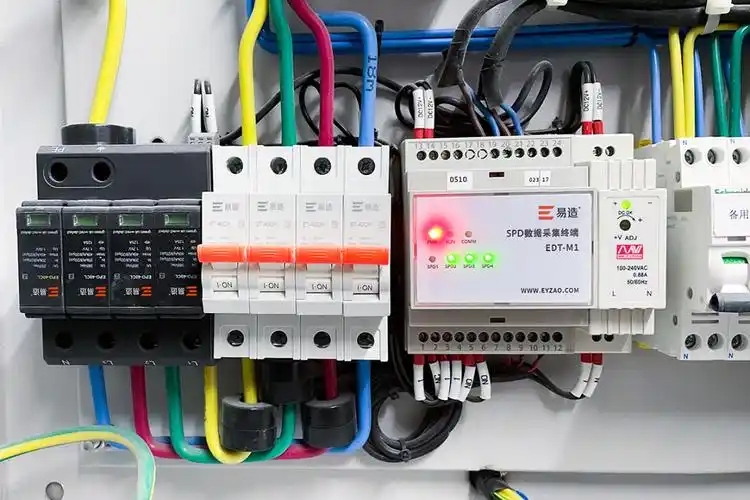
VI. Frequently Asked Questions (FAQ)
We've compiled a list of common questions to provide further clarification and address practical concerns you may encounter in the field. We hope these answers offer valuable, real-world insights.
Why can't I just use a circuit breaker instead of a fuse as backup protection for my SPD?
A circuit breaker provides overcurrent protection, but its operating principle and response time are fundamentally different from a fuse. A fuse is a single-use device based on thermal effects, and its I²t melting characteristic curve is perfectly matched to the energy dissipation of a surge.
This ensures it won’t trip during a brief, high-current transient. A circuit breaker, by contrast, is a thermal-magnetic trip device, and its response time is typically on the order of milliseconds to seconds. This is far too slow compared to the nanosecond-to-microsecond speed of a surge event.
When an SPD fails in a short-circuit condition, a fuse can interrupt the current in just a few milliseconds. A circuit breaker may not be fast enough, allowing the SPD module to be destroyed or even causing an explosion or fire. For this reason, a fuse is the superior choice for SPD backup protection.
My SPD has a "built-in disconnector." Do I still need an external backup fuse?
A "built-in disconnector" is an internal protection mechanism designed to automatically disconnect the SPD from the main circuit if it fails. It usually consists of a thermal release or a mechanical linkage.
Its primary function is to indicate that the SPD has failed, not to rapidly interrupt a short-circuit fault. Its interrupting rating and response speed are nowhere near that of an external fuse. When a high-amperage short circuit occurs, the built-in disconnector will likely be destroyed by the fault current before it can act, failing to provide effective protection. Therefore, even if your SPD has a built-in disconnector, it is strongly recommended to install an external backup fuse to ensure the safety of the entire system in a worst-case scenario.
What if my SPD is installed very close to a distribution transformer where the short-circuit current is extremely high? How should I select the fuse?
In this situation, the fuse's Breaking Capacity (Icn) is the most critical parameter. Because you are close to the transformer, the fault current could be incredibly high—tens or even hundreds of kiloamperes.
You must first accurately calculate the maximum prospective short-circuit current at the installation point. Then, select a fuse with a breaking capacity that is significantly greater than this calculated value. You must also pay close attention to the fuse's I²t value to ensure it matches the SPD, preventing nuisance tripping during normal surges. For these high-stakes, high-fault-current environments, it is always best to consult a professional electrical engineer or the fuse manufacturer's technical support.
Should I choose a slow-blow (gL/gG) or a fast-acting (aR) fuse to protect my SPD?
The right choice depends on the type of SPD you are using and its specific application.
For the vast majority of standard SPDs (like Type 2 or Type 3, which are primarily based on MOVs), a slow-blow (gG-type) fuse is the more common choice. They are better able to withstand the energy of a surge without nuisance tripping while still providing reliable protection in the event of a hard short circuit.
For certain high-speed applications (e.g., some SPDs based on semiconductor technology), a fast-acting (aR-type) fuse may be more suitable. These fuses have a very low I²t value and can interrupt current at the highest possible speed to protect sensitive components. Always consult the SPD manufacturer's technical manual, as they typically provide clear recommendations for backup protection.
In a real-world project, how can I ensure proper selective coordination between the chosen fuse and the upstream circuit breaker?
Ensuring selective coordination is key to preventing a “cascading trip,” where an SPD fault only blows its backup fuse without tripping the upstream breaker. To achieve this, you must take a few key steps.
First, compare I²t values. Make sure the selected fuse's pre-arcing I²t value is less than the upstream circuit breaker's tripping I²t value.
Second, consult the Time-Current Curves. Carefully compare the I-t curves of both the fuse and the circuit breaker. In the fault current range, the fuse’s curve must always be located below the breaker’s curve.
Third, consider breaking capacity. The fuse's breaking capacity (Icn) must be high enough to safely clear the maximum prospective short-circuit current. If it can clear the fault before the breaker has a chance to trip, then selective coordination is guaranteed. This is a critical step that requires careful calculation and verification by an engineer during the design phase.
VII. Conclusion
Selecting the correct fuse for a Surge Protective Device is a fundamental and non-negotiable step in sound electrical design. This process is far more complex than a simple current match; it is a comprehensive technical evaluation of voltage, breaking capacity, thermal characteristics, and energy coordination.
A proper selection allows the fuse to be an invisible part of the system during normal operation, only to prove its worth and step up when a fault occurs. The ultimate goal is to achieve a protective state where the fuse only acts when necessary, and it does so with perfect efficiency.
We hope this guide provides you with the knowledge and confidence to approach your next design with meticulous attention to detail. Finding the right guardian for every SPD you install is not just a technical task; it is a commitment to safety and reliability.