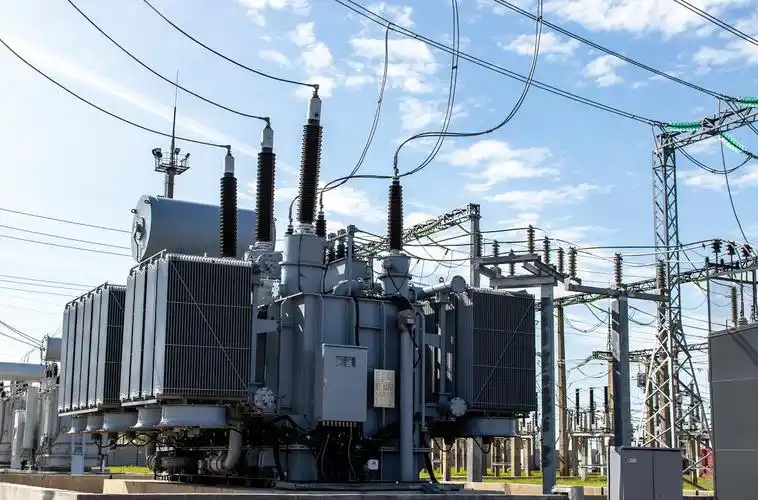
Electricity is the lifeblood of our modern world. It's a powerful force that seems to arrive out of thin air.
Have you ever wondered how immense amounts of power safely travel thousands of miles from a distant power plant to your home? The answer lies with an unsung hero of our power grid: the high-voltage transformer.
This seemingly colossal device is a quiet powerhouse, serving as the heart of our electrical system. It ensures that energy flows smoothly and efficiently.
This video provides an excellent visual introduction to how transformers work and their role in the power grid. It’s perfect for getting a quick overview before diving into the details.
What Is a High-Voltage Transformer? A Quick Look at Core Concepts
Put simply, a high-voltage transformer is an electrical device that uses electromagnetic induction to step up to a higher level. Its core function is to act as both a highway on-ramp and an elevator for electrical power.
At power plants, it boosts generator voltage to ultra-high levels for long-distance transmission. At substations, it then takes that power and steps it back down to voltage levels suitable for distribution.
The existence of these transformers fundamentally solves the massive energy loss problem of long-distance transmission. It's the primary reason our modern power grid can operate so efficiently.
From an engineering perspective, the "high-voltage transformers" we're discussing are specifically power transformers used for electricity transmission and distribution. It's important to distinguish them from instrument transformers (such as a voltage transformer or VT, and a current transformer or CT).
While they share the same operating principle, their functions and design are fundamentally different. The latter are used for precise measurement and protection.
How It Works: Unlocking the Power of Electromagnetic Induction
To truly understand a high-voltage transformer, you must first grasp the core principle behind it. That's Faraday's Law of Electromagnetic Induction.
This fundamental law states that a changing magnetic field will induce an electromotive force (or voltage) in a conductor. A transformer is simply a perfect application of this universal principle.
Its operation can be broken down into three simple steps.
The Primary Coil: Creating the Magnetic Field. A transformer's primary coil connects to an alternating current (AC) power source. As the AC constantly changes in magnitude and direction, it creates a magnetic field that is continuously fluctuating as well.
This fluctuating field is the starting point for all energy conversion.
The Iron Core: The Loyal Guide for the Magnetic Field. Both the primary and secondary coils are wrapped around a laminated steel core. This core is critical because it acts like a pipeline for magnetism.
It efficiently concentrates and guides the magnetic field from the primary to the secondary coil. Thanks to the core, the transformer can achieve energy transfer between the two coils without any direct physical connection.
The Secondary Coil: Inducing the High Voltage. When the fluctuating magnetic field travels through the core and passes through the secondary coil, it induces a new voltage. The most remarkable aspect of a transformer is that the ratio of turns between the primary and secondary coils determines the voltage change.
For a high-voltage transformer, the secondary coil has significantly more turns than the primary. This is why the induced voltage is so much higher than the input voltage, achieving the desired step-up effect.
From a more rigorous engineering perspective, the induced electromotive force relates to the frequency, the number of turns, and the maximum magnetic flux. Its more precise formula is.
Designers must carefully control these parameters to prevent the iron core from reaching magnetic saturation. This is a critical limit that ensures stable operation.
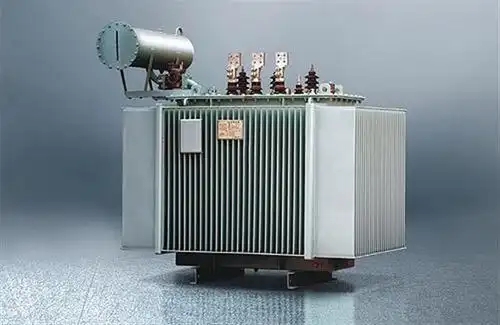
In-Depth Look: Core Components & The Tap Changer
A complete high-voltage transformer is far more than just two coils and a core. It's a complex system that integrates electrical, magnetic, thermal, and mechanical engineering.
In addition to the core components, a series of auxiliary systems ensures its safe and efficient operation.
Coils and Core: The Fundamentals. The coils are usually made of high-purity copper or aluminum wire, while the core consists of laminated silicon steel sheets. This design is crucial for minimizing the eddy current losses that would otherwise occur.
The Tap Changer: The Voltage Regulator. This is a vital component often overlooked in basic explanations. The tap changer allows engineers to adjust the output voltage by changing the number of active turns on the coil.
This is a crucial function for maintaining stable voltage even when the grid's voltage fluctuates.
Insulation and Cooling Systems: The Guardians. High voltage requires robust insulation to prevent short circuits. Insulation systems include materials like insulating paper, cable bushings, and most importantly, transformer oil.
The oil serves as both an excellent insulator and a coolant, absorbing the heat generated by the coils and core. In practice, cooling methods are classified by engineering names like ONAN (Oil Natural Air Natural) or OFAF (Oil Forced Air Forced).
Protective Devices: The Final Line of Defense. To handle potential internal faults, modern high-voltage transformers are equipped with multiple protective devices. For example, a Buchholz relay monitors for gas and oil flow abnormalities.
A pressure relief valve automatically releases pressure to prevent an explosion. These devices act as silent guardians, ensuring the stability of the equipment and the entire power grid.
A high-voltage transformer diagram can clearly illustrate how these components work together.
Why High Voltage? The Principle of Efficient Power Transmission
This is a common question: if we eventually need low voltage, why not just transmit power that way? The answer lies in a simple physics formula and the fundamental reason high-voltage transformers exist.
Imagine electricity as water flowing through a pipe from a distant reservoir to a city. The faster the flow (current), the more friction (resistance) it generates, leading to significant energy loss along the way.
In electrical engineering, this loss is precisely described by the formula. Here, P is power, I is current, and R is resistance.
The formula reveals that the power lost as heat is proportional to the square of the current. To transmit the same amount of power, if you step the voltage (V) up by a factor of 10, the current (I) drops to just one-tenth.
According to the formula, this reduces the power loss to just one percent of its original value! This is why high-voltage transmission is so incredibly efficient. By minimizing current, you maximize the energy delivered.
Besides this, a transformer itself has two main types of losses. For a deeper dive into this topic, you can check out this article on
Load Loss (Copper Loss): Caused by the heating of the coils' resistance, it is directly related to the current.
No-Load Loss (Iron Loss): Caused by hysteresis and eddy currents in the iron core, it is voltage-dependent and remains constant regardless of the load.
Thanks to careful engineering design, modern high-voltage transformers can operate with an efficiency of over 99%. They are truly a miracle of energy conversion.
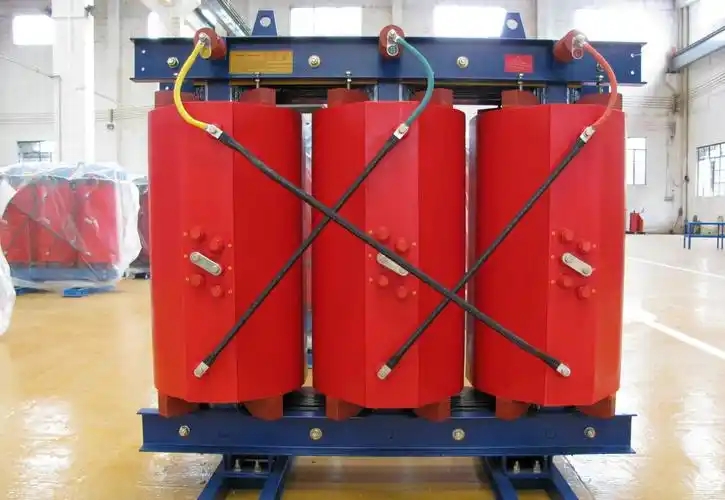
A Look at the Different Types of High-Voltage Transformers
High-voltage transformers are not one-size-fits-all devices. They are categorized based on their purpose and cooling method.
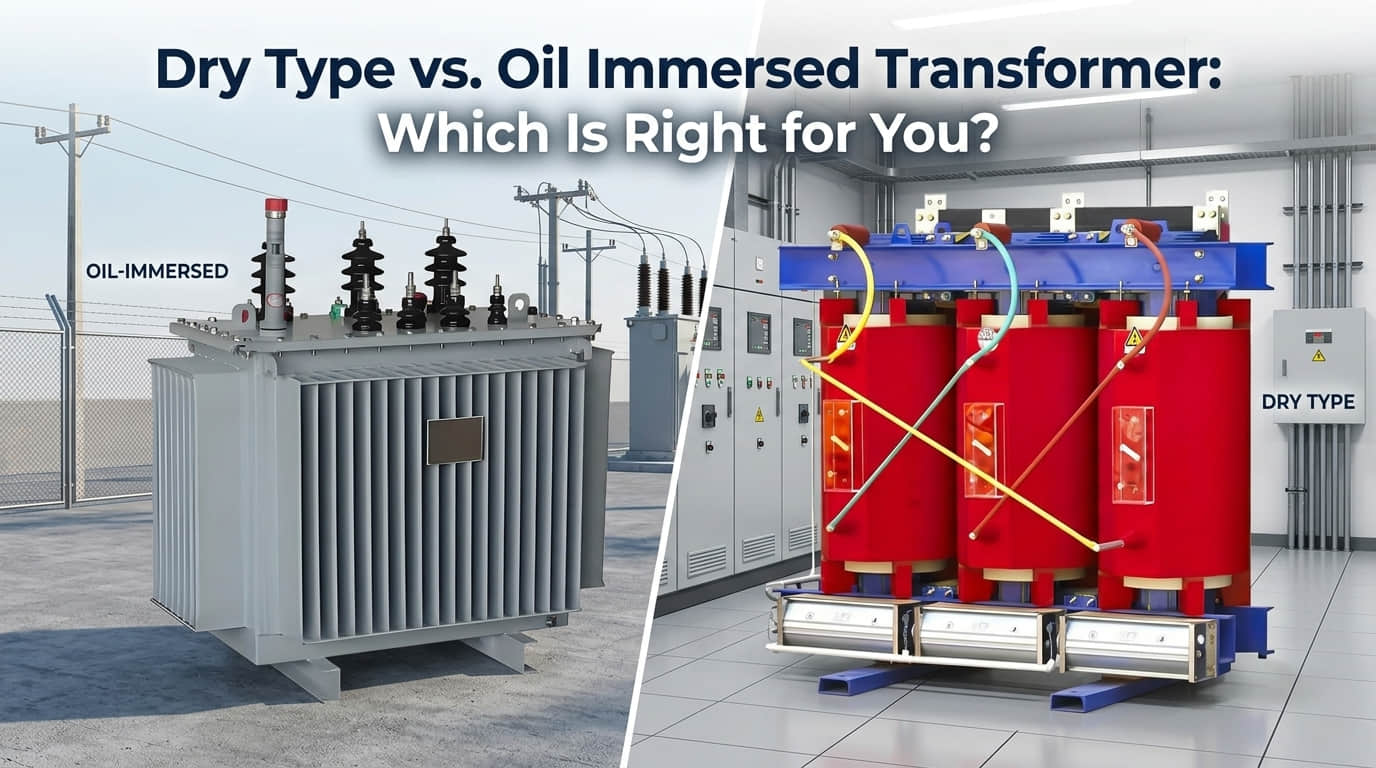
By Cooling Method. Oil-immersed transformers are the most common type, with coils and core submerged in transformer oil. The oil provides both excellent insulation and cooling.
They are highly efficient but require regular maintenance.
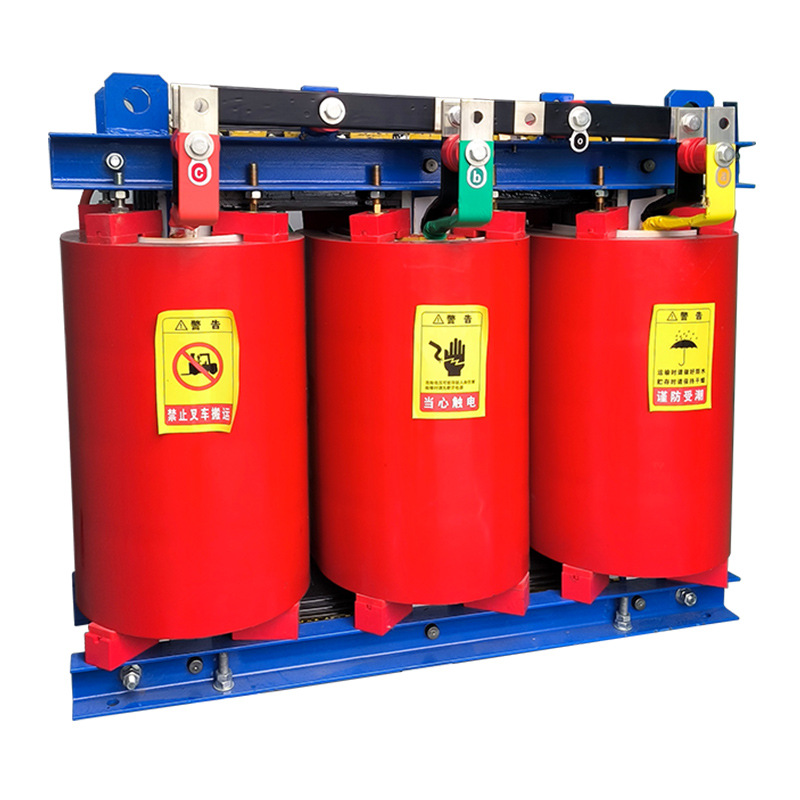
Dry-type transformers use epoxy resin for insulation instead of oil. Since they contain no oil, they are safer and more environmentally friendly. They are commonly used indoors or in locations with high fire safety requirements.
By Application. Step-up transformers are used primarily at power plants. They boost the voltage from the generator to ultra-high levels for long-distance transmission.
Step-down transformers are located at substations. They progressively reduce the voltage to levels that can be safely used by industries and residential customers.
Safety & Maintenance: The Cornerstone of Reliability
The safe operation of a high-voltage transformer is paramount, requiring expert maintenance and management. One often-overlooked safety hazard is "backfeed."
When the power grid goes down, power generated from backup generators or solar inverters can flow back into the transformer. This poses a fatal risk to utility workers. For this reason, rigorous testing is always mandatory before any maintenance work begins.
To ensure the long-term, stable operation of a transformer, routine maintenance is essential. This includes regular checks of the transformer's oil color, temperature, and fluid level.
Engineers also use more advanced, professional diagnostic methods to monitor the transformer's health. Dissolved Gas Analysis (DGA) is a key technique for detecting early-stage internal faults by analyzing gases in the oil.
Other crucial tests include winding resistance and turns ratio tests, which verify the integrity of the coils and tap changer.
Common Questions & Answers
Q: What's the difference between a high-voltage transformer and a regular transformer?
A: While both operate on the same principle, a high-voltage transformer is typically much larger, has a higher power rating, and features more complex insulation and cooling systems to handle the extreme voltage and current levels.
Q: Why do transformers make a humming sound?
A: This is a normal phenomenon caused by magnetostriction. As the iron core is magnetized by the fluctuating magnetic field, it undergoes a tiny physical change in shape.
This vibration produces the distinct humming sound.
Q: How does high-voltage transmission work?
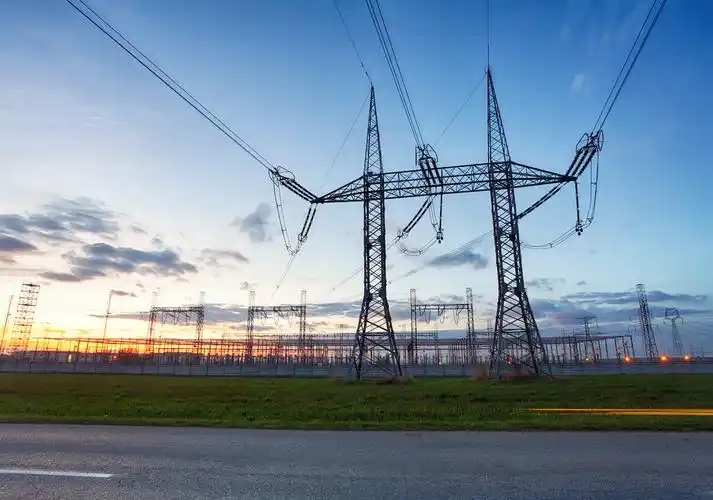
A: It's a method that uses high-voltage transformers to step up voltage to extremely high levels (e.g., 220kV to 1000kV). This is done to dramatically reduce energy loss and transmit power over long distances.
The core principle is that by minimizing the current, you maximize the energy delivered.
Conclusion
The high-voltage transformer is a massive, silent powerhouse and an indispensable cornerstone of our modern world. It works tirelessly between power plants and substations, ensuring that our lives, our economies, and our cities keep running.
Understanding how it works is not just an appreciation for a great piece of engineering. It's an understanding of the very civilization we've built.
As the grid evolves with smart technology and renewable energy, the high-voltage transformer will continue to play a central role. It will power the world for generations to come.