I. Introduction: The Critical Mission and Inherent Risks of Circuit Breaker Testing
The overarching function of testing High Voltage (HV) Circuit Breakers (CBs) is to conduct a series of specialized diagnostic checks. These essential evaluations encompass comprehensive electrical performance tests, such as contact resistance and insulation integrity, alongside crucial mechanical characteristic tests, covering operating time and travel, all to assess the equipment's overall reliability and safety during power flow and fault isolation.
The core value of this process lies in accurately comparing the newly acquired field data against the manufacturer's established baseline, or "fingerprint," allowing engineers to perform trend analysis and fingerprint diagnostics to determine the equipment's optimal operating condition, moving far beyond a simple pass/fail assessment.
The Indispensable Role and Catastrophic Risk in the Power Grid
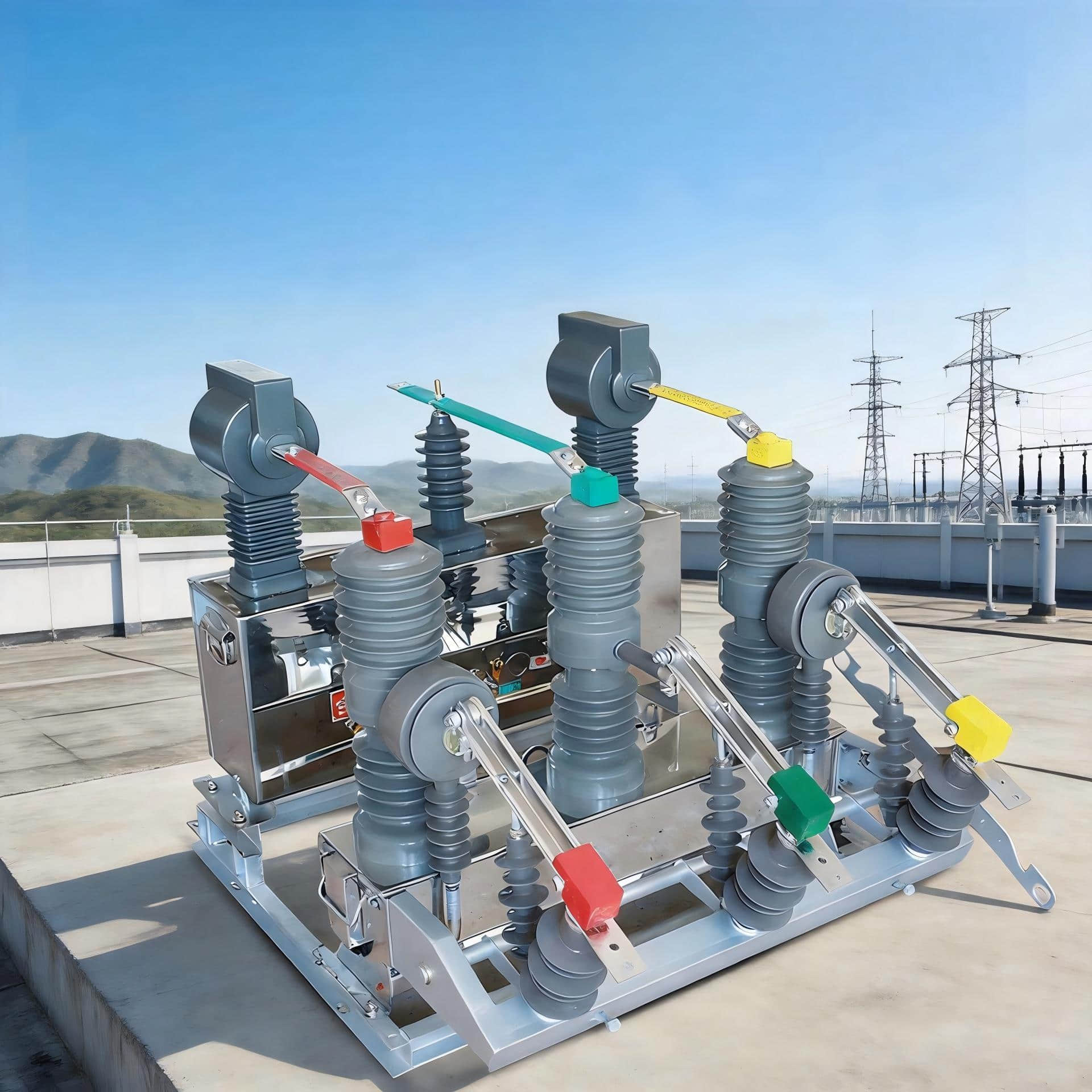
High Voltage Circuit Breakers (HV CBs) stand as one of the most vital yet complex electromechanical protection devices within any electrical transmission and distribution system. Their primary responsibility extends beyond merely connecting and disconnecting the rated current under normal conditions; they are fundamentally tasked with the critical role of reliably and swiftly isolating massive fault currents—often thousands of amperes—in a matter of milliseconds following a short-circuit incident.
This rapid isolation is paramount, as it serves to protect costly assets, such as generators, power transformers, and other substation equipment. Ultimately, the HV CB is the power grid’s definitive last line of defense, acting as a "Guardian of Stability" whose operational status determines the overall integrity of the entire system.
【Engineer's Insight】: The Nightmare Scenario – “Failure to Trip”
The most catastrophic failure mode in any power system is unquestionably a “Failure to Trip,” which occurs when a circuit breaker fails to open in time after receiving a trip command from the protective relaying system. A single instance of a breaker failing to operate on time can rapidly escalate the fault zone, leading to cascading failures, widespread power outages, and resulting in immense economic damage, a risk far exceeding that of a false or unnecessary trip.
Consequently, rigorous and in-depth periodic testing and diagnostics are the only dependable method to ensure the breaker’s absolute reliability at the most critical moment of system instability.
The Strategic Value: Evolving from Preventive Maintenance to Condition Monitoring
Implementing a regular, deep testing regimen for High Voltage Circuit Breakers offers a value proposition that dramatically surpasses simple regulatory compliance. Such a proactive approach allows maintenance teams to detect subtle, underlying defects early on, preventing minor issues from escalating into catastrophic equipment failures and unplanned outages.
This intervention includes identifying early signs of mechanical flaws and electrical wear, such as slight contact erosion or minor control linkage looseness, which significantly extend the overall operational life of the equipment. By performing precise adjustments to the operating mechanism through this data, engineers reduce mechanical stress and avoid premature wear, effectively optimizing resource allocation by transitioning from time-based maintenance to a more efficient, Condition-Based Monitoring (CBM) strategy.
Key Takeaways
High Voltage Circuit Breaker testing is not just a compliance checkbox; it represents the final safety barrier for the entire electrical system.
Core tests include: Static and Dynamic Contact Resistance , Insulation Assessment , and Millisecond-Precise Mechanical Timing .
The key to Advanced Diagnostics is comparing new test data against the historical "healthy fingerprint," moving beyond simple pass/fail limits.
Dynamic Resistance Measurement (DCRM) and Motion Curve Analysis are considered the gold standard for diagnosing the health of arcing contacts and the operating mechanism, respectively.
Modern maintenance trends prioritize utilizing Trend Analysis, Fingerprint Diagnostics, and Vibration Monitoring to achieve true Condition-Based Maintenance (CBM) .
II. The Testing Framework: Standards, Classification, and Maintenance Strategy
The effective testing of high-voltage circuit Breakers requires strict adherence to global and industry-specific standards to guarantee the reliability and universal acceptance of all test results. Major regulatory frameworks, such as the IEC 62271 series (International Electrotechnical Commission), govern high-voltage switchgear and control gear, forming the global benchmark followed by most manufacturers and end-users worldwide.
Similarly, the IEEE Std C37 series (Institute of Electrical and Electronics Engineers) is predominantly utilized throughout North America, providing detailed specifications for performance and testing procedures.
Classification and Purpose of Testing Across Life Cycles (EEAT: Experience)
An electrical engineer must strategically select the testing approach based on the circuit breaker's current operational phase, as the objectives and focus areas vary significantly.
HV CB Types and Specialized Testing Focus
The type of arc-extinguishing medium utilized by the breaker dictates specific diagnostic priorities. For SF6 Circuit Breakers, the primary focus must be on Gas Quality (purity and moisture content) and Gas Tightness (leak rates).
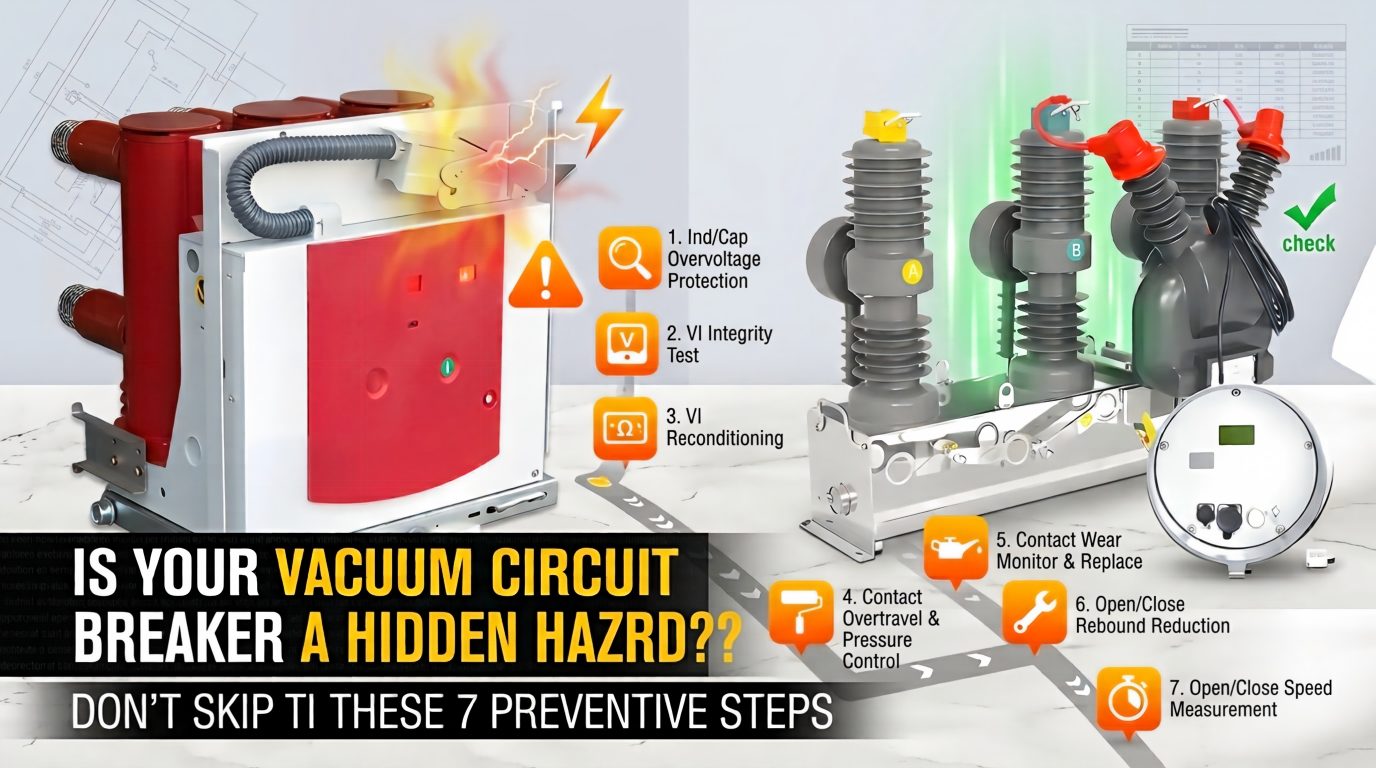
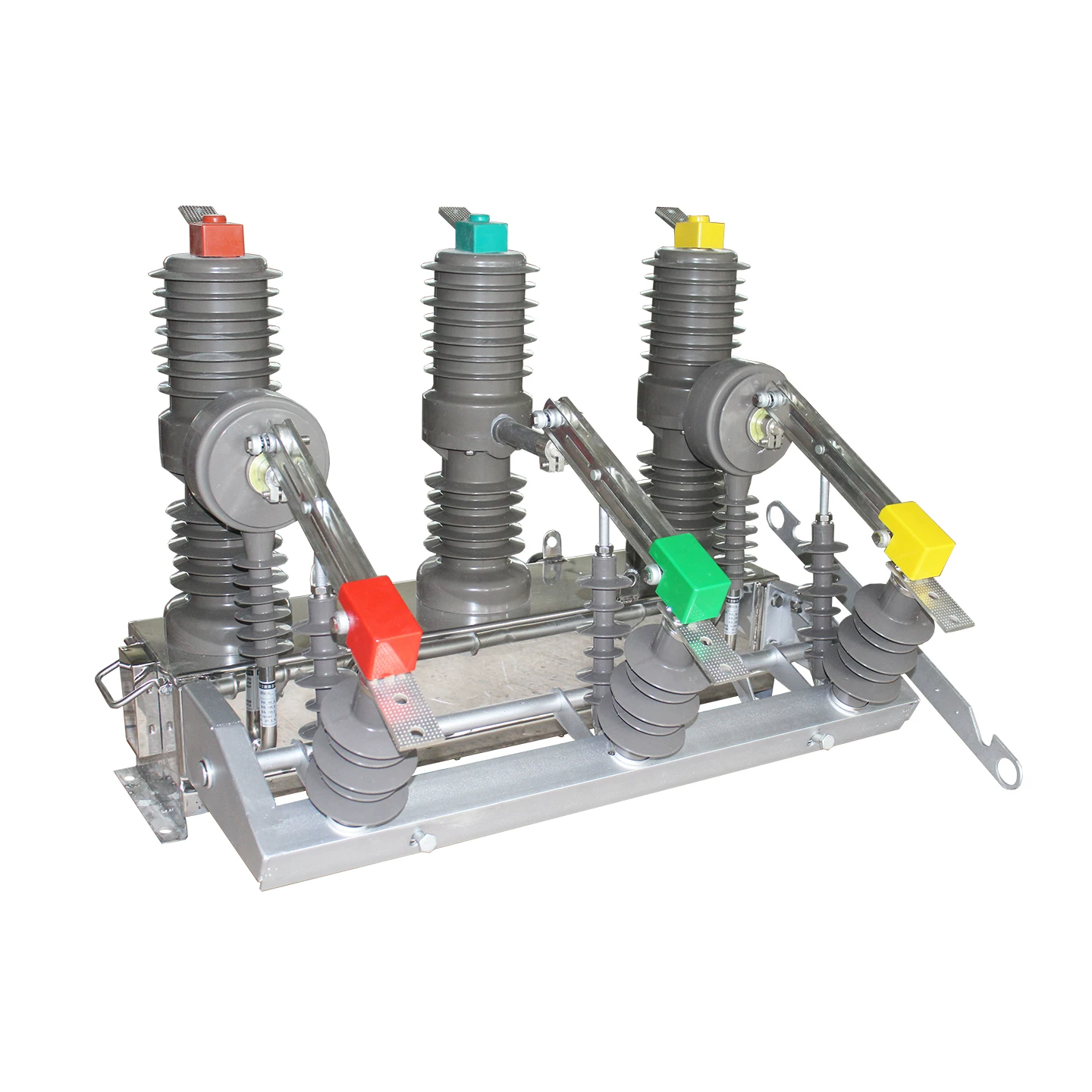
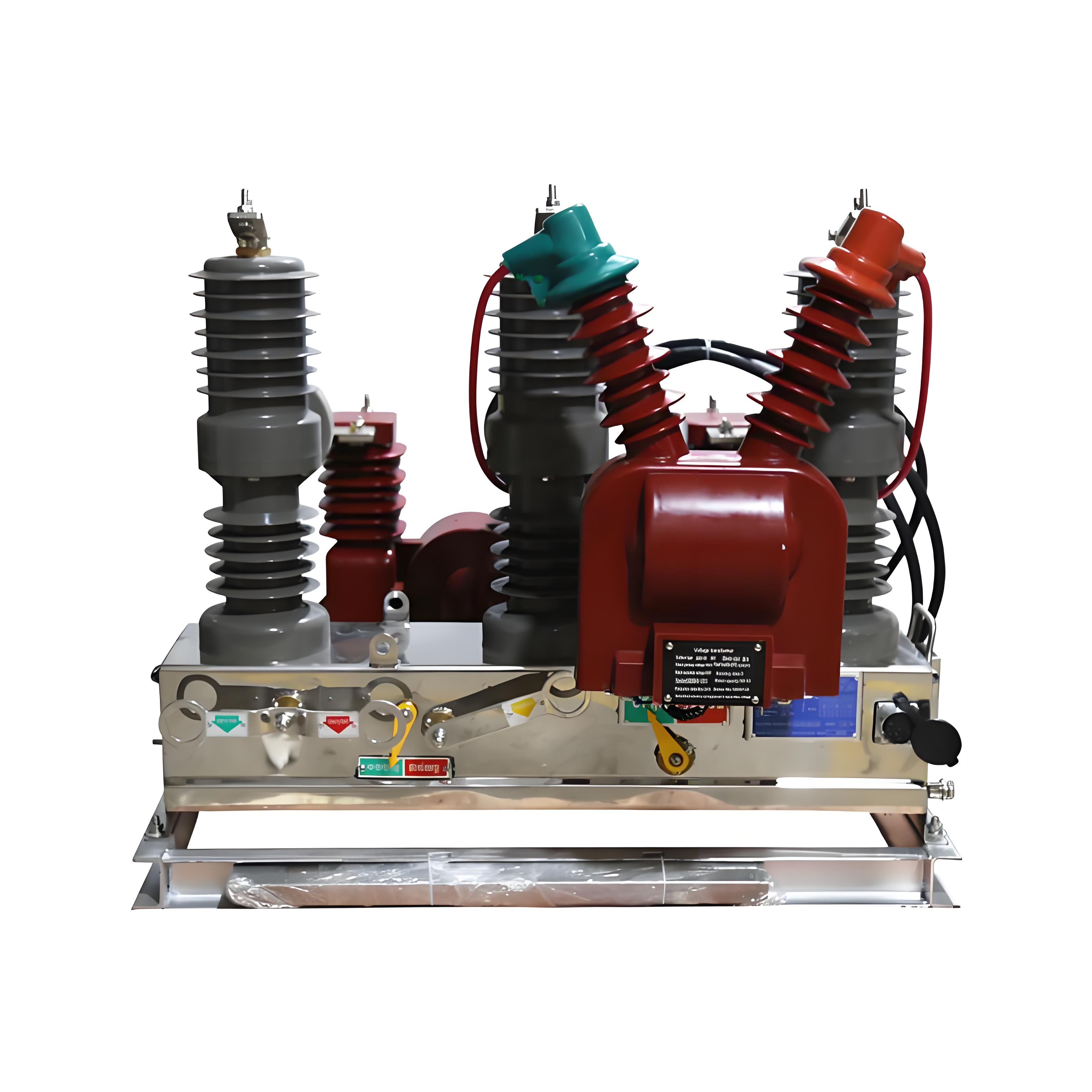
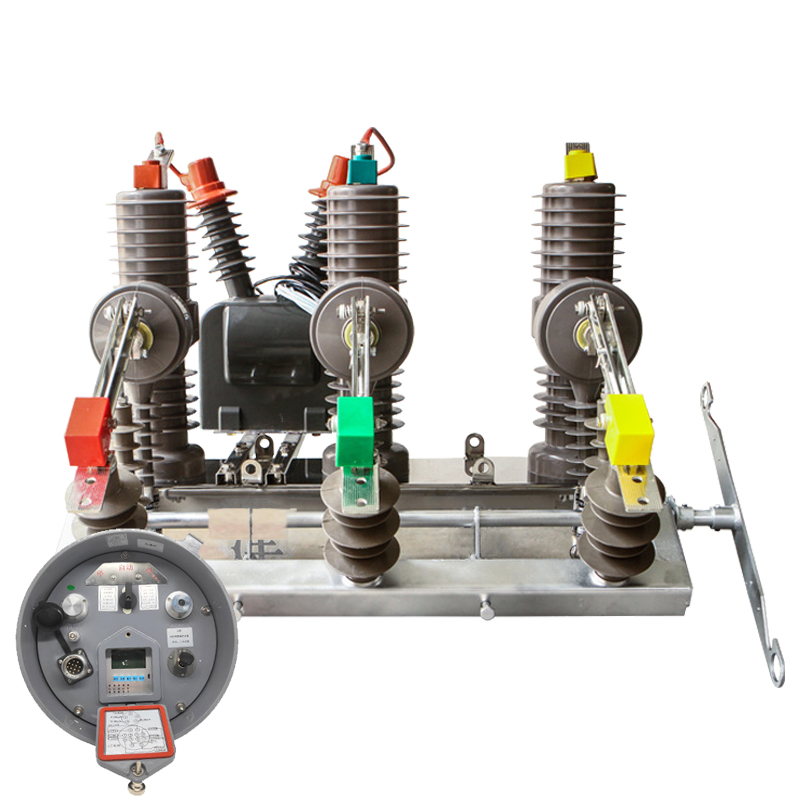
Any degradation in gas quality or integrity will directly and severely compromise both the insulation and the arc-quenching capability of the unit, increasing the risk of explosive failure. In contrast, since the interrupter chamber in Vacuum Circuit Breakers is permanently sealed, testing centers on verifying the Vacuum Integrity.
This is typically accomplished indirectly through an AC overpotential test (Hi-Pot). A significantly reduced dielectric withstand voltage indicates a degradation in the vacuum level, necessitating immediate action.
Tip: The data captured during the initial Acceptance Test must be rigorously documented and archived. This "Healthy Baseline" set of data serves as the Gold Standard for all future maintenance test trend analyses.
III. In-Depth Electrical Performance Testing: Current Path and Insulation Integrity
Electrical performance tests are specifically designed to thoroughly evaluate the circuit breaker's core functionality, which includes its ability to safely conduct current under both normal and fault conditions, as well as the complete reliability of its insulation system.
VIDEO
Video Content: A demonstration of using a circuit breaker analyzer (EuroSMC PME-500-TR) to measure timing, coil current, and static contact resistance.
3.1. Main Circuit Contact Resistance: Assessing Current Capacity and Thermal Risk
Contact resistance measurement is the fundamental starting point for evaluating the quality of the main contact connections and the overall conductive performance of the breaker assembly. This measurement must be performed using a micro-ohmmeter that strictly follows the four-wire method (Kelvin Bridge) principle.
Crucially, the test set must be capable of injecting a sufficiently high DC (typically required to be $\ge 100\text{A}$) through the main contacts. This high current is necessary to break down any light oxide layers or surface contamination that may have formed on the contacts, thereby providing a more accurate resistance value that reflects real-world operational conditions.
Based on Joule's Law (P = I I R), even a marginal increase in resistance (R) can lead to a drastic rise in power loss (P) at the contact point when the rated current (I) is high, inevitably causing localized overheating. This phenomenon is one of the earliest and most reliable indicators of developing faults, often preceding catastrophic breaker failure or fire.
VIDEO
Video Content: A professional comparison between a healthy DCRM curve and a defective curve caused by severe arcing contact erosion.
Note: A passing static contact resistance value is insufficient for total confidence. If the DCRM curve indicates underlying issues with the arcing contacts, the breaker faces severe risk when attempting to interrupt a high-current fault.
3.2. Insulation Performance Tests: Ensuring Safe High Voltage Isolation
The insulation system serves as the critical 'barrier' that safely separates the high-voltage conductor from the ground and other phases. This standard check uses a megohmmeter (typically $2500\text{V}$ or $5000\text{V}$) to measure the insulation resistance value.
A significant drop in this value usually indicates that the bushings, insulation medium, or internal components are experiencing surface contamination or moisture absorption. Partial Discharge (PD) is characterized by minute electrical pulse discharges occurring within or on the surface of insulation material.
Although these discharges have minimal energy, they cause progressive localized degradation of the insulation over time, which eventually leads to a complete dielectric breakdown. PD testing is highly valuable as it can detect defects in their very early stages (e.g., small voids in the insulation) long before a catastrophic failure occurs. Dielectric Withstand and Power Factor Tests verify the equipment's ability to withstand AC overvoltages without failure.
For Vacuum Circuit Breaker s, this test is considered the definitive, indirect method for assessing the vacuum level.
IV. Precision Mechanical Testing: Millisecond-Level Control and Synchronization
A circuit breaker is inherently a highly complex electromechanical system, and mechanical characteristic testing is the single most accurate method for assessing the proper coordination and speed of its operation. This test involves precisely measuring the time required for the breaker to open (O), close (C), and execute a reclose operation (O-C-O), with measurements required to be accurate down to the millisecond level.
4.1. Opening and Closing Time Test: Ensuring Fast and Synchronous Isolation
The measurement of Three-Phase Desynchronization is a critical diagnostic metric. This measures the deviation in operating time among the three poles.
If the deviation exceeds the typical standard (e.g., $\le 1/6$ of a cycle, or $3.33\text{ms}$), the inability to synchronize current interruption across all phases can exacerbate a phase-to-phase fault. The Pole-to-Pole Desynchronization metric specifically assesses the timing deviation between different contacts within the same pole.
4.2. Motion Characteristics Test: Diagnosing Mechanism Health
Motion characteristic testing provides the maintenance team with the breaker's operational "heartbeat." This is achieved by mounting a high-precision displacement transducer (such as a linear potentiometer) onto a moving part of the operating mechanism, which captures the Travel-Time Curve, the Velocity-Time Curve, and the Acceleration-Time Curve.
Critical Measured Parameters:
Stroke (Total Travel): The total distance traveled by the contacts.
Overtravel: The distance the contacts continue to move after establishing contact, ensuring adequate contact pressure.
Contact Wipe (Contact Penetration): A measure of the reliability and depth of the physical contact.
Damping Characteristics: Evaluates the mechanism's ability to absorb kinetic energy precisely at the end of the stroke.
【Engineer's Insight】Velocity Analysis: The average velocity of the contacts immediately preceding the arcing contact separation is paramount, as this speed directly dictates the effectiveness of the arc-quenching medium (e.g., SF6 gas flow or oil movement). Insufficient velocity directly reduces the breaker’s Rated Interrupting Capacity, while excessive speed can lead to high impact forces at the end of the stroke, causing damage to the mechanism or the hydraulic dampers.
Tip: A single breaker operation involves hundreds of complex mechanical movements. The motion characteristic curve functions as the mechanical system's "electrocardiogram," where any subtle curve distortion may indicate a loose linkage or an abnormal mechanism friction level.
V. Auxiliary and Media System Checks: Details That Determine Success or Failure
A circuit breaker's primary circuit performance may be excellent, yet a failure in the auxiliary or control systems can just as easily result in a dangerous "failure to trip." This includes performing a Minimum Operating Voltage Test, which determines the lowest DC voltage at which the trip and close coils can reliably operate.
This test is non-negotiable, as the DC control voltage in a substation may drop due to battery aging or fault conditions. The measurement of Coil Resistance helps identify anomalies.
Any deviation from the established baseline may suggest an issue such as an inter-turn short circuit within the coil or a poor connection in the control wiring.
5.2. SF6 Gas Deep Analysis and Tightness Assessment
For SF6 Circuit Breakers, the quality of the gas is entirely synonymous with the quality of both the insulation and arc extinction processes. Standard maintenance procedures require measuring the SF6 gas purity and moisture content.
Excessive moisture creates a major problem; it reduces the dielectric strength and, critically, can react with the SF6 decomposition products at high temperatures to form highly corrosive acids. Decomposition Product Analysis is a truly advanced maintenance practice that goes beyond simple moisture and purity checks.
When an internal fault such as localized overheating, arcing, or partial discharge occurs, the SF6 gas breaks down chemically at high temperatures, producing trace chemical byproducts like SO2, HF, and CS2. A measured increase in the concentration of these specific decomposition products serves as clear, high-value chemical evidence of an early-stage internal fault (e.g., contact degradation or insulation damage), requiring immediate attention. High-precision leak detection tools are employed to ensure that the SF6 gas pressure remains stable.
Excessive leakage over time will invariably lead to a gradual decline in the critical insulation performance.
VI. 【Core Differentiation】Fingerprint Diagnostics and Predictive Trending of Test Data
The foundation of advanced maintenance lies in the engineer’s diagnostic and predictive capability when interpreting the data, which is the key factor distinguishing this approach from basic periodic maintenance. The successful application of this capability allows for proactive intervention, minimizing unexpected failures.
6.1. Motion Curve Fingerprint Analysis
This advanced technique mandates the precise, digital comparison of the Travel-Time Curve obtained from the current test against the pre-established “Healthy Fingerprint” (Baseline Curve) recorded during the initial acceptance testing phase. Highly experienced engineers possess the skills to localize mechanical failures simply by analyzing deviations in the fingerprint.
"Shelf" or "Distortion" in the Fingerprint: If this abnormality occurs during the first half of the travel stroke, it typically indicates a sudden increase in friction within the linkage or bearing system, potentially due to inadequate lubrication or a slight mechanism bind.
Severe Waveform Distortion at Stroke End: If the curve exhibits a rapid, sharp deviation at the very end of the travel, this almost always points to Damper (Buffer) Failure, which causes excessive mechanical impact and accelerates damage to the operating mechanism.
VIDEO
Video Content: Demonstrates the setup and procedure for motion measurement on a high-voltage GIS, which generates the motion curve data for fingerprint analysis.
Visual Aid (Prompt 03: Motion Curve Fingerprint Analysis and Comparison)
Prompt: A professional side-by-side graph comparison. The left graph shows a smooth "Baseline" motion curve (distance vs. time) in blue. The right graph shows a "Diagnostic" curve (in red) with a clear, sharp deviation (a sudden drop or "shelf") in the middle of the stroke, representing mechanical anomaly. The background should show a magnified, simplified diagram of a circuit breaker linkage mechanism, with an arrow pointing to a suspected problem area (e.g., a damper). Technical data visualization, predictive maintenance concept.
6.2. Core Parameters' Trend Analysis (Trending)
Simply having all parameters fall within the manufacturer’s acceptable tolerance band is not sufficient for complete confidence. The truly powerful diagnostic value lies in meticulously tracking the trend of historical data over time.
6.3. Dynamic Diagnostics: Vibration and Acoustic Monitoring (The CBM Enabler)
The mechanical vibration pattern produced by a circuit breaker during its closing and opening operations acts as its unique "acoustic signature." This signature is captured using highly sensitive accelerometers (for vibration monitoring) or ultrasonic receivers (for acoustic monitoring), which record the detailed waveform of the operation.
This is a non-invasive technique that can detect transient mechanical failures in their nascent stages—problems that traditional timing tests often miss. Examples include the initial development of a spring fracture, a loose fastener, or an insufficient oil level in the damper. Changes in the vibration signature appear immediately, often long before the issue is severe enough to affect the breaker’s overall operating time.
VII. 【Reference Table】HV Circuit Breaker Core Test Summary and Diagnostics
Core Test Item: Timing Test
Test Objective: Verifies arc interruption speed and phase synchronization.
Key Measurement Metric: Opening/Closing Time, Three-Phase Deviation.
Typical Pass/Fail Standard (Reference): Manufacturer's specification or IEC/IEEE requirements (e.g., error $\le 3\text{ms}$).
Diagnostic Conclusion (EEAT Demonstration): Slow Time: Insufficient coil/mechanism power; Desynchronization: Uneven mechanical adjustment or contact wear.
Core Test Item: Dynamic Contact Resistance (DCRM)
Test Objective: Assesses the wear and condition of arcing and main contacts.
Key Measurement Metric: Resistance curve waveform, Arcing contact resistance spike magnitude.
Typical Pass/Fail Standard (Reference): Smooth resistance transition; Peak value within acceptable baseline range.
Diagnostic Conclusion (EEAT Demonstration): Excessive Waveform Fluctuation: Severe contact surface erosion/corrosion; Resistance Trend Upward: Decaying contact pressure.
Core Test Item: Motion/Travel Test
Test Objective: Evaluates mechanism damping, travel accuracy, and contact engagement.
Key Measurement Metric: Damping Time, Contact Overtravel, Average Velocity.
Typical Pass/Fail Standard (Reference): Velocity and travel must match the factory/commissioning baseline "fingerprint."
Diagnostic Conclusion (EEAT Demonstration): Slow Velocity or Poor Damping: Damper failure, excessive friction; Fingerprint Deviation: Loose or binding mechanical linkage.
Core Test Item: SF6 Decomposition Analysis
Test Objective: Assesses risk of internal arcing or thermal faults.
Key Measurement Metric: Concentration of chemical byproducts (SO2, HF, etc.).
Typical Pass/Fail Standard (Reference): Concentration below specified alarm thresholds (e.g., ppm level).
Diagnostic Conclusion (EEAT Demonstration): Elevated Byproducts: Confirms presence of internal discharge or overheating (requires immediate physical inspection).
Core Test Item: Minimum Trip/Close Voltage
Test Objective: Verifies the reliability of the control system under low power.
Key Measurement Metric: Coil operation time at the lowest design voltage.
Typical Pass/Fail Standard (Reference): Must be below the DC system's design low-voltage point (e.g., 70% Un).
Diagnostic Conclusion (EEAT Demonstration): Failure: Indicates the breaker may experience a dangerous "Failure to Trip" under substation battery discharge conditions.
VIII. Conclusion: The Path to CBM—From Data Points to Strategic Decision-Making
Testing a High Voltage Circuit Breaker must never be viewed as a simple checklist procedure; rather, it represents a comprehensive, forward-looking assessment of the equipment's future risk profile. Every data point, from the micro-ohm resistance measured with a $100\text{A}$ DC to the millisecond precision of operating time, contains vital health information about the breaker's internal state.
By strategically incorporating advanced diagnostic techniques such as Fingerprint Analysis, Trend Prediction, and Dynamic Monitoring, maintenance teams can shift their focus from a reactive response (fixing equipment after failure) to a proactive strategy (intervening before failure occurs). The maintenance paradigm is decisively moving toward Condition-Based Maintenance (CBM).
This model fundamentally breaks away from fixed, time-based maintenance schedules, instead relying on the circuit breaker's "health data"—derived from continuous or periodic high-precision testing—to dictate the optimal timing for maintenance or overhaul. Achieving CBM successfully requires systematic, high-accuracy testing supported by exceptional data interpretation skills. This approach is crucial for maximizing asset uptime and optimizing maintenance resources without compromising the safety and reliability of the electrical grid.
Frequently Asked Questions (FAQ) and Professional Insights Q: Our static contact resistance test passes every year, so why is DCRM necessary?
A: Static Resistance Measurement (SRM) only confirms the conductivity of the main contact path. Conversely, Dynamic Contact Resistance Measurement (DCRM) is the only reliable method for assessing the condition of the arcing contacts . These contacts absorb the majority of the destructive energy during a fault interruption, and if they are severely worn while the SRM remains acceptable, the breaker is at high risk of failing to extinguish the arc during a critical short circuit.
Q: If the breaker’s opening time is slightly outside the manufacturer’s tolerance, say by 2 ms, is it safe to keep it in service?
A: This is strictly an engineering risk judgment . While 2 ms may seem minimal, exceeding the standard directly implies a reduction in the breaker's Rated Interrupting Capacity . More importantly, this time extension often signals increased mechanical friction or weakened spring energy .arc failure and may negatively impact relay protection coordination . Therefore, continued operation is strongly discouraged until the root cause is resolved.
Q: How do I definitively determine if my SF₆ breaker needs a full gas replacement or a major overhaul?
A: SF₆ gas management is based on three critical parameters:
1. Moisture content — if high, drying or gas purification is required.
2.
3. severe internal arcing or overheating .taken out of service immediately for internal inspection and overhaul , as merely replacing the gas will not address the underlying physical damage.
Q: How often should I perform a full mechanical characteristics test on my high-voltage circuit breaker?
A: Traditional maintenance schedules recommend testing every 5 to 8 years , but this should be adjusted based on the breaker's operational frequency .Condition-Based Maintenance (CBM) approach, frequently operated breakers (e.g., those used in auto-reclosing transmission lines ) should undergo an annual check of operating time and motion curves .trend analysis , helping engineers determine overhaul needs proactively instead of relying on rigid, calendar-based intervals.
Q: Is vibration and acoustic monitoring a required test, and what unique problems does it detect?
A: Vibration and acoustic monitoring are advanced diagnostic tools under the CBM strategy—not mandatory standard tests, but extremely valuable.transient mechanical anomalies that traditional tests cannot, such as:
Changes in the vibration or acoustic signature appear immediately , often long before the defect affects the breaker's overall operation time. Hence, these tests greatly enhance predictive maintenance accuracy.