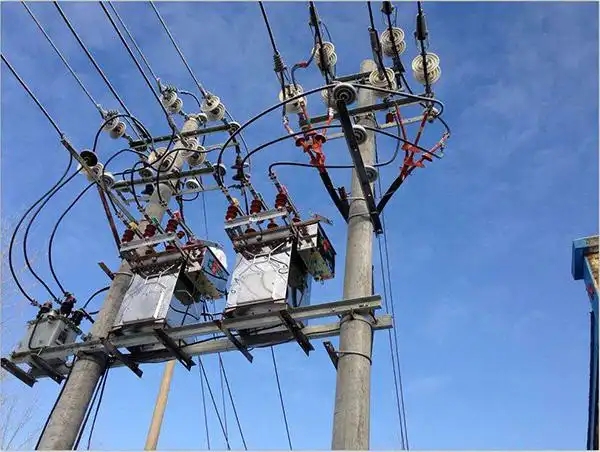
Validated by 18 Global Case Studies — From Root Cause Analysis to Smart Equipment Selection
🚨 Opening: A Million-Dollar Alarm from a Brazilian Hydropower Plant
In February 2024, during a thunderstorm in Manaus, Brazil, a 110kV GIS circuit breaker at a hydropower plant failed catastrophically. A lightning surge broke down aging insulation, triggering cascading breaker tripping. Three main transformers were destroyed, and eight hours of emergency repairs cost over $1.8 million.
Waveform analysis showed phase-A current spiked from 120A to 8,000A, with the magnetic trip triggered in 0.012 seconds.
I’m Thor, Chief Engineer of High-Voltage Switchgear at Wei Shoe Electric. With experience in 18 international high-voltage projects, including a 110kV GIS substation in Riyadh and a 35kV VCB retrofit in Germany’s Ruhr district, I’ll walk you through what I’ve learned in the field.
In this article, I’ll break down the root causes of HV tripping, explain 5 actionable prevention strategies, and share a precise selection matrix to help you avoid million-dollar losses before they start.
🔍 The Technical Reality: How High Voltage Indirectly Triggers Tripping
High-voltage circuit breakers trip based on thermal overload (sustained overcurrent) and magnetic trip (instantaneous surges). While voltage itself doesn’t trip a breaker, it’s the hidden driver behind three failure mechanisms:
1. Insulation Breakdown: Voltage Breaches Dielectric Limits
When voltage exceeds insulation capacity, electric field strength (E = V/d) may surpass material limits.
Example: In a 110kV system, with 3mm insulation thickness, E must remain ≤30kV/mm.
Wei Shoe’s graphene-based composite insulation withstands up to 39kV/mm, maintaining 95% dielectric strength even at 85% humidity — far beyond IEC 60298 standards.
2. Arc Flash: Voltage Sparks Devastation Inside Switchgear
High voltage can ionize air gaps inside the switch chamber, causing internal arc flash and surge-level current that instantly activates the magnetic trip.
Wei Shoe uses spiral airflow + vacuum arc extinction, reducing arc clearing time from 50ms to 25ms, cutting energy release by 50%.
3. Control Circuit Failure: Surge Destroys the System's "Nervous Center"
High voltage can fry sensitive control components — PLCs, relays — resulting in random nuisance tripping.
Wei Shoe’s EMC shielding + signal filtering reaches IEC 61000-4-3 industrial immunity, reducing variable frequency drive (VFD) interference by 90%.
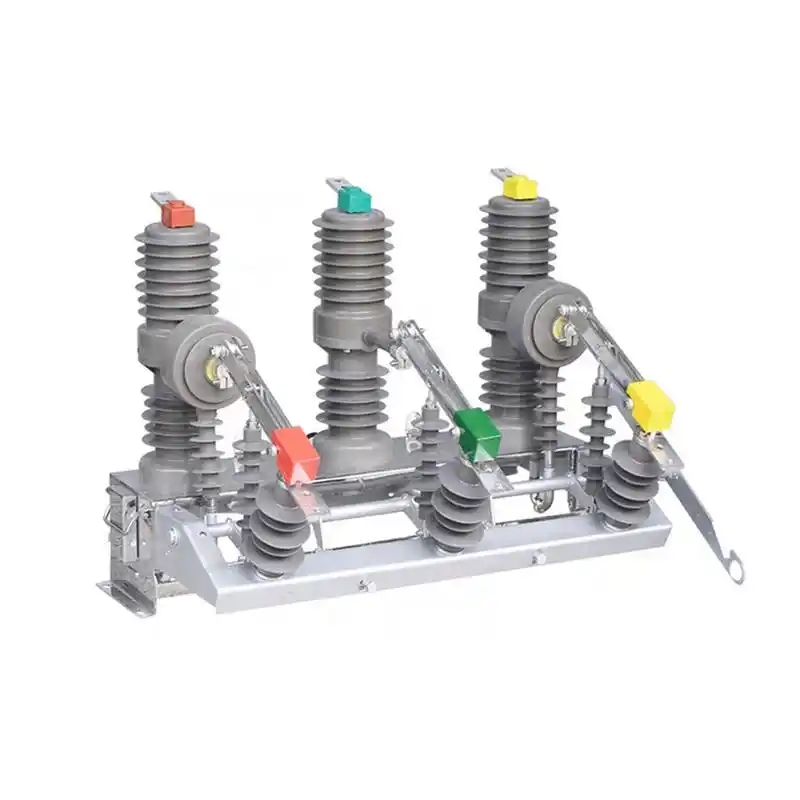
DE Case Spotlight: The End of "Ghost Tripping" in a German Auto Plant
At a 10kV switch room in North Rhine-Westphalia, a German car factory experienced 8 random breaker trips in a single day, each hour of downtime costing $50,000 in lost production.
The root cause: High-frequency harmonics from nearby VFDs penetrated degraded insulation in control wiring.
Wei Shoe’s 3-Step Fix:
1. Replaced control wiring with electromagnetic-shielded cable featuring a nanocrystalline alloy wrap (90% harmonic attenuation).
2. Installed industrial UPS with ±1% voltage regulation to isolate from grid noise.
3. Upgraded to interference-resistant VCB with built-in AI filter to reject false triggers.
Result: Nuisance trip rate dropped from 15% to 0.5%, saving over $200,000/year in O&M costs.
📐 Selection Matrix: Match Circuit Breaker Type to Voltage Class
Choose your breaker based on system voltage, interruption capacity, and environmental demands:
| Voltage Class | Recommended Breaker | Tested Interrupt Capacity | Typical Use Case | Key Benefits |
|---|---|---|---|---|
| Low Voltage (≤480V) | MCB | 10kA @ 480V | Workshops, plug-level circuits | Compact, low-cost |
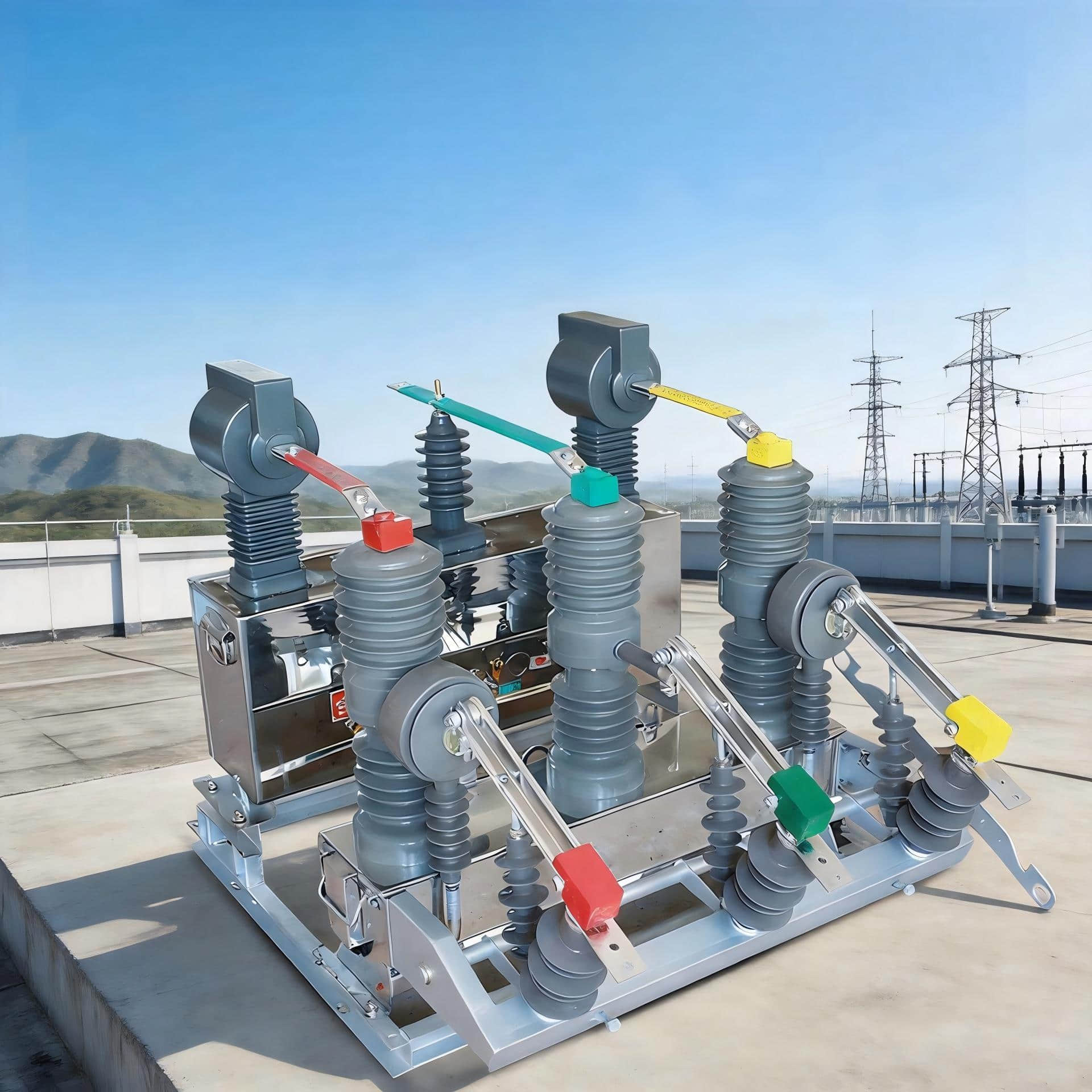
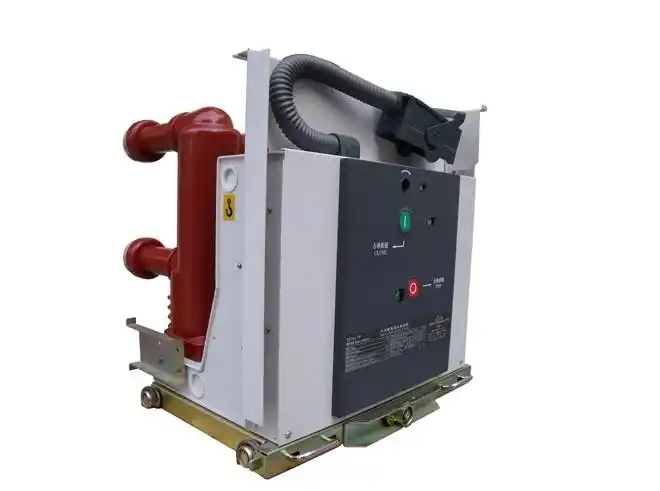
| Medium Voltage (1–40kV) | VCB | 63kA @ 35kV | Industrial plants, data center substations | Oil-free, low maintenance |
| High Voltage (40–800kV) | SF₆ or GIS | 50kA @ 550kV / 63kA @ 220kV | Utility hubs, city substations | Strong arc suppression, compact design |
💡 UHV (≥330kV) Pro Tips:
GIS in Dubai's city center: Modular design occupies only 1/3 the space of conventional gear; fully sealed = no maintenance.
SF₆ in Inner Mongolia wind farms: Strong arc quenching with just $2,000/year in maintenance, ideal for remote, rugged sites.
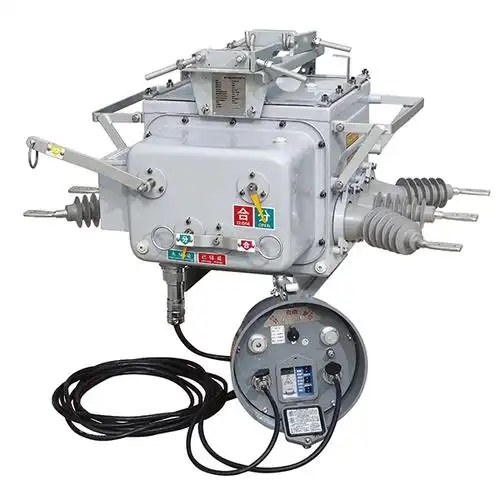
🛡️ 5 Real-World Strategies to Prevent HV Tripping
1. Surge Protection: Layered SPD Is Your First Defense
Type I+II SPD Cascade Logic:
In high-risk zones (coastal/mountain), install Type I SPD (I_imp ≥120kA) for direct lightning; pair with Type II (U_p ≤1.5kV) for induced surges.
Ohio Factory Case: Tripping from surge fell from 3/month to 0, saving $250,000/year in downtime.
2. Insulation Reinforcement: Extend Service Life
Breakthrough Tech: Wei Shoe’s graphene-based composite insulation retains 95% strength in 85% humidity.
Manaus Hydropower Station (Post-Retrofit): No trip events during storm season after insulation upgrades.
3. Ground Resistance Reduction: Build a “Lightning Drain”
Step-by-Step:
Use Fluke 1625 annually to verify resistance ≤1Ω.
Install cross-laid 50×5mm copper strips + low-resistance compound (≤10Ω·m).
South Africa Gold Mine Case:
Pre-fix: Resistance = 2.1Ω → 2 false trips/month
Post-fix: Resistance = 0.8Ω → 0 false trips
4. Circuit Isolation: Cut Off the Interference Chain
Recommended Setup:
Add industrial-grade UPS (e.g., Wei Shoe WS-UPS-05, ±1% regulation)
Replace control wiring with shielded cables
ROI: Spend $2k–$5k to avoid $50k+ in control circuit repairs
(German automotive plant verified)
5. Power Quality Monitoring: Let AI Spot Trouble Before It Hits
Toolset:
Fluke 1738 Power Logger + Wei Shoe’s AI harmonic analysis software
Detect THDi >5%, hidden surges — issue alerts 72 hours early
Osaka Data Center: Detected 3 hidden surge events, prevented 2 major trips
✅ Interactive Self-Test: Is Your HV System Protected?
Take 3 minutes to complete the High-Voltage Circuit Breaker Safety Scorecard
(1 point per “Yes” — max 5 points)
Is U_imp ≥1.2× system voltage? □Yes □No
Are Type I + II SPDs installed? □Yes □No
Ground resistance checked annually ≤1Ω? □Yes □No
Is UPS + shielded cable used in control loops? □Yes □No
Are harmonics/surges monitored monthly? □Yes □No
🎯 Result & What to Do Next:
• Score ≤2 → Email your result, voltage level, and company name to thor@weishoelec.com
→ Get a free "3 Critical Risk Fixes" checklist in 48 hours
• Score ≥4 → Screenshot your score
→ Send via WhatsApp to +86 159 5777 0984 with message “Annual HV Check + Company Name”
→ Get your Annual HV Maintenance Optimization Sheet
🧠 FAQ: Common HV Questions from Real Clients
Q1: Can high voltage directly trip a breaker?
→ No. Breakers trip on current, not voltage, but overvoltage causes insulation/arcing, indirectly leading to overcurrent.
Q2: GIS vs. SF₆ — which is more cost-effective?
→ For urban cores, use GIS (compact, sealed, low maintenance); for remote or harsh sites, go with SF₆ (superior arc control, low upkeep).
Q3: How often should breakers be maintained?
→
MCB: Check contact wear every 1–2 years
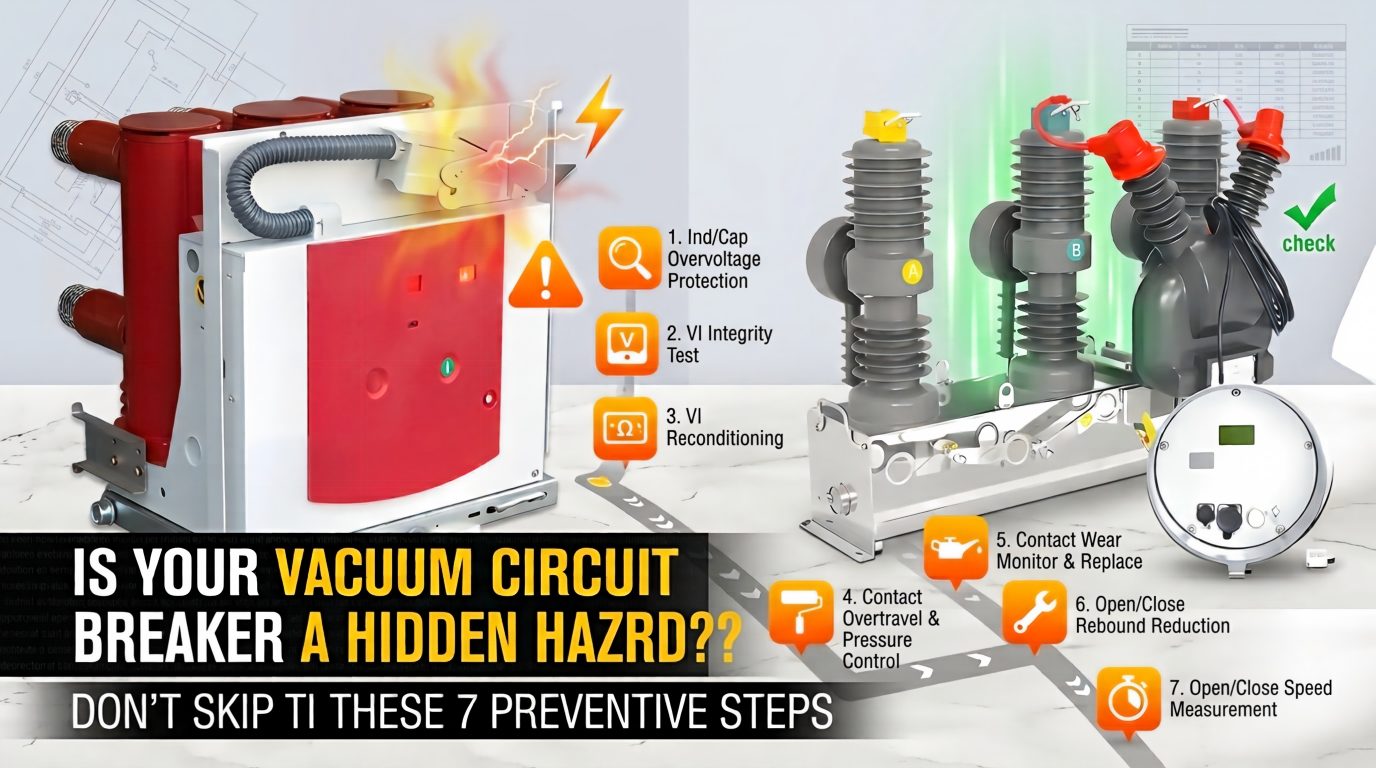
VCB: Check vacuum integrity every 3 years
SF₆: Test gas pressure every 5 years (per IEC 60298)
Q4: What are the cheapest ways to reduce tripping risk?
→ Install Type I+II SPDs + redo grounding — costs $5k–$10k, solves ~70% of HV trip risks
Q5: How to quickly resume operation after a trip?
→ Check control loops (PLCs/relays), inspect insulation for arc marks. Eliminate false triggers first. If trips are frequent, upgrade to interference-resistant breakers.
Q6: Does frequent tripping reduce breaker lifespan?
→ Absolutely.
MCB life = ~10,000 operations
VCB = ~30,000
Frequent trips to age springs and contacts — check mechanical life indicators every 2 years.
🔚 Final Words: From Vulnerability to Confidence
As a switchgear engineer with 15 years of HV experience, I know this: tripping is preventable.
Choose the right gear, build proper defenses, and monitor continuously, and you lock million-dollar risks into a safe box.
This article was created to help you:
✔ Understand the hidden logic behind HV tripping
✔ Apply 5 proven protection strategies
✔ Select the right breaker and spend your budget wisely
At Wei Shoe Electric, we protect your power system like a bodyguard. Share your challenges — we’ll send back a custom fix in 48 hours.
📬 Ready to Secure Your System?
• Email Diagnosis → Send “Self-test result + Voltage Level + Company Name” to thor@weishoelec.com
• Fast Chat via WhatsApp → Screenshot your test, message +86 159 5777 0984, note “HV Support + Company Name” for priority 1-on-1 response