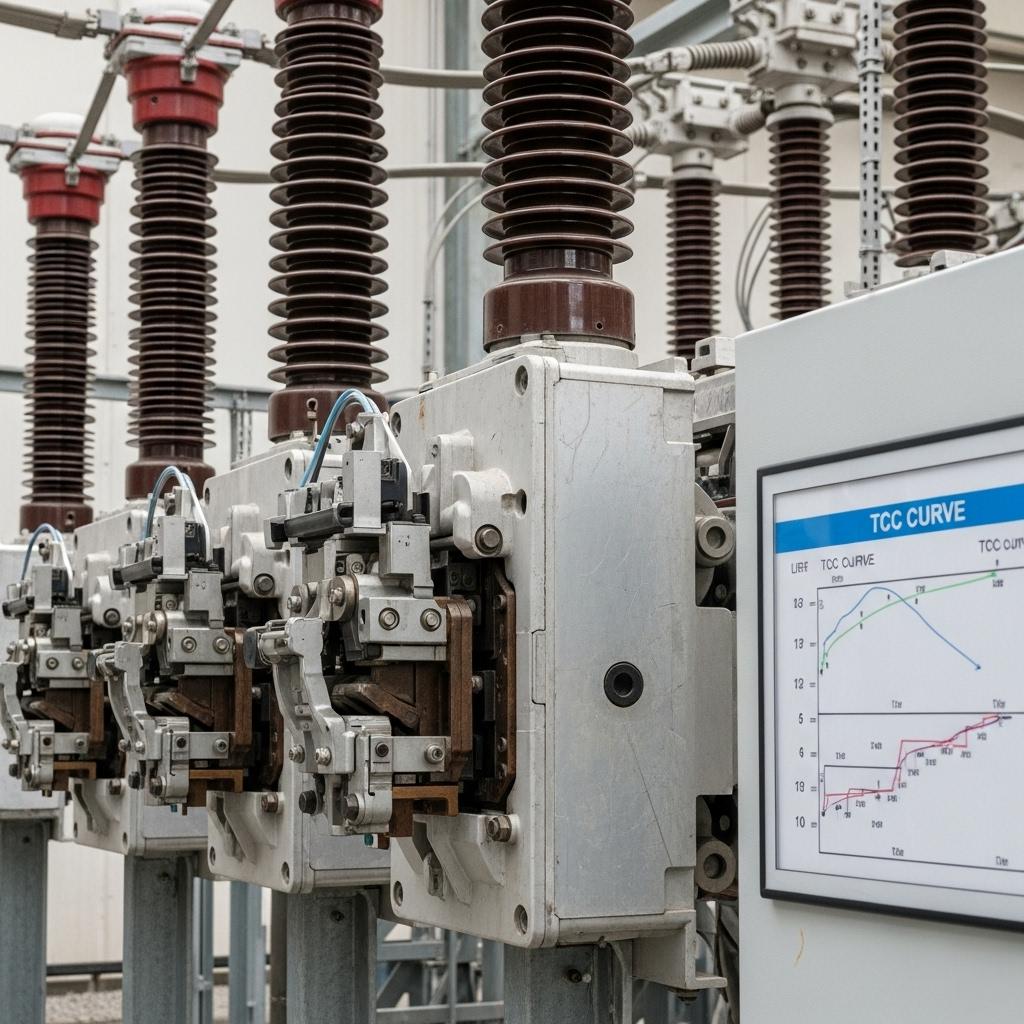
Hi everyone, I'm Thor, an Electrical Engineer with years of hands-on experience in the power system field. At Weishoelec, I'm dedicated to providing high-quality "Made in China" electrical products to global markets, especially in Europe and North America.
In my day-to-day work, I often encounter a common question from fellow engineers and tech enthusiasts: "We all know low voltage circuit breakers have those crucial Time-Current Characteristic (TCC) curves. Do high-voltage circuit breakers have them, too?"
Well, the straightforward answer is: High voltage circuit breakers typically do not come with their own built-in TCC curves like their low voltage counterparts.
This might seem surprising, but it conceals a far more sophisticated and intelligent protection mechanism. The safety of high voltage power systems relies heavily on protective relays – these "intelligent brains" are the ones equipped with programmable time-current characteristic curves, and they are the true heart of high voltage system safety!
If you've ever been puzzled by this question, or if you've found yourself grappling with the complexities of electrical protection systems in large industrial facilities, substations, or even vast power grids, you're in the right place.
Today, I'm going to take you on a deep dive into the mysteries of high-voltage circuit breaker protection. I'll explain it in the simplest, most practical terms, helping you clear up any confusion and gain valuable insights that can solve your real-world protection coordination challenges.
Our "Old Friends": Low Voltage Circuit Breakers and Their "Unique Fingerprints"—TCC Curves
Before we venture into the high-voltage world, let's start with our more familiar "little guardians"—low-voltage circuit breakers.
They are widely used in homes, offices, small shops, and factories for low-voltage distribution systems (typically below 1000 volts).
When an electrical fault like an overload or short circuit occurs, they swiftly cut off the power, protecting our equipment and wiring from damage.
What is a TCC Curve? Why Is It So Important?
TCC, short for Time-Current Characteristic Curve, is like a unique "behavior manual" or "fingerprint" for a low-voltage circuit breaker.
This two-dimensional graph clearly illustrates how long the circuit breaker will take to trip automatically under different fault currents.
Horizontal Axis (X-axis): Current Magnitude. Current increases from left to right, usually on a logarithmic scale, allowing for a wide range of currents to be displayed.
Vertical Axis (Y-axis): Trip Time. Time extends from bottom to top, also typically on a logarithmic scale, representing trip times from milliseconds to hours.
Through this graph, engineers can instantly see the circuit breaker's "reaction speed" under various current conditions. It's like having a tailor-made "battle plan" for each circuit breaker.
The TCC Curve's "Three-Stage Protection": A Layered Defense Strategy
A low-voltage circuit breaker's TCC curve typically consists of three main regions, working together to provide multi-layered, precise protection for electrical circuits:
Long-Time Overload Protection:
Function: This is the most basic protection function, designed to prevent wires or equipment from overheating due to prolonged, minor overloads. For example, if your household wiring is rated for a maximum of 20 amps, but you continuously draw 25 amps for an extended period, this protection will eventually trip.
Analogy: Think of it as a patient and responsible "health monitor." When your body (the circuit) is slightly "overburdened" (current is slightly high), it doesn't immediately force you to rest, but observes for a period. If the "overburden" persists, it then issues a "warning" (trips), forcing you to stop to prevent serious damage.
Curve Characteristics: Located in the lower-left portion of the TCC curve, it's a downward-sloping curve. The larger the current, the shorter the trip time; for smaller overloads, it tolerates a longer duration.
Short-Time Short-Circuit Protection:
Function: Specifically designed to handle larger but non-catastrophic short-circuit currents. It provides a very short, fixed delay (typically a few hundred milliseconds) to coordinate with downstream protective devices, ensuring selective tripping.
Analogy: Imagine a burglar (short-circuit fault) breaking into your backyard (a localized circuit). Your backyard alarm (downstream circuit breaker) will sound, and the main house alarm (upstream circuit breaker) will wait a few seconds. If the backyard alarm fails to deter the burglar, the main house alarm then activates, preventing unnecessary panic throughout the entire property.
Curve Characteristics: Usually appears as a nearly horizontal curve or line. Once the current reaches the set short-circuit protection value, the circuit breaker trips after a preset, fixed short delay.
Instantaneous Short-Circuit Protection:
Function: This is the fastest, most direct protection. It's used to quickly clear very large, destructive short-circuit currents, preventing severe or permanent damage to equipment and wiring.
Analogy: This is like an emergency stop button. If a factory machine (circuit) suffers a major catastrophic failure, you hit the emergency stop immediately without hesitation; every millisecond counts because even a one-second delay could lead to a catastrophe.
Curve Characteristics: Appears as a completely vertical line. Once the current instantaneously exceeds the set instantaneous trip value, the circuit breaker trips in an extremely short time (virtually no delay).
The TCC Curve's Core Role in Protection Coordination
Engineers use these TCC curves to perform Protection Coordination, also known as Selective Coordination. This work is critically important.
Its goal is to ensure that when a fault occurs at any point in the circuit, only the protective device closest to the fault location (the circuit breaker) trips, thereby limiting the power outage to the smallest possible area.
For instance, in a factory, if a lighting branch circuit experiences a short circuit, we only want the circuit breaker on that specific branch to trip, not cause a power outage for the entire workshop or even the whole factory.
TCC curves make this possible by helping us "stagger" the tripping times of different circuit breakers, forming a "step-by-step" protection scheme.
It's worth noting that the TCC curves of low-voltage circuit breakers are usually fixed or can only be adjusted to a limited extent via dip switches. This is generally sufficient for relatively simple, low-voltage systems where fault current levels are predictable and localized. They more or less directly rely on the circuit breaker's internal thermal and magnetic properties to achieve tripping.
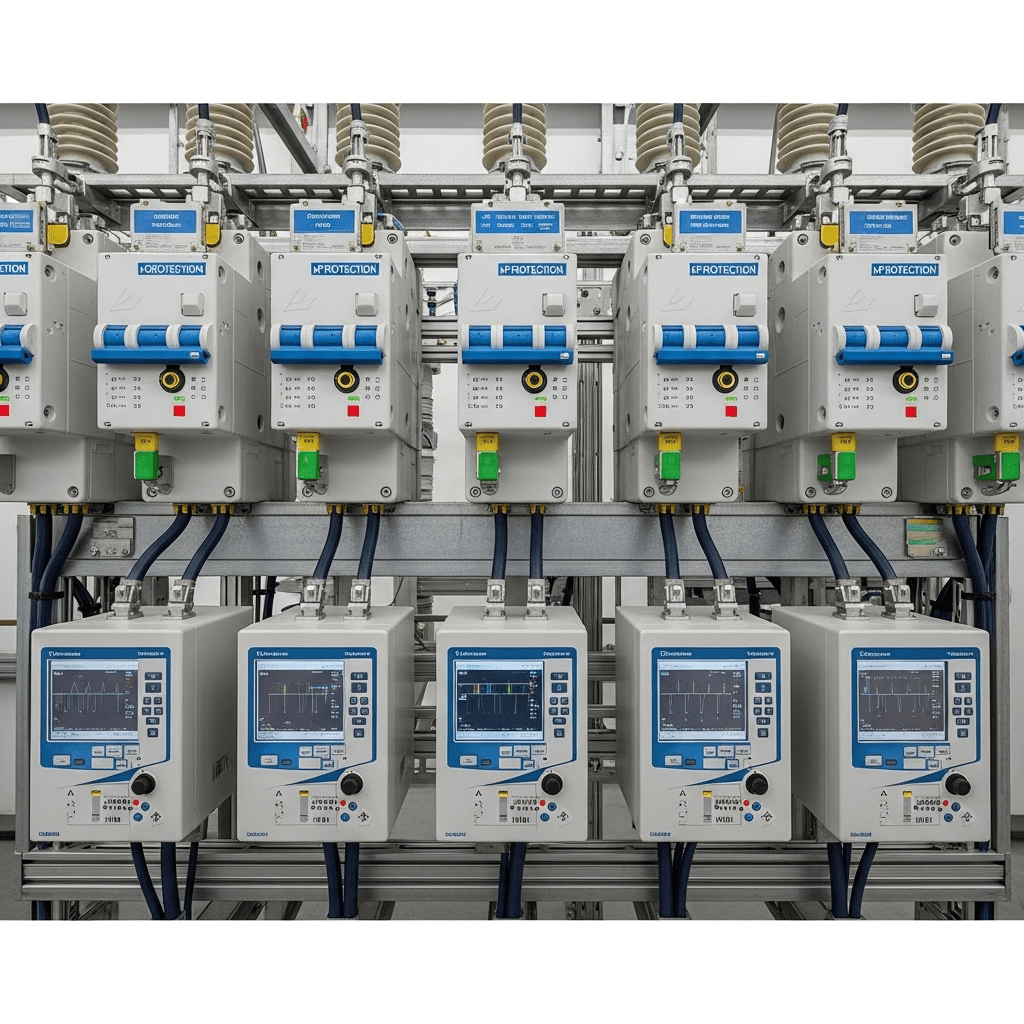
Diving into the High Voltage World: Breakers are "Muscle," Relays are the "Decision-Making Brain"
Now, let's shift our focus to the high voltage world—high voltage power systems (typically 1000 volts and above, carrying megawatts of power or more).
Here, electrical energy is transmitted and distributed at much higher voltages. High voltage systems handle enormous amounts of energy, and any single fault can have catastrophic consequences. Therefore, the demands for safety and reliability are paramount.
Precisely because of this, the protection mechanisms for high-voltage circuit breakers are fundamentally different from those in low-voltage systems.
High Voltage Circuit Breakers: The Powerful "Switches" Responsible for "Execution"
You might be wondering, if high-voltage circuit breakers don't have built-in TCCs, what do they do then?
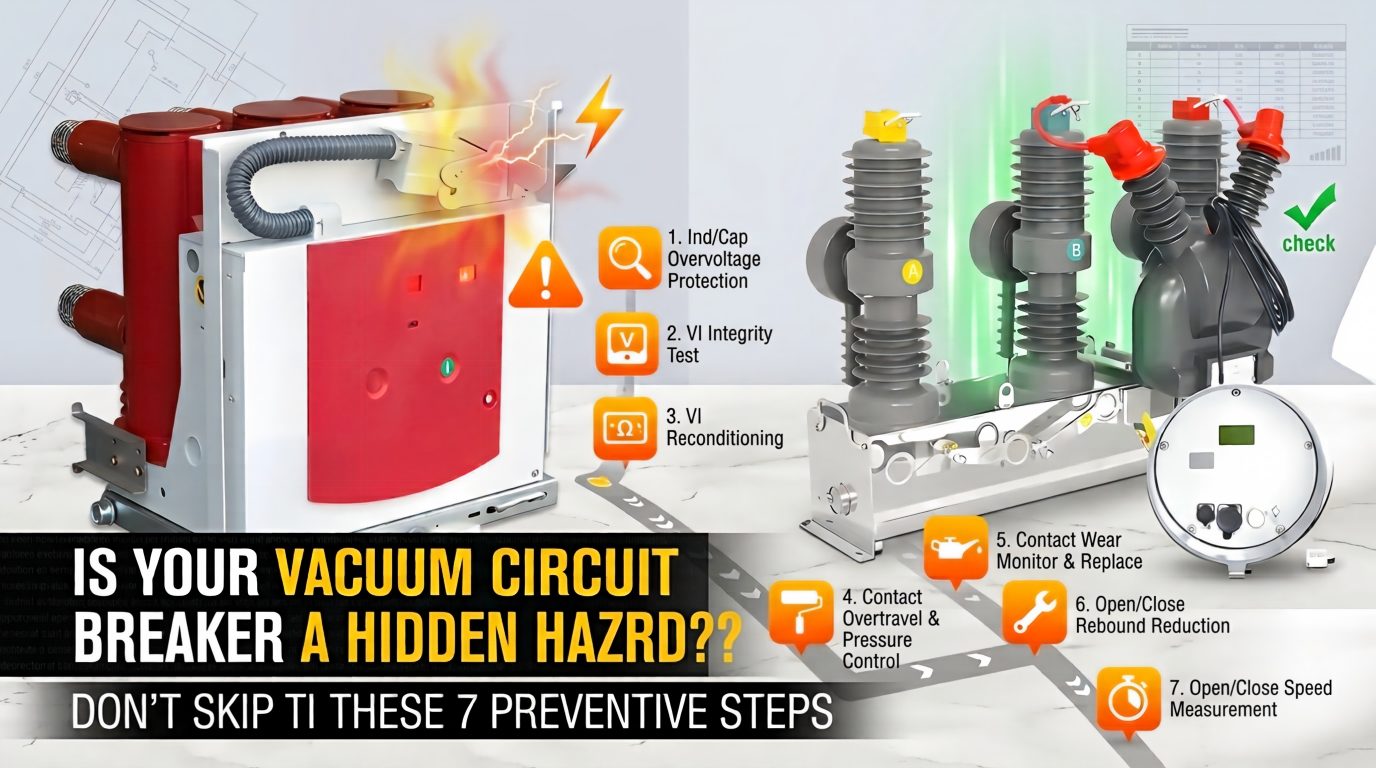
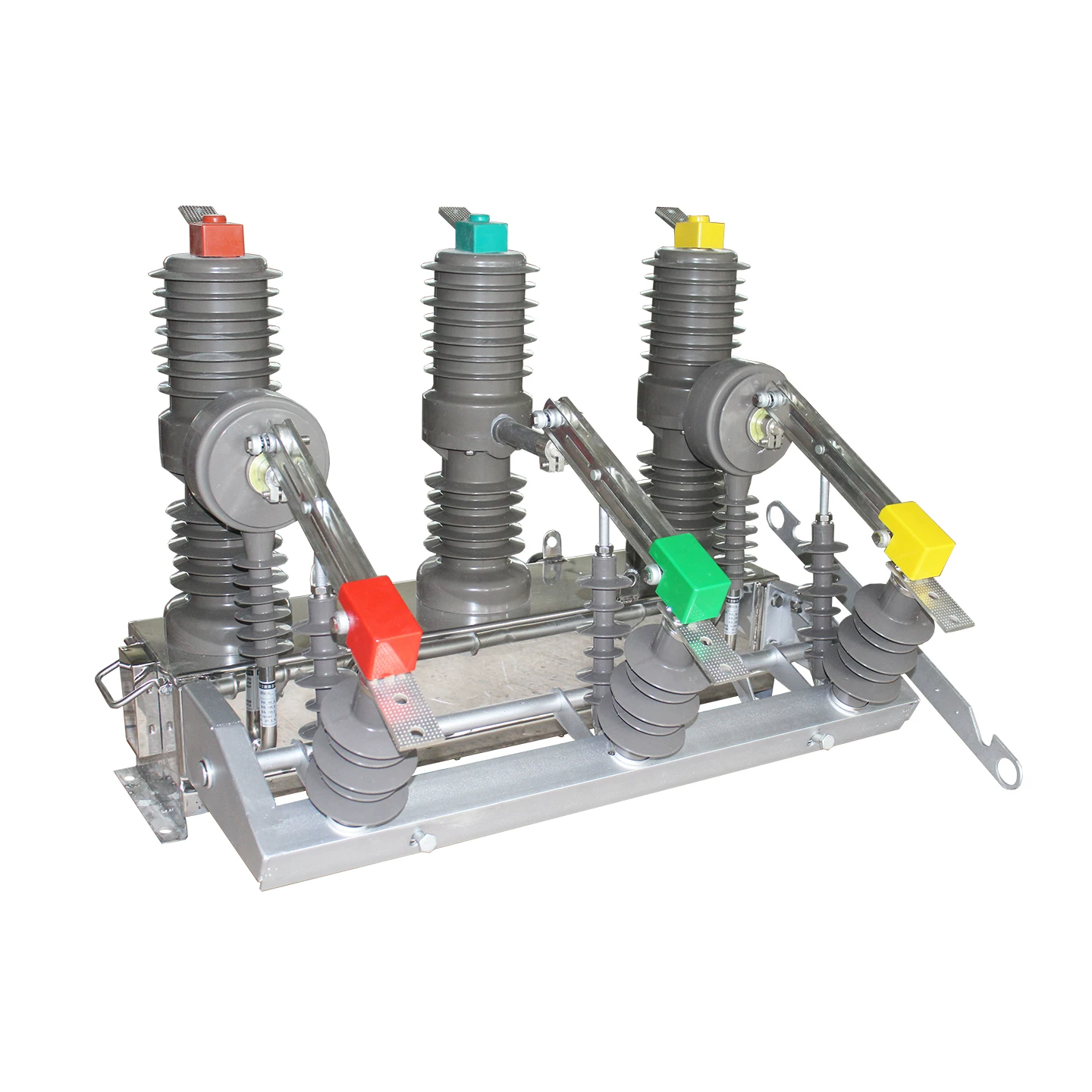
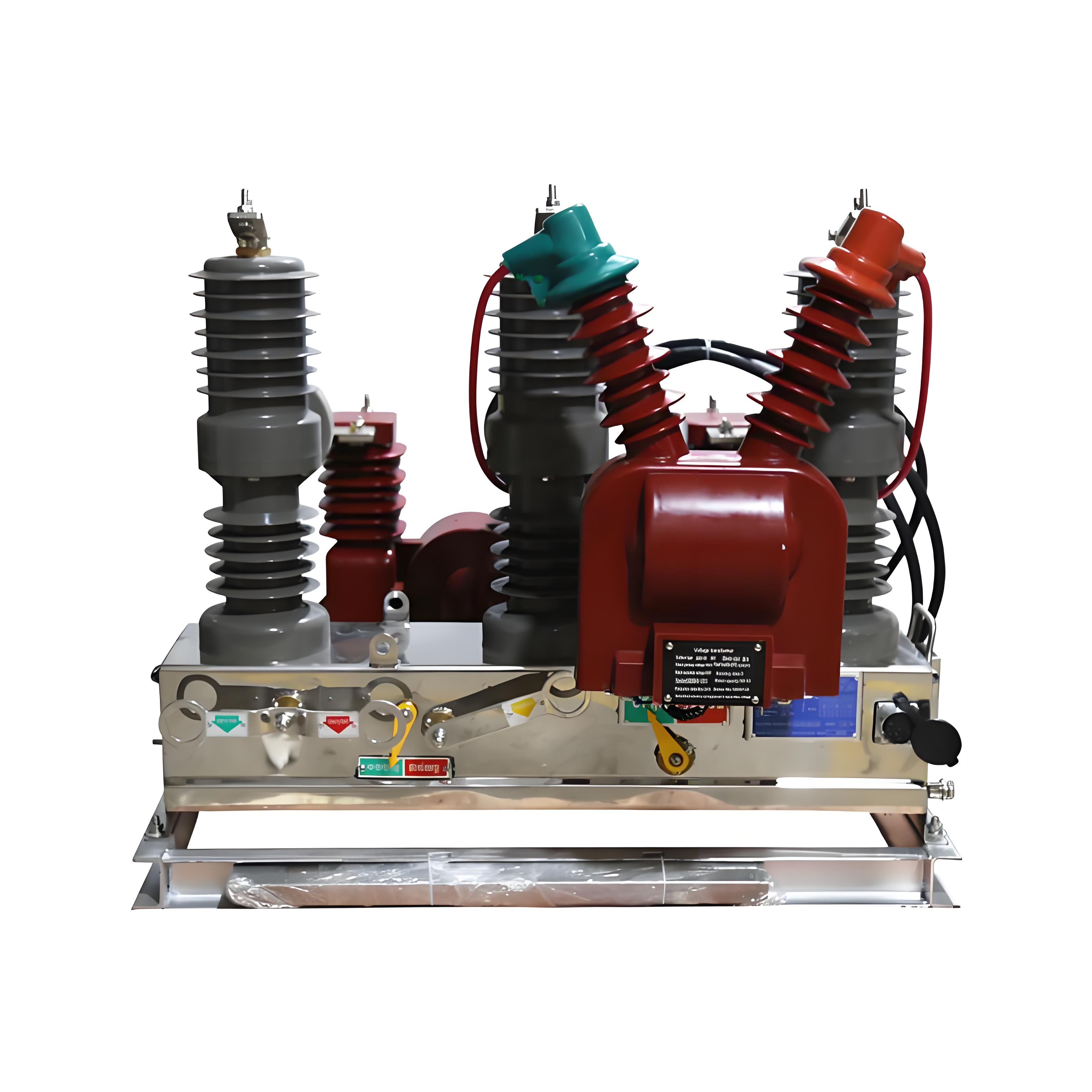
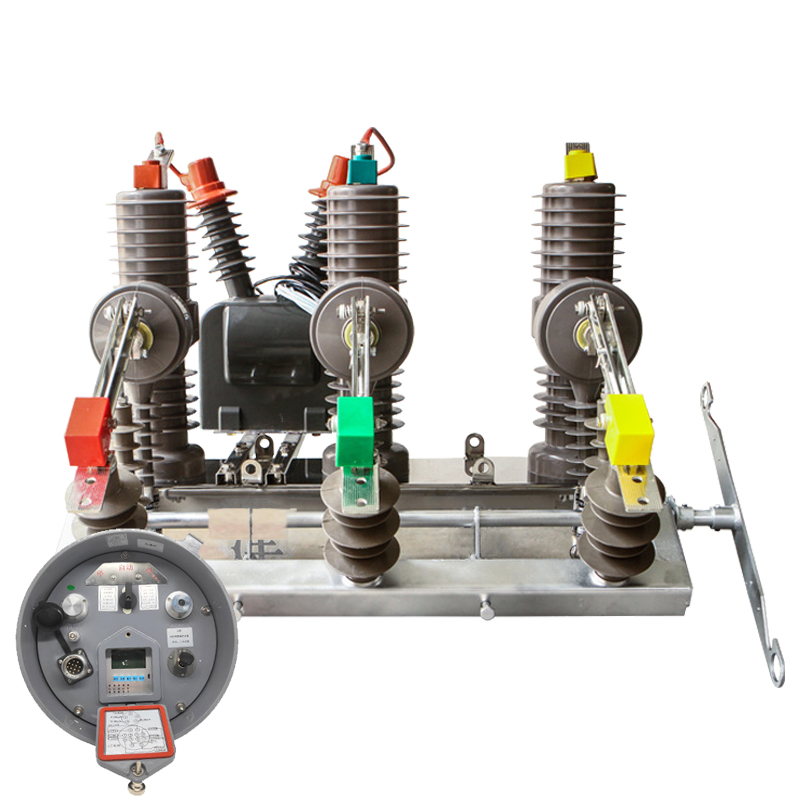
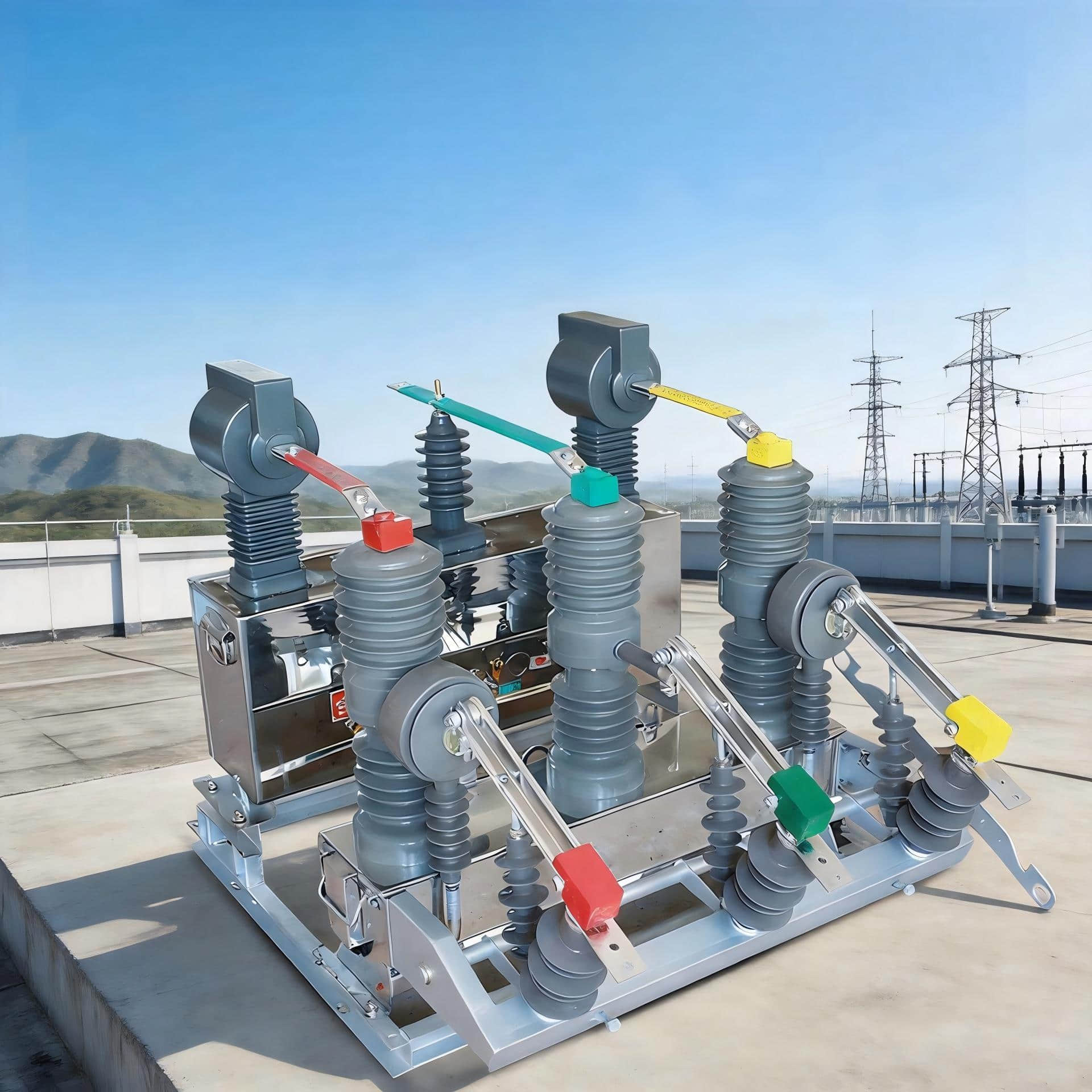
Simply put, high voltage circuit breakers (commonly SF6 circuit breakers, vacuum circuit breakers, air circuit breakers, etc., named after their arc-quenching medium) primarily function as incredibly powerful "switches."
Interrupting High Currents: They are capable of safely and quickly interrupting high voltage, high current circuits, including normal operating currents, as well as destructive fault currents reaching tens or even hundreds of thousands of amperes. Imagine the immense energy involved!
Isolating Faults: Upon receiving an external "command," high voltage circuit breakers act extremely quickly to cleanly and rapidly isolate the faulty section from the entire power grid, preventing the fault from spreading to healthy areas.
As an electrical engineer, I can tell you: High voltage circuit breakers themselves do not contain internal thermal-magnetic or electronic trip units like low voltage circuit breakers.
They cannot "sense" current abnormalities on their own, nor can they "decide" when to trip. They are more like physically strong "soldiers" who faithfully execute commands issued by "headquarters," rather than strategizing on their own.
The "Decision-Making Brain" of High Voltage Protection—Protective Relays
So, who gives these powerful high-voltage circuit breakers the "open" command?
The answer lies with the core intelligent devices in high voltage power systems—Protective Relays. These relays are the true "brains" and "decision-makers" of the high-voltage protection system.
Precise "Scouting": Protective relays do not directly connect to high voltage lines; they don't get involved with such dangerous high voltages. They use special "sensors" to perceive the real-time status of the power system:
Current Transformers (CTs): These are like the "current detectives" of the power system, precisely transforming huge currents in high voltage lines into safe, scaled-down current signals (typically 1 amp or 5 amps) that the relay can process.
Potential Transformers (PTs): These are the "voltage detectives" of the power system, similarly transforming high voltage levels into safe, scaled-down voltage signals for the relay.
By receiving these highly accurate, low-voltage, low-current signals, the relays can "see" and "analyze" the health of the entire power system, much like a doctor interpreting lab results.
Intelligent "Thought" and "Judgment": Modern protective relays are highly intelligent, microprocessor-controlled devices. They have complex protection logic, algorithms, and parameters pre-programmed within them.
They continuously monitor various real-time parameters from CTs and PTs, including current, voltage, frequency, phase angle, and more.
If these parameters exceed normal ranges or if their combination matches a pre-defined fault mode (e.g., short circuit, ground fault, overload, undervoltage, abnormal power direction, frequency deviation, etc.), the relay will make a judgment within an extremely precise timeframe.
Issuing "Commands": When the relay determines that a trip is necessary, it rapidly sends a low-voltage trip signal to the corresponding high-voltage circuit breaker.
Upon receiving this electrical signal, the circuit breaker immediately operates, interrupting the faulty circuit and isolating the damaged section from the healthy grid.
This separate "brain (relay) decides, muscle (breaker) executes" model gives high-voltage protection systems unparalleled flexibility, precision, and reliability. It can handle various complex and hazardous fault types inherent in high voltage systems and achieve highly precise protection coordination.
It's like a large symphony orchestra: each musician (circuit breaker) is a highly skilled performer, while the conductor (relay) oversees the entire performance, ensuring every note is played at the right time for a harmonious and safe operation.
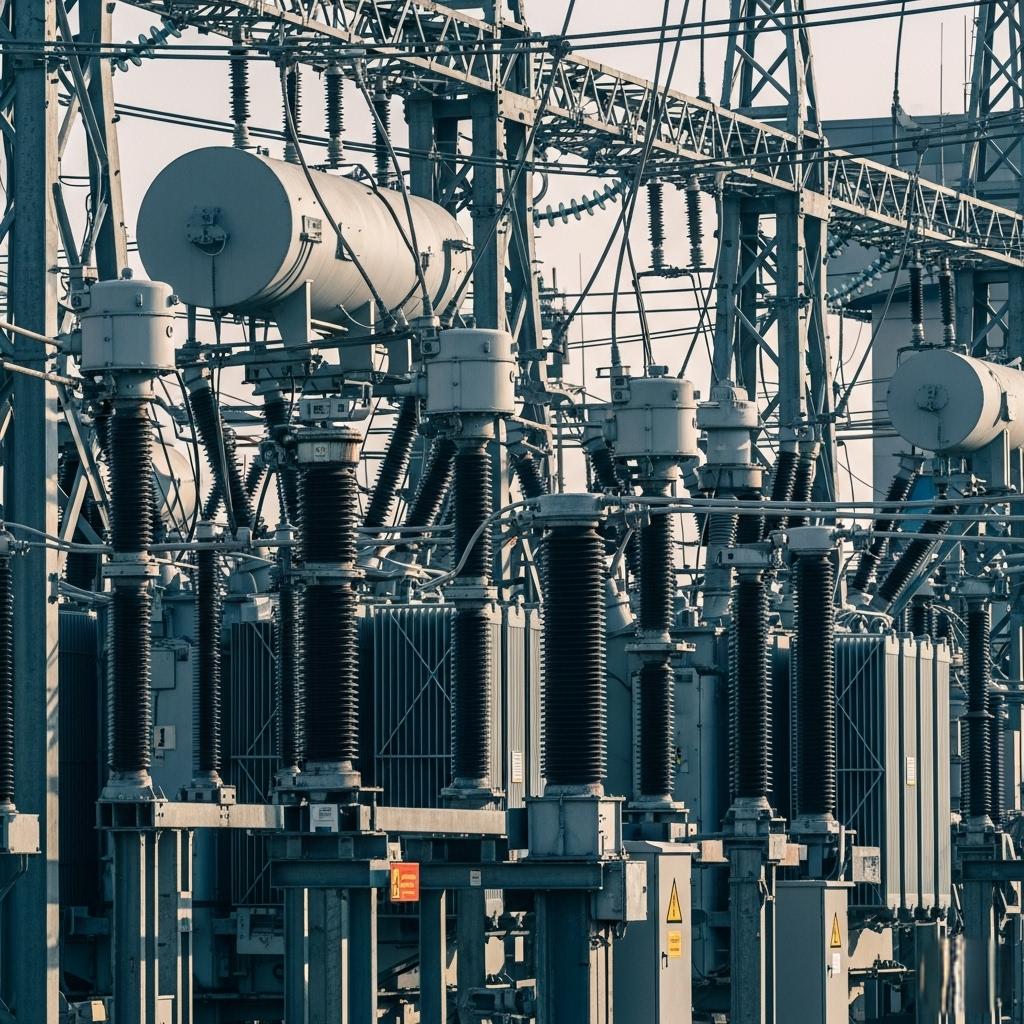
The "TCC Curves" in High Voltage Systems: The Precise Art of Relay Characteristic Curves
Since high-voltage circuit breakers don't have TCC curves, how do high-voltage power systems achieve precise protection coordination?
The answer lies with the "brains" we just discussed—protective relays. They indeed have their own Time-Current Characteristic Curves, but we typically refer to them as Relay Characteristic Curves.
These curves are the true "blueprint" and "codebook" for high voltage protection coordination.
Relay Characteristic Curves: The "Precision Clock" of Power System Safety
Relay characteristic curves are similar in principle to low-voltage TCCs; they both depict the time required for a protective relay to issue a trip command under different fault currents.
But the greatest characteristic of relay curves is their high programmability and customizability.
As engineers, we can precisely adjust the relay's operating characteristics based on the specific needs and operational features of the power system, thereby achieving unparalleled protection accuracy. This is like owning a "precision clock" whose hands' speed and movement can be freely adjusted to suit different tasks, rather than a fixed hourglass.
Common Relay Characteristic Curve Types: Adapting to Various "Fault Scenarios"
There are numerous types of relay characteristic curves, each designed to handle specific "fault scenarios":
Inverse Time Characteristics:
Standard Inverse / Normal Inverse
Very Inverse
Extremely Inverse
Long-Time Inverse
Core Concept: The larger the fault current, the shorter the time required for the relay to operate (trip). This aligns with our most intuitive expectation for fault protection—"the more severe the disaster, the faster the rescue."
Importance: This is one of the most commonly used and crucial curve types in high voltage protection, allowing for perfect "time grading" coordination with downstream protective devices.
Main Types: International standards (like IEEE and IEC) define various standard inverse time curves, including:
Analogy: Imagine a sprinkler with adjustable speed. A standard inverse sprinkler waters slowly during a light rain (minor fault) but speeds up during heavy rain (major fault). An extremely inverse sprinkler, on the other hand, sprays water at the highest speed when facing a "downpour" (gigantic fault). Choosing the right type depends on your required response speed to changes in "rainfall."
Definite Time Characteristics:
Core Concept: Once the current reaches or exceeds a set value, the relay will operate after a preset fixed time, regardless of how large the fault current is.
Analogy: This is like a precise time bomb. If the detonation conditions are met, it will explode after a set 10 seconds. It doesn't care if you gently pressed a button or hit it with a sledgehammer; it executes after the time expires.
Application: Typically used for protection scenarios requiring a precise time delay, for example, to coordinate with equipment that needs a brief delay to start, or as a backup protection for another device.
Instantaneous Characteristics:
Core Concept: When the current instantaneously exceeds a large preset value, the relay will operate immediately with virtually no perceptible delay.
Function: Used to quickly clear the most severe and dangerous faults (such as direct short circuits near the power source), minimizing damage to equipment and lines.
Analogy: Like a car's emergency braking system: if sudden danger arises, it applies full brakes without hesitation, every millisecond counts because even a one-second delay could lead to a catastrophe.
Controlling the Curve's "Magic Knobs": The Mystery of Relay Setting Parameters
As engineers, we can adjust key parameters in the relay to change the position and response speed of its characteristic curve. These parameters are like the "magic knobs" inside the relay; each adjustment brings a different protection effect:
Pickup Current/Setting:
Function: This is the minimum current value at which the relay becomes "alert" and prepares to operate. Only when the current flowing through the current transformer, converted to the relay side, exceeds this "pickup value," will the relay activate its protection function and internal timing program.
Analogy: It's like setting the "sensitivity" for a smart access control system. The system only triggers an alarm when the intruder's weight (current) exceeds 100 pounds (pickup value). The lower the setting, the more sensitive the relay is, and the smaller the abnormality it can detect.
Time Multiplier Setting (TMS) or Time Dial Setting (TDS):
Function: This parameter is used to adjust the "height" of the inverse time curve. It does not change the curve's inherent shape (e.g., it remains a standard inverse curve), but it shifts the entire curve up or down along the time axis.
Analogy: You can think of it as a "playback speed" knob on a tape recorder. By adjusting the TMS/TDS, we can make the relay's operating time for a specific fault current longer (curve shifts up) or shorter (curve shifts down), just like speeding up or slowing down a song's playback, but the song's melody (curve shape) remains unchanged. This parameter is crucial for achieving time coordination between different protective devices.
The "Digital Canvas" of Protection Coordination: The Power of Professional Software
Manually plotting and analyzing these complex relay characteristic curves and coordinating multiple levels of protective devices is an almost impossible task.
In real-world engineering, engineers rely on specialized power system analysis software, which ais re indispensable and powerful tool for high voltage protection coordination:
ETAP (Electrical Transient Analyzer Program)
SKM PowerTools
DIgSILENT PowerFactory
These software tools are like an engineer's "digital canvas" and "simulation laboratory." They allow engineers to:
Precisely Model: Input detailed parameters of the power system, including line lengths, transformer impedances, generator characteristics, etc.
Load Curves: Import characteristic curves for various protective relays (usually provided by relay manufacturers).
Overlay and Analyze Curves: Overlay and display all relevant relay curves on the same graph to visually inspect their operating coordination.
Simulate Faults: Simulate various fault conditions (e.g., short circuits at different locations) and observe the operating sequence of relays and circuit breakers.
Optimize Parameters: Precisely adjust the relay's pickup current and time multiplier until all curves maintain an appropriate "time margin" (i.e., coordination time interval), thereby achieving perfect selective coordination.
As an engineer who has personally participated in countless coordination studies, I can confidently say: Without these professional power system analysis software tools, high voltage system protection coordination would be nearly impossible.
They significantly improve the accuracy and efficiency of coordination, minimizing potential errors from manual calculations and providing a solid guarantee for the safe operation of power systems.
The "Art of Command" in High Voltage Protection Coordination: Ensuring Safe and Efficient Power System Operation
High voltage protection coordination is a precise "wisdom strategy," not just a technical problem, but a consideration of the power system's overall safety and economic viability.
Its core objective is Selectivity, which means minimizing the fault area during an incident, clearing only the faulty section, and not affecting healthy, non-faulty areas.
Selective Coordination: Ending the "Domino Effect"
Have you ever seen a domino effect? If the first tile falls, all subsequent tiles will follow.
In a power system, a fault point is like that first falling domino. The purpose of protection coordination is to ensure that only the "nearest domino" (the protective device closest to the fault) falls, without triggering a chain reaction across the entire "domino array" (the entire grid), leading to a widespread power outage.
Core Objective: Ensure that the first protective device upstream of the fault (usually the relay and its controlled circuit breaker) trips in the shortest possible time, isolating the fault, while all upstream protective devices remain undisturbed, continuing to supply power to other non-faulty areas.
Key to Achievement: Coordination Time Interval (CTI). This refers to the minimum time difference that must be maintained between the characteristic curves of upstream and downstream protective devices (typically between 0.2 seconds and 0.4 seconds).
This time difference must be long enough to ensure that the downstream circuit breaker has sufficient time to complete its clearing operation and that the relay also has enough "confirmation" time. This is like a relay race where the previous runner must securely pass the baton to the next runner before they can continue; otherwise, chaos ensues.
Real-World Scenario: A Power Challenge in a Large North American Industrial Park (Based on common industry coordination challenges)
In North America, many large industrial parks (such as automotive manufacturing plants, data centers, or large chemical plants) have their own complex high-voltage distribution networks.
These parks typically receive high-voltage power directly from the utility grid and distribute it to various production workshops or data center modules via multiple internal substations and long feeders.
Consider this scenario: Within a large industrial park, a high-voltage feeder supplying a critical production workshop suddenly experiences a ground fault due to equipment aging or external factors.
Risks of Improper Protection Coordination: If the coordination between the protective relay on this feeder (downstream protection) and the outgoing feeder relay at the park's main substation (upstream protection) is not precise enough—for example, if the curves are set too close or overlap—then when a fault occurs, the following might happen: the feeder relay for the refinery unit acts too slowly, or the main substation relay trips before or simultaneously.
This could lead to a widespread power outage across the entire park, potentially even affecting parts of the utility grid. For an industrial park with hundreds of millions in annual revenue, even a few minutes of production downtime could result in hundreds of thousands or even millions of dollars in significant economic losses, in addition to disrupting production schedules and delivery times.
Success through Optimized Coordination: After a professional team of electrical engineers conducted in-depth analysis and precise protection coordination using advanced software like ETAP, when the same ground fault occurred again: the relay on that production workshop feeder acted as the first line of defense, detecting the fault first and issuing a trip command within its set extremely short time (e.g., 0.15 seconds), precisely clearing only that faulty feeder.
Meanwhile, the upstream main substation relay remained stable, and power supply to other production units within the park was completely unaffected, continuing to operate normally. The fault was quickly and accurately isolated to the smallest possible area, allowing park management to focus on restoring power to the single production workshop, minimizing downtime and economic losses.
This scenario (based on common protection coordination challenges and successful practices observed in industrial power systems worldwide) clearly demonstrates the immense value of high voltage protection coordination.
It is not just the cornerstone of electrical equipment safety but also a crucial factor in ensuring the continuity of large-scale industrial production, system reliability, and economic efficiency. Its importance should never be underestimated.
(This case study is a generalized scenario based on widespread protection coordination challenges and successful experiences in global industrial power systems, aiming to illustrate the importance of protection coordination, rather than a specific, publicly reported incident or project. Relevant principles and practices are extensively documented in various power engineering textbooks, industry technical reports, and international standards such as IEEE and IEC. At Weishoelec, such coordination work is a core part of our solutions provided to clients in Europe and overseas markets.)
Sensitivity and Reliability: The Power System's "Eagle Eye" and "Solid Backup"
When performing protection coordination, engineers must also consider two equally critical factors that collectively determine the efficiency and quality of the protection system:
Sensitivity: The protective device must be able to "see" and detect even the smallest expected fault currents in the system. This is like a well-trained security guard who can detect and alert to an intruder, no matter how cautious they are.
In my years of experience, I've observed that if relays are not set sensitively enough, some "minor issues" or high-impedance ground faults might not be detected in time, leading to fault escalation—turning a small spark into a major disaster.
Reliability: When required to operate, the protective device must operate with 100% reliability, never "failing"; and when not required to operate, it must never "false alarm" or malfunction.
This is like a fire suppression system that must precisely spray water to extinguish a fire when there truly is one, but never false alarms due to a bit of steam, causing unnecessary losses and disruption. This is the fundamental baseline for any system.
Key Factors Affecting Coordination: Details Determine Success
The complexity of high voltage protection coordination also stems from its susceptibility to various detailed factors. As an engineer, I know the importance of these details; they often determine success or failure:
Accuracy of Current Transformers (CTs) and Potential Transformers (PTs): These are the "eyes and ears" through which the relay "perceives" the system's status.
If the CT/PT ratios are improperly chosen or their inherent accuracy is insufficient, the current/voltage signals received by the relay will be distorted, directly affecting the accuracy of protection. This is like giving a doctor incorrect lab reports—even the best diagnostic system can go wrong.
Precision of Fault Current Calculations: Accurately calculating the maximum and minimum short-circuit currents that might occur at different fault points in the power system is crucial.
This requires detailed system parameters, line impedance data, and professional calculation software. If fault current calculations are inaccurate, the relay curve settings will be off, and protection might fail.
Circuit Breaker Interrupting Time: After the relay issues a trip command, the circuit breaker itself requires a certain mechanical operating time to fully open the circuit.
This time (typically tens to hundreds of milliseconds) must be considered during coordination. We must ensure that the "total clearing time" of the downstream device (relay operating time + circuit breaker interrupting time) is less than the minimum operating time of the upstream device to guarantee selectivity and prevent "cascading trips."
System Expansion and Changes: As factories expand, loads increase, or new equipment is connected, the power system changes. The original protection coordination scheme might no longer be suitable, requiring regular review, recalculation, and adjustment.
As an engineer, I strongly recommend: always re-evaluate protection coordination after any significant modification to the power system. This is a crucial step to avoid future hidden dangers.
Practical Engineer's Tips: Ensuring Power System Reliability
As an engineer who has gained experience in the power industry trenches for many years, I want to offer you some practical advice. These are valuable lessons I've learned from my own work, hoping to help you avoid pitfalls:
Prioritize Accurate Data: The foundation of any protection coordination is accurate and up-to-date system data. Ensure you have the latest line parameters, transformer data, load information, and fault current calculation results. Inaccurate data makes your coordination scheme a "castle in the air," far from reliable.
Regular Review and Maintenance: A power system is not a "set it and forget it" solution; it's a living organism. Relays and circuit breakers require regular testing and maintenance, and their settings should be reviewed based on system changes. Don't wait until a fault occurs to remember to check; by then, it's too late!
Embrace Professional Software: While understanding the principles is vital, in practical work, please rely on professional power system analysis software. They can handle complex calculations, visually present coordination results, greatly reduce the risk of errors, and significantly improve efficiency and accuracy.
Consider Multiple Fault Types: Protection coordination shouldn't just consider three-phase short circuits. It must also account for single-phase ground faults, phase-to-phase short circuits, and other fault types, as current levels can vary drastically under different fault conditions, requiring different relay responses.
Seek Expert Help: If you are unsure or if a project is particularly complex, do not hesitate to seek help from experienced engineers or specialized teams. Power system protection is a highly specialized field, and safety comes first. Professional advice can save you countless troubles.
Frequently Asked Questions (FAQ)
As an Electrical Engineer at Weishoelec, I understand the questions you might have when facing high voltage protection. Here are some common questions I've compiled, hoping to help clarify things for you:
Q1: What is the main difference between low-voltage TCCs and high-voltage relay characteristic curves?
A1: The main difference is that a low-voltage TCC is typically the inherent tripping characteristic of the circuit breaker itself, determined by its internal thermal-magnetic or electronic trip unit, making its function relatively fixed.
In contrast, a high voltage "TCC" is the characteristic curve of an external protective relay. The relay makes tripping decisions based on detected current and preset logic, and the high-voltage circuit breaker then executes the opening operation.
Simply put, one is "self-judging and self-executing," while the other involves a "brain (relay) judging, and muscle (breaker) executing," allowing for clearer division of labor, greater intelligence, and flexibility.
Q2: Why do high-voltage systems require external protective relays instead of having built-in protection like low-voltage circuit breakers?
A2: High voltage systems involve immense currents and extremely high voltages, demanding exceptionally high levels of precision, speed, selectivity, and reliability from their protection.
Simple trip units built into circuit breakers cannot meet these complex requirements.
Separate protective relays allow for much finer parameter settings, a wider variety of protection function combinations (such as overcurrent, ground fault, differential, distance protection, etc.), higher computational capabilities, and integration with communication systems, providing a more reliable, flexible, and intelligent overall protection solution.
Q3: Is protection coordination research very complex? Is professional software necessary?
A3: Yes, high voltage protection coordination is indeed a complex and precise engineering task, involving the setting and coordination of multiple protective devices.
As an engineer, I strongly recommend, and would almost say it's essential, to use professional power system analysis software (such as ETAP, SKM PowerTools, DIgSILENT PowerFactory, etc.) for coordination studies.
These software tools can intuitively plot and overlay curves, perform fault simulations, and optimize parameters, greatly improving the accuracy and efficiency of coordination, minimizing potential errors from manual calculations, and saving significant time and labor costs.
Q4: What are the consequences if protection coordination is not done well?
A4: If protection coordination is poor, the most direct and severe consequence is non-selective tripping.
This means that when a localized fault occurs, it might not be the device closest to the fault that trips, but rather a more upstream main circuit breaker, leading to a much wider power outage, affecting normal production or daily life.
In the long run, this also increases the risk of equipment damage, reduces the overall reliability and operational efficiency of the power system, and can ultimately result in significant economic losses or even safety incidents.
Q5: If someone is interested in learning about power engineering protection, where is a good place to start?
A5: I'm delighted you're interested in power engineering protection! It's a challenging but very rewarding field. My advice would be:
Start with the basics: First, build a solid understanding of fundamental circuit principles, electromagnetism, and basic power system concepts.
Read introductory books: Find some easy-to-understand introductory books on power system protection; they usually explain core concepts with simplified language and diagrams.
Online resources: Utilize online resources such as open courses from universities, educational materials, and online tutorials provided by power companies or professional associations (like IEEE). Many YouTube channels also have excellent animated demonstrations.
Practice with software: If possible, try to get hands-on experience with trial versions of power system simulation software, or participate in relevant laboratory courses, combining theoretical knowledge with practical application.
Q6: Do protective relays require regular testing and maintenance?
A6: Absolutely, and it's extremely important! Protective relays are critical components for power system safety, and their proper functioning is paramount.
Just like your car needs regular servicing, protective relays also require periodic testing and maintenance (e.g., annually or biennially). This includes checking relay settings, performing functional tests, cleaning, and inspecting wiring, among other tasks.
Regular maintenance ensures that relays operate accurately and reliably when needed, thereby minimizing fault risks, extending equipment lifespan, and guaranteeing the continuous stable operation of the system.
Conclusion: Weishoelec and You – Building a Safe and Reliable Power Future Together
As an Electrical Engineer dedicated to the power industry, I hope this detailed article has clarified how high voltage circuit breaker protection operates, highlighting its fundamental differences from low voltage system TCC curves. High voltage power system protection coordination is a rigorous science and a sophisticated art crucial for power supply reliability, equipment safety, and overall societal and industrial stability. While HV circuit breakers don't have built-in TCCs, the powerful and intelligent protective relays behind them, with their precise characteristic curves, enable perfect, multi-layered protection. Understanding these principles is essential for growth in the power industry and maintaining healthy power systems.
Weishoelec, as a manufacturer committed to delivering high-quality "Made in China" electrical products to global markets, especially in Europe and North America, deeply understands the importance of robust protection systems. We offer advanced and reliable electrical equipment and core components, and we are eager to discuss and solve practical engineering challenges with our clients, striving to provide innovative solutions for efficient, safe, and stable power system operation. If you have any questions or are seeking a trustworthy partner for customized technical solutions and professional quotes, please contact us. Weishoelec looks forward to working with you to build a bright future for power systems!
Contact Us to Start Your Safe and Efficient Power Journey:
Phone: +86 0577-62788197
WhatsApp: +86 159 5777 0984
Email: thor@weishoelec.com
Feel free to save and repost this article, but please remember to cite the source.