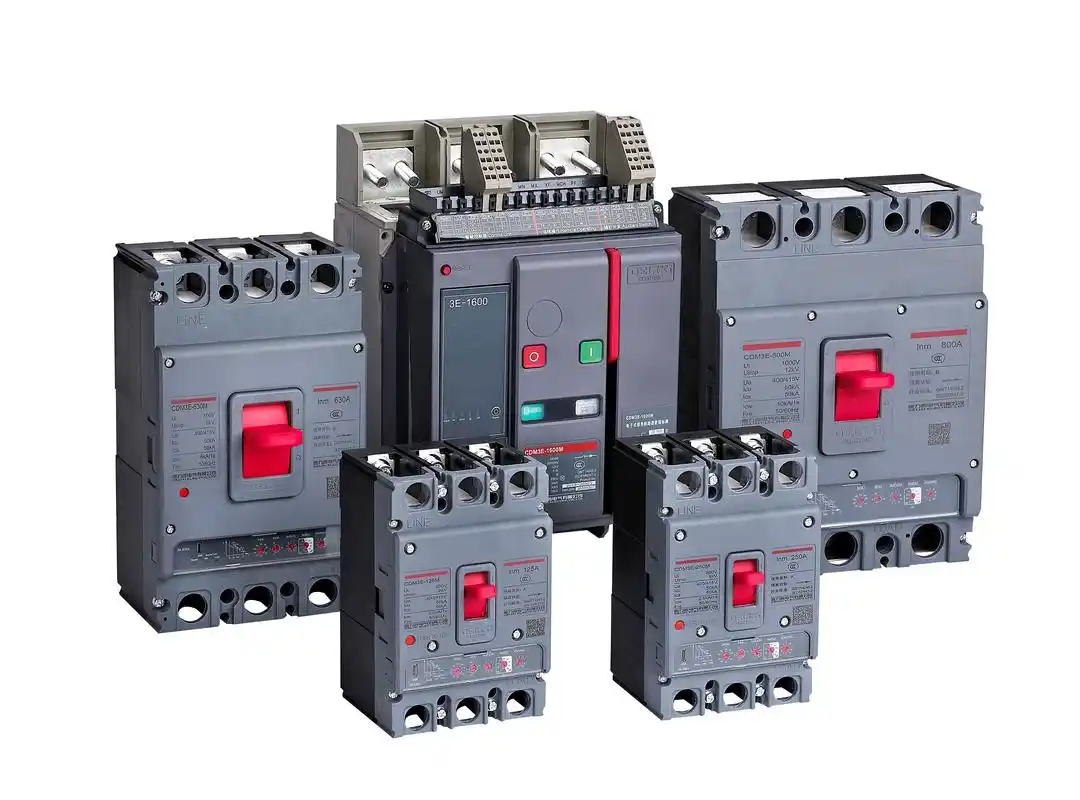
Electrical circuit breakers are vital protective devices in low-voltage power distribution systems. They serve not only as switches for infrequent connection and disconnection of circuits but also bear the critical responsibility of overload and short-circuit protection in low-voltage AC and DC distribution circuits.
A typical low-voltage circuit breaker comprises a contact system, an arc-extinguishing device, an operating mechanism, and various protection devices.
As an electrical engineer with years of deep experience at Weishoelec, I (Thor) am keenly aware of the various challenges circuit breakers face in real-world applications. Weishoelec, a manufacturer focused on "Made in China" that serves markets across Europe, America, and the rest of the world, is committed to providing high-quality, high-performance circuit breaker solutions.
Today, I'm sharing insights on common technical issues with circuit breakers, drawing from years of practical experience and a solid understanding of international standards. I hope this guide becomes a valuable technical reference for you.
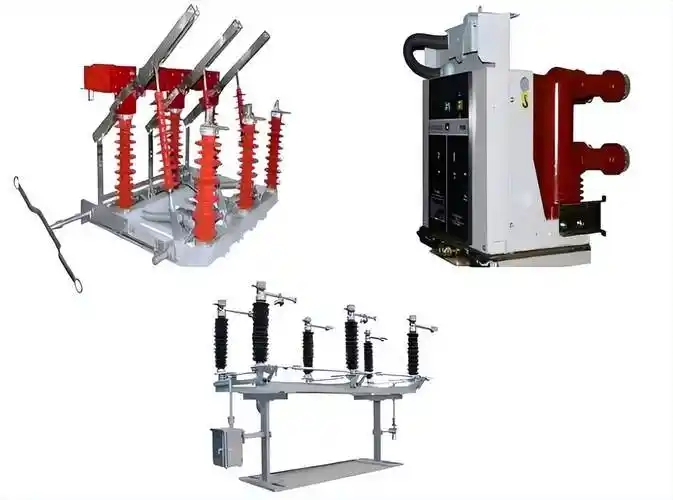
I. Functional Differences: Load Break Switches vs. Disconnectors
Both load break switches and disconnectors can isolate circuits, but their core functions differ significantly.
A load break switch includes an arc extinguishing device, enabling it to interrupt normal current under load and withstand a specified short-circuit current (Icw) for a set duration.
In contrast, a disconnector lacks an arc extinguishing device and can only interrupt very small circuit currents; its primary role is solely power isolation for safe maintenance.
II. Decoding Key Short-Circuit Breaking Capacity Parameters: Icu, Ics, and Icw
Understanding a circuit breaker's short-circuit breaking capacity is crucial for proper equipment selection and system protection.
Ultimate short-circuit breaking capacity (Icu) refers to the breaker's ability to make and break a short-circuit current under specific test parameters (voltage, short-circuit current, power factor). After this operation, the breaker may not be able to continue carrying its rated current. Its typical test procedure is O–t–CO ("O" for open, "t" for a time interval—usually 3 minutes—and "CO" for close then open immediately).
Service short-circuit breaking capacity (Ics) is the breaker's ability to make and break a short-circuit current under specific test parameters. The critical difference here is that after this operation, it must be able to continue carrying its rated current. Its typical test sequence is O–t–CO–t–CO.
Short-time withstand current (Icw) indicates the breaker's ability to withstand a specific voltage, short-circuit current, and power factor for 0.05, 0.1, 0.25, 0.5, or 1 second without tripping. Icw is a key indicator of a Class B circuit breaker's electrical and thermal stability during short-delay tripping.
A crucial principle in circuit breaker selection is that its short-circuit breaking capacity (usually referring to Icu) must be greater than or equal to the expected short-circuit current of the line.
III. Deep Dive into Icu and Ics: Why "Ics = 100% Icu" Isn't Always the Best Choice
Many mistakenly believe that a circuit breaker's service short-circuit breaking capacity (Ics) being equal to its ultimate short-circuit breaking capacity (Icu) is always ideal. However, this depends heavily on the breaker's application location and protection strategy.
For mainline frame circuit breakers, which typically feature three-stage protection, the service short-circuit current breaking capacity (Ics) is more critical. This is because a fault interruption on a mainline could lead to widespread outages, affecting numerous users. Therefore, mainline circuit breakers must withstand at least two consecutive make-and-break operations during a short-circuit fault, along with a certain short-circuit current withstand capability (Icw). This ensures that the consequences of a widespread outage are minimized.
For branch circuit molded case circuit breakers, the focus shifts to ensuring a sufficiently large ultimate short-circuit current breaking capacity (Icu). If a short circuit occurs and the branch circuit trips, the impact is localized, and continuous make-and-break capability isn't necessarily required.
Consequently, the required percentage of ICS relative to Icu varies based on the circuit breaker's position:
Frame-type circuit breakers: Minimum allowed Ics ≥ 50% Icu.
Molded case circuit breakers: Minimum allowed Ics ≥ 25% Icu.
Thus, for designers to use service short-circuit breaking capacity as the sole criterion for judging a circuit breaker's suitability is a misunderstanding.
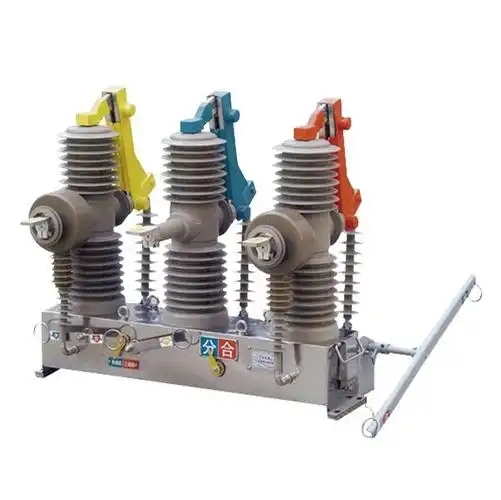
IV. Rated Short-Circuit Making Capacity: The Breaker's Instantaneous Current Limit
According to National Standard GB14048.2 on short-circuit characteristics, the rated short-circuit-making capacity is specified by the product standard or manufacturer. It represents the current a circuit breaker can make at a defined voltage, rated frequency, and specific power factor (or time constant), typically expressed as the maximum prospective peak current.
For AC circuit breakers, their rated short-circuit-making capacity must not be less than the product of the rated short-circuit-breaking capacity (Icn) and coefficient N, as listed in the table below:
For DC circuit breakers, assuming a constant steady-state short-circuit current, the rated short-circuit-making capacity should be no less than the rated short-circuit breaking capacity.
This rated short-circuit-making capacity signifies the current a circuit breaker can reliably connect when the power supply voltage is 105% of its rated operating voltage. Here, the rated short-circuit breaking capacity (Icn) should be expressed as either Icu or Ics.
V. Rated Insulation Voltage of Circuit Breakers
An appliance's rated insulation voltage is closely linked to its dielectric performance test voltage and creepage distance. Critically, the maximum rated operating voltage should never exceed the rated insulation voltage.
According to the GB14048.1 standard, if an appliance lacks a specified rated insulation voltage, its maximum operating voltage can be considered the rated insulation voltage.
VI. Components of a Circuit Breaker's Breaking Time
A circuit breaker's breaking time is a crucial dynamic characteristic, comprising two distinct parts.
Opening time is the interval from the instant the opening operation begins until the arc contacts of all poles separate.
Arcing time is the interval from the moment the first arc is produced until the final extinction of the arc on all poles.
Therefore, the total breaking time is simply the sum of arcing time and opening time:
VII. Electrical Equipment Insulation Protection Classes: Understanding Class I and Class II
Electrical equipment often displays Class I and Class II insulation markings, which categorize them by their protective measures against indirect contact shock. These classifications are detailed in the table below:
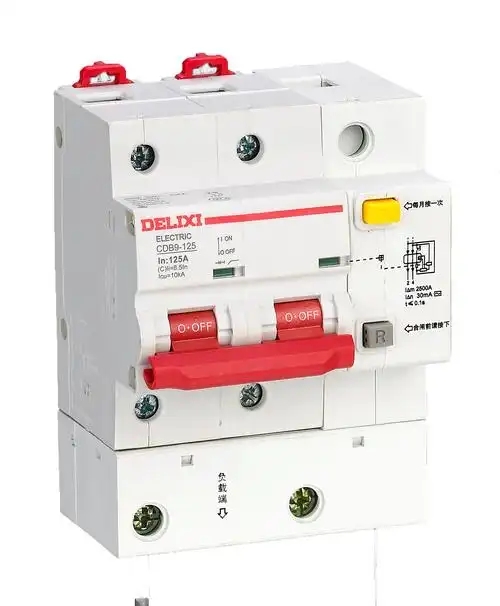
VIII. Motor Protection: Type 1 and Type 2 Coordination
According to IEC/EN60947-4-1 standards, motor protection coordination levels are defined as follows:
Lack of coordination presents a very high risk to the operator, and equipment may be damaged.
Type 1 coordination is the most common standard solution: in a short-circuit situation, there is no risk to the operator, and damage to starting equipment (like contactors) is permissible, but equipment outside the electrical control cabinet must not be damaged. After a fault, the motor starter equipment needs repair before restarting.
Type 2 coordination is a high-performance solution. In a short-circuit situation, there is no risk to the operator, and equipment outside the electrical control cabinet must not be damaged. Slight welding of contactor contacts is allowed if they can be easily separated, and immediate restarting is possible without special precautions.
Full coordination represents an even higher-performance solution. In a short-circuit situation, neither the operator nor the equipment is at risk, and no welding of the starter contacts themselves is allowed. Immediate restarting is possible without any special precautions.
IX. Coordination of Rated Currents: Circuit Breakers, Contactors, and Thermal Relays
In a motor protection circuit, the rated currents of the circuit breaker, contactor, and thermal relay should follow a specific relationship to ensure coordinated and effective protection:
X. Current-Limiting Circuit Breakers and Their Types
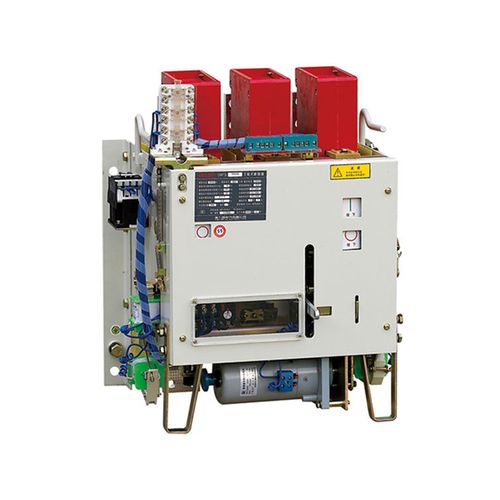
A current-limiting circuit breaker is designed to operate with an extremely short breaking time, capable of interrupting current before it reaches its prospective peak. Its main types include combinations of current-limiting fuses with general-purpose circuit breakers or self-resetting fuses with general-purpose breakers. Some types also combine metal current-limiting wires—iron-based alloy wires with high resistance temperature coefficients—with general-purpose circuit breakers.
Electrodynamic repulsion current-limiting circuit breakers are particularly notable. These breakers leverage the immense electrodynamic repulsive force generated when short-circuit current flows through the contact circuit, rapidly opening the circuit before the prospective short-circuit current can reach its peak. Currently, electrodynamic repulsion current-limiting circuit breakers are the most widely used type.
XI. The Significance and Selection Principles of Current-Limiting Characteristics
The essence of current-limiting characteristics lies in rapidly interrupting a circuit, cutting off the short-circuit current before it reaches its maximum prospective value. This effectively limits the thermal stress generated by the short-circuit current, which is critically important for selecting protective devices given cable thermal stress limits.
The selection principle involves checking the switch product's current-limiting curve and the cable's maximum permissible thermal stress table. The goal is to choose a switch that limits the thermal stress to a value less than the cable's maximum allowable thermal stress.
XII. Defining Overload and Under-voltage
Overload occurs when the actual load current exceeds the rated current of a line or equipment. This condition leads to excessive temperatures in lines and equipment, accelerating insulation aging and shortening service life. Prolonged overload can even cause severe accidents such as equipment damage, fires, or explosions.
Under-voltage, or low voltage, describes a situation where the line voltage falls below the equipment's rated voltage. When electrical equipment operates under low voltage for extended periods, it not only increases energy losses in the supply lines, causing lights to dim or fail but also reduces the output and efficiency of motors, potentially preventing them from starting. Worse, it can lead to overcurrent conditions that overheat and even burn out motors.
XIII. Role of Low-Voltage Circuit Breakers and Determining Rated Voltage/Current
Low-voltage circuit breakers primarily provide protection against overload, short-circuit, reverse current, voltage loss, under-voltage, and earth leakage. Additionally, they can be used for infrequent starting of motors, or for operating and converting circuits.
The rated voltage of a circuit breaker (Unzd) must be greater than or equal to the rated voltage of the line (Unx).
The rated current of a circuit breaker (Inzd) must be greater than or equal to the calculated current of the line (Ijs).
XIV. Distinguishing Earth Fault Protection from Leakage Protection
Earth fault protection refers to measures taken to prevent hazards caused by short circuits between a phase conductor and exposed conductive parts of electrical equipment, extraneous conductive parts, or the earth (i.e., an earth fault).
Leakage protection, however, specifically refers to protective devices added to prevent small currents (milliampere-level) from causing electric shock injuries or initiating fires due to earth faults.
XV. Impact of Branch Feeder Single-Phase Loads on Main Incoming Leakage Module Selection
When branch feeders carry single-phase loads, the main incoming leakage module cannot be a 3-pole type; it must be a 4-pole type.
If a 3-pole leakage module were used, a significant single-phase load current would flow through the neutral (N) line once the single-phase load is engaged. In this scenario, the current vector sum within the leakage module would equal the current flowing through the N line, immediately causing the main incoming leakage module to trip unnecessarily.
XVI. Common Causes and Solutions for Nuisance Tripping or Failure to Trip in RCDs
Residual Current Devices (RCDs) occasionally experience nuisance tripping or failure to trip in real-world applications. Here are common reasons and suggested solutions:
Incorrect Selection
Problem: The leakage tripping current (sensitivity) is set too low, making the RCD overly sensitive to normal leakage currents and causing nuisance trips. For example, electronic devices like desktop computers have relatively large normal leakage currents (e.g., 3-4 mA), so a 30 mA RCD circuit should not connect more than 5 computers.
Solution: When selecting the leakage tripping current, it should be 2 to 4 times greater than the normal leakage current in the circuit.
Problem: In a three-phase circuit, the circuit after a 3-pole RCD module connects to a single-phase load.
Solution: In this case, a 4-pole RCD module should be used.
Incorrect Wiring
Problem: The N line after the Residual Current Device (RCD) is repeatedly grounded, causing the N line's operating current to shunt through the ground, leading to RCD nuisance tripping.
Solution: The N line after the RCD should not be repeatedly grounded.
Problem: In a circuit with an RCD, the PE (protective earth) wire of the electrical equipment passes through the RCD's current transformer.
Solution: If the equipment's casing experiences a fault leakage, the leakage current will bypass the current transformer, preventing the RCD from detecting the residual current and causing it to fail to trip. The PE wire must not pass through the RCD's current transformer.
Problem: When only two or three poles of a 3-pole or 4-pole switch are used, the poles used for power take-off are not connected.
Solution: The two poles used for power take-off must be connected.
Problem: Loose wiring connections in the RCD cause arcing, leading to nuisance trips.
Solution: Inspect and tighten all wiring terminals.
Load Type Influence
Problem: High-frequency lightning-induced overvoltages and operating overvoltages in the circuit, combined with very low line-to-ground capacitance, can generate transient large leakage currents, causing the RCD to nuisance trip.
Problem: Mercury lamps, fluorescent lamps, and their ballasts are installed separately and at long distances, resulting in large line-to-ground capacitance. When numerous units are connected, nuisance tripping is likely.
Problem: Transient processes like motor starting and incandescent lamp energization moments can easily cause nuisance trips.
Problem: Low insulation resistance of the neutral (N) wire can also lead to RCD nuisance trips.
Solution: For transient overvoltages, consider installing Surge Protective Devices (SPDs). For special loads, analyze the situation and implement targeted measures (e.g., segmented power supply, installing filters). Regularly inspect the insulation condition of the N wire.
XVII. Significance and Application of 300mA Leakage Protection Value
A 300mA RCD is often used for fire protection, with its trip-setting current designed to be less than the minimum ignition current that could cause a fire. Installing an RCD at the main incoming line of a residential building aims to prevent electrical fires caused by earth faults. Studies indicate that a heating power of 60-100W if released on a small area of combustible material, can immediately ignite a fire (equivalent to a current of approximately 272.7-454.5mA, calculated as ).
Therefore, the rated residual operating current (Iz) for an RCD installed at the main incoming line of a residential building should be ≤300-500mA. The selection of the trip current for the main incoming RCD in residential buildings can refer to the following requirements:
For residential areas with a building area less than 1500㎡ (single-phase distribution) or 4500㎡ (three-phase distribution), the RCD's rated residual operating current should be 300mA.
For residential areas with a building area between 1500-2000㎡ (single-phase distribution) or 4500-6000㎡ (three-phase distribution), the RCD's rated residual operating current should be 500mA.
When the residential building area exceeds 6000㎡, multi-circuit distribution should be adopted, with RCDs installed separately for each circuit, or several RCD groups installed in the outgoing circuits of the main distribution cabinet.
Conclusion
As an electrical engineer at Weishoelec, I (Thor) understand the critical role circuit breakers play in power systems. Weishoelec is dedicated to "Made in China," providing high-quality, international-standard circuit breakers and other low-voltage electrical products to European, American, and global overseas markets. We firmly believe that only through a deep understanding and strict control of technical details can truly reliable and safe products be created.
I hope this in-depth analysis of common circuit breaker technical issues proves helpful in your work and studies. Should you have any further questions or needs regarding circuit breaker selection, application, or any other electrical matters, please feel free to contact us:
Phone: +86-0577-62788197WhatsApp: +86 159 5777 0984Email: thor@weishoelec.com
I look forward to discussing and collectively advancing electrical technology with you!