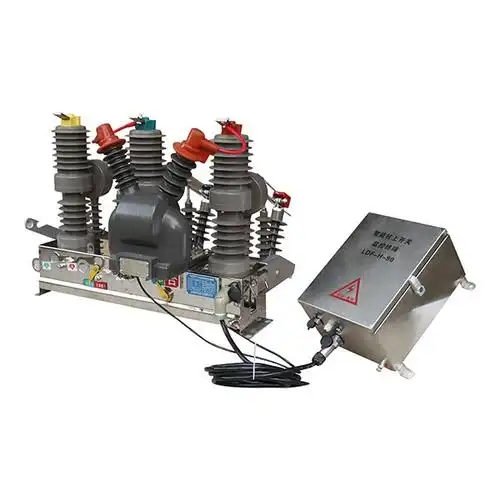
01 Introduction
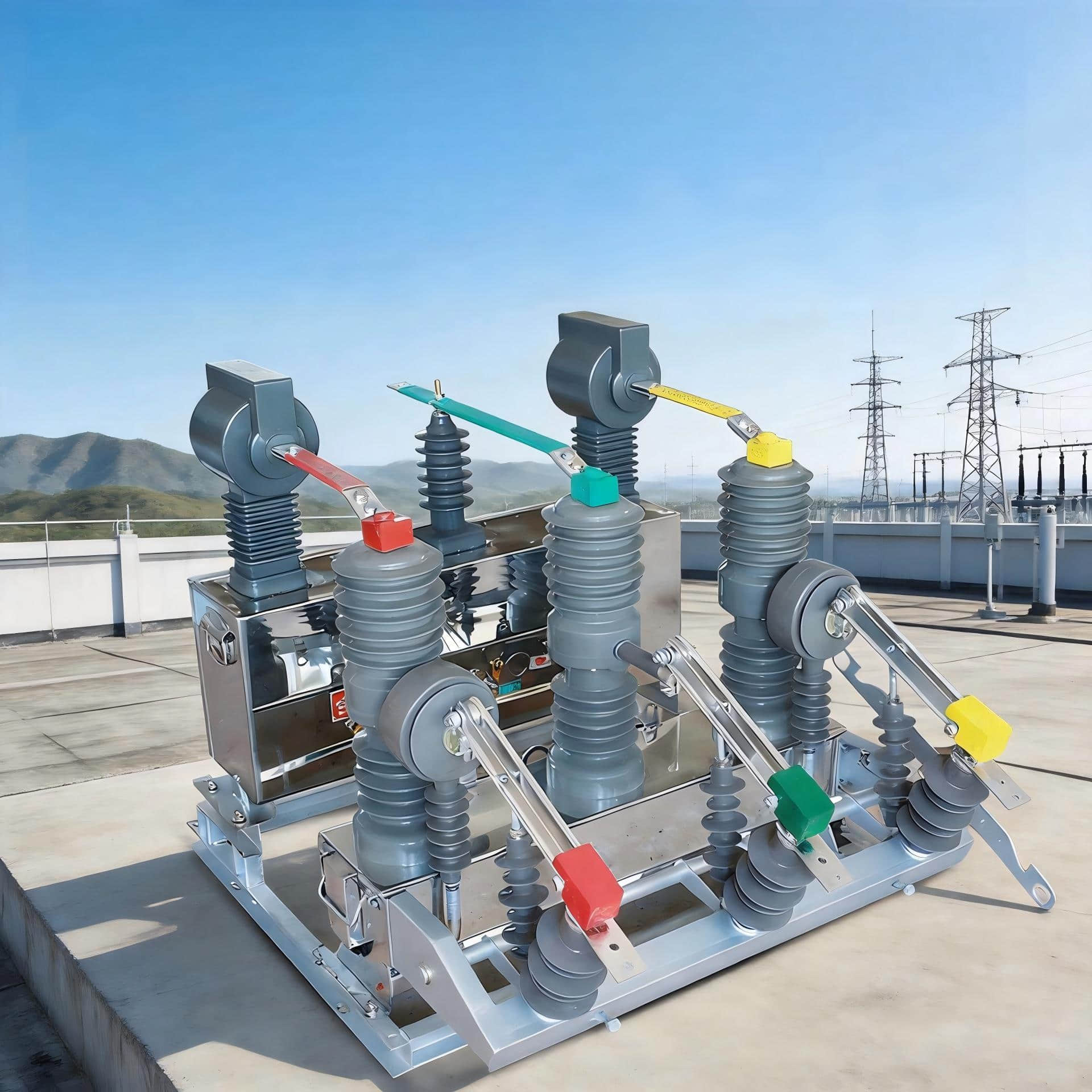
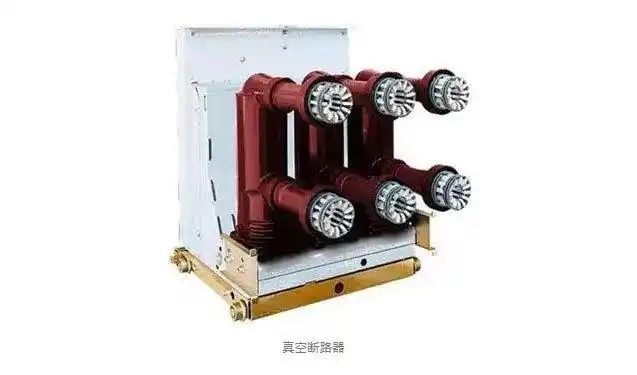
In medium-voltage power systems (like 10kV and 35kV), vacuum circuit breakers are crucial control and protection devices. Their selection directly impacts grid safety, economic efficiency, and overall reliability. Have you, in your electrical engineering practice, ever found yourself overspending on equipment due to blindly chasing high technical parameters, or inadvertently creating safety risks from flawed selection?
This article, leveraging Weishoelec's 12 years of deep engineering practice and industry experience, will meticulously analyze four common misconceptions in vacuum circuit breaker selection. Our goal is to provide you with a scientific, economic, and safe selection strategy. We'll help you ensure system reliability while effectively avoiding unnecessary investment waste.
02 Misconception One: Blindly Chasing Excessively High Short-Circuit Breaking Capacity
A circuit breaker's core function is to reliably interrupt current during a short-circuit fault. However, believing "the stronger the breaking capacity, the better" is a classic misconception that drives up costs and can even backfire.
The Conflict Between Actual Needs and Redundancy
In 10kV end-user substations, busbar short-circuit currents typically range between 10 and 16kA. Even accounting for future grid expansion, a circuit breaker with 20-25kA breaking capacity fully meets these needs.
Yet, designs often demand 31.5kA or even 40kA breaking capacity. This directly inflates equipment procurement costs by 30-50%. Larger circuit breaker dimensions also force an upgrade in switchgear cabinet size, further escalating overall project costs unnecessarily.
Short-Circuit Current Calculation: "Ideal vs. Reality"
Design calculations for short-circuit currents often rely on an idealized "pure metallic three-phase short-circuit" model. This model ignores practical factors like arc resistance and contact resistance, universally resulting in overestimated values.
In real-world operation, over 80% of short circuits are single-phase, and they're accompanied by arcs. Arc resistance significantly reduces the actual short-circuit current. This means the circuit breaker actually needs to interrupt far less than the calculated value.
If you blindly select based on the maximum calculated value, your protection settings might become too high, leading to insufficient sensitivity. Remember, in engineering, the more common problem isn't "the breaker fails to open," but "the protection refuses to operate."
Misconception in Selecting Main vs. Branch Breakers
Some designs mistakenly demand that "the main incoming circuit breaker has a higher breaking capacity than branch breakers." This is unnecessary and can be costly.
The current difference between a short circuit near the feeder breaker's load side and the busbar short-circuit current is minimal. Therefore, the breaking capacity for both main and branch breakers should generally remain consistent, eliminating the need for arbitrary grading and preventing needless equipment cost increases.
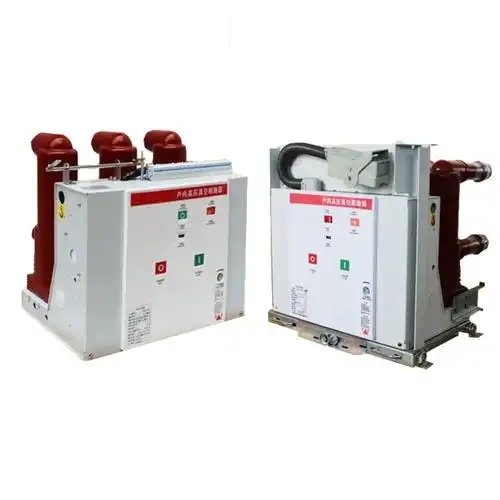
03 Misconception Two: Over-Demanding Electrical and Mechanical Life
A circuit breaker's "life" parameters must be viewed realistically, considering actual fault probabilities. Don't solely pursue high numerical targets, as overly stringent requirements only add unnecessary expenses without providing tangible benefits.
Electrical Life: 30 Short-Circuit Interruptions Are Enough
Electrical life, which refers to the number of times a circuit breaker can interrupt short-circuit currents, isn't a "higher is better" scenario. Although national standards don't mandate a specific number, industry consensus dictates that being able to reliably interrupt short-circuit currents 30 times fully satisfies typical engineering needs.
Short circuits are major faults that occur extremely rarely in normal power system operation; a circuit breaker's actual short-circuit interruptions over its entire lifecycle usually won't exceed 10. Forcibly demanding "100 interruptions" not only doubles equipment costs (due to increased type test fees and material strength upgrades) but can also degrade normal switching performance if contact materials become excessively hard.
Mechanical Life: No Need to "Compete" with Contractors
Mechanical life, referring to the number of opening and closing operations, is an even more widespread selection misconception. Some tenders specify "100,000 mechanical operations," yet a typical distribution circuit breaker operates less than 500 times per year.
This means 100,000 operations would equate to an astonishing 200 years of service life, far exceeding a device's actual service period (generally 20-30 years). In fact, an M2 class circuit breaker (10,000 mechanical operations) already satisfies the vast majority of common distribution scenarios.
If your application truly demands frequent operation, like motor switching or capacitor bank compensation circuits, a vacuum contactor is a more sensible and economical choice, as they typically offer over a million mechanical operations. Don't force a circuit breaker to "cross over" into a function it's not designed for.
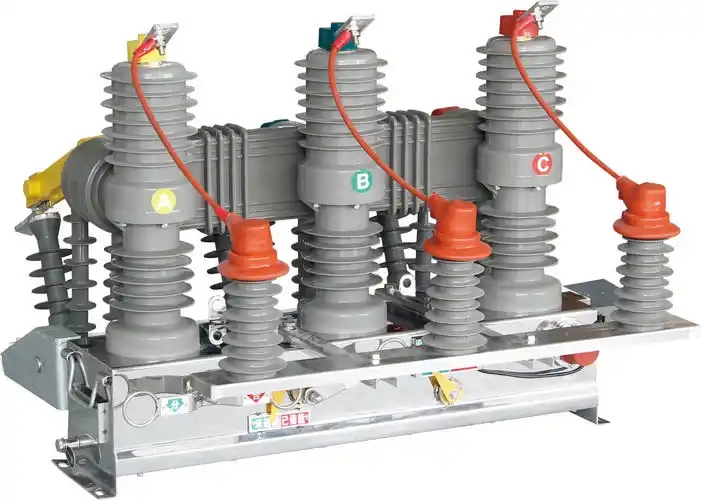
04 Misconception Three: Unreasonable Demands for Short-Time Withstand Current and Contact Parameters
Beyond core parameters, setting excessively high standards for certain auxiliary parameters also results in significant resource waste and unnecessary costs. This often stems from a misunderstanding of technical specifications, leading to suboptimal choices in vacuum circuit breaker selection.
Short-Time Withstand Current: 3 Seconds Is Ample, 5 Is Superfluous
Short-time withstand current, also known as thermal stability, refers to the duration a circuit breaker can withstand the thermal effects of current during a short-circuit fault. In design, requiring a "3-second" withstand capability fully satisfies actual needs.
After a short circuit occurs, the protection system employs graded time delays (typically 0.5 seconds between adjacent breakers) to achieve selective tripping. Fault isolation is completed within a maximum of 1.5 seconds, leaving a substantial safety margin with a 3-second withstand capability. Unnecessarily demanding "5 seconds" forces the circuit breaker to use larger conductor cross-sections and thicker insulation materials, ultimately leading to severe material waste and increased equipment volume.
Contact Bounce and Three-Phase Asynchronicity: Chasing "1ms" Is Impractical
Contact bounce time refers to the brief separation of contacts immediately after closing, while three-phase asynchronicity is the time difference in opening or closing between the three phases. If these times are too long (exceeding the industry standard of 2ms), they can indeed cause overvoltage issues, so industry standards clearly mandate "≤2ms."
However, some users unrealistically pursue an extremely high requirement of "≤1ms," which is currently beyond mature technical capabilities. Under existing processes, 2ms represents an optimal balance between reliability and economic feasibility. Forcibly compressing this parameter will significantly reduce product qualification rates and skyrocket production costs, all without providing any substantial improvement to operational safety.
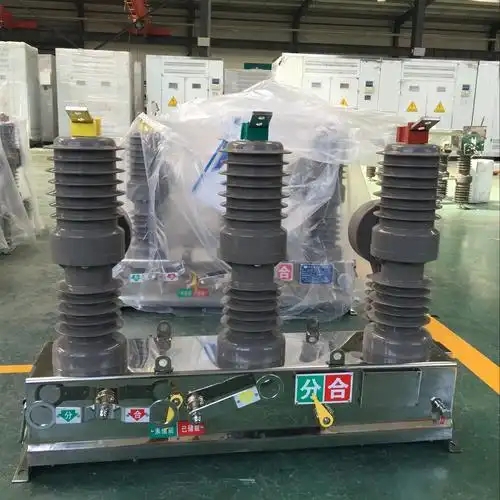
05 Misconception Four: Waste Due to Excessive Minimum Arc Chute Current Ratings
The vacuum arc chute is the core component of a circuit breaker. It's rated current, often called the "starting current," directly impacts the overall equipment's material utilization and cost. An unreasonable selection here leads to significant waste.
The Current Situation: 1250A Minimum Causes Non-Ferrous Metal Waste
Currently, some manufacturers have discontinued production of 630A arc chutes, setting their minimum starting current directly at 1250A. This market trend forces the selection of a 1250A circuit breaker even for lightly loaded circuits, such as those connected to a 1000kVA transformer (where the 10kV side's rated current is only 57.7A).
Consequently, all associated components—like pole assemblies, plug connectors, and switchgear fixed contacts—must be designed and manufactured for a 1250A rating. This leads to a 1-2 fold increase in the usage of non-ferrous metals like copper and aluminum, resulting in enormous material waste.
Recommendation: Select Smaller Current Arc Chutes Based on Need
For lightly loaded circuits (e.g., small transformers or lighting distribution systems), we strongly recommend prioritizing circuit breakers with 630A and lower rated arc chutes. If market supply for these smaller current ratings is limited, consider contacting manufacturers capable of custom orders.
While custom solutions might incur a slightly higher short-term cost, in the long run, this approach will significantly reduce non-ferrous metal consumption by over 50%. This not only aligns with current global energy-saving and carbon reduction trends but also reflects a commitment to sustainable development.
06 Scientific Selection Principles Summary
Mastering scientific vacuum circuit breaker selection is key to achieving safe, economical, and reliable power system operation. Here are four core principles Weishoelec has summarized for you, based on years of experience:
Based on Actual Short-Circuit Current with Reasonable Margin: Precisely calculate the "maximum possible breaking current" based on actual grid parameters. You only need to maintain a reasonable margin of 20-30% on this value, avoiding the blind stacking of excessive safety factors and preventing unnecessary expenditure.
Match Life Parameters to Operating Scenarios, Avoid Over-Configuration: For conventional distribution applications, selecting a circuit breaker with "30 short-circuit interruptions life" and "10,000 mechanical operations life" is more than sufficient. If your application truly requires frequent operations (like frequent motor switching or capacitor bank compensation circuits), the more sensible choice should be to prioritize vacuum contactors, rather than forcibly upgrading circuit breaker specifications, as this isn't the primary strength of circuit breakers.
Auxiliary Parameters: Strictly Follow Industry Standards, Don't Chase Extremes: For short-time withstand current, please select the 3-second rating as per industry standards; a 5-second requirement is usually superfluous. Contact bounce time and three-phase asynchronicity should be selected based on the ≤2ms standard. You shouldn't blindly pursue the "1ms extreme value" that exceeds current technical capabilities, as this will significantly increase costs with no substantial improvement to actual operational safety.
Avoid "Big Horse Pulling a Small Cart." Select Arc Chute Rated Current Based on Need: Please choose the vacuum arc chute rated current according to the actual load's rated current. For lightly loaded circuits, it's crucial to prioritize circuit breakers with 630A and lower ratings. Doing so effectively reduces non-ferrous metal consumption, avoids resource waste, and ultimately lowers overall project costs.
07 Author Information
Name: Thor
Qualifications: 12 years of experience in high-voltage electrical equipment design and selection, specializing in medium-voltage circuit breaker and switchgear technology research.
Company:
Weishoelec Co., Ltd. Business Scope: Our products are widely exported to Europe, America, the Middle East, "Belt and Road" countries, and various other global markets. We provide comprehensive customized selection solutions and professional technical support.
Contact Information:
Phone: +86-0577-62788197
WhatsApp: +86 159 5777 0984
Email: thor@weishoelec.com
08 Technical Consultation & Partnership Guidance
During your vacuum circuit breaker selection process, have you encountered challenges such as mismatched short-circuit current calculations and breaking capacities? Or perhaps struggled with customized selection for different application scenarios (such as factories, substations, or new energy projects)? Are you also seeking ways to avoid unnecessary equipment cost redundancy and material waste effectively?
Weishoelec, with our 12 years of extensive industry experience, offers comprehensive professional services, from "parameter verification" to "equipment customization." We ensure that your chosen equipment not only meets stringent safety requirements but also effectively prevents unnecessary expenditure.
Ready to Optimize Your Power System?
Download Our Exclusive Vacuum Circuit Breaker Selection Guide: Get a detailed PDF checklist and comparative analysis to streamline your decision-making. [[Link to PDF Download - Lead Magnet]]
Book a Free Technical Consultation: Schedule a 30-minute session with Thor, our expert engineer, to discuss your specific project needs and challenges. [[Link to Booking Page]]
Explore Our Vacuum Circuit Breaker Products: Discover Weishoelec's range of high-quality, cost-effective vacuum circuit breakers designed for diverse applications. [[Link to Product Page on Website]]
Conclusion
At its core, vacuum circuit breaker selection is about finding the optimal balance between "safety, performance, and cost." Blindly chasing high parameters might seem cautious, but it's actually a significant waste of valuable resources. Conversely, neglecting core actual needs could sow serious safety risks for future operations.
Scientific selection demands a deep understanding of actual grid conditions, specific operating scenarios, and current technical feasibility. Within the established industry standards framework, we must explore and achieve the optimal solution.
We sincerely hope this article provides valuable reference and guidance for electrical design engineers and procurement professionals. Let's work together to promote more rational and economical power equipment selection. If you have any questions or would like to share your experiences, please don't hesitate to leave a comment below. Your valuable input is what drives our continuous learning and improvement.