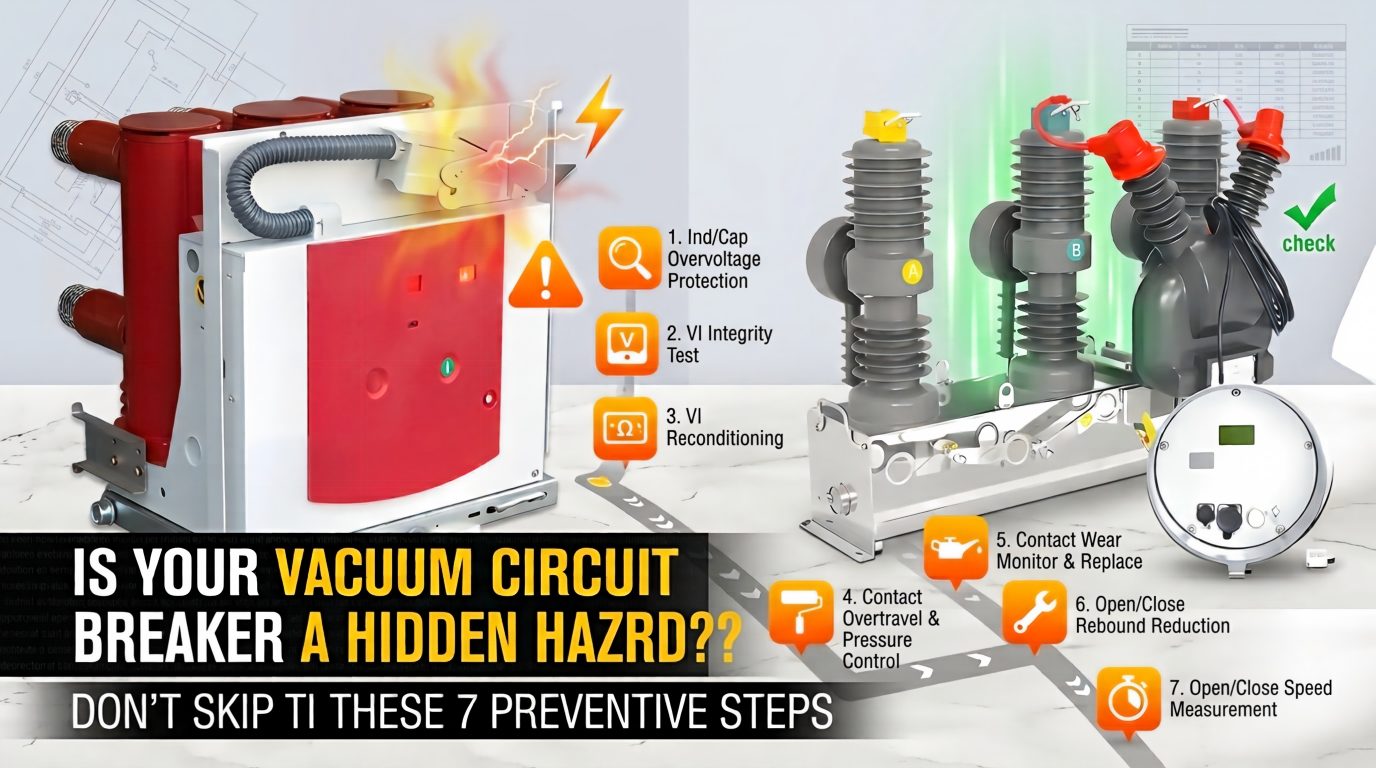
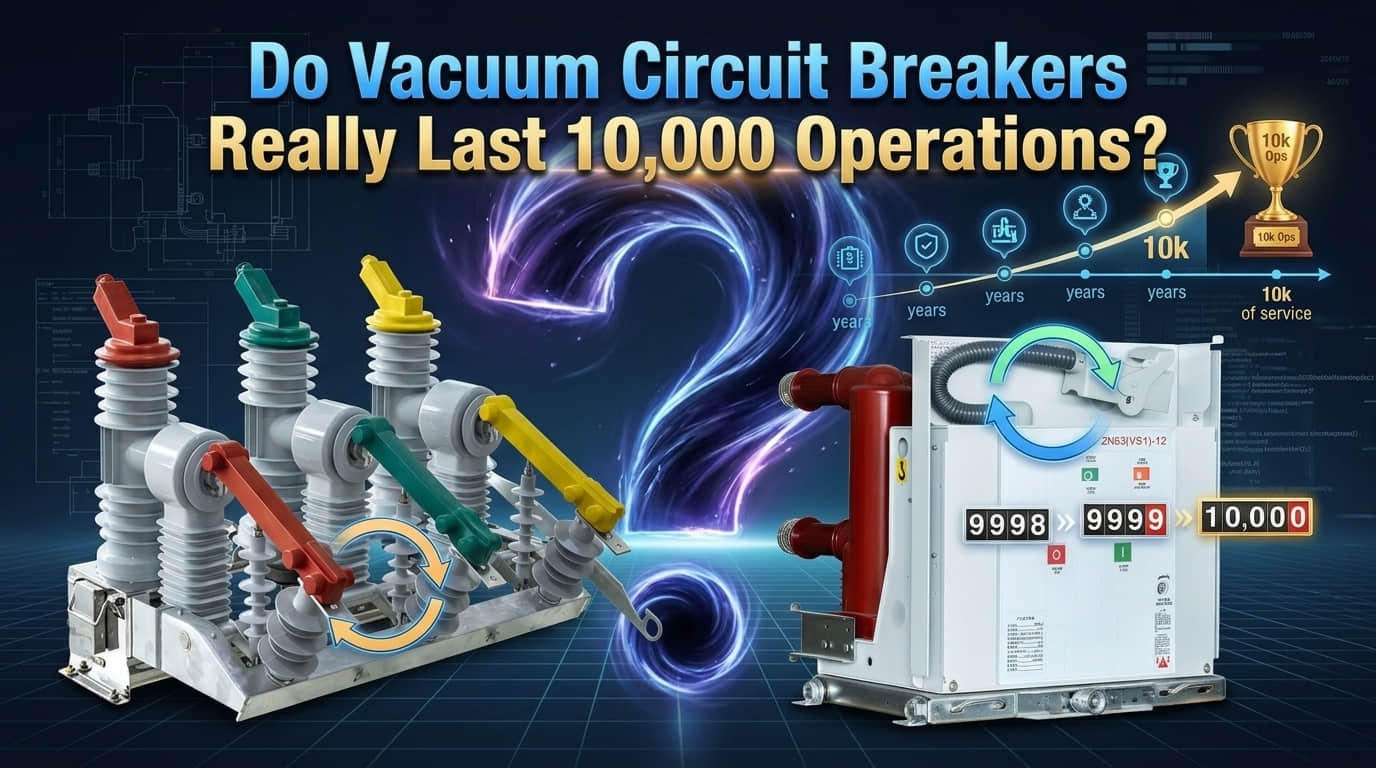
In medium-voltage projects, few brochure claims are repeated more often than this one: “10,000 operations”. On paper, it sounds simple. In actual procurement, engineering, and maintenance work, it is not.
Buyers of Vacuum Circuit Breakers often assume that 10,000 operations means 10,000 real switching events in the field under any duty. That assumption causes expensive mistakes.
A breaker can pass a factory endurance test and still deliver a much shorter practical life in a dusty mine, a humid coastal substation, or a motor-heavy industrial plant. The difference lies in duty profile, contact wear, environment, maintenance discipline, and the quality of the operating mechanism.
This guide is written for engineers, EPC teams, utility buyers, plant managers, and procurement professionals who need a commercial answer, not a marketing slogan. We will break down what the number really means, where it misleads, how service life is measured, what cycle expectations look like by voltage class, and how to evaluate the total cost of ownership before you buy.
When comparing the Indoor Vacuum Circuit Breaker and Outdoor Vacuum Circuit Breaker across common ratings of 11 kV, 15 kV, 17 kV, 22 kV, 24 kV, 33 kV and 35 kV, this article will help you separate true lifecycle value from brochure‑level claims.
What Does “10,000 Operations” Really Mean for Vacuum Circuit Breakers?
In commercial terms, “10,000 operations” usually refers to the circuit breaker operation cycle rating under defined test conditions. It does not automatically mean 10,000 fault interruptions or 10,000 years of carefree service.
Three terms matter most.
Operation-cycle rating: the number of opening and closing actions the breaker mechanism is designed and tested to perform.
Vacuum interrupter mechanical endurance: how long the mechanism and interrupter assembly can survive repeated operation, often without significant load current interruption.
Electrical endurance: how many switching or interruption events the breaker can perform under actual electrical stress, especially load current and fault current.
In purchase negotiations, these numbers should never be treated as interchangeable. A breaker may achieve high mechanical endurance but still have a much lower practical limit when switching transformers, motors, capacitor banks, or repeated fault current.
This distinction matters because downtime costs are usually driven by electrical duty, not by no-load operation counts.
The Real Problem: Why a 10,000-Operation Claim Can Mislead Buyers
The biggest buying mistake is assuming the rated cycle number equals usable life in service. It does not.
In the lab, testing is controlled. In the field, operating conditions are messy. Ambient heat, dust, vibration, humidity, operator practice, lubrication quality, auxiliary voltage stability, and the frequency of switching all influence service life.
A utility feeder breaker exposed to dust and monsoon humidity may age faster than a similar breaker installed in a climate-controlled industrial switch room. Yet both may carry the same nominal operation rating.
The issue becomes more serious when buyers compare suppliers based only on catalog numbers. One manufacturer may publish 10,000 operations based on standard mechanical endurance, while another may provide detailed electrical endurance data, interruption duty data, contact erosion criteria, and maintenance recommendations. The second supplier usually gives the more useful commercial picture.
That is why experienced buyers ask a better question: 10,000 operations under what exact conditions?
Quick Answer: Yes, but Only Under Specific Operating Conditions
Yes, many Vacuum Circuit Breakers can last 10,000 operations. Some can exceed that mechanically.
But that result is realistic only when the breaker is correctly selected, properly installed, used within its switching duty, and maintained at the right medium-voltage breaker maintenance intervals.
Four variables determine whether 10,000 operations is real or theoretical.
Switching duty: frequent motor starts, capacitor switching, and fault interruptions consume life much faster than occasional feeder operation.
Environment: dust, salt, humidity, temperature swings, and vibration accelerate wear and increase failure risk.
Maintenance quality: poor lubrication, unchecked misalignment, and neglected auxiliary circuits shorten useful life quickly.
Breaker design: contact material, actuator robustness, interrupter quality, and assembly precision directly affect endurance consistency.
That is why a serious procurement review must look beyond the headline rating and into the actual duty profile of the site.
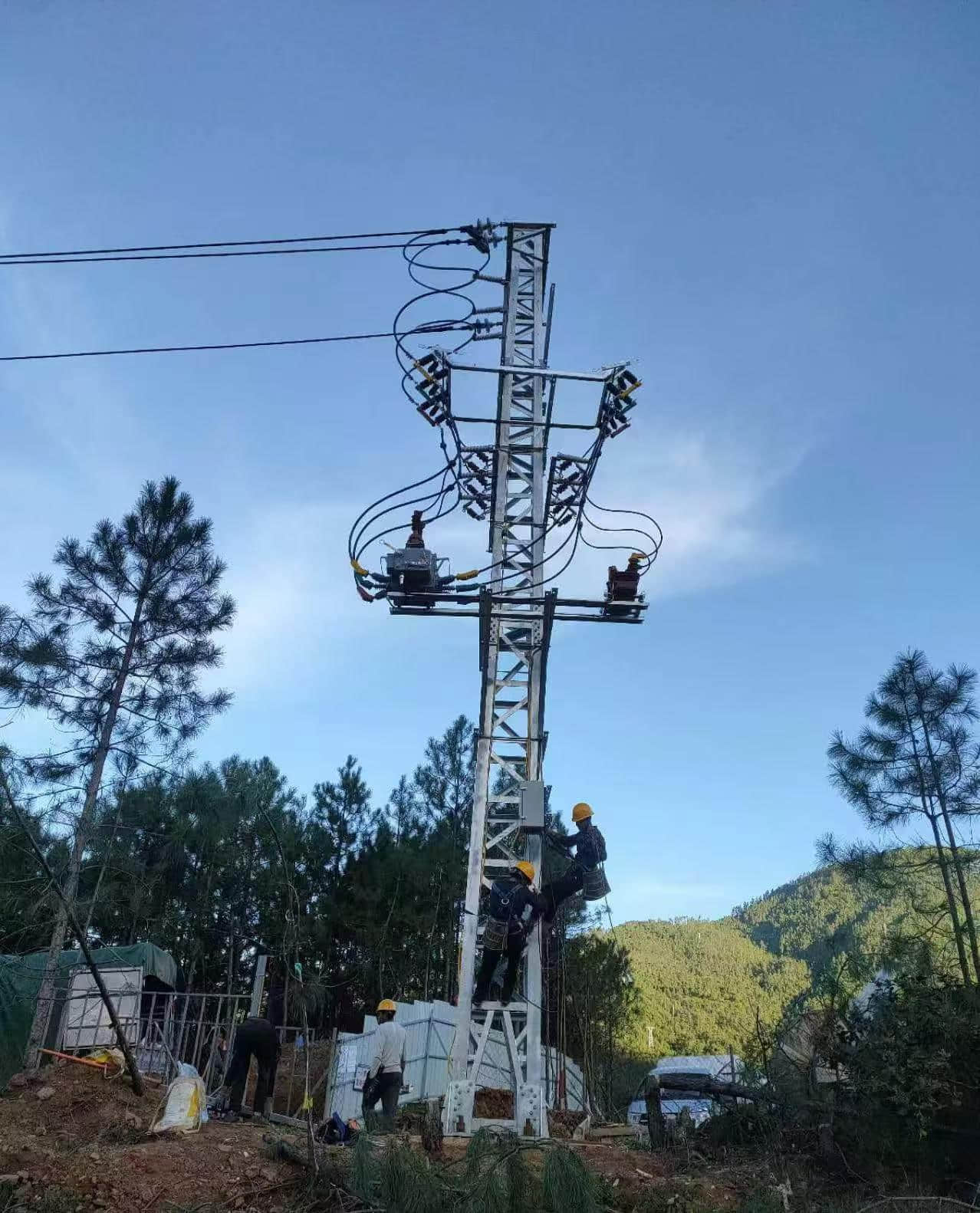
How Vacuum Circuit Breaker Service Life Is Actually Measured
Vacuum circuit breaker service life is measured through a combination of laboratory endurance tests, dielectric checks, interruption tests, and real-world maintenance history.
Manufacturers typically validate performance against IEC or ANSI standards. These tests are essential, but they are not the whole story. Standards prove the product can meet a defined minimum requirement. They do not guarantee identical field performance across every operating environment.
From a buyer’s standpoint, the best measure of service life includes three layers:
Type-test validation: confirms the breaker design passed recognized endurance and interruption tests.
Routine and factory test records: confirm the actual production unit meets manufacturing quality requirements.
Field duty history: confirms how the breaker behaves in real applications with real maintenance practices.
In practice, the gap between test performance and application performance is where lifecycle cost is won or lost.
Mechanical Endurance vs Electrical Endurance
This is the most important technical-commercial distinction in the entire buying process.
Mechanical endurance measures how many open-close cycles the breaker can perform, generally without major electrical stress. It primarily tests the actuator, linkages, springs, bearings, latches, and motion control system.
Electrical endurance measures how many times the breaker can interrupt current under load or fault conditions. This places stress on the vacuum interrupter, contacts, arc control characteristics, and thermal performance.
A breaker that easily survives 10,000 no-load operations may only be rated for a far smaller number of full short-circuit interruptions. In many medium-voltage systems, the latter matters far more.
For example, repeated interruption of high inrush currents from motors or transformers may not equal full fault duty, but it still imposes more wear than simple mechanical cycling. Buyers who ignore this difference often underestimate replacement and maintenance costs.
Contact Wear, Arc Energy, and Switching Frequency
Vacuum circuit breaker contact wear is one of the clearest indicators of remaining service life. Every interruption event produces arc energy. The greater the current and the more frequent the switching, the faster the contact system degrades.
In a lightly loaded feeder, contact wear may remain low for years. In a process plant where motors start and stop many times per shift, wear can accumulate much faster.
Arc energy is not just a laboratory concept. It translates directly into business outcomes:
Higher contact erosion
Reduced interruption reliability
Increased maintenance frequency
Greater risk of unplanned outage
Earlier vacuum interrupter replacement
A common field pattern is this: the mechanism remains functional, but electrical performance declines because contact wear reaches service limits first. That is why vacuum interrupter mechanical endurance should never be evaluated in isolation from switching duty.
Rated Duty by Voltage Class
Voltage class matters because insulation design, application environment, and typical duty differ between systems.
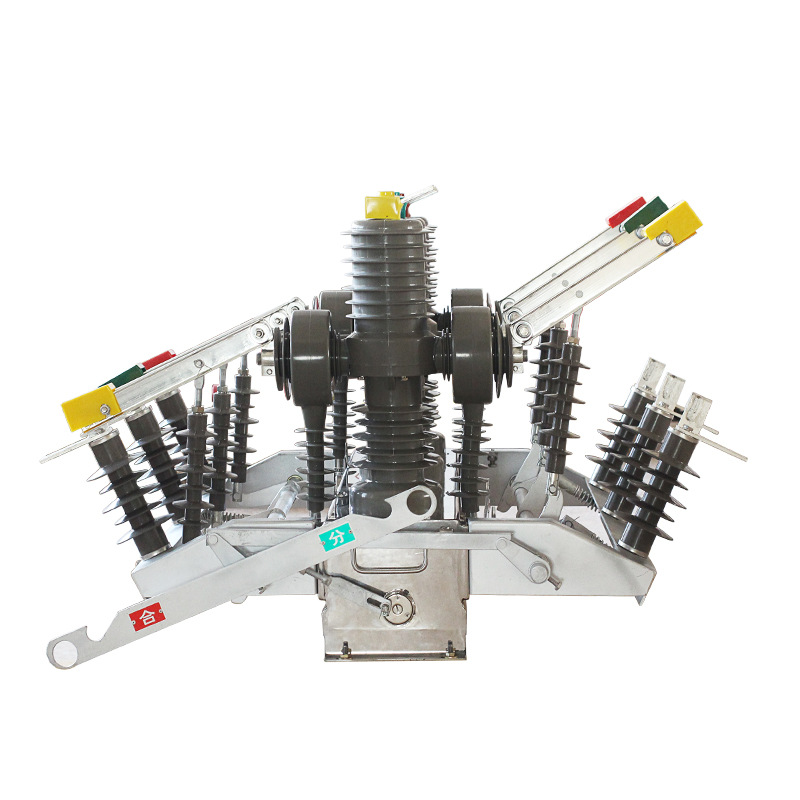
An Indoor vacuum circuit breaker installed in a clean switchgear room often benefits from more stable temperature, lower contamination, and better maintenance access. An Outdoor Vacuum Circuit Breaker may face UV exposure, rain, dust, corrosion, and wider thermal cycling.
The practical expectations for an 11kv vacuum circuit breaker in industrial distribution are not identical to those for a pole-mounted 22KVvacuum circuit breaker on a rural feeder. Likewise, a 33KV vacuum circuit breaker or 35KV vacuum circuit breaker used in utility or heavy industrial duty may see fewer total electrical interruptions but much more severe consequences when failure occurs.
That is why smart buyers map service-life expectations by both voltage class and use case, not by voltage alone.
Service Life by Voltage Class: Typical Cycle Expectations
The table below gives a practical reference point. These are not universal guarantees. They are realistic commercial expectations based on common market configurations, standard endurance patterns, and field usage trends.
Data Table: Typical Vacuum Circuit Breaker Operation Cycle Rating by Voltage
| VOLTAGE CLASS | COMMON PRODUCT TYPE | TYPICAL MECHANICAL ENDURANCE | TYPICAL ELECTRICAL ENDURANCE | TYPICAL USE CASE |
|---|---|---|---|---|
| 11 kV | Indoor vacuum circuit breaker | 10,000–30,000 operations | 20–100 full fault interruptions | Industrial feeders |
| 15 kV | Indoor vacuum circuit breaker | 10,000–30,000 operations | 20–100 full fault interruptions | Commercial substations |
| 17 kV | Indoor vacuum circuit breaker | 10,000–30,000 operations | 20–100 full fault interruptions | Utility distribution |
| 22 kV | Outdoor vacuum circuit breaker | 10,000–20,000 operations | 20–50 full fault interruptions | Pole-mounted distribution |
| 24 kV | Indoor/Outdoor vacuum circuit breaker | 10,000–30,000 operations | 20–100 full fault interruptions | Renewable integration |
| 33 kV | Outdoor vacuum circuit breaker | 10,000–20,000 operations | 10–50 full fault interruptions | Primary distribution |
| 35 kV | Outdoor vacuum circuit breaker | 10,000–20,000 operations | 10–50 full fault interruptions | Grid and heavy industry |
Notice the commercial pattern. Mechanical endurance often looks broadly similar across classes. Electrical endurance becomes more application-sensitive as fault-duty severity and environmental exposure increase.
For buyers, the key message is simple: if your site experiences frequent switching, fault clearing, or harsh outdoor exposure, you should focus less on the headline operation count and more on lifecycle support, interrupter replacement strategy, and maintenance access.
Real-World Examples: When 10,000 Operations Is Real—and When It Is Not
Field results are rarely determined by one variable. The following examples show how the same nominal rating can produce very different commercial outcomes.
Example 1: Indoor Vacuum Circuit Breaker in a Clean Industrial Plant
Consider a food-processing plant running a medium-voltage switchboard with feeder breakers in a climate-controlled room. The breakers operate mostly for planned switching, occasional isolation, and routine testing. Fault events are rare.
In this setting, an Indoor vacuum circuit breaker can realistically achieve or exceed 10,000 mechanical operations over a long service window, provided the maintenance team tracks operation count, checks travel and wipe, and lubricates the mechanism according to duty.
One practical pattern seen in industrial maintenance programs is that breakers used only for feeder isolation may remain mechanically healthy for many years, with the first major intervention driven by age-related lubrication issues rather than interrupter wear.
Commercially, this is the environment where brochure ratings are closest to reality.
Example 2: Outdoor Vacuum Circuit Breaker on a Dusty Utility Feeder
Now consider a rural utility line using an Outdoor Vacuum Circuit Breaker mounted in a dusty, high-humidity area. The breaker operates during sectionalizing events, storm recovery, and fault isolation. Auxiliary enclosures face temperature swings and moisture intrusion risk.
On paper, the breaker may still carry a 10,000-operation mechanical rating. In practice, actuator stress, corrosion, dust ingress, degraded lubrication, and repeated fault duty can reduce useful life significantly.
Utilities often find that outdoor service life is not limited first by the interrupter itself, but by secondary factors: control wiring, seals, operating mechanism consistency, or insulation contamination. This is why enclosure design, ingress protection, and local service support matter so much in outdoor procurement.
A lower purchase price looks attractive until one storm season exposes weak field reliability.
Example 3: Frequent Motor Switching in an 11kV Vacuum Circuit Breaker Panel
Motor duty changes everything.
An 11kv vacuum circuit breaker in a cement plant, water treatment facility, or metals plant may switch large motors repeatedly. Even when those operations are not fault interruptions, the switching frequency places higher demands on the mechanism and increases arc-related stress over time.
In this scenario, the issue is not just the raw operation count. It is the cumulative combination of:
Frequent opening and closing
Higher inrush duty
Thermal stress
Accelerated vacuum circuit breaker contact wear
Increased need for condition-based maintenance
Plants that treat motor-switching breakers like ordinary feeder breakers usually discover the mistake late, often after nuisance trips, contact wear alarms, or degraded timing performance.
For this type of duty, premium interrupter quality and robust actuator design can justify a higher upfront cost very quickly.
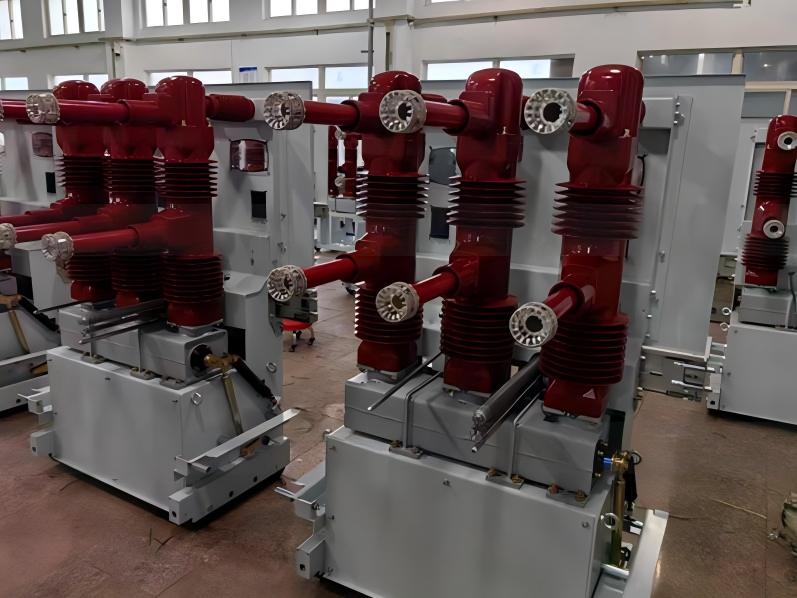
Data Table: What Factors Shorten Vacuum Circuit Breaker Life Fastest
Below is a practical summary of the variables that most often reduce service life in the field. This is the list maintenance teams should monitor if they want to control outage risk and replacement cost.
| LIFE FACTOR | IMPACT ON SERVICE LIFE | TYPICAL BUSINESS RISK | MONITORING PRIORITY |
|---|---|---|---|
| Frequent switching | High | Faster mechanism fatigue | Very High |
| Fault current interruption | Very High | Accelerated contact erosion | Very High |
| Poor lubrication | High | Mechanism failure | High |
| Dust/humidity | Medium to High | Insulation and actuator issues | High |
| Misalignment | High | Incomplete closing/tripping | High |
| Inadequate maintenance intervals | High | Unexpected downtime | Very High |
| Low-quality components | High | Premature replacement cost | Very High |
From a financial perspective, three items usually dominate lifecycle risk: frequent switching, fault interruption history, and inadequate maintenance intervals. If your supplier cannot help you track those three, the operation rating alone has little planning value.
Maintenance Intervals: How to Extend Medium Voltage Breaker Service Life
Maintenance is where theoretical endurance becomes practical uptime.
Well-managed medium voltage breaker maintenance intervals reduce the chance of sudden mechanism seizure, slow closing, failed tripping, contact degradation, and insulation-related problems. More importantly, they convert maintenance from a reactive emergency expense into a planned lifecycle strategy.
In commercial operations, the goal is not to “maintain more.” The goal is to maintain smarter, based on duty and condition.
Recommended Inspection Points
The highest-value inspection points are the ones most closely tied to real failure modes.
Operating mechanism: inspect springs, latches, bearings, linkages, and stored-energy function.
Contact travel and wipe: verify movement remains within manufacturer tolerance.
Vacuum integrity: perform applicable tests according to manufacturer and standard guidance.
Auxiliary circuits: check trip coil, close coil, motor charging circuit, limit switches, and wiring condition.
Lubrication condition: assess dryness, contamination, hardening, or over-application.
Insulation cleanliness: especially important in outdoor or dusty environments.
Teams that only check visual appearance often miss the early warning signs. The more useful approach is to tie inspections to measurable criteria: operation counts, timing values, travel measurements, wear indicators, and duty records.
Condition-Based vs Time-Based Maintenance
Calendar-only maintenance is easy to schedule, but it is often inefficient.
Condition-based maintenance uses actual operating history and test results to decide when service is needed. In most medium-voltage systems, that produces better cost control.
For example, two identical breakers installed on the same day may require very different service if one has performed 500 switching operations and the other 5,000. Treating them the same wastes labor in one case and creates risk in the other.
A practical condition-based program should track:
Total operation count
Number of fault interruptions
Number of heavy-load switching events
Mechanism timing drift
Contact wear indicators
Environmental stress level
This method aligns maintenance expense with actual asset consumption. It also improves budgeting accuracy.
When to Replace the Vacuum Interrupter
The vacuum interrupter should be replaced when evidence shows performance margin has been consumed.
Typical replacement triggers include:
Measured contact wear beyond allowable limit
Failed vacuum integrity or dielectric-related test
End-of-life duty accumulation after repeated heavy switching or fault interruption
Timing or travel deviation linked to interrupter condition
Manufacturer guidance following severe fault events
In real plants, waiting for failure is the most expensive replacement strategy. Planned replacement during a maintenance window is almost always cheaper than emergency outage response.
This is one reason experienced buyers pay attention to spare interrupter availability before purchase. A breaker with weak aftermarket support becomes a lifecycle liability fast.
How to Verify a Manufacturer’s 10,000-Operation Claim Before You Buy
If a supplier says its breaker lasts 10,000 operations, the correct response is not skepticism alone. It is structured verification.
A good commercial evaluation compares documented evidence, application fit, and service support.
Ask for Type Test Reports and Standards Compliance
Request the actual test package, not just a statement in the brochure.
At minimum, buyers should ask for:
Type-test reports to relevant IEC or ANSI standards
Mechanical endurance test records
Short-circuit interruption test data
Routine-test records for the delivered unit
Insulation, timing, and functional test results
This documentation helps confirm the published circuit breaker operation cycle rating is supported by recognized testing. It also shows whether the manufacturer is disciplined enough to support its claims transparently.
Check Duty Profile, Not Just Brochure Numbers
Many purchase errors happen because the breaker is suitable in general, but wrong for the actual switching duty.
You should define whether the breaker will be used for:
Feeder protection
Motor switching
Transformer switching
Capacitor bank duty
Frequent isolation or transfer duty
Renewable integration with variable load patterns
A 24KVvacuum circuit breaker in a solar or wind integration project may see a very different switching pattern from a 15KV vacuum circuit breaker in a commercial building substation. A 17KV vacuum circuit breaker serving utility distribution may prioritize fault performance and environmental resilience over frequent operation convenience.
Brochure numbers are general. Duty profile is specific. Procurement must be specific.
Review Spare Parts and Service Support
This step is often overlooked until the first outage happens.
Ask these questions early:
How quickly can spare vacuum interrupters be supplied?
Are operating mechanism parts stocked regionally?
Is field service available locally?
Can the supplier support commissioning, testing, and operator training?
What is the expected spare-parts support period?
A stronger aftermarket plan often has more commercial value than a slightly higher mechanical endurance figure. This is where established manufacturers and service-oriented suppliers stand apart.
For buyers evaluating long-term uptime, this is one area where companies such as Weisho Electric can enter the conversation meaningfully if they provide documented testing, clear maintenance guidance, and dependable spare-parts support rather than relying only on catalog promises.
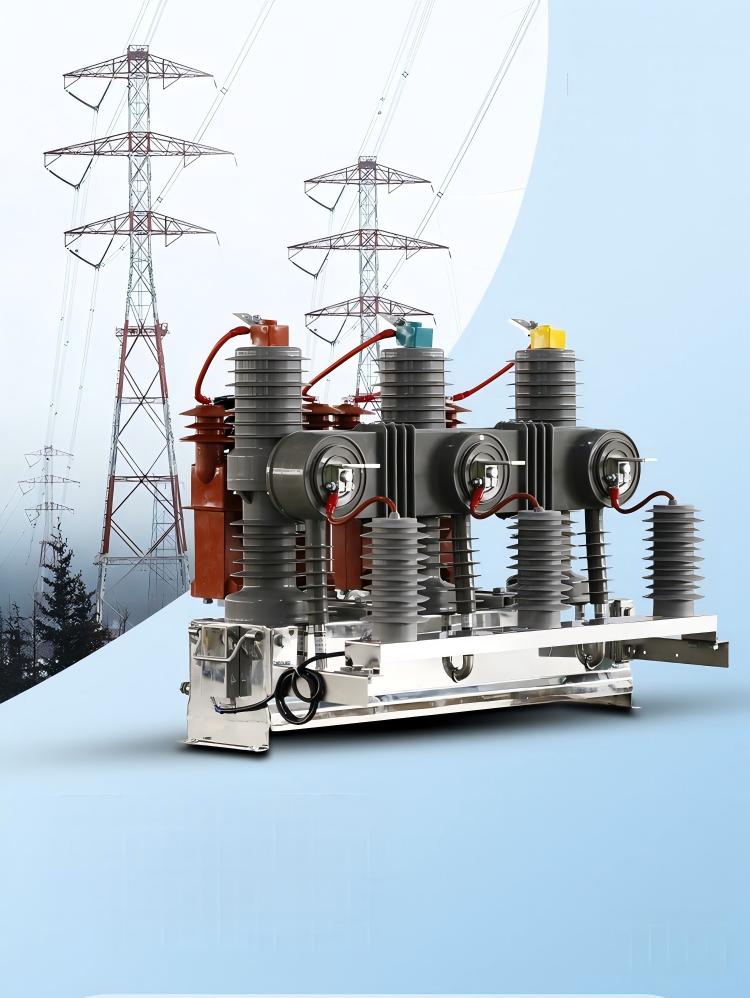
Indoor vs Outdoor Vacuum Circuit Breaker: Which Lasts Longer in Practice?
In practice, indoor models often achieve more stable lifecycle performance because the environment is controlled. But that does not mean outdoor breakers are less durable by design.
An Indoor vacuum circuit breaker benefits from:
Lower contamination exposure
More stable humidity and temperature
Easier inspection access
Lower corrosion risk
An Outdoor Vacuum Circuit Breaker must deal with:
Dust and pollution
Rain and moisture ingress risk
Thermal expansion and contraction
UV exposure
Insects, condensation, and enclosure aging
However, outdoor units designed with robust sealing, corrosion resistance, strong control cabinet design, and proven field support can perform extremely well. The issue is not indoor versus outdoor in the abstract. The issue is whether the product design matches the site reality.
A high-quality outdoor breaker on a dusty feeder may outlast a lower-quality indoor breaker in a motor-intensive process plant. Duty and design matter more than category labels alone.
Cost of Ownership: Is a Higher-End Vacuum Circuit Breaker Worth It?
In many commercial cases, yes.
The lowest purchase price rarely represents the lowest lifecycle cost. A breaker that costs less upfront but needs more maintenance, has inconsistent endurance, or lacks spare-parts support can become more expensive within a few years.
This is especially true where outage cost is high. In mining, metals, water infrastructure, data-driven manufacturing, and utility networks, a single unexpected breaker failure may cost more than the price difference between an economy unit and a premium unit.
Lifecycle economics should include:
Initial procurement price
Commissioning and installation effort
Maintenance labor frequency
Spare-parts cost and lead time
Expected interrupter replacement interval
Outage and production-loss risk
Service support quality
Data Table: Low-Cost vs Premium Vacuum Circuit Breaker Lifecycle Economics
| EVALUATION FACTOR | LOW-COST BREAKER | PREMIUM BREAKER |
|---|---|---|
| Initial purchase price | Lower | Higher |
| Mechanical endurance consistency | Moderate | High |
| Contact wear resistance | Moderate | High |
| Maintenance frequency | Higher | Lower |
| Outage risk | Higher | Lower |
| Spare parts availability | Uncertain | Stronger |
| 10-year ownership cost | Often higher | Often lower |
In real procurement reviews, this pattern shows up again and again. The cheap breaker wins the bid. Then maintenance burden, trip inconsistencies, or delayed parts erase the savings.
That is why sophisticated buyers compare not just capex, but 10-year operational value. When the supplier can prove endurance quality, replacement strategy, and service support, the premium often pays back faster than expected.
For organizations that value reliability over one-time purchase optics, a supplier such as Weisho Electric should be judged on total support capability, application matching, and verified performance data—not merely on nominal ratings.
Buyer Checklist: How to Select a Vacuum Circuit Breaker for Long Service Life
Below is a practical shortlist used by experienced engineers and commercial teams to avoid the most common mistakes.
Match Voltage Class and Duty Correctly
Choose the voltage class that fits both system rating and switching pattern.
11kv vacuum circuit breaker: common in industrial feeders and motor applications
15KV vacuum circuit breaker: common in commercial and institutional substations
17KV vacuum circuit breaker: common in utility-oriented distribution roles
22KVvacuum circuit breaker: often seen in outdoor distribution systems
24KVvacuum circuit breaker: widely used in industrial and renewable integration projects
33KV vacuum circuit breaker: common in primary distribution
35KV vacuum circuit breaker: used in heavy industry and grid applications
Voltage alone is not enough. Ask whether the breaker will be a lightly operated feeder device or a heavily cycled switching asset.
Confirm Mechanical and Electrical Endurance Separately
Never accept one combined endurance statement.
Insist on separate values for:
Mechanical operation cycles
Rated normal current switching duty
Short-circuit interruption duty
Special duty such as motor or capacitor switching if relevant
This prevents one of the most costly misunderstandings in medium-voltage procurement: confusing no-load endurance with real interruption life.
Evaluate Maintenance Access and Parts Support
The easier a breaker is to inspect, test, and repair, the lower the real downtime cost.
Prioritize designs that offer:
Accessible operating mechanism
Clear wear or travel checks
Straightforward interrupter replacement path
Documented maintenance procedures
Reliable spare-parts commitment
In field service, maintainability is not a side issue. It is one of the main drivers of lifecycle ROI.
FAQ
Do vacuum circuit breakers really last 10,000 operations?
Yes, many do in mechanical terms, but actual service life depends heavily on application duty, environment, and maintenance quality. A breaker used mainly for occasional no-load switching can realistically reach or exceed that figure, while one exposed to frequent fault interruption or harsh outdoor conditions may reach its practical service limit sooner.
What is the difference between mechanical endurance and electrical endurance?
Mechanical endurance measures how many open-close cycles the mechanism can perform, usually without significant electrical stress. Electrical endurance measures how many times the breaker can interrupt load current or fault current, which creates arc energy and causes contact wear.
How does vacuum circuit breaker contact wear affect lifespan?
Contact wear gradually reduces interruption reliability because repeated arc energy erodes the contact material. The higher the switching frequency and the more severe the current interrupted, the faster wear accumulates and the sooner maintenance or interrupter replacement becomes necessary.
Are outdoor vacuum circuit breakers less durable than indoor models?
Not necessarily, but outdoor units face harsher environmental stress such as dust, humidity, temperature swings, and corrosion exposure. Without proper enclosure quality, sealing, and maintenance, their practical lifespan can be shorter than indoor models in clean installations.
How often should medium voltage breakers be maintained?
Maintenance intervals should follow manufacturer guidance, operation count, duty severity, and condition-monitoring results. In practice, operation-based and condition-based maintenance is more accurate than relying only on calendar intervals.
Which voltage class is most common for industrial use?
11kV vacuum circuit breaker, 15KV vacuum circuit breaker, and 24KVvacuum circuit breaker models are widely used across industrial and commercial medium-voltage systems. The best choice depends on the facility’s system design, load mix, and switching profile.
Can a 33kV or 35kV vacuum circuit breaker also reach 10,000 operations?
Yes, mechanically it often can, but electrical endurance under real fault duty may be much lower. Buyers should verify short-circuit interruption data and expected duty accumulation instead of assuming the mechanical operation figure tells the full story.
What documents should buyers request from suppliers?
Ask for type-test reports, routine-test records, standards compliance certificates, maintenance manuals, recommended spare-parts lists, and written spare-parts support commitments. These documents are far more useful than a standalone brochure claim.
Final Takeaway and Next Step
The honest answer is this: Vacuum Circuit Breakers can last 10,000 operations, but only when the number is understood correctly.
It is usually a mechanical endurance reference, not a blanket promise of 10,000 real-world switching events under any load, environment, or fault duty. Actual service life depends on how the breaker is used, where it is installed, how well it is maintained, and how seriously the supplier supports the product after delivery.
If you are buying an Indoor vacuum circuit breaker or an Outdoor Vacuum Circuit Breaker, and comparing an 11kv vacuum circuit breaker, 15KV vacuum circuit breaker, 17KV vacuum circuit breaker, 22KVvacuum circuit breaker, 24KVvacuum circuit breaker, 33KV vacuum circuit breaker, or 35KV vacuum circuit breaker, do not stop at the catalog headline.
Compare your actual duty profile. Request certified test data. Verify mechanical and electrical endurance separately. Review maintenance requirements, spare-parts support, and field service capability before you place the order.
If long-term uptime, lower outage risk, and stronger lifecycle ROI matter to your project, now is the time to speak with a qualified supplier, review documented performance evidence, and select the right breaker for the real conditions at your site.
Take the next step today: gather your switching-duty data, shortlist compliant suppliers, request test certificates, and contact a proven Vacuum Circuit Breaker manufacturer or partner for a technical-commercial evaluation before you buy.