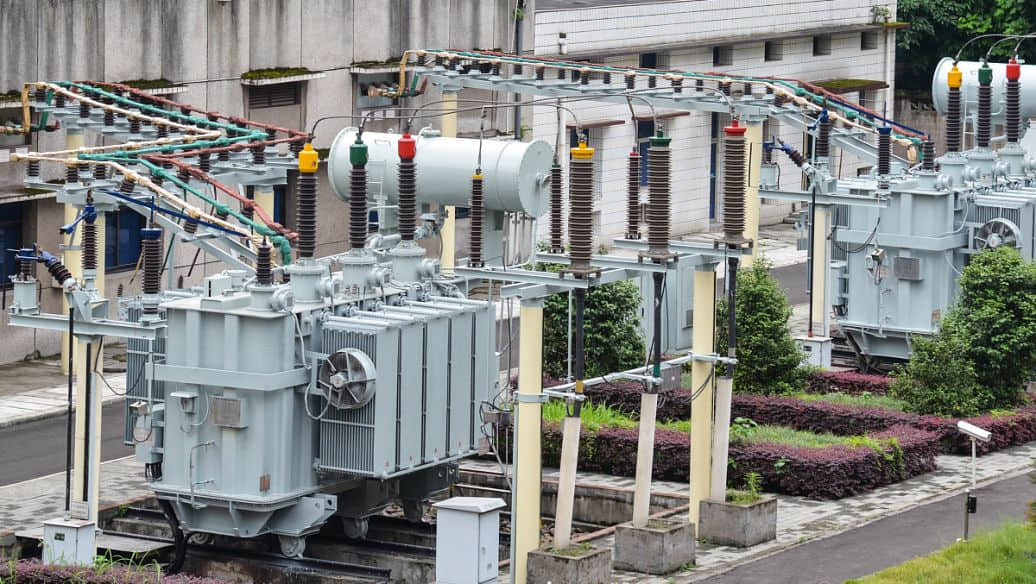
A pad-mounted transformer is a special electrical device that is critical to modern power distribution. You often see it in distinct green metal boxes on the ground in neighborhoods, near shopping centers, and commercial parks. This equipment takes high-voltage electricity from underground lines and steps it down to a safe, low-voltage level (like or ) suitable for homes and businesses.
These transformers are essential in densely populated areas where overhead wires are impractical, and approximately half of all city and town power systems utilize them for their safety and reliability.
Core Value Proposition: Safety and Aesthetics
The unique design of the pad-mounted transformer offers significant safety advantages over traditional pole-mounted units:
Public Safety: They lower the chance of accidents by keeping all high-voltage parts fully locked up and enclosed within a tamper-resistant cabinet. This design prevents unauthorized personnel and the general public from touching dangerous components.
Environmental Integration: By blending into the area with their low-profile metal enclosures, they maintain the aesthetic quality of the neighborhood better than overhead lines and poles.
Reliability: They provide steady power, designed to function reliably even in adverse weather conditions.
Weisho Key Takeaway: Always stay away from pad-mounted transformers and immediately notify the utility company if you see any damage, as the cabinet contains energized high-voltage equipment.
Definition
Design and Technical Specifications
A pad-mounted transformer is defined by its integrated, ground-level, and secure design. It connects to underground power lines to step down high-voltage electricity to a lower, usable voltage for end-users, commonly found in residential, commercial, and business parks.
The primary function is to deliver electricity safely and reliably, offering significant benefits due to its unique construction:
Enhanced Safety: The locked, tamper-resistant cabinet keeps dangerous energized parts away from the public, which is critical in easily accessible locations.
Aesthetic Considerations: Its low-profile design allows it to blend with the landscape, avoiding the visual impact of overhead pole-mounted equipment.
Reliability: The closed, strong casing protects the internal components from rain, debris, and animals.
A. Core Technical Specification Profile
The following table outlines the typical technical parameters for a standard distribution-class pad-mounted transformer:
| Characteristic | Specification | Engineer's Focus |
|---|---|---|
| Type | Pad-mounted, compartmental-type distribution transformer | Focus on separate high-voltage/low-voltage compartments. |
| Voltage Rating (Primary) | Up to (High-voltage) | Must match incoming utility line voltage. |
| Voltage Rating (Secondary) | Up to (Low-voltage, for feeder circuits) | Must match end-user load requirements (e.g., ). |
| Cooling Method | Liquid immersed, self-cooled (Type ONAN) | Uses mineral or synthetic oil for efficient heat dissipation. |
| Rating | or smaller | Covers capacity from residential () up to light industrial distribution. |
| System Compatibility | Works with radial or loop-feed systems | Loop-feed allows power restoration from two directions during a fault. |
| Key Safety Feature | Uses self-protecting fuses and locked cases | Enhances public safety and prevents unauthorized access. |
B. Structural Safety and Placement
The design of the pad-mounted unit is centered on public safety and vandal resistance:
Secure Enclosure: The case is strong and hard to open, engineered to be tamper-resistant and corrosion-resistant.
Ground-Level Installation: By sitting directly on a concrete pad, it eliminates the hazards associated with pole-mounted installations, such as climbing or vehicle collisions with poles.
Compartmental Design: Internally, the high-voltage (primary) and low-voltage (secondary) sections are housed in separate, locked compartments, ensuring that maintenance work on the low-voltage side can be performed more safely.
Pad-Mounted Transformer Features
A. Professional Design and Construction
A pad-mounted transformer's design prioritizes public safety and aesthetic integration. Its distinctive features include:
Low-Profile Design: The unit is shaped low to the ground and sits directly on a reinforced concrete pad. This design eliminates the need for external fencing or a separate building, allowing it to seamlessly integrate into residential areas and commercial complexes.
Robust Enclosure: The cabinet is constructed from heavy-gauge steel and features a tightly locked, tamper-resistant structure. The hinges and doors are designed to prevent unauthorized access, protecting the high-voltage internal components from vandalism and accidental contact.
Compartmental Construction: Inside, the transformer utilizes a compartment-type construction. High-voltage (Primary) and low-voltage (Secondary) parts are separated by internal barriers. This organization enhances safety and simplifies maintenance by isolating energized sections.
| Feature | Engineering Description | Rationale |
|---|---|---|
| Low-profile design | Ground-level installation on a concrete slab. | Improves aesthetics and saves space in urban environments. |
| Compartment-type construction | Physical separation of high-voltage and low-voltage terminals. | Enhances safety for maintenance personnel and simplifies organization. |
| Outdoor mounting capability | Robust, corrosion-resistant steel cabinet. | Easy installation without the need for supplementary weather covers. |
| Compliance | Adherence to ANSI/IEEE and NEMA standards. | Ensures safety and reliability across the power system. |
B. Core Components and Functionality
The internal components are engineered to provide efficient voltage transformation while maintaining thermal stability:
Core and Coils: The core guides the magnetic flux, while the coils (windings) utilize the principle of electromagnetic induction to change the high voltage to low voltage.
Insulating Medium: The core and coils are immersed in transformer oil (mineral or synthetic) to provide superior cooling and enhance electrical insulation, preventing internal sparking. The cabinet utilizes cooling fins or radiators to help move heat away efficiently.
Bushings and Terminals: Bushings connect the transformer's internal coils to the external underground cables. These often utilize loadbreak elbow connectors on the primary side to allow energized sectionalizing by utility crews.
Protective Casing: The strong outside box provides essential protection against rain, dust, and external impacts.
C. Enhanced Public Safety Features
Safety is the paramount design consideration, especially given their public accessibility:
| Safety Feature | Primary Benefit to Personnel and Public | EEAT Relevance |
|---|---|---|
| Locked, tamper-resistant cabinet | Stops unauthorized personnel or the public from gaining internal access. | Meets anti-vandalism requirements for public-facing equipment. |
| Ground-mounted installation | Eliminates the fall hazard and complex maneuvering associated with pole-mounted units. | Improves operational safety and reduces utility costs. |
| Fully enclosed design | Hides all energized conductors and eliminates the risk of accidental contact. | Lowers the chance of electric shock by maintaining a secure physical barrier. |
| Integrated Protection | Includes internal fuses and surge arresters. | Stops dangerous transient voltage spikes and catastrophic internal failures. |
Professional Tip: The locked box and strong build keep you safe; however, never attempt to open, climb, or touch a pad-mounted transformer. The high-voltage compartment remains energized unless specifically isolated by utility personnel.
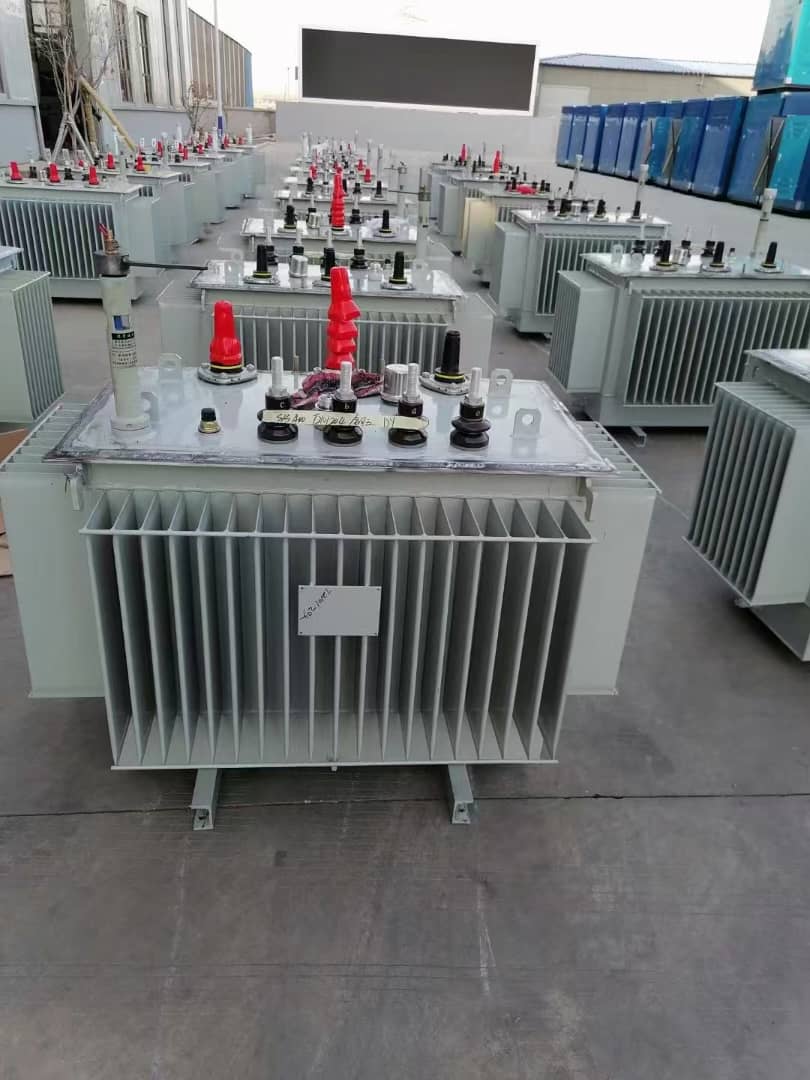
Operation: How the Pad-Mounted Transformer Works
A. The Principle of Voltage Step-Down
A pad-mounted transformer's core function is to facilitate the voltage step-down process, making high-voltage utility power safe and usable for local consumption.
Incoming High Voltage: Electricity originates from the power plant at extremely high voltages (up to ) and is delivered to the unit via underground cables. This voltage is far too strong for standard appliances.
Electromagnetic Induction: Inside the sealed unit, the transformer contains a core and two sets of coils (windings). These parts use the principle of electromagnetic induction to change the voltage.
Voltage Reduction: The Primary Winding (connected to the high-voltage input) has significantly more turns than the Secondary Winding (connected to the load). This Turns Ratio dictates the amount of voltage reduction. The transformer lowers the voltage to a safe, low-voltage level before distributing it to the end-user.
Outgoing Low Voltage: The output power is typically regulated to common utilization voltages, such as (residential) or (commercial/industrial).
| Stage | Voltage Level | Destination/Purpose |
|---|---|---|
| Incoming Power | Up to () | Delivered via underground cables to the transformer's primary winding. |
| After Step-Down | to | Distributed to homes, schools, and businesses for safe use. |
B. Reliability and Operational Longevity
The pad-mounted design ensures highly reliable and quiet operation over many years:
Quiet Operation: Pad-mounted transformers (especially the liquid-immersed type) are designed to minimize noise pollution, a critical factor for installation in residential neighborhoods. The enclosure also helps dampen sound.
Weather Resilience: The strong, hermetically sealed steel enclosure protects the internal core and coils from the environment, allowing the unit to work consistently in rain, snow, or extreme heat without interruption, guaranteeing steady power delivery.
Low Maintenance: The sealed system (often liquid-immersed) reduces the need for frequent maintenance compared to open substation designs, contributing to a longer, reliable service life.
Note: The transformer’s strong, locked box keeps all the parts safe and ensures the public is protected from the high voltage inside, even though you don't see the internal components in action.
Applications
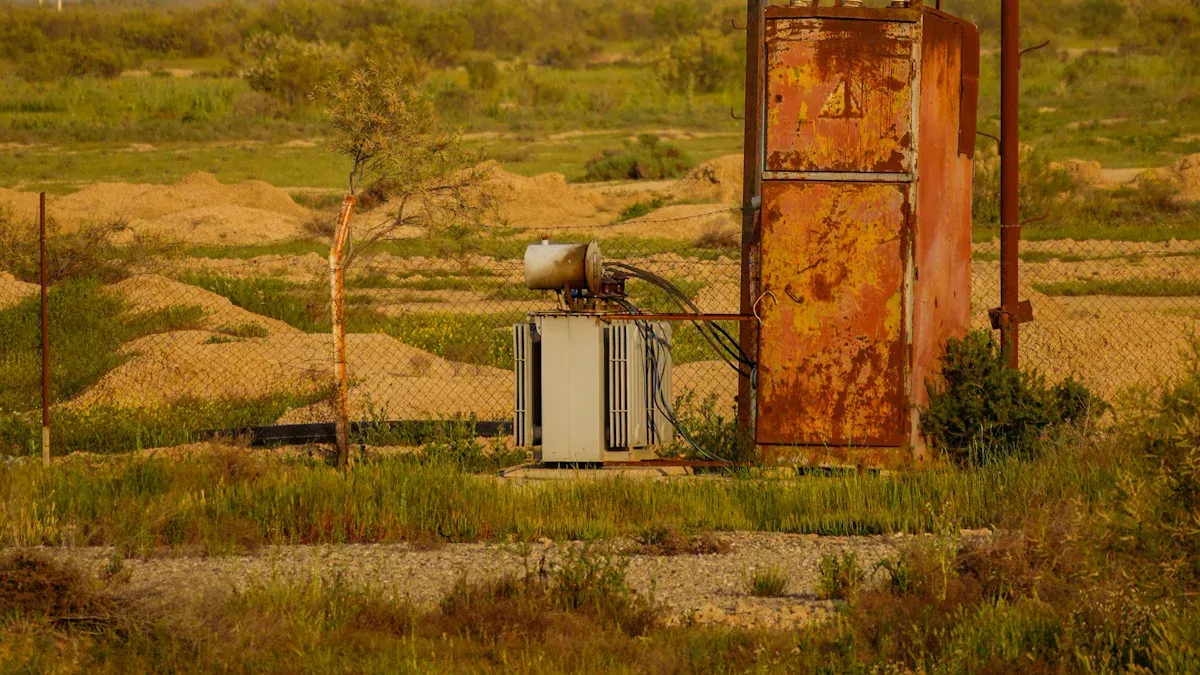
Key Applications Across Power Systems
The pad-mounted transformer's secure and self-contained design makes it an ideal choice for localized power step-down across various sectors, from residential neighborhoods to heavy industrial facilities.
A. Residential Power Distribution
Pad-mounted transformers are found in many neighborhoods, sitting on concrete pads near sidewalks or driveways.
Function: These units primarily supply single-phase power to homes and small residential complexes.
Safety & Aesthetics: They provide safe power to homes by eliminating overhead high-voltage wires. The locked box keeps children and pets safe, and the design blends into the surrounding area.
Capacity: Typically utilizes the lower range (e.g., to ) to power homes in cities and suburbs.
B. Commercial and Industrial Complexes
Pad-mounted transformers are critical for medium to large-scale power distribution, where higher capacity and reliability are non-negotiable.
Capacity Range: They can handle power needs ranging from up to (or ).
Voltage Step-Down: They lower high voltages like or down to safe commercial levels like or .
Applications: Widely used to support factories, shopping centers, business parks, and data centers, ensuring steady power for continuous operations.
C. Capacity Selection Benchmarks
The size ( rating) of the pad-mounted transformer directly correlates with the load demand of the application. Typical application suitability is illustrated below:
| kVA Capacity | Suitable Applications | System Type Focus |
|---|---|---|
| Small neighborhoods or light business use | Single-phase or small three-phase distribution | |
| Bigger neighborhoods or small businesses (e.g., fast-food outlets) | Focus on reliable residential distribution | |
| Small factories or medium businesses (e.g., retail chains) | Start of dedicated industrial feeders | |
| Large businesses or light factories | Used for commercial air conditioning and lighting loads | |
| Big factories or business centers with high power needs | Requires detailed load analysis and impedance matching | |
| Heavy factories or large business centers (e.g., mid-tier data centers) | Often integrated into loop-feed systems for enhanced reliability |
D. Integration into Modern Systems
Beyond traditional distribution, pad-mounted transformers are essential for:
Industrial Facilities: Powering heavy equipment and machinery in factories and warehouses.
Renewable Energy Integration: Working seamlessly with solar farms and wind turbines to step up or step down power for grid injection.
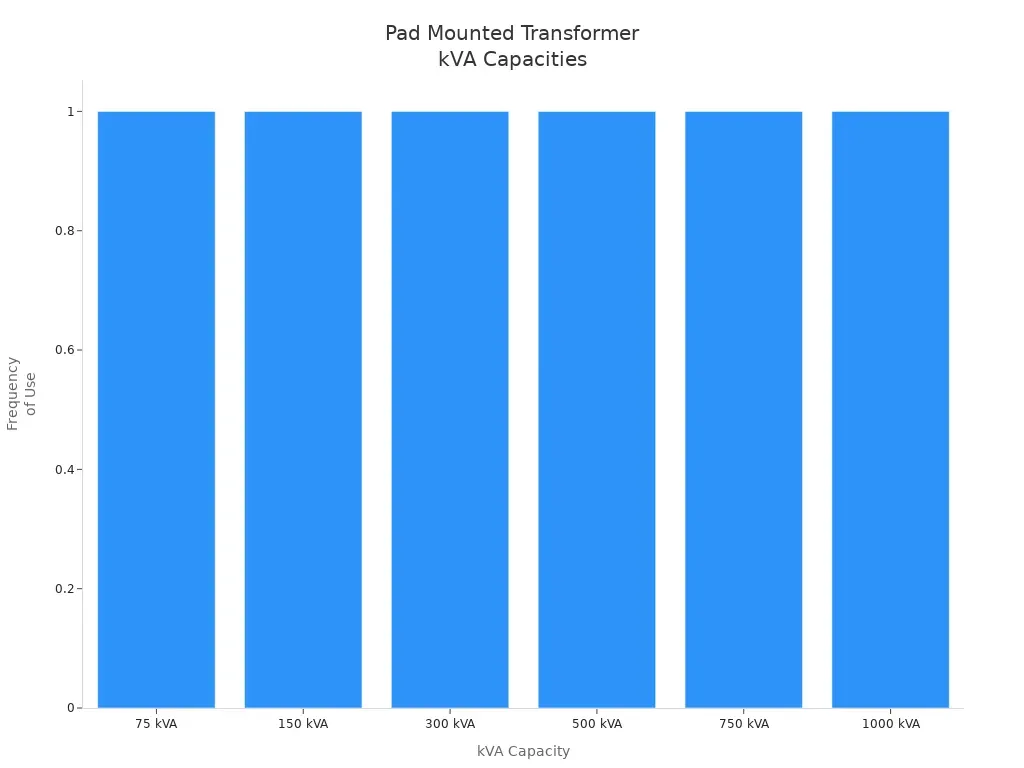
Pad-mounted transformers work for homes, stores, and factories. They help give safe and steady power wherever it is needed.
Application in Underground Distribution Systems
A. Underground Systems and Aesthetic Integration
Pad-mounted transformers are the foundational component of modern underground distribution systems. In dense urban areas where overhead lines are impractical, power lines run entirely beneath the ground.
Space Efficiency: Compact units can be easily installed on small concrete pads, in designated special rooms, or underground vaults—crucial for busy city blocks and commercial centers.
Aesthetic Advantage: Placement at ground level or below hides the power system from view, keeping streets visually clean and free of poles or wires.
Resilience: The sealed, robust casing keeps out water, dirt, and animals, reducing susceptibility to storm damage and external accidents, resulting in fewer blackouts.
| Advantage | Benefit to Underground Systems |
|---|---|
| Space Utilization | Fits in tight spots, crucial for urban growth and development |
| Environmental Protection | Sealed box keeps out water, dirt, and animals |
| Aesthetics | Hides equipment from view (behind bushes or in vaults), keeping streets neat |
| Rapid Deployment | Allows utility workers to add new connections or upgrade quickly without extensive street digging |
B. Safety and Reliability Advantages
The pad-mounted design inherently offers superior public safety and operational reliability.
| Safety Feature | Primary Advantage |
|---|---|
| Enclosed Design | Prevents public contact with dangerous live components |
| Locked Cabinets | Tamper resistance against unauthorized access and vandalism |
| Weather Resistance | Sealed casing ensures reliable operation in rain, snow, or extreme heat |
| Ground Installation | Reduces risk compared to elevated pole-mounted units |
Comparative Analysis and Maintenance Considerations
A. Pad-Mounted vs. Pole-Mounted Transformers
The choice depends entirely on the environment and system requirements.
| Feature | Pole-Mounted Transformers | Pad-Mounted Transformers |
|---|---|---|
| Installation | High on utility poles, with difficult access | On the ground, on a dedicated concrete pad |
| Application | Rural/suburban, overhead lines | Urban, high-density underground distribution |
| Safety | Elevated, but exposed to weather/animals | Enclosed and locked, a high level of public safety |
| Aesthetic Impact | It can look messy and obstruct views | Low-profile, blends in with the landscape |
| Cost | Lower initial cost (uses existing poles) | Higher initial cost (requires a concrete pad and underground cables) |
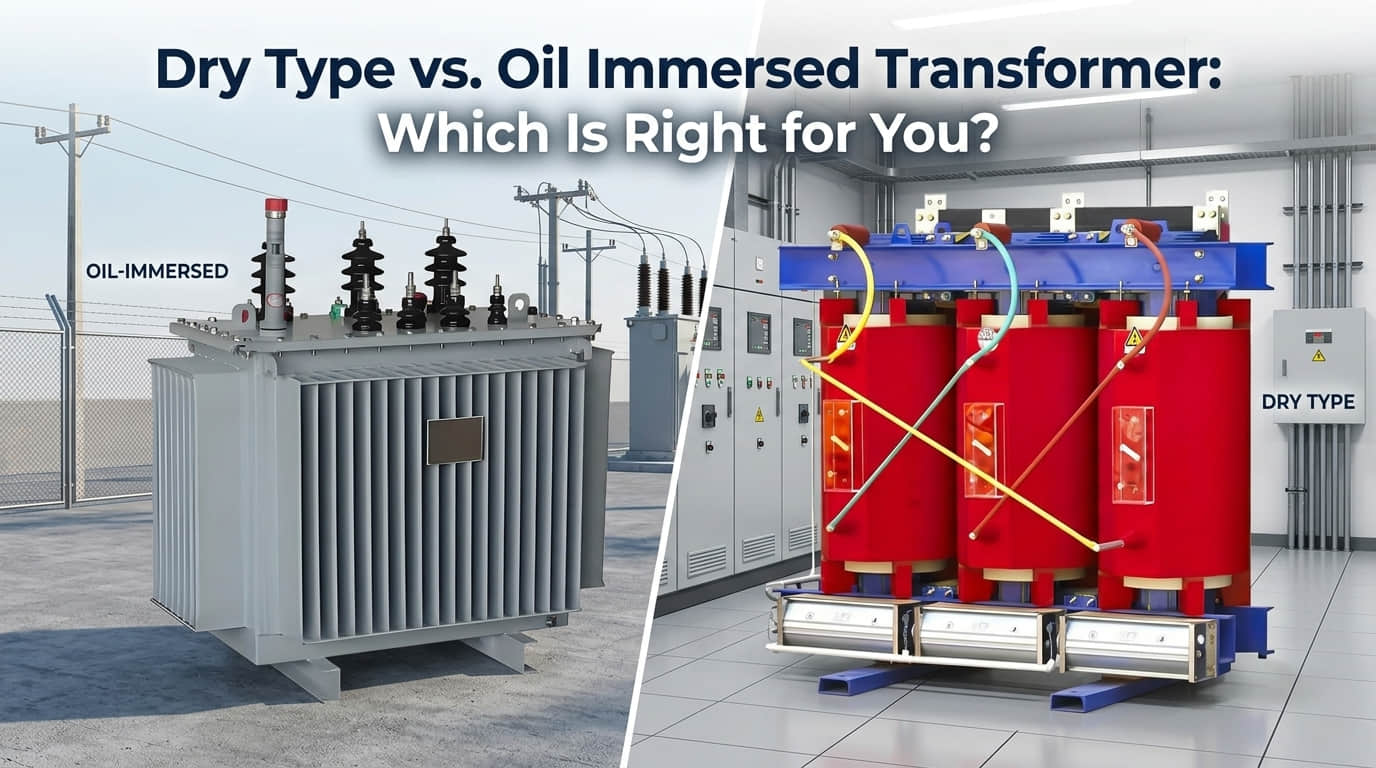
B. Pad-Mounted (Liquid-Cooled) vs. Dry-Type Transformers
| Cooling Method | Pad-Mounted Transformer | Dry-Type Transformer |
|---|---|---|
| Cooling Medium | Oil/Liquid Cooled (Superior outdoor heat transfer) | Air Cooled (Vents or fans) |
| Cabinet | Sealed (Weatherproof and tamper-resistant) | Vented (Indoor application focused) |
| Application | Outdoor, high-power needs, factories, commercial centers | Indoor, clean environments, hospitals, schools, offices |
C. Installation Requirements and Drawbacks
Installation Planning:
Prepare a concrete pad with proper drainage.
Install a suitable ground grid for safety.
Maintain sufficient clearance for ventilation and safe worker access.
Drawbacks:
Flooding occurs if drainage is poor.
Vandalism if the cabinet is not robust.
Proper planning and solid construction mitigate these risks.
D. Maintenance and Safety Rules
Pad-mounted transformers require regular maintenance, focusing on internal oil/liquid and external casing.
| Frequency | Critical Maintenance Tasks |
|---|---|
| Daily/Weekly | Check oil level and temperature, monitor voltage/current, and inspect gaskets and radiators |
| Monthly/Yearly | Test oil dielectric strength (DGA for faults), test insulation, and clean cabinets |
Safety Rule: Always call 8-1-1 before digging or planting near a transformer to prevent damage to underground cables.
Adherence to Industry Standards (EEAT)
Pad-mounted transformers must comply with strict standards to ensure safety, reliability, and energy compliance.
| Standard | Description and Key Focus | EEAT Relevance |
|---|---|---|
| IEEE C57.12.28 | Ensures the box is tamper-resistant and safe to touch | Crucial for public safety and anti-vandalism |
| UL 50 / NEMA 250 | Protects the enclosure against weather, dust, and rust | Guarantees reliability and lifespan in outdoor settings |
| 10 CFR Part 431 | Energy efficiency rules (minimum loss standards) | Addresses Life Cycle Cost (LCC) and sustainability |
| NEC / NESC | Safe installation, design, and structural strength (including seismic) | Ensures system safety and structural integrity |
Conclusion
The pad-mounted transformer is a foundational component of modern power infrastructure, enabling safe, aesthetically pleasing, and highly reliable underground distribution in urban and commercial environments.
By selecting units that:
Comply with strict safety standards (IEEE C57.12.28)
Offer robust weather protection
Prioritize low-profile design
…communities benefit from steady power, minimized visual impact, and maximized public safety.
Key Trend: Urbanization and aesthetic demands are accelerating the adoption of these enclosed, ground-mounted units, making them a key investment for future city growth.
Consultation Offer: Do you need specialized consultation on selecting the appropriate single-phase or three-phase pad-mounted transformer capacity for your urban development project?
Frequently Asked Questions
Q: What does a pad-mounted transformer do?
A: It provides safe electricity. It lowers high voltage from underground cables so you can use power at home, school, or work.
Q: Where can you find pad-mounted transformers?
A: You see pad-mounted transformers in neighborhoods, shopping centers, parks, and factories. They sit on concrete pads near sidewalks or buildings.
Q: Is it safe to touch a pad-mounted transformer?
A: You should never touch a pad-mounted transformer. The locked cabinet keeps you safe from high-voltage parts. Always stay away and follow warning signs.
Q: How often do pad-mounted transformers need maintenance?
A: They require regular checks. Workers inspect them daily, weekly, monthly, and yearly to keep them working safely and reliably.
Q: Can pad-mounted transformers work in bad weather?
A: Yes. You get steady power from pad-mounted transformers even in rain, snow, or heat. The strong, sealed cabinet protects the inside parts from weather.
Q: Why do cities use pad-mounted transformers instead of pole-mounted ones?
A: Cities use them because they look better, fit in small spaces, and keep wires underground. This provides safer and more reliable power in busy, high-density areas.
Q: What should you do if you see damage on a pad-mounted transformer?
A: You should stay away and immediately call your utility company if you see damage. Never try to fix or open the box yourself.
Q: How do pad-mounted transformers help with underground power systems?
A: Pad-mounted transformers connect directly to underground cables. This provides safe, steady power without overhead wires, which helps keep streets clean and neighborhoods looking nice.