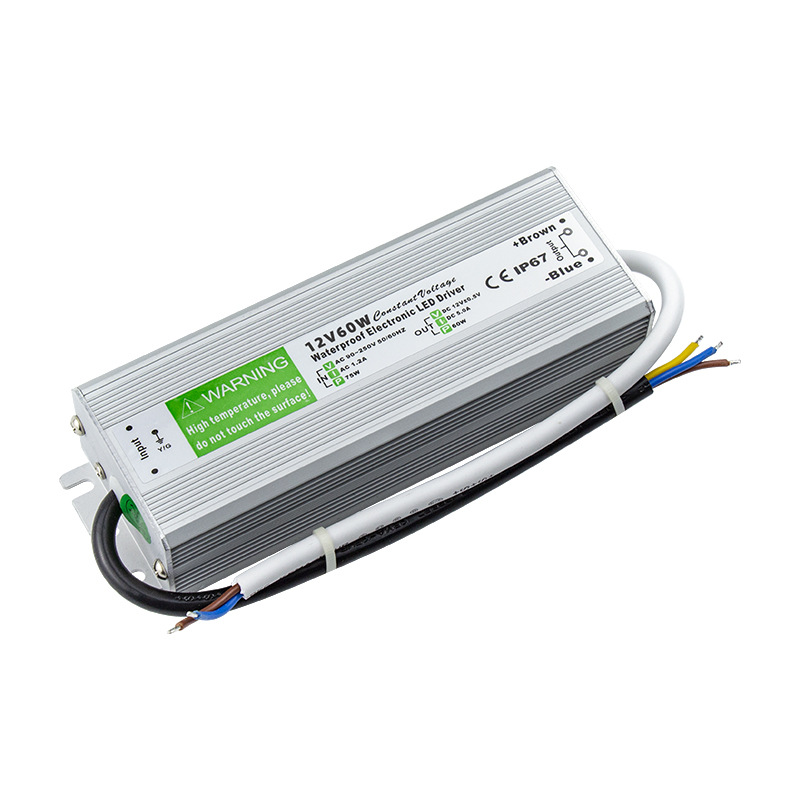
Why Proper Transformer Sizing Matters for Your Landscape Lighting
Installing outdoor path lights, garden spotlights, or deck illumination is one of the most rewarding home improvement projects you can tackle. But the entire system depends on one critical component working correctly: the low-voltage transformer that converts your household 120V power down to a safe 12V output. If you choose a unit that's too small, the lights dim and the device overheats. Go too large, and you waste money on capacity you'll never use.
This guide walks you through the exact steps to calculate the right wattage, select between indoor and outdoor models, and wire everything properly. Whether you're lighting a modest front walkway or a sprawling backyard entertaining area, these principles apply universally.
Understanding the Basics: What These Devices Actually Do
A landscape lighting transformer steps down standard household voltage to 12 volts AC (or in some cases, 12V DC for specific LED drivers). This lower voltage makes the system safe to bury in soil, run through garden beds, and handle without risk of serious electrical shock.
Modern units designed for outdoor lighting typically range from 100 watts to 900 watts in capacity. The volt-amp rating transformer manufacturers list on the spec sheet tells you the maximum load the unit can handle continuously without overheating or tripping its internal breaker.
Key Terminology You'll Encounter
Wattage (W): The total power consumption of all connected fixtures combined
VA (Volt-Amps): The apparent power rating of the transformer — often listed interchangeably with watts for resistive loads
Load: The sum of all fixture wattages connected to one transformer
Run length: The distance from the transformer to the farthest fixture
Step-by-Step: Calculating Your Required Wattage
The landscape lighting transformer wattage calculation is straightforward once you know what fixtures you're installing. Follow these four steps to arrive at the correct size.
Step 1: List Every Fixture and Its Wattage
Write down each light you plan to connect and its rated wattage. For LED fixtures, use the actual wattage drawn (not the incandescent equivalent). A typical LED path light uses 2–5 watts, while an LED spotlight may consume 7–15 watts.
Step 2: Add Up the Total Load
Sum all fixture wattages. For example, if you have 10 path lights at 4W each and 4 spotlights at 9W each, your total load is:
(10 × 4W) + (4 × 9W) = 40W + 36W = 76 watts total
Step 3: Apply the 80% Rule
Industry best practice dictates that you should never load a transformer beyond 80% of its rated capacity. This buffer accounts for voltage drop, temperature variations, and future expansion. Divide your total wattage by 0.80 to find your minimum transformer size.
76W ÷ 0.80 = 95 watts, minimum capacity needed
Step 4: Round Up to the Nearest Available Size
Transformers come in standard sizes. In this example, a 100W or 150W unit would work perfectly. Choosing the 150W model gives you room to add a few more fixtures later without replacing the entire power supply.
Real-World Sizing Examples
Below are three common residential scenarios showing how to choose a low-voltage transformer for LED lights based on actual fixture counts and layouts.
| Scenario | Fixtures | Total Load | 80% Rule Minimum | Recommended Size |
|---|---|---|---|---|
| Front walkway (simple) | 6 path lights × 3W | 18W | 23W | 50W–75W |
| Medium backyard | 12 path lights × 4W + 6 spots × 9W | 102W | 128W | 150W |
| Large estate landscape | 20 path lights × 4W + 10 spots × 12W + 4 wash lights × 20W | 280W | 350W | 400W–600W |
Notice how the large estate scenario might benefit from splitting the load across two smaller units rather than running one massive device. This approach reduces voltage drop across long wire runs and gives you independent zone control.
Voltage Drop: The Hidden Factor in Sizing
Even if your transformer has enough wattage capacity, long cable runs can cause a voltage drop that dims fixtures at the end of the line. According to industry guidelines, you should keep voltage loss below 10% (ideally under 5%) for consistent brightness across all fixtures.
Factors That Increase Voltage Drop
Longer cable distances from the power source to the last fixture
Thinner wire gauge (higher AWG number = thinner wire = more resistance)
Higher total amperage on a single run
Daisy-chain wiring instead of hub or T-method layouts
Low Voltage Lighting Wire Gauge Recommendations
| Wire Gauge (AWG) | Maximum Run Length (at 50W load) | Best Use Case |
|---|---|---|
| 16 AWG | Up to 50 feet | Short runs, small systems |
| 14 AWG | Up to 75 feet | Medium residential layouts |
| 12 AWG | Up to 100 feet | Longer runs, higher loads |
| 10 AWG | Up to 150 feet | Large properties, commercial use |
If your design requires runs exceeding these distances, consider using a multi-tap transformer that offers 12V, 13V, 14V, and 15V terminals. By connecting longer runs to a higher tap, you compensate for voltage loss and deliver a consistent 12V at the fixture.
Indoor vs. Outdoor Models: Choosing the Right Enclosure
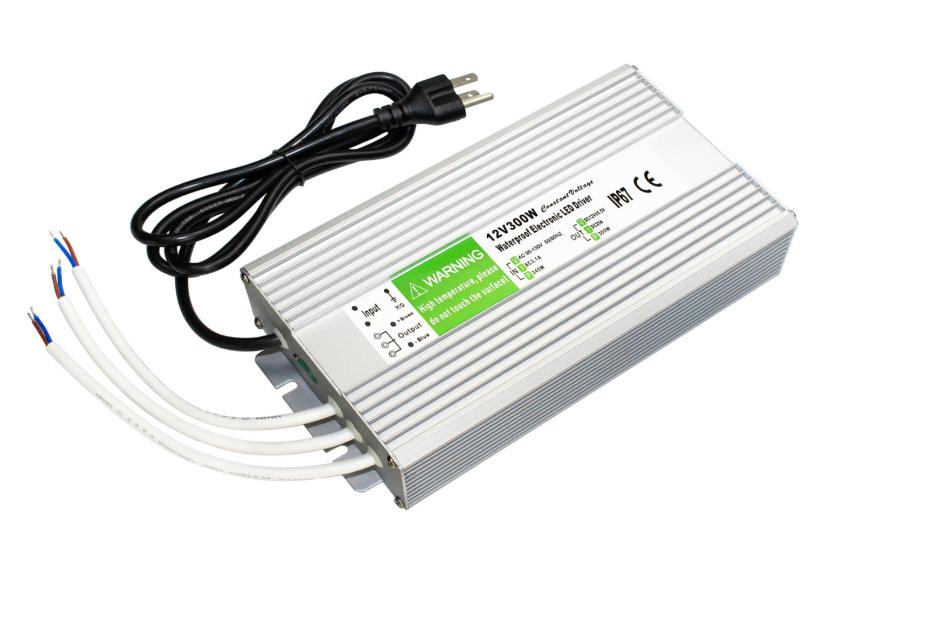
When comparing a low-voltage transformer's indoor vs outdoor rating, the primary differences are weather resistance, mounting options, and safety certifications. Outdoor-rated units feature sealed enclosures (typically NEMA 3R or higher) that protect internal components from rain, snow, humidity, and temperature extremes.
Indoor models cost less but must be installed in a protected location like a garage or covered utility closet. If you mount an indoor-rated device outside, moisture intrusion will eventually destroy the windings and create a potential fire hazard.
Quick Decision Guide
Choose outdoor-rated: If mounting near landscaping, on exterior walls, or anywhere exposed to weather
Choose indoor-rated: Only if you have a dry, ventilated, protected mounting location within a reasonable cable distance of your fixtures
Wiring Methods and Installation Layout
Understanding the low voltage transformer wiring diagram installation options helps you minimize voltage drop and ensure even brightness. Three primary wiring methods exist for landscape systems.
Daisy Chain (Series Loop)
One cable runs from the transformer to each fixture sequentially. Simple to install but causes significant brightness variation — fixtures closest to the source shine brightest while those at the end receive less voltage.
T-Method (Split Load)
A single cable runs from the transformer to the midpoint of your fixture layout, then splits in two directions. This balances the load and cuts effective run length in half, dramatically reducing voltage variation.
Hub Method (Home Run)
Individual cables run from the transformer to each fixture or small group. This delivers the most consistent voltage but uses more wire. It's ideal for high-end installations where uniform brightness is critical.
Pro Tip: For most residential projects, the T-method offers the best balance of material cost, installation simplicity, and performance. Reserve the hub method for spotlight zones where precise light output matters.
Features to Look for When Selecting Your Unit
Beyond raw wattage capacity, several features distinguish a quality low voltage transformer from a bargain-bin device that will fail within a season.
Photocell or astronomical timer: Automates on/off based on ambient light or calculated sunrise/sunset times
Multiple circuits: Allows independent zone control and staggered timing
Multi-tap terminals: Compensates for voltage drop on longer runs
Toroidal core: Quieter operation and better efficiency than EI-core designs
UL or ETL listing: Third-party safety certification is non-negotiable
Thermal protection: Automatic shutdown if the unit overheats due to overload
When evaluating the best low voltage transformer for outdoor garden lighting 2026, prioritize units with smart connectivity options. Wi-Fi and Bluetooth-enabled controllers now integrate with popular home automation platforms, letting you adjust schedules and dim zones from your phone.
Common Sizing Mistakes to Avoid
After helping dozens of homeowners troubleshoot dim lights and tripped breakers, these are the most frequent errors I encounter in the field.
Mistake 1: Using Halogen Wattage Ratings for LED Fixtures
If you replaced 20W halogen bulbs with 3W LED equivalents but kept the original 600W transformer, you're running at roughly 10% capacity. While this won't damage anything, it wastes money. More critically, some magnetic transformers perform poorly at very light loads, causing LED flicker.
Mistake 2: Ignoring Future Expansion
Adding "just a few more lights" next year is almost inevitable. Choosing a unit with 25-50% headroom above your calculated need saves you from replacing the entire power supply later.
Mistake 3: Running One Massive Cable to All Fixtures
A single 200-foot daisy chain causes unacceptable voltage drop regardless of your transformer's capacity. Split long runs into multiple shorter circuits connected to separate terminals.
Putting It All Together: Your Sizing Checklist
Use this transformer sizing guide as a final verification before purchasing:
1. List all fixtures with exact LED wattages (not incandescent equivalents)
2. Total wattage across all planned fixtures
3. Divide by 0.80 to apply the safety buffer
4. Account for future expansion (add 25-50% if you anticipate growth)
5. Verify your wire gauge supports the planned run lengths
6. Choose multi-tap if any run exceeds 50 feet
7. Confirm the unit's outdoor lighting load capacity matches or exceeds your needs
8. Select an outdoor-rated enclosure unless you have a protected indoor mounting location
Frequently Asked Questions
Can I connect LED and halogen fixtures to the same transformer?
Yes, but it's not recommended for optimal performance. Halogen and LED fixtures have different electrical characteristics. Halogen bulbs are purely resistive loads, while LEDs use drivers that may introduce power factor issues. If you mix them, calculate total wattage normally but be aware that dimming behavior may be inconsistent across fixture types.
What happens if my transformer is too small for the connected load?
An undersized unit will overheat, causing the thermal breaker to trip repeatedly. Over time, this shortens the lifespan of internal components and can create a fire risk. Fixtures will appear dim, and you may notice buzzing or humming from the enclosure. If you're experiencing these symptoms, measure your actual load and upgrade to a properly sized device.
How far can I run cable from the transformer to my farthest light?
This depends on wire gauge, total load on that run, and acceptable voltage drop. As a general rule, keep individual runs under 100 feet using 12 AWG cable for loads under 100 watts. For longer distances, use heavier gauge wire, split into multiple runs, or use higher-voltage taps (13V or 14V) to compensate for line loss.
Do I need a dedicated circuit for my landscape lighting system?
While not always required by code for smaller systems under 300W, a dedicated 15A or 20A circuit is strongly recommended. This prevents interference from other devices, simplifies troubleshooting, and ensures your outdoor system has consistent power. For larger installations exceeding 600W, a dedicated circuit becomes a practical necessity.
Should I choose a magnetic or electronic transformer for my outdoor lights?
Magnetic (toroidal) models are the traditional choice for landscape systems — they're robust, handle varying loads well, and tolerate outdoor temperature swings. Electronic (solid-state) models are lighter and more efficient but can be sensitive to moisture and may cause compatibility issues with certain LED drivers. For most residential landscape applications, a magnetic toroidal unit remains the more reliable option.
Final Thoughts and Next Steps
Sizing your landscape lighting power supply correctly is the foundation of a system that performs beautifully for years. Remember the core formula: total fixture wattage ÷ 0.80 = minimum transformer capacity. Add headroom for future growth, account for voltage drop on longer runs, and always choose a unit rated for outdoor use if it will be exposed to weather.
Take 15 minutes to walk your property, count your planned fixture locations, and note approximate cable distances. With those numbers in hand, you can confidently select the right transformer and start enjoying a professionally lit landscape that enhances both safety and curb appeal.