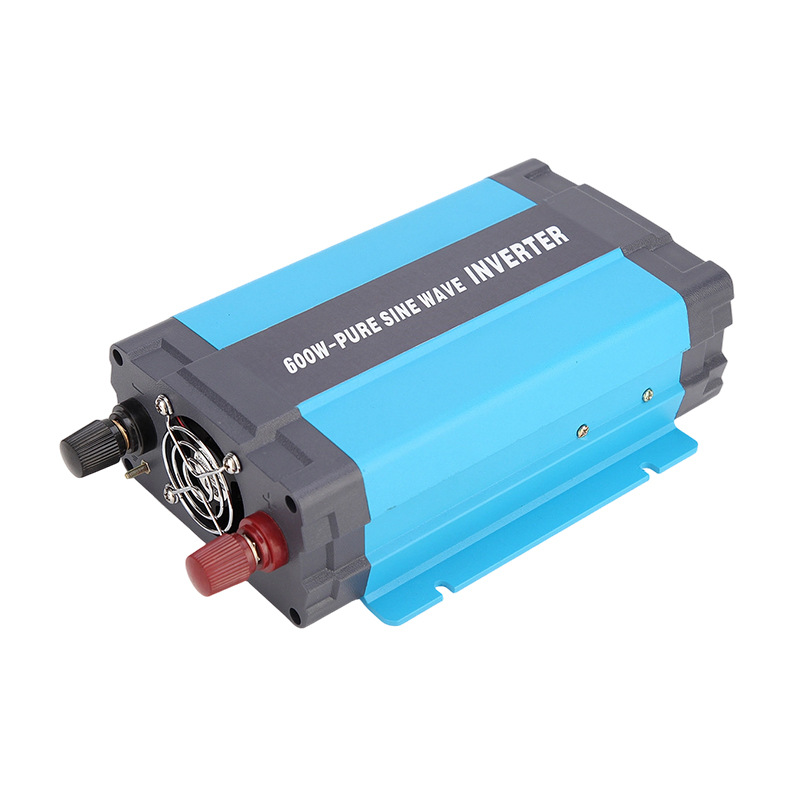
Choose the wrong inverter once, and the damage rarely stops at the invoice price.
In real business use, a poor waveform can make motors run hot, cause printers to fail, inject noise into audio systems, crash communication equipment, and shorten the life of sensitive electronics. The result is not just equipment trouble. It is downtime, emergency replacement costs, lost productivity, and customer frustration.
That is why the pure sine wave inverter is no longer a niche product for engineers. It has become a practical power decision for contractors, fleet operators, solar installers, workshop owners, telecom teams, and anyone who needs stable AC output in the field or during outages.
This guide is built for buyers who want more than brochure language. It focuses on real applications, sizing logic, comparison criteria, and buying mistakes that affect performance after installation.
Why Pure Sine Wave Inverters Matter in Real Business Use
In the market, many inverter failures are not true product failures. They are selection failures.
A buyer sees 2000W on the label, assumes that is enough, and ignores startup surge, battery current, cable losses, waveform quality, and load sensitivity. The system may turn on at first. But under real operating conditions, it overheats, alarms, trips, or slowly damages connected equipment.
For businesses, the hidden cost is serious. A service van that cannot run charging equipment on site loses billable hours. A remote telecom cabinet with unstable backup power creates field maintenance costs. A mobile food business with poor inverter output may see refrigeration or POS instability during peak hours.
Clean output power matters because modern loads are not simple resistive heaters. They include microprocessor controls, variable-speed motors, battery chargers, networking gear, sensors, and power supplies. These devices are far less tolerant of poor waveform quality than basic incandescent lamps were twenty years ago.
The Core Problem: Why Many Power Systems Fail After Purchase
The most common buying error is focusing only on wattage.
In practice, four other factors are equally important: waveform quality, surge demand, battery matching, and load type. If even one is ignored, system performance suffers.
For example, a refrigerator might run at 150W to 250W once stable. But startup surge can reach 600W to 1200W depending on compressor design. A buyer who sizes for running watts only may find the inverter trips every few cycles.
Battery matching is another frequent weak point. A 3000W inverter on a 12V battery bank can draw more than 250A before losses. If cables are undersized or batteries are weak, voltage sag triggers low-voltage shutdown even when the inverter itself is high quality.
Then there is load sensitivity. A modified waveform may run a fan, but the same output can create humming, excess heat, or unstable operation in test instruments, AV systems, or medical-support electronics. This is exactly where a pure sine wave inverter for sensitive electronics becomes the safer and more economical choice.
What Is a Pure Sine Wave Inverter?
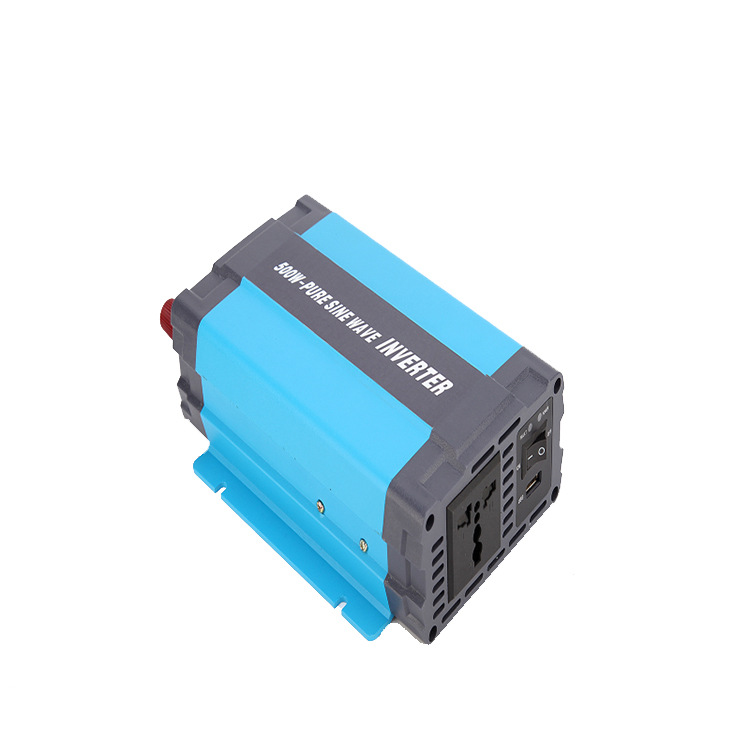
A pure sine wave inverter converts DC power from a battery or DC source into AC power with a smooth sinusoidal waveform that closely matches utility grid electricity.
That smooth waveform is the key value. It allows connected equipment to operate in the way designers intended, with lower electrical stress, lower acoustic noise, more stable timing, and better compatibility with power supplies, motors, and control boards.
In practical terms, a pure sine wave inverter is the standard choice when the load includes electronics, inductive devices, appliances with digital controls, communication hardware, or equipment that must run reliably for long periods.
For buyers comparing options, the question is not whether a low-cost inverter can switch on a load once. The better question is whether it can power that load safely, efficiently, quietly, and repeatedly over months or years of operation.
Pure Sine Wave vs Modified Sine Wave Inverter
The comparison between a pure sine wave vs modified sine wave inverter is one of the most important decisions in off-grid, backup, and mobile power design.
Modified sine wave units usually cost less up front. That is why they attract budget buyers. But the lower price often hides downstream cost in heat, reduced efficiency, compatibility issues, and troubleshooting time.
Pure sine wave models produce a cleaner AC waveform, which is better for modern equipment. Modified sine wave models use a stepped waveform that may be acceptable for some simple loads, but it is often problematic for motors, precision electronics, chargers, and audio/video systems.
Comparison Table: Pure Sine Wave vs Modified Sine Wave Inverter
| Comparison Item | Pure Sine Wave Inverter | Modified Sine Wave Inverter |
|---|---|---|
| Waveform Quality | Smooth waveform close to utility grid power | Stepped waveform with higher harmonic distortion |
| Appliance Compatibility | Excellent for most electronics, motors, and digital controls | Limited; may cause problems with sensitive or inductive loads |
| Efficiency with Real Loads | Typically better overall system performance with complex loads | Can reduce efficiency in some appliances and power supplies |
| Noise Level | Lower electrical and audible noise | Can create humming in audio gear, transformers, and motors |
| Motor Performance | Smoother startup and lower heat | Higher heat, poorer torque behavior, rougher startup |
| Risk to Sensitive Electronics | Low when properly sized and protected | Higher risk of unstable operation, overheating, or shortened lifespan |
| Long-Term Cost | Higher upfront, lower compatibility risk | Lower upfront, potentially higher operational and replacement cost |
In short, modified sine wave may still have a place for very simple, non-critical loads. But for business continuity, equipment protection, and reduced uncertainty, pure sine wave is the stronger commercial choice.
Pure Sine Wave Inverter Applications in Real-World Scenarios
When buyers search for pure sine wave inverter applications, they are usually trying to answer one practical question: where does it truly matter?
The answer is broad. Today, clean inverter output is relevant across commercial, industrial, residential, and mobile power environments.
Pure Sine Wave Inverter for Sensitive Electronics
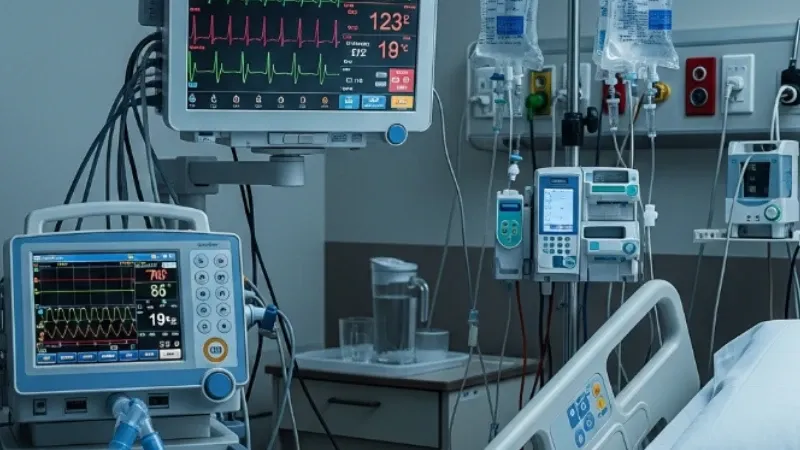
A pure sine wave inverter for sensitive electronics is one of the most common and most justified use cases.
Sensitive devices often rely on stable input power for timing, charging, control logic, and heat management. Poor waveform quality can create subtle faults that are difficult to trace, including random resets, charger overheating, display distortion, communication errors, or data corruption.
Medical concentrators and monitoring devices
Laptops, docking stations, and professional workstations
Servers, network switches, and storage units
Laboratory and field testing instruments
Professional audio systems and amplifiers
CCTV, NVR, and access-control systems
Smart home gateways and automation controllers
POS terminals and payment equipment
In field service businesses, even one unstable laptop charger or communication hub can delay a job. That is why many fleet operators no longer gamble on stepped-wave output.
Pure Sine Wave Inverter for Motors and Inductive Loads

Motors and inductive loads place different demands on an inverter than electronics do.
They often need a high startup surge and benefit from a smooth waveform to reduce torque ripple, buzzing, and heat. Modified output can make some motors run hotter and less efficiently, especially over long duty cycles.
Refrigerators and freezers
Water pumps and pressure pumps
Power tools with brushed or induction motors
Air compressors
Ventilation systems
HVAC control circuits and blower motors
For a contractor trailer, workshop, or small cold-chain transport setup, smooth motor operation is not a luxury. It is central to uptime and asset life.
Pure Sine Wave Inverter for Solar and Off-Grid Systems
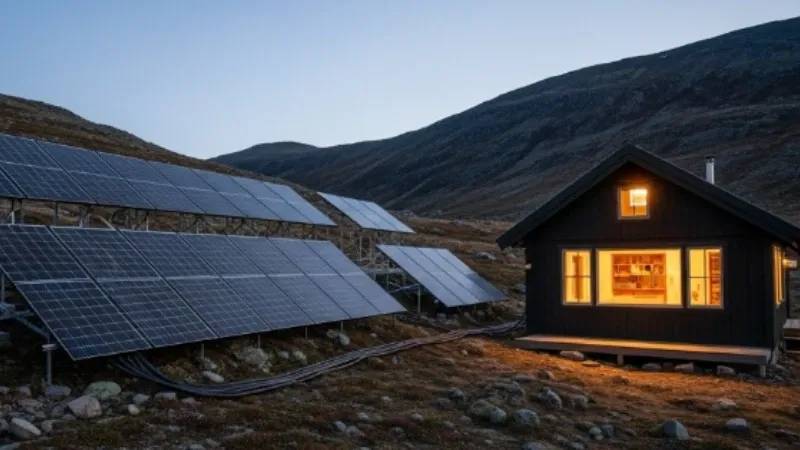
In solar storage systems, waveform quality affects the entire user experience.
People do not install solar to accept lower-quality power. They install it to maintain reliable power when the grid is absent or expensive. That is why pure sine wave is common in cabins, rural homes, telecom backup, agricultural monitoring sites, security installations, and remote industrial stations.
Off-grid cabins and residences
Solar backup systems for homes and offices
Telecom repeater and communication backup
Remote monitoring and sensor stations
Agricultural irrigation controls
Emergency lighting and security systems
In these applications, the inverter is not a standalone purchase. It is part of a system that includes batteries, PV charging, protection devices, and load priorities. A weak inverter choice can compromise the value of the entire installation.
Pure Sine Wave Inverter for RV, Marine, and Mobile Business Use

Mobile environments are especially demanding because loads change constantly and users expect utility-like power from batteries.
In an RV, service van, boat, or food truck, the inverter may need to support refrigeration, charging, microwave use, communication devices, and lighting in a compact installation with heat, vibration, and limited battery capacity.
Food trucks running POS systems, fridges, and prep equipment
Service vans charging power tool batteries on site
Mobile offices with laptops, monitors, routers, and printers
Boats with navigation electronics and onboard appliances
Event vehicles with lighting, sound, and networking gear
For these users, a pure sine wave inverter reduces the chance that critical onboard devices behave unpredictably. Brands such as Weisho Electric are often evaluated in these scenarios based on stability, protection features, and integration flexibility.
Real-World Data and Use Cases
Serious buyers need more than theory. They need field logic backed by realistic numbers.
Below are practical sizing references. Actual demand varies by manufacturer, power factor, compressor type, and operating temperature, so these numbers should be treated as planning data rather than absolute limits.
Typical Appliance Wattage and Recommended Pure Sine Wave Inverter Size
| Device | Typical Running Watts | Typical Surge Watts | Suggested Inverter Capacity |
|---|---|---|---|
| Laptop Charger | 45W-120W | Minimal | 300W-500W |
| Wi-Fi Router + Modem | 15W-40W | Minimal | 300W-500W |
| 24-inch Monitor | 20W-60W | Minimal | 300W-500W |
| Laser Printer | 300W-600W | 600W-1200W | 1000W-1500W |
| Mini Fridge | 70W-150W | 300W-800W | 800W-1500W |
| Full-Size Refrigerator | 150W-250W | 600W-1200W | 1500W-2000W |
| Microwave Oven | 900W-1500W | 1200W-2200W | 2000W-3000W |
| Coffee Machine | 800W-1500W | 1000W-1800W | 1500W-3000W |
| Water Pump 1/2 HP | 700W-1000W | 1400W-3000W | 2000W-3500W |
| Power Tool Charger Bank | 200W-800W | Moderate | 1000W-2000W |
One practical insight stands out: many systems are not large because of average load. They are large because of short surge events.
Common Sensitive Devices That Require Pure Sine Wave Output
| Device Category | Risk When Using Modified Sine Wave | Recommended Inverter Range |
|---|---|---|
| Laptops and Workstations | Charger overheating, unstable charging, noise | 300W-1000W |
| Medical Support Devices | Operational instability, unacceptable safety risk | 500W-1500W |
| Servers and Networking Equipment | Power supply stress, reboot risk, data interruption | 500W-2000W |
| Audio/Video Systems | Hum, interference, sound distortion | 500W-3000W |
| Testing Instruments | Measurement error, calibration impact, unstable output | 300W-2000W |
| Smart Home and Security Controllers | Communication glitches, false alarms, reset issues | 300W-1000W |
| POS and Payment Systems | Transaction interruption, adapter stress | 300W-800W |
This is where the true cost-benefit discussion becomes clear. The price difference between inverter classes is often far lower than the cost of one damaged device or one disrupted operating day.
Example: Small Off-Grid Office Backup Setup
Consider a small office backup configuration designed to keep essential work online during outages.
Router and modem: 25W
Laptop: 65W
24-inch monitor: 30W
Small inkjet printer on standby: 10W average, higher only during print
LED task lighting: 20W
Total continuous load is about 150W. Add margin and occasional charging variation, and a 300W to 500W pure sine wave inverter is typically appropriate.
If the battery system is 12V with 100Ah lithium capacity, total stored energy is roughly 1200Wh before system losses. Assuming 85% to 90% usable energy after inverter and battery factors, practical usable energy may be around 1000Wh.
At a 150W load, runtime can be estimated near 6 to 6.5 hours. If the printer is used frequently or additional loads are added, runtime falls accordingly.
This example shows why backup design must consider both wattage and energy capacity. A correctly selected inverter alone does not guarantee runtime.
Example: RV or Mobile Service Vehicle Power Setup
Now consider a mobile service vehicle that needs to support mixed loads during field work.
Coffee machine: 1200W
Microwave: 1000W
Two battery chargers for cordless tools: 300W combined
Laptop and router: 100W combined
If all loads ran together, demand could exceed 2600W. In real use, the microwave and coffee machine may not operate continuously at the same time, but the design should still account for likely overlap and startup events.
A practical choice here is often a 3000W pure sine wave inverter with adequate surge capability, paired with a 24V or 48V battery architecture rather than 12V. At 12V, current draw can become excessive, increasing cable size and voltage-drop problems.
For example, a 3000W inverter at 24V may draw roughly 125A plus losses. At 12V, the same power can exceed 250A, which creates a much tougher installation environment. This is one reason larger mobile systems increasingly move toward 24V or 48V layouts.
How to Choose a Pure Sine Wave Inverter
If you are researching how to choose a pure sine wave inverter, use a disciplined process rather than shopping by price or headline wattage.
Below is a practical framework used in real projects.
Step 1: Calculate Continuous Wattage and Peak Surge
Start with the running wattage of every load that may operate at the same time.
Then identify which devices have startup surge: refrigerators, pumps, compressors, power tools, microwave ovens, and some printers. Your inverter must handle both the continuous load and the highest realistic surge event.
A common field rule is to add 20% to 30% safety headroom above expected continuous demand. For motor-heavy systems, check surge rating very carefully.
Simple formula:
Required inverter size = total simultaneous running watts x safety margin
Then verify:
Inverter surge rating > highest startup demand
Step 2: Match the Inverter to Battery Voltage
Battery voltage affects current, cable sizing, efficiency, and installation complexity.
12V: common for smaller systems, typically suitable for lighter loads
24V: better for mid-size systems, lower current, more efficient cabling
48V: preferred for larger off-grid and commercial systems
As power increases, staying at low voltage becomes less practical. High current means thicker cables, more heat, and greater sensitivity to connection quality.
As a rough commercial guideline:
Up to about 1000W: 12V can work well
1000W to 3000W: 24V is often the more balanced choice
3000W and above: 48V is frequently the smarter design path
Step 3: Check Output Waveform Quality and THD
Not all pure sine wave inverters are equal.
Look beyond the label and check Total Harmonic Distortion (THD). Lower THD generally means cleaner output, which matters for sensitive electronics, measurement devices, AV systems, and premium appliances.
For precision-oriented loads, buyers often seek output THD below 5%. For more demanding applications, even tighter performance may be preferred.
This is especially relevant in a pure sine wave inverter buying guide because some low-cost products use the phrase “pure sine wave” loosely while delivering inconsistent real-world performance under dynamic loads.
Step 4: Evaluate Efficiency, Idle Consumption, and Cooling
Efficiency affects battery runtime and heat generation.
A difference of a few percentage points may seem minor, but over long off-grid or backup operation, it directly impacts usable energy. For solar and battery systems, that translates into system economics.
Idle consumption also matters. If the inverter stays on for long periods with light loads, high standby draw quietly wastes stored power.
Cooling design is equally important. A unit may meet rating on paper but derate in hot compartments or enclosed cabinets. Check airflow requirements, fan behavior, and temperature protections.
Step 5: Confirm Safety Protections and Certifications
Commercial buyers should never skip protection review.
At minimum, look for:
Overload protection
Over-temperature protection
Low-voltage shutdown
Over-voltage protection
Short-circuit protection
Reverse-polarity protection or clear installation safeguards
Also review applicable compliance marks and test documentation based on your market and application. For installed systems, especially in marine, vehicle, telecom, and building environments, compliance requirements may influence brand selection as much as price does.
Step 6: Review Charging, Transfer Switch, and UPS Features
Some inverters are simple DC-to-AC converters. Others are inverter-chargers with integrated battery charging and automatic transfer capability.
If your application involves backup power, these features may matter more than raw wattage.
Integrated charger: useful when shore power or generator charging is part of the system
Automatic transfer switch: switches loads between external AC source and inverter output
UPS or fast transfer behavior: critical for networking, IT, and communication devices that cannot tolerate long interruptions
In office backup or telecom use, transfer speed can determine whether devices stay online or reboot.
Step 7: Choose the Right Brand, Warranty, and After-Sales Support
This step is often underestimated until something goes wrong.
In real procurement, support quality affects total ownership cost. A lower-priced inverter with poor documentation, limited replacement policy, and weak technical support can become expensive very quickly.
Check these points before purchase:
Warranty length and coverage terms
Local or regional technical support availability
Spare-part and replacement access
Clear manuals and wiring guidance
Actual load test data if available
Professional buyers often shortlist suppliers not just by price but by response quality. Companies such as Weisho Electric are commonly compared on exactly these practical dimensions when projects involve long-term deployment rather than one-off retail use.
Pure Sine Wave Inverter Buying Guide: Key Specifications to Compare
A strong pure sine wave inverter buying guide should reduce confusion, not add jargon.
Use this checklist to compare products line by line before committing.
Specification Table: Pure Sine Wave Inverter Buying Checklist
| Specification | What to Check | Why It Matters |
|---|---|---|
| Continuous Power Rating | Rated output at real operating temperature | Determines sustained load capability |
| Surge Rating | Peak output and duration | Critical for motors, compressors, and startup events |
| DC Input Voltage | 12V, 24V, or 48V | Affects current draw, cable size, and efficiency |
| AC Output Voltage/Frequency | 110V/120V or 220V/230V, 50Hz or 60Hz | Must match local appliance requirements |
| THD | Prefer low distortion, typically under 5% | Important for sensitive electronics and clean power quality |
| Efficiency | Peak and typical efficiency figures | Impacts battery runtime and heat |
| Idle Consumption | Standby draw in watts or amps | Important in always-on backup or solar systems |
| Protection Features | Overload, short-circuit, low-voltage, thermal protection | Improves safety and equipment survival |
| Cooling Method | Fan-assisted, thermal control, airflow requirements | Affects reliability in hot or enclosed spaces |
| Transfer/Charger Functions | Integrated charger, transfer relay, UPS mode | Important for backup and hybrid systems |
| Certifications | Application-relevant compliance documentation | Supports safety and project approval |
| Warranty | Coverage period and support conditions | Reduces risk after installation |
Common Mistakes When Buying a Pure Sine Wave Inverter
Most buying mistakes are predictable. That is good news, because predictable mistakes can be avoided.
Undersizing the inverter: running watts fit, but startup surge trips the unit
Oversizing without reason: increases cost and may reduce efficiency at very light load
Poor battery matching: weak or undersized battery bank causes voltage sag and shutdown
Ignoring cable losses: long DC runs and thin cables hurt performance
Buying by price alone: low-cost units may have poor thermal design or exaggerated ratings
Ignoring load sensitivity: stepping down to cheaper waveform output for premium electronics
No growth margin: system works today but cannot support future load additions
One mistake deserves special emphasis: assuming every appliance label tells the whole story. Many loads, especially those with motors or internal heaters, behave very differently during startup than during stable operation.
Best Practices for Installation and Daily Operation
Even the best inverter can perform poorly if installed badly.
Practical installation discipline often makes the difference between years of stable operation and constant nuisance faults.
Use correct cable sizing to minimize voltage drop on the DC side
Keep DC cable runs as short as possible, especially at higher current
Install proper fuse or breaker protection near the battery source
Ensure ventilation and avoid sealed hot compartments unless the unit is designed for them
Follow grounding requirements based on application and local code
Separate sensitive signal wiring from power cables where possible
Do not exceed surge assumptions by adding loads casually after installation
Inspect terminals periodically for loosening, heat discoloration, or corrosion
Daily operation matters too. Users should learn not to start all heavy loads at once, not to ignore low-voltage alarms, and not to treat the battery bank as unlimited just because AC power is available at the outlet.
For commercial sites, a simple load map posted near the system can prevent operator error. That small step often saves service calls.
FAQ
What is the main advantage of a pure sine wave inverter?
The main advantage is clean, utility-like AC output that works well with a wider range of equipment. It improves compatibility, supports stable performance, reduces electrical noise, and lowers the risk of overheating or malfunction in sensitive electronics and motor-driven devices.
How do I choose a pure sine wave inverter for home backup?
Start by listing essential loads such as lights, router, refrigerator, TV, laptop, or small appliances. Add the running watts, identify any startup surge, choose an inverter with safety headroom, and then match it to a battery bank that can provide the required runtime. For larger home backup loads, 24V or 48V systems are often more practical than 12V.
Can a pure sine wave inverter run sensitive electronics safely?
Yes, when properly sized and installed, it is the preferred choice for laptops, medical devices, AV equipment, communication gear, and control systems. The smoother waveform reduces stress on adapters, power supplies, and internal circuits compared with rougher stepped-wave alternatives.
Is a pure sine wave inverter worth the extra cost?
In many real applications, yes. The extra upfront cost is often justified by better equipment compatibility, lower troubleshooting risk, quieter operation, reduced heat, and less chance of damaging expensive electronics. When downtime has a business cost, the value becomes even clearer.
What size pure sine wave inverter do I need?
Add the total running watts of all loads that may operate at the same time, then add a safety margin of about 20% to 30%. After that, verify that the inverter’s surge rating can handle the highest startup demand from compressors, pumps, microwaves, or motor-driven tools. That combined check gives a much more reliable answer than looking at running watts alone.
Can I use a pure sine wave inverter with a solar system?
Yes. It is widely used in off-grid and hybrid solar storage systems because it provides clean AC output from battery energy. It works well in cabins, backup systems, telecom sites, remote stations, and residential solar applications where users expect grid-like power quality.
What is the difference between pure sine wave and modified sine wave inverter performance?
Pure sine wave output is smoother and better for motors, chargers, electronics, and precision devices. Modified sine wave output can lead to extra heat, humming, reduced motor efficiency, unstable charging behavior, and higher long-term stress on some equipment. The performance gap is most noticeable with sensitive or inductive loads.
Final Recommendation: Choose for Load Quality, Not Just Price
The best pure sine wave inverter is not simply the cheapest model or the one with the biggest watt number on the box.
It is the inverter that matches your real load profile, startup behavior, battery architecture, installation environment, and uptime requirements. That means evaluating waveform quality, surge capability, voltage platform, protections, cooling, and support with the same seriousness you give the purchase price.
If the load is valuable, the power should be dependable. That is the real buying principle.
Get Expert Help Choosing the Right Pure Sine Wave Inverter
If you are planning a solar backup project, mobile work vehicle, RV installation, telecom cabinet, workshop system, or off-grid power setup, do not rely on guesswork.
Request a professional load calculation, product recommendation, or quotation based on your actual application. Share your load list, battery voltage, runtime target, and installation environment, and get a solution sized for performance rather than sales hype.
Take the next step now: contact an experienced inverter supplier or engineering team to review your scenario and recommend the right pure sine wave inverter for safe, stable, long-term operation.